

When a dog’s stomach rebels, vets reach for the simplest tool in the kitchen: a bland diet for dogs. Plain boiled chicken and white rice, served in small frequent meals, gives the gut a rest while keeping the dog nourished. It is not fancy, and that is the point. This guide covers the classic recipe and ratio, how to cook it, how much to feed by size, how long to stay on it, and the warning signs that mean home care is not enough.
What a bland diet is
A bland diet is a short-term, low-fat, easy-to-digest meal plan that rests an irritated digestive tract. The classic version pairs lean protein, usually boneless skinless chicken breast, with a gentle carbohydrate, usually white rice. Everything is cooked plain, with no salt, oil, butter, or seasoning.

The logic is straightforward. An inflamed gut struggles most with fat, fiber, and complex ingredients, so the bland diet removes all three. What remains is soft, simple food the stomach can process with minimal effort. VCA Animal Hospitals describes exactly this approach for pets with upset stomachs: boiled white rice with boiled chicken breast, no flavorings of any kind, served in several small meals. Think of it as a reset button, not a menu. It calms things down for a few days while you watch whether the problem resolves or needs a vet.
When a bland diet helps
A bland diet suits mild, short-lived digestive upset: diarrhea after dietary indiscretion, vomiting from eating something odd, or reduced appetite during recovery. It also helps dogs transitioning back toward normal eating. It is first aid for the gut, for dogs that are otherwise bright, drinking water, and not in pain.

The key judgment is how sick the dog is. A dog that ate trash, had one bad night, and is now acting normal is a classic bland-diet candidate. A dog that is lethargic, refusing water, vomiting repeatedly, or passing bloody stool is not; that dog needs a vet, not rice. Puppies dehydrate faster than adults, so be more cautious with the very young. When in doubt, a quick call to your vet costs nothing and settles the question. Many vets will green-light the bland diet over the phone for mild cases and tell you exactly what to watch for.
The classic recipe and ratio
The standard bland diet is one part plain boiled chicken breast to two parts plain white rice, by volume. Use boneless, skinless chicken breast only, since thigh meat carries roughly twice the fat. Use white rice, not brown: its lower fiber and softer starch are gentler on a recovering gut, which is why vets specify it.

The ratio is a starting point, not a law. Some vets prefer slightly more chicken for dogs that need the protein, others more rice for firming loose stool. What does not change is the plainness: no salt, no oil, no butter, no garlic, no onion, no broth cubes. If your dog is allergic to chicken, low-fat ground beef (boiled and drained) or plain turkey breast can substitute; ask your vet which fits your dog. For dogs that refuse rice, plain canned pumpkin is a common alternative carbohydrate. Keep notes on what you serve, so you can tell the vet exactly what the dog ate if things do not improve.
Cooking it right
Boil the chicken in plain water until cooked through with no pink inside, reaching 165 degrees Fahrenheit at the thickest point. Drain the cooking water, which holds released fat. Cook the rice separately in plain water until soft; slightly overcooked is gentler. Shred the chicken small, mix with the rice, and cool to room temperature before serving.

Two pots, plain water, and patience are all this takes. Do not cook the rice in the chicken water for a sick dog; that water carries fat you just worked to remove. Shred the chicken finely, since small pieces are easier on a sore gut and safer for dogs that inhale food. Skip the microwave-reheat guesswork: if you batch-cook, portion it out and rewarm gently to room temperature, not hot. A hot meal on an irritated stomach can trigger vomiting all over again. Taste nothing, season nothing. The blandness is the medicine.
How much to feed and how often
Feed small amounts often: four to six small meals a day beats one or two big bowls for an irritated gut. Start with two tablespoons of the mix per ten pounds of body weight per meal. A 20-pound dog might get a quarter cup per meal; a 60-pound dog closer to three-quarters of a cup. Adjust to your dog’s size.

Start smaller than you think on day one. A queasy stomach handles a little food well and a lot poorly, so begin with half portions and build up if they stay down. If the dog vomits a meal, wait a few hours and offer a smaller one; repeated vomiting means call the vet. Keep fresh water available at all times, since diarrhea and vomiting dehydrate. Do not free-feed the bland mix all day; scheduled small meals let you track exactly what stays down. And resist topping it with extras to “make it appealing.” The dog does not need enticement; it needs simplicity.
How long to stay on a bland diet
Most dogs need only two to three days, until vomiting stops and stools firm up. Some vets extend to three to five days for stubborn cases. Longer needs a vet’s direction, because a bland diet is not nutritionally complete. VCA notes chicken and rice lack many essential nutrients, so it is a bridge, never a lifestyle.
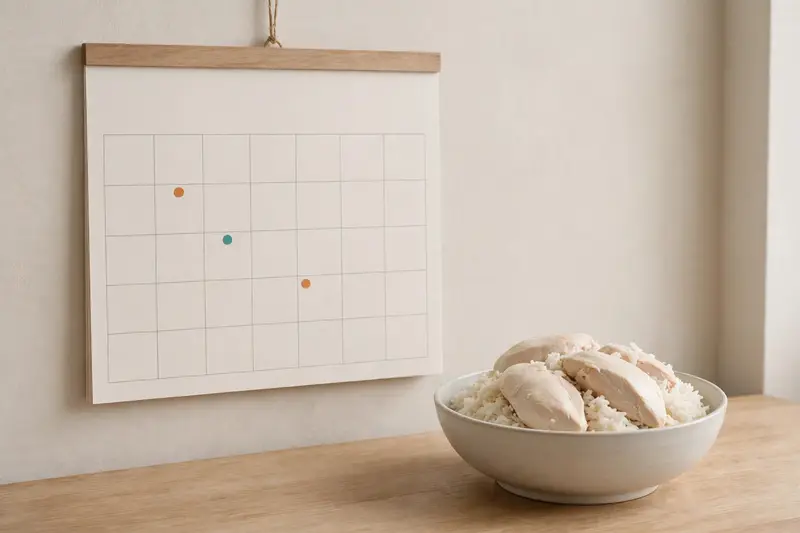
Set a mental deadline when you start. If day three arrives with no improvement, or if things worsen at any point, the bland diet has done its diagnostic job: it told you this needs professional care. Do not keep extending it hoping tomorrow will be different. Chronic or recurring digestive trouble needs bloodwork, fecal tests, or imaging, not more rice. Also watch the dog’s energy and hydration during the bland days. A dog that is bright, drinking, and slowly improving is on track. A dog that is fading, even on the bland diet, is not.
Transitioning back to regular food
Do not switch straight back to kibble. Over five to seven days, gradually mix increasing amounts of the regular food into the bland mix: roughly a quarter new food at first, then half, then three-quarters, until the bowl is all regular food. A sudden switch can restart the digestive trouble you just resolved.

Slow transitions protect a gut that is still healing. If soft stool returns at any step, drop back to the previous ratio for another day or two before advancing. This is also the moment to consider whether the regular diet contributed to the problem. If digestive episodes keep recurring, talk to your vet about a diet review rather than cycling through bland diets indefinitely. Some dogs do better on a sensitive-stomach formula long term. Keep feeding times consistent during the transition; routine itself is gentle on digestion.
Pumpkin and other gentle swaps
Plain canned pumpkin (not pie filling) is the best-known bland diet alternative: high in soluble fiber, gentle, and good at firming loose stool. A spoonful mixed into the chicken and rice, or served alone in small amounts, helps many dogs. Other options include low-fat cottage cheese in small amounts and plain yogurt with live cultures for dogs that tolerate dairy.
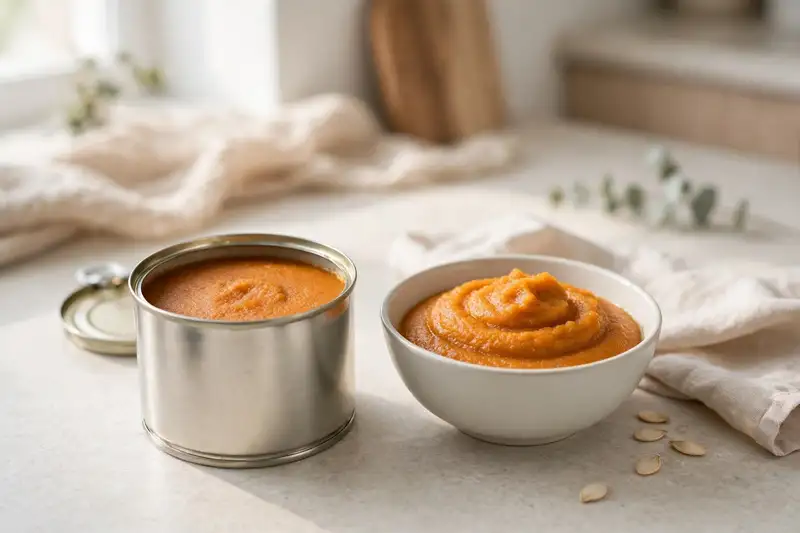
Read every label. “Pumpkin pie filling” contains sugar and spices a sick dog must avoid; you want the can that lists one ingredient: pumpkin. Sweet potato, cooked plain and mashed, works similarly for some dogs. Bone broth, homemade and fat-skimmed with no onion or garlic, can moisten the food and encourage eating. Introduce any swap one at a time so you know what agrees with the dog. And keep portions modest: gentle foods in large amounts can still overwhelm a recovering stomach. When the dog is clearly improving, fold the swap back out and return to the standard plan.
Foods to keep out
During bland feeding, keep everything else out of the bowl: fatty foods, dairy beyond the small exceptions above, raw meat, table scraps, rich treats, and anything seasoned. High-fat foods can worsen diarrhea or trigger pancreatitis in susceptible dogs, especially during recovery. This is also the time to secure the trash and remind the family that no scraps means no scraps.

The usual suspects deserve a callout. Cheese cubes, hot dog bits, and peanut butter are training staples, but they are too rich for a bland-diet gut. Rawhides and rich chews can irritate too, so pause them until recovery is complete. Even the dog’s normal treats should wait; most commercial treats are richer than they look. If you need a pill disguise during bland feeding, ask your vet or pharmacist for the gentlest option. And watch the other pets’ bowls: a bland-diet dog will happily steal the cat’s dinner, undoing a day of careful feeding in one raid.
When to skip home care and call the vet
Call your vet promptly if diarrhea or vomiting lasts beyond 48 hours, if there is blood in stool or vomit, or if the dog refuses water, becomes lethargic, or shows belly pain. Puppies, seniors, and dogs with chronic conditions get a lower threshold: call sooner. These signs point to infections, blockages, or pancreatitis that a bland diet cannot fix.

Do not negotiate with red flags. Bloody diarrhea, repeated vomiting, a swollen painful abdomen, or collapse are emergency signs. Bring notes: when symptoms started, what the dog ate, what you fed, and how much water it drank. A stool sample in a sealed bag helps the vet check for parasites. Remember what the bland diet is for: mild, short-lived upset in an otherwise well dog. Everything outside that box belongs to your veterinarian, and the sooner you hand it over, the simpler the fix usually is.
A bland diet is beautifully simple: plain chicken, plain rice, small meals, a few days, then a slow return to normal. Respect its limits, watch for red flags, and let it do its quiet work. For the chicken half of the recipe, our guide to whether dogs can eat chicken covers safe preparation. For the rice half and other gentle carbs, see whether dogs can eat rice. And for the full safe-feeding reference, visit what human food dogs can eat.
Frequently Asked Questions
What is the best bland diet for dogs?
Plain boiled boneless, skinless chicken breast with plain white rice, roughly one part chicken to two parts rice, served in small frequent meals. It is the combination vets recommend most for mild digestive upset.
How long should I feed my dog a bland diet?
Usually two to three days, until vomiting stops and stools firm up, with three to five days as the outer range for stubborn cases. Longer needs a vet’s direction since the diet is not nutritionally complete.
Can I use brown rice instead of white rice for a bland diet?
White rice is the better choice for upset stomachs. Brown rice keeps its fibrous coating, which asks more of a recovering gut. Save the brown rice for healthy days.
What can I use instead of chicken in a bland diet?
For chicken-allergic dogs, plain boiled turkey breast or boiled low-fat ground beef (drained well) can substitute. Plain canned pumpkin also works as a gentle carbohydrate alternative. Ask your vet which fits your dog.
How much bland food should I feed my dog?
Start with about two tablespoons of the mix per ten pounds of body weight per meal, split across four to six small meals daily. Begin with smaller portions on day one and build up as food stays down.
Should I fast my dog before starting a bland diet?
Some vets still suggest withholding food for 12 to 24 hours after vomiting, with water available, before introducing bland food. Ask your vet whether a fast suits your dog’s situation.
When should I worry about my dog’s diarrhea?
Call the vet if it lasts beyond 48 hours, contains blood, or comes with vomiting, lethargy, appetite loss, or belly pain. Puppies, seniors, and chronically ill dogs warrant a sooner call.
This article is general information only and is not a substitute for veterinary advice. If your dog’s digestive symptoms persist or worsen, consult your veterinarian promptly.



28 thoughts on “Bland diet for dogs: the chicken and rice recovery plan”