Are dogs omnivores? The short answer is yes, mostly. Dogs descended from wolves, but thousands of years of living beside humans rewired their digestion. Modern dogs carry extra starch-digesting genes their wolf ancestors lack, and they can get real nutrition from plant foods. That does not make them herbivores, and it does not end every diet argument on the internet. What follows is the actual science, where honest experts still disagree, and what it means for the food in your dog’s bowl.
Are dogs omnivores? The short version
Yes. Dogs are best described as facultative carnivores with strong omnivorous adaptations. They evolved from wolves, but thousands of years living alongside humans gave them extra copies of starch-digesting genes. A dog can digest and use plant foods, though meat remains the most efficient source of the protein they need.
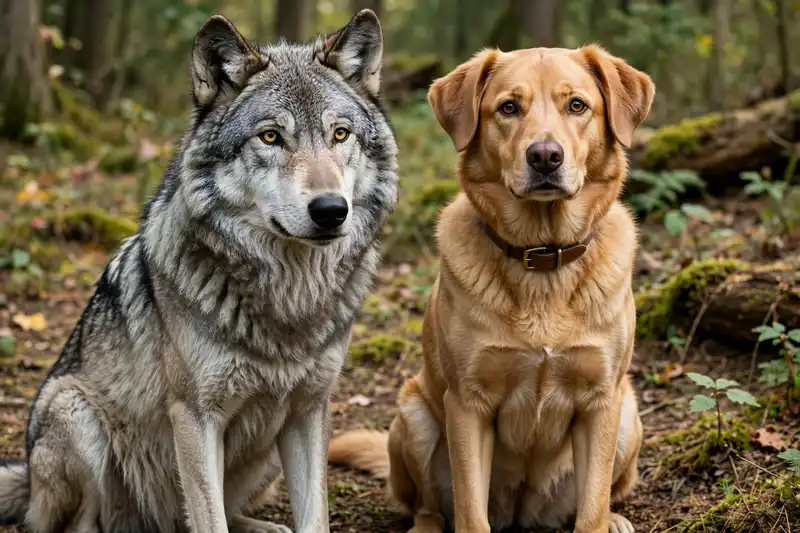
If you want one sentence to settle bar-room debates, that is it. But the interesting part is the word “facultative,” which means “by choice or circumstance” rather than “by necessity.” An obligate carnivore, like a cat, must eat meat or it gets sick and dies. A dog prefers meat, digests it beautifully, but can also get real nutrition from grains, vegetables, and fruits when they are part of a balanced diet. That flexibility is not an accident. It is the whole reason dogs succeeded as our companions while other predators stayed in the wild.
Most veterinary nutritionists land in the same place. Dogs sit on a spectrum, closer to the carnivore end than humans or bears, but genuinely able to thrive on mixed diets. The AKC’s nutrition experts describe dogs as omnivores in their feeding guidance, and that reflects the mainstream view in veterinary nutrition today. A vocal minority of researchers argues dogs are still true carnivores with an unusually adaptable metabolism, and their argument is worth hearing too. We will get to it.
What omnivore means (and what it does not)
An omnivore is an animal whose digestion can extract nutrition from both plant and animal matter. That is the entire definition. It says nothing about ideal proportions or preferences. Bears are omnivores and still eat huge amounts of meat when they can. For dogs, it means capability, not a prescription to cut meat.

This matters because people stretch the word in both directions. On one side, the raw-feeding crowd hears “omnivore” and worries it is a marketing excuse to pack kibble with cheap corn. On the other side, some plant-based brands hear “omnivore” and suggest dogs barely need meat at all. Both readings abuse the term. Bears are omnivores and a grizzly still eats enormous amounts of meat and fish when it can get them. Being an omnivore describes capability, not a prescription.
For your dog, the practical translation is simple. Meat should anchor the diet because it delivers complete protein, essential amino acids, and fats in the most usable form. Plant ingredients can fill real nutritional roles too: fiber for gut health, carbohydrates for energy, and various vitamins and minerals. A diet that is all steak with no balance is just as incomplete as a diet of plain rice. Which brings us to how dogs got this way in the first place.
From wolf to dog: the diet that changed everything
Dogs were domesticated from gray wolves somewhere between 15,000 and 40,000 years ago, and the dogs that thrived were the ones that could eat what humans left behind. Our scraps were rich in starches from grains and root vegetables, and that created relentless selection pressure.

Picture the arrangement. Early farming villages produced piles of food waste: porridge spillings, bread crusts, vegetable peelings, bones with scraps of meat. The wolves bold enough to hang around camp got calories no deep-forest wolf could access, but only if their guts could handle the starch. The ones that digested it better ate more, bred more, and slowly became dogs. Wolves that could not process starch stayed wolves. This is not speculation about temperament alone. It left a signature in the genome that scientists can still read.
That history explains something dog owners notice every day. Your dog will happily eat a dropped piece of bread, cooked potato, or carrot with genuine enthusiasm. That is not your dog being weird. It is your dog being exactly what ten thousand years of village scraps designed it to be. A wolf would get far less from that same scrap. The difference is written into their DNA, which is where the story gets properly scientific.
The starch gene discovery that settled the debate
In 2013, a team led by Erik Axelsson published a landmark study in Nature comparing the dog and wolf genomes. The headline finding was about a gene called AMY2B, which codes for pancreatic amylase, the enzyme that breaks down starch. Wolves typically carry two copies. Dogs carry anywhere from four to thirty.
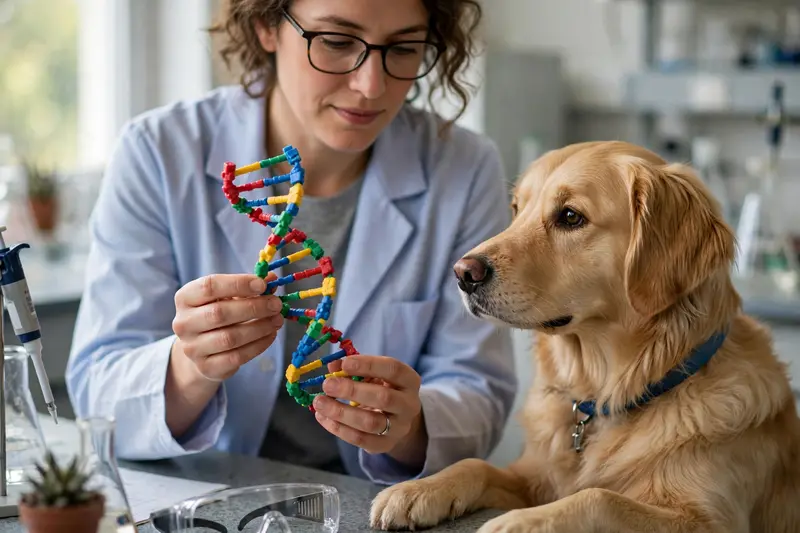
More copies mean more enzyme, which means measurably better starch digestion. The study found related changes too, in genes called MGAM and SGLT1 that help break down starches and absorb the resulting sugars. Together, this is about as close to a smoking gun as genetics gets: dogs adapted to a starch-rich diet during domestication, and the adaptation is large, consistent across breeds, and absent in wolves.
Does this prove dogs are omnivores all by itself? Not quite, and honest scientists say so. Gene copies show capability, and capability plus ten millennia of dogs eating human food makes a strong case. The researchers themselves framed it as adaptation to a new dietary niche. PetMD’s nutrition content cites this domestication history when explaining why modern dogs handle carbohydrates far better than their ancestors did. It is the single most cited piece of evidence in the whole debate, and if you remember one study from this article, make it this one.
Your dog’s gut: built like a carnivore, tuned like an omnivore
Look inside a dog and you see carnivore hardware. The digestive tract is short compared with a true herbivore, the stomach is highly acidic, and the teeth are designed for tearing and crushing rather than grinding plants all day. Food moves through quickly, which is a meat-eater’s design.

But the tuning is omnivorous. Unlike cats, dogs produce ample pancreatic amylase, the starch-digesting enzyme from the gene story above. Their intestines are proportionally longer than a cat’s, giving plant matter more time to be processed. And dogs can synthesize several nutrients that cats must get preformed from meat, which is the biochemical version of flexibility. The hardware says “meat eater.” The software has been patched for the village diet.
This is why the middle-ground label fits best. “Facultative carnivore” sounds like academic hedging, but it describes the animal accurately: a carnivore by ancestry and preference that gained genuine omnivorous ability. When you see VCA Hospitals’ nutrition articles discussing how dogs utilize both animal and plant ingredients, this dual design is what they are describing. Neither the wolf-purist view nor the plant-based marketing version survives contact with the actual gut.
Why the word Carnivora confuses everyone
Here is the mix-up behind half the internet arguments. Carnivora with a capital C is a taxonomic order, a branch of the mammal family tree. Carnivore with a lowercase c is a dietary description. They sound alike and they are not the same thing.
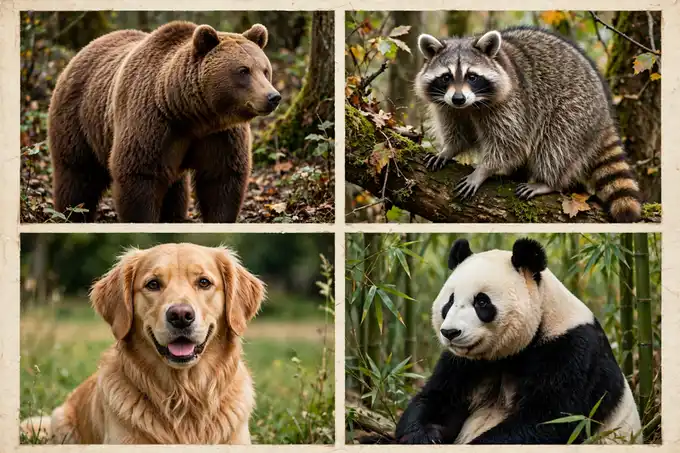
The order Carnivora includes the giant panda, which eats almost nothing but bamboo, and several bear species that eat mostly plants for much of the year. Nobody looks at a panda and concludes it must eat meat because of its family tree. Membership in the order tells you about ancestry and anatomy, not about what the animal must eat today. Dogs inherited the carnivore body plan from their Carnivora ancestors and then spent thousands of years adapting it toward dietary flexibility.
So when someone says “dogs are in the order Carnivora, therefore they are carnivores,” they are making a category error. It is like saying a human must eat insects because primates include insect-eating tarsiers. Taxonomy is history. Diet is what the gut can do right now, and the dog’s gut can do more than its family name suggests.
Dogs vs cats: the obligate carnivore contrast
Cats are the true obligate carnivores. They cannot synthesize taurine, so they must get it from meat, and they cannot convert plant beta-carotene into vitamin A. Dogs can do both. That metabolic gap is the clearest proof that dogs are the flexible ones, and why cat food and dog food are not interchangeable.

Dogs can do all of those things. They synthesize their own taurine, convert beta-carotene to vitamin A, and handle plant-based fats far better. This is the clearest practical proof of the difference. It is also why you should never feed dog food to a cat long term, and why the reverse is less immediately dangerous but still wrong. The two species left the same carnivore starting line and walked very different nutritional paths.
This contrast is the fastest way to answer someone who insists dogs are just like wolves. Wolves and cats share the strict carnivore biochemistry. Dogs broke away from it. Whatever label you prefer, the metabolic facts show a dog is the flexible one in the family, and diet advice built for a cat or a wolf does not automatically apply.
What this means for your dog’s bowl
Here is the practical payoff. Feed a complete and balanced diet formulated to meet AAFCO nutrient profiles, and your omnivore-capable dog will do well whether that food includes grains or not. Meat should be the dietary anchor, plant ingredients are legitimate supporting players, and balance matters more than ideology.

In practice, that means a quality commercial food with named meat ingredients first, plus grains or other carbohydrate sources, is a sound choice for most dogs. If you want to share safe extras, our guide to which human foods are safe for dogs covers what can go in the bowl and what must stay out. For dogs recovering from stomach trouble, a bland diet of plain cooked chicken and rice works precisely because dogs digest both the meat and the starch. Warm additions like bone broth or chicken broth can make meals more appealing while staying within a balanced plan.
One caution that follows from the science. Flexibility is not the same as indifference. Dogs with kidney disease, for example, often need controlled protein levels, so owners of dogs with kidney disease should follow veterinary guidance rather than improvising. The omnivore verdict gives you options. It does not give you a license to wing it.
Grain-free, raw, and the marketing in between
The omnivore finding gets misused by marketing on all sides, so let us be blunt. It does not prove grain-free diets are better. The FDA investigated a potential link between grain-free, legume-heavy diets and dilated cardiomyopathy in dogs. The case never closed neatly, but it ended the idea that grain-free is automatically safer.

It also does not bless raw diets by default. Raw feeding has genuine pathogen risks for both dogs and the humans in the house, and many homemade raw recipes tested by nutritionists turn out nutritionally incomplete. And on the other side, the wolf narrative gets abused too. “Feed like a wolf” sounds primal and correct until you remember that the whole point of the last 15,000 years is that dogs stopped being wolves.
The Merck Veterinary Manual grounds pet nutrition in nutrient requirements rather than ancestral storytelling, and that is the right frame. Ask what nutrients your dog needs and whether the food delivers them, verified by feeding trials or formulation to established profiles. Ancestry is interesting. The nutrient panel is dinner.
Can dogs live on a vegetarian or vegan diet?
Technically possible in some cases, genuinely difficult, and not something to improvise. Because dogs are metabolically flexible, a carefully formulated vegetarian diet designed with a board-certified veterinary nutritionist can meet AAFCO profiles for some adult dogs. A few small studies and case reports suggest it can be done without obvious harm.

But “can be done with expert help” is doing heavy lifting in that sentence. Plant proteins are less digestible and have less ideal amino acid profiles than meat, so formulation has to be precise. Puppies, pregnant dogs, and nursing mothers have no margin for error and should not be test cases. And most commercial vegetarian dog foods have not been through the feeding trials that back the best conventional foods.
My honest take: the omnivore science explains why this conversation exists at all, and it is not crazy to ask the question. But the dog in front of you did not volunteer for a nutrition experiment. If you are considering it for ethical reasons, work with a specialist, use a product with real testing behind it, and monitor bloodwork. Do not build the diet from internet recipes. Flexibility deserves respect, not exploitation.
Frequently asked questions
Do dogs need meat to survive?
Dogs do best with meat as the core of their diet, and every complete commercial dog food is built around animal protein for good reason. Meat delivers complete, highly digestible protein with the right amino acid balance. Dogs can survive periods on well-formulated meat-free diets, but meat remains the most reliable foundation, and no major veterinary body recommends removing it without expert supervision.
Are dogs carnivores or omnivores according to scientists?
The mainstream scientific view is that dogs are omnivores, or more precisely facultative carnivores with omnivorous adaptations. The 2013 Nature study on starch-digestion genes is the most cited evidence. A minority of researchers argues dogs remain true carnivores with an adaptable metabolism. Both sides agree on the underlying facts about digestion; they differ on which label fits best.
Can dogs digest grains and starches?
Yes, far better than wolves can. The extra copies of the AMY2B gene give dogs ample pancreatic amylase to break down cooked starches, and related genetic changes help absorb the resulting sugars. This is why rice, oats, and other cooked grains work well in dog food and in bland recovery diets. Raw or poorly cooked starch is harder to digest, which is why grains for dogs should always be cooked.
Why does my dog eat grass if dogs are omnivores?
Grass eating is common and usually harmless, and it is not proof of anything about dietary classification. Dogs may eat grass because they like the texture, because of mild stomach upset, or simply out of boredom. Most dogs vomit rarely afterward and show no pattern linked to nutritional deficiency. If grass eating becomes obsessive or comes with vomiting, diarrhea, or appetite loss, talk to your vet.
Is a vegan diet safe for dogs?
It can be adequate for some adult dogs only when the diet is professionally formulated to meet all nutrient requirements and the dog is monitored with regular vet checks and bloodwork. It is risky to improvise, and it is not appropriate for puppies, pregnant, or nursing dogs. Most vets recommend sticking with conventional complete diets unless you have a strong reason and expert guidance.
What did dogs eat before commercial dog food?
Scraps. For most of domestication, dogs ate human leftovers: grains, root vegetables, bones, offal, and whatever meat scraps were available. That inconsistent, starch-heavy scavenger diet is exactly what selected for their omnivorous adaptations. Commercial dog food only became the norm in the twentieth century, which is a blink in evolutionary time.
Do dogs need vegetables in their diet?
Dogs do not strictly require vegetables the way they require protein and fat, but vegetables contribute fiber, vitamins, minerals, and low-calorie bulk that support digestion and weight management. Many complete dog foods already include them. If you add extras at home, stick to dog-safe options like carrots, green beans, and pumpkin, and keep treats and toppers under ten percent of daily calories.