
Flea treatment for dogs works by killing adult fleas, stopping eggs from hatching, or both, and the right choice depends on your dog’s age, weight, health, and lifestyle. Chews and spot-ons kill fleas, and so do collars, shampoos, and sprays. They differ in speed, duration, and safety. This guide explains each type, the safety rules that matter, and how to choose. A companion comparison of the leading products sits at best flea treatment for dogs, if you already know the type you want.

How flea treatment for dogs works
Flea treatment for dogs kills adult fleas on the animal, breaks the flea life cycle, or both. Adult fleas bite and feed on blood, and a single female lays eggs that fall into bedding and carpets. Most of the flea population in a home lives off the dog. Eggs and larvae hide in bedding and carpets.
That is why one dose rarely ends an infestation. Pupae can wait in carpets for weeks before hatching. Products attack at different points. Some kill adult fleas within hours. Others stop eggs from hatching or larvae from growing. The strongest plans pair a fast adult killer with something that breaks the cycle, and they run for at least three months. Fleas also spread tapeworms and cause flea allergy dermatitis, so treatment protects more than comfort.

Oral chewables: how they work
Oral flea chewables work from the inside out. The dog swallows a flavored tablet, the active ingredient enters the bloodstream, and fleas die when they bite. Most chewables belong to the isoxazoline class. NexGard and Bravecto lead the class, with Simparica and Credelio alongside them.
They start killing fleas within a few hours, and nearly all fleas die within eight hours of a dose. Chewables suit dogs that swim or bathe often, since nothing washes off the skin. Dosing is exact, and nothing rubs off on children or furniture. Most need a prescription, and the vet screens the dog before prescribing. Monthly chews need a dose every 30 days, while Bravecto lasts about 12 weeks per chew. Dogs with a seizure history need a vet conversation first, because the FDA links this class to rare neurologic events.

Topical spot-ons: how they work
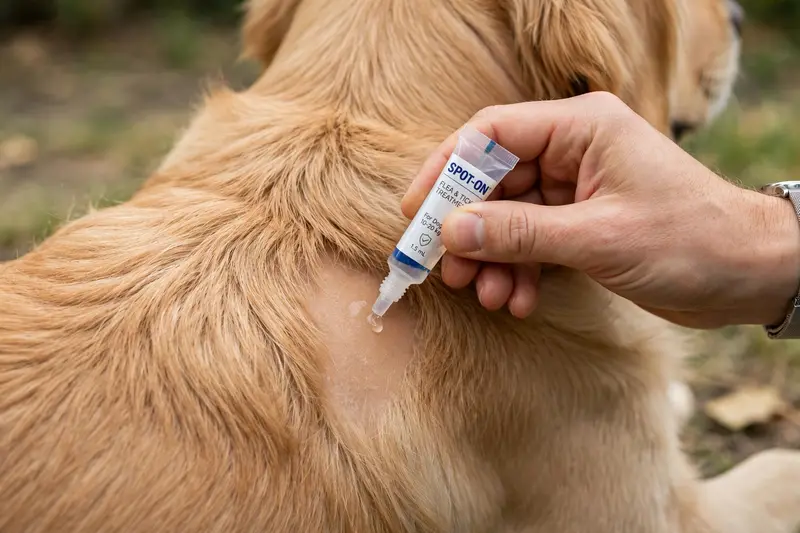
Topical spot-ons work from the outside in. You squeeze a small tube onto the skin between the shoulder blades, and the ingredient spreads across the skin surface over the next day or so. Fleas die on contact, before they bite, which matters for dogs with flea allergy. Most spot-ons last a month per dose.
Frontline Plus and Advantage II are the best known over the counter spot-ons. Frontline Plus kills adult fleas, flea eggs, and larvae, plus ticks. Advantage II kills fleas in all life stages but covers no ticks. Spot-ons suit dogs that refuse pills. The trade off is washing: frequent bathing or swimming can shorten coverage on some products. Keep the dog dry for a day after application, and keep treated dogs away from cats until the product dries, since some dog spot-ons contain permethrin, which is toxic to cats.

Flea collars: how they work
Flea collars release active ingredients slowly across the skin for months at a time. The Seresto collar is the modern standard, and it protects against fleas and ticks for up to eight months from a single collar. Older collars had a weak reputation, and many only worked near the neck. Modern collars changed that math with sustained release technology.
Collars suit owners who forget monthly doses, and they suit dogs that hate pills and spot-ons. Fit matters. The collar should sit snug enough that two fingers fit underneath, and the extra length gets trimmed so the dog cannot chew it. Check the fit every few weeks, since puppies grow and thick coated dogs hide a loose collar. Remove the collar before baths if the label says so, and replace it on the schedule the label sets, not when fleas reappear.
Shampoos, sprays, and dips
Flea shampoos, sprays, and dips kill the fleas on the dog at the time of use, and they offer little lasting protection. A flea shampoo bath kills adult fleas during the wash, which brings fast relief to an itchy dog. The effect ends when the bath ends, and new fleas from the home can jump on the same day.
Sprays work the same way on the coat and on bedding, and dips coat the whole dog in a flea killing solution. These products suit one job: knockdown. They clear a heavy load fast, then a chewable, spot-on, or collar takes over for the long term. Never combine a flea shampoo with another flea product on the same day unless the vet says so, since the combined dose can overwhelm a small dog. Read the label for the minimum age, since many shampoos are not for young puppies.

Fast knockdown vs long term prevention
Fast knockdown and long term prevention solve different problems, and most infestations need both. Knockdown kills the fleas on the dog right now. Capstar is the classic knockdown tablet: it starts killing fleas within 30 minutes, and all adult fleas die within a few hours. It lasts less than a day, so it never works alone.
Long term prevention keeps fleas from coming back. Monthly chews, spot-ons, and collars do this job. Our guide on whether Capstar is safe for dogs covers the knockdown limits in full. Plan on treating every pet in the home for at least three months to break the cycle, since pupae in carpets can hatch for weeks after the adults die. A knockdown dose on day one, plus a preventive that starts the same week, clears most infestations faster than either one alone.

Prescription vs over the counter flea treatment
Prescription and over the counter flea treatments differ in strength and speed, and in how much oversight they need. Prescription chewables are usually the fastest and longest lasting, and the vet screens the dog before prescribing. Over the counter products need no vet visit, and they suit healthy adult dogs with light flea pressure.
The FDA notes that some flea and tick products are available only from a veterinarian, while others can be bought over the counter. Tell the two apart from the label. FDA approved animal drugs carry an Approved by FDA under NADA number, and these are mostly oral chews and tablets. EPA registered pesticides carry an EPA Reg number, and these are mostly spot-ons, collars, shampoos, and sprays. Both paths require safety and efficacy data before sale. The EPA warns about counterfeit flea products sold online, and the warning signs include missing or non English directions and no EPA registration number. Buy from a vet or a known retailer, never from a random listing.

Safety rules every owner should know
Flea treatment safety starts with the label, and the label wins every argument. Dose by the dog’s exact weight. Never guess, and never split a dose between two dogs. Check the minimum age on the box before treating a puppy. Never use a dog flea product on a cat, since permethrin in many dog products can kill cats.
Keep treated dogs away from cats until a topical dries. Watch the dog for a day after the first dose of any new product. Mild itching can follow a dose, and so can tiredness. Both usually pass. Muscle tremors, wobbliness, or a seizure need a vet at once, and the ASPCA Animal Poison Control Center can advise while you head to the clinic. The FDA issued a warning in 2018 that isoxazoline chewables have been linked to neurologic events in some dogs, including animals with no prior seizure history. Dogs with a seizure history need a vet conversation before starting one. Store products where children cannot reach them, and wash your hands after application.

Choosing the right treatment for your dog
Choosing flea treatment for dogs means matching the product to the dog, not to the advertisement. Start with age and weight, since every product sets minimums. Next, check health: dogs with seizure histories avoid isoxazolines, and dogs with skin disease may do better on a chewable than a spot-on.
A puppy under eight weeks has few options, and the vet should pick. Then look at lifestyle. A dog that swims daily loses topical coverage fast, so a chewable or collar fits better. A dog that hates pills suits a spot-on or collar. A home with cats rules out permethrin products. A home with a heavy infestation needs a knockdown dose plus a preventive, plus washing bedding and vacuuming. The VCA guide to flea control in dogs walks through the same matching process. The AKC tips for flea and tick prevention cover the same ground: ask the vet, read the label, and check the dog after walks. When in doubt, ask the vet. A five minute conversation beats a month of the wrong product.

What to do when flea treatment fails
Flea treatment fails for a few fixable reasons, and the product is rarely the real problem. The most common cause is the flea life cycle: eggs and pupae in the home keep hatching for weeks, so new fleas appear after the adults die. Keep dosing on schedule for at least three months, and wash bedding and vacuum weekly.
The second cause is a missed pet. Every dog and cat in the home needs treatment at the same time, or fleas hop between animals. The third cause is a wrong dose: a product dosed for a smaller dog, a split dose, or a bath right after a spot-on. The fourth cause is resistance, which vets see with some older topicals in some regions. If fleas persist after three months of correct use, call the vet and name the product, the dose, and the schedule. The vet may switch the class or check for flea allergy dermatitis, which keeps dogs itching even after the fleas die. The AKC guide to external parasites in dogs covers the same troubleshooting steps.

Frequently asked questions about flea treatment for dogs
How long does flea treatment take to work?
Oral chewables start killing fleas within a few hours, and Capstar starts within 30 minutes. Spot-ons take up to a day to spread across the skin. Full control takes at least three months of steady treatment, since eggs in the home keep hatching.
Can I use a dog flea product on my cat?
Never. Many dog flea products contain permethrin, which is toxic to cats and can kill them. Cats need products made for cats, and treated dogs should stay away from cats until a topical dries.
Are natural flea treatments effective?
Natural options like essential oils and diatomaceous earth have weak evidence behind them, and some are unsafe. Peppermint oil can harm dogs in the wrong dose, and our guide on whether peppermint oil is safe for dogs explains the risks. Diatomaceous earth has its own safety questions, covered in our guide on whether diatomaceous earth is safe for dogs. Proven products work better and carry clearer safety data.
How often should I treat my dog for fleas?
Most products need monthly dosing, Bravecto needs a dose every 12 weeks, and the Seresto collar lasts up to eight months. Year round treatment beats seasonal treatment in most regions, since fleas survive indoors through winter.
Can I bathe my dog after flea treatment?
Wait at least a day after a spot-on, and follow the label for the exact window. Chewables and collars are not affected by baths. Frequent swimming can shorten some topical products, so ask the vet if your dog swims daily.
My dog still has fleas after treatment. Is the product failing?
Usually not. Eggs and pupae in the home keep hatching for weeks, so new fleas appear after the adults die. Keep dosing for at least three months and treat every pet at the same time. Wash bedding and vacuum weekly. If fleas persist past three months of correct use, call the vet.
Flea treatment for dogs is a match between a product and a dog, not a single product. Chewables suit swimmers and forgetful owners. Spot-ons suit dogs that refuse pills. Collars suit owners who want months of cover from one step, and shampoos suit fast knockdown only. Safety runs on the label: exact weight, minimum age, and never a dog product on a cat. Treat every pet and keep dosing for three months. Clean the home alongside the dog. The fleas leave when the cycle breaks, and it breaks when the treatment, the timing, and the house all work together.
Disclaimer: This article is for general information only and is not veterinary advice. If your dog has a seizure history, is pregnant, or reacts badly to a flea product, contact your veterinarian promptly.



1 thought on “Flea Treatment for Dogs: Types, Safety, and How to Choose”