Revolution for dogs is a monthly topical liquid with selamectin that prevents heartworm disease, kills adult fleas, and treats ear mites, sarcoptic mange, and American dog ticks. It is the only topical that covers heartworm in the same dose as fleas, which makes it a strong pick for dogs that will not swallow a chew. This guide covers how to apply it, what it misses, and when a chew may suit the dog better.

What is Revolution for dogs?
Revolution for dogs is a topical parasiticide made by Zoetis, applied to the skin once a month. Its single active ingredient is selamectin, a drug from the macrocyclic lactone family, the same family as ivermectin. The liquid comes in a single dose tube sized to the dog’s weight, and the owner squeezes it onto the skin at the base of the neck. It is prescription only, so a vet visit and a heartworm test come before the first tube.
Revolution was the first topical to give broad parasite cover in one dose, and it still holds a place no chew can match: heartworm prevention without a tablet. Dogs that spit out chews, dogs that vomit pills, and dogs with sore mouths can all take a liquid on the skin. The trade off is the tick list, which covers only one species, while chews cover five or six. Owners in tick heavy regions need to weigh that gap before they choose.

Which parasites does Revolution cover?
Revolution covers five jobs in one monthly dose. It prevents heartworm disease by killing larvae before they mature, it kills adult fleas and stops their eggs from hatching for a month, it treats and controls ear mite infestations, it treats and controls sarcoptic mange, and it controls American dog tick infestations. That mix covers the parasites most owners meet first: fleas in the house, heartworm from mosquitoes, and mites in the ears and skin.
The gaps are clear too. Revolution does not cover lone star ticks, black legged ticks, brown dog ticks, or Gulf Coast ticks, so dogs in tick heavy areas may need extra tick cover. It does not treat roundworms, hookworms, whipworms, or tapeworms in dogs, though the same drug does cover some gut worms in cats. It also does not kill flea larvae in the home, so a heavy infestation needs cleaning alongside the topical. The VCA guide to heartworm disease in dogs explains why the heartworm half of this list matters most. The AKC tips to protect your dog from heartworm cover the same test first, dose monthly routine.

How does selamectin work?
Selamectin disrupts the nerve and muscle function of parasites, causing paralysis and death. It binds to chloride channels in the parasite’s nervous system, the same target other macrocyclic lactones use, and the block stops normal nerve signals. The drug is absorbed through the skin into the bloodstream, so it reaches parasites inside the body as well as on it. That absorption is what sets Revolution apart from topicals that stay in the skin oils: the drug travels, so it can kill heartworm larvae and mites under the skin.
Fleas die when they bite and feed on a treated dog, and the drug also stops flea eggs from hatching for a full month. Heartworm larvae die in the tissue stage, before they can migrate to the heart and lungs. Ear mites and mange mites die where they live, in the ear canal and the skin, though mite eggs can hatch for a few weeks after the first dose, so a second dose may be needed for a full clear. The drug does not linger for months, which is why the monthly date rules.

How do you apply Revolution to your dog?
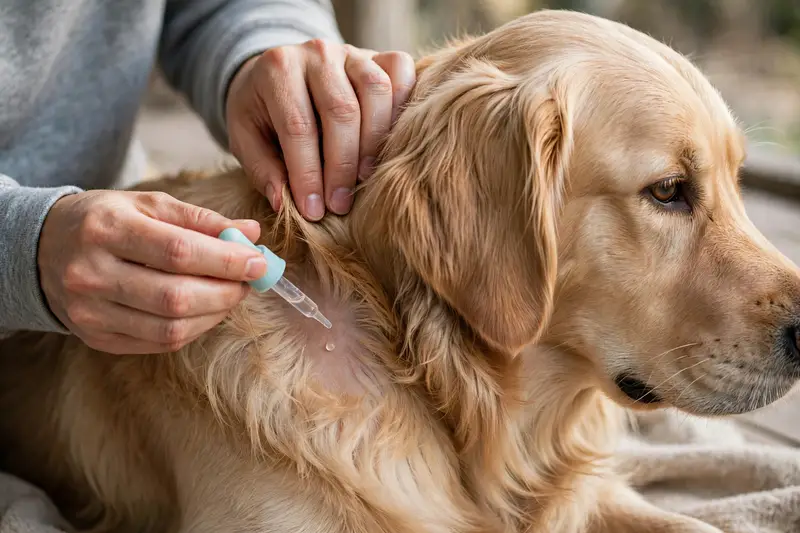
Pick the tube that matches the dog’s current weight, and check the box for the right size. Hold the tube upright, press the cap down to break the seal, and remove the cap. Part the hair at the base of the neck, in front of the shoulder blades, until the skin shows. Squeeze the full tube onto that one spot, keeping the liquid on the skin and off the fur. Do not spread it over a wide area, and do not rub it in. One spot is the design, since the skin absorbs it from there.
Keep the dog dry for 2 hours after the dose, and do not bathe the dog in that window. After 2 hours, bathing does not reduce the protection against heartworm, though the label advises care with the flea cover in the first day. Keep other pets and children away from the wet spot until it dries, and wash hands after applying. The liquid may leave the hair stiff or clumped at the spot for a day, which is normal and fades. Apply the next dose on the same date each month, and mark it on the calendar the day you apply it.
How fast does Revolution work, and how long does it last?
Revolution starts working the day it is applied, but the effect shows on different clocks for different parasites. Fleas die after biting a treated dog, and the flea population on the dog falls sharply within the first day. Flea eggs stop hatching for the full month, which breaks the cycle over time rather than in a day. Heartworm larvae die in the tissue stage, so the protection is silent: nothing visible happens, and the monthly dose simply keeps clearing each month’s larvae.
Ear mites and mange mites die over the days after the dose, though the itching may take a week or more to settle as the skin heals. Mite eggs can hatch after the first dose, so the vet may advise a second monthly dose to catch the next generation. American dog ticks die on contact with the treated skin, but the tick cover is the weakest part of the product, since it covers only one species. The monthly date still rules for every parasite on the list, and a late dose opens a gap for heartworm larvae.

What side effects can Revolution cause?
Revolution is well tolerated by most dogs, and side effects are uncommon. The usual complaint is mild irritation at the application spot, with redness, itching, or hair loss at the site that fades on its own. Some dogs show temporary hair clumping or a greasy patch where the liquid dried, which is not a side effect, just the product drying. A few dogs vomit, show diarrhea, or seem tired for a day after the dose, and those signs usually pass without care. Benadryl for dogs may ease itching at the spot, and a bland diet for a day or two is the usual recovery path once the vet rules out anything serious.
Serious reactions are rare at the label dose. Dogs with an existing heartworm infection can suffer a severe reaction if they receive the drug, because dying microfilariae trigger a strong immune response, which is why the heartworm test comes before the first dose. The label also warns against use in sick, debilitated, or underweight dogs, and the vet should check those dogs first. A dog that shows tremors, wobbling, or a seizure after a dose needs urgent vet care, and the box and lot number should go with the dog to the clinic.

Which dogs can use Revolution, and which need extra care?
Revolution is labeled for dogs and puppies 6 weeks of age and older, with no minimum weight on the label beyond the smallest tube size. That early start makes it a common pick for young puppies that cannot yet take some chews. It is the only topical heartworm preventive, which makes it the pick for dogs that refuse every chew and pill. Collies and other herding breeds can use it at the label dose, since selamectin sits in the same family as ivermectin but the label dose is set for those breeds.
A few situations need a pause and a vet visit first. Dogs 7 months or older need a negative heartworm test before the first tube, and the test is repeated each year. A dog that already carries adult heartworms needs melarsomine treatment, and Revolution cannot replace that. The safe use of the drug in breeding, pregnant, or lactating dogs has not been fully evaluated, so the vet weighs the risk for those dogs case by case. Dogs that reacted to selamectin before should not get it again without a vet’s say so. The product is for dogs only, and the dog version must never go on a cat, since the sizes and the safety data differ by species.

What if you miss a dose of Revolution?
Apply the missed tube as soon as you remember, then return to the normal monthly date. A dose a few days late is a small gap, and the next tube still clears most heartworm larvae. A gap of several weeks is a bigger problem, because larvae from the missed period may have matured past the stage selamectin can kill, and the vet may order a heartworm test a few months after a long gap. Do not apply two tubes to catch up. One tube is the dose, and doubling it adds risk without adding protection.
If the dog gets wet within 2 hours of the dose, call the vet before reapplying, since the vet needs to judge how much was lost. After that window, baths do not cut the heartworm protection. If the dog vomits or shows stomach upset after a dose, watch the signs and call the vet if they repeat. Gastroenteritis covers the stomach upset that follows a bad reaction, and bloody diarrhea is the sign that always earns a prompt vet visit. Keep the box and the lot number handy when you call.

Revolution or a chew: which fits your dog?
Revolution suits dogs that will not swallow a chew, dogs that vomit pills, and owners who want heartworm and flea cover in one topical dose. It also suits puppies from 6 weeks, since few chews start that early with heartworm cover built in. The ASPCA guide to fleas and ticks covers the flea half of that pair in plain terms. The topical route avoids the gut entirely, so dogs with sensitive stomachs often do better with a liquid on the skin. Owners who dislike the monthly chew battle may find the single spot application far easier to keep up.
A chew suits dogs in tick heavy regions, since Revolution covers only the American dog tick while chews cover five or six species. Chews also suit dogs that swim daily, since the topical needs a dry window after each dose, and they suit homes where another pet licks the application spot before it dries. The trade off is the prescription and, for most chews, the isoxazoline warning, which Revolution does not carry. Dogs with a seizure history may do better on Revolution for that reason alone. Capstar can knock down adult fleas fast in a bad infestation, and the vet can say whether it fits alongside the topical.

Getting a prescription and keeping the routine going
Revolution is prescription only in the United States, so the process starts with a vet visit and a heartworm test. The vet draws a small blood sample, runs the antigen test, and writes the prescription if the result is negative. Many clinics sell the tubes on the spot, and online pharmacies fill the same prescription with the vet’s approval. Keep the prescription current, because a lapsed prescription means a gap in cover while the refill is sorted out.
Store the tubes at room temperature, away from heat and damp, and keep them out of reach of children and other pets. A second dog that licks a wet application spot can swallow the drug, so keep treated dogs apart until the spot dries. Refill before the box runs out, not after, and mark the dose date on the calendar the day the box arrives. Cornell’s veterinary school describes the same monthly timing in its heartworm disease overview for dog owners, and the routine it describes is simple: test first, dose monthly, never skip. A pill pocket is not needed here, which is the whole point of a topical for a dog that fights pills.

Frequently asked questions about Revolution for dogs
Does Revolution for dogs cover all ticks?
Revolution controls American dog ticks only, so it does not cover all ticks. Dogs in areas with lone star, black legged, or brown dog ticks need extra tick cover, and the vet can suggest a product that pairs with it.
How old must a puppy be for Revolution?
6 weeks old. Younger puppies need a different approach, and the vet can suggest what is safe for their age and weight.
Can my dog be bathed after Revolution?
Not for 2 hours. After that window, bathing does not reduce the heartworm protection. The label advises care with the flea cover in the first day, so keep baths short and gentle.
Does Revolution treat ear mites?
Revolution treats and controls ear mite infestations, and it also treats sarcoptic mange. Mite eggs can hatch after the first dose, so the vet may advise a second monthly dose.
Is Revolution safe for collies?
Yes, at the label dose. Selamectin is a macrocyclic lactone like ivermectin, and the label dose is set for herding breeds. The vet still needs to know the breed before prescribing.
Can Revolution cure heartworm disease?
Revolution kills larvae, not adult worms, so it cannot cure the disease. A dog with adult heartworms needs melarsomine treatment from the vet, and Revolution alone will not clear the infection.
This article is for information only and is not a substitute for veterinary advice. Revolution for dogs is the quiet option in parasite control: a liquid on the skin, once a month, that covers heartworm, fleas, ear mites, mange, and one tick species. Its strength is the heartworm cover without a chew, and its limit is the short tick list. Test first, apply to the skin, not the fur, keep the dog dry for 2 hours, and hold the monthly date. A dog that never misses a month rarely has to face the treatment that follows a missed one, and that is the whole point of the tube.