

Vomiting, diarrhea, a dog that will not eat. Most dog owners meet gastroenteritis at some point, usually at the worst possible hour. The word sounds alarming, but it is simply the medical term for inflammation of the stomach and intestines. It is a description, not a diagnosis. Underneath it can sit anything from a garbage raid to a viral infection. The good news is that most cases are mild and resolve within a few days. The skill is knowing which cases those are and which ones need a vet now. This guide covers the causes, the signs, sensible home care, and the red flags that should send you to the clinic.
What is gastroenteritis in dogs?
Gastroenteritis is inflammation of the stomach and intestines, and in dogs it shows up as vomiting, diarrhea, or both, often with appetite loss and lethargy. It is one of the most common reasons dogs visit the vet. Most acute cases are mild, resolve within a few days with rest and supportive care, and never get a specific cause identified.
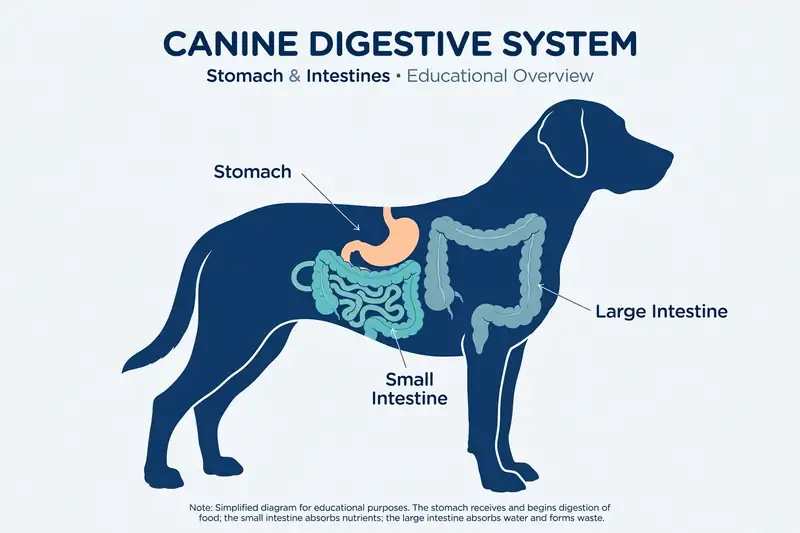
Think of it the way doctors think of “stomach flu” in people: a useful label for a set of symptoms with many possible triggers. The stomach lining gets irritated, the intestines get irritated, and the body tries to empty both ends. That is miserable for the dog and messy for you, but in straightforward cases the gut calms down on its own. The important nuance is that gastroenteritis describes what is happening, not why. Finding the why is your vet’s job when the case is not straightforward.
Acute versus chronic
Acute gastroenteritis comes on suddenly and usually resolves quickly. Chronic means it keeps coming back or never fully clears, and that pattern needs a proper workup for underlying disease.
Common causes
The list is long because the gut reacts to almost everything. Dietary indiscretion leads the pack: garbage, table scraps, spoiled food, too many treats, a sudden food change. Dogs are enthusiastic eaters with indiscriminate standards, and their stomachs pay for it regularly.
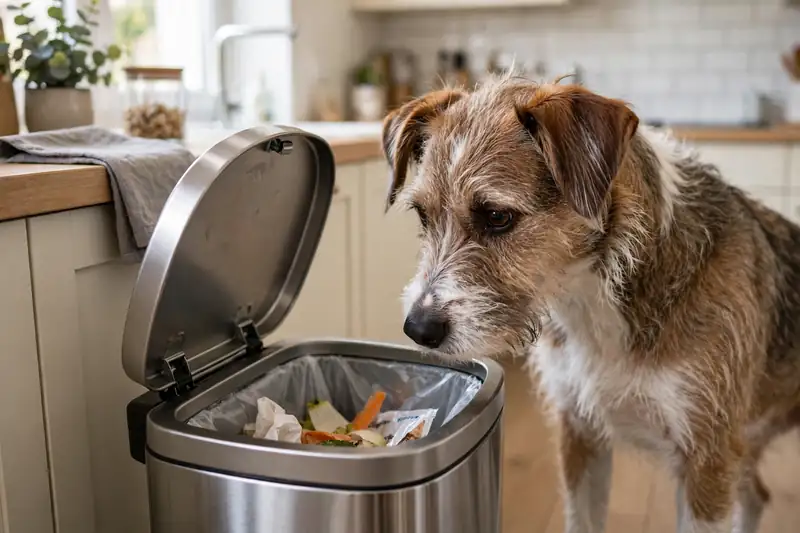
Infections are the next big category. Viruses like parvovirus, bacteria like Salmonella, and parasites like Giardia and worms all inflame the gut. Toxins matter too: certain plants, chemicals, spoiled food, and some medications can trigger it. VCA‘s gastritis guide lists culprits including dietary indiscretion, foreign objects, infections, parasites, pancreatitis, and even stress. Food allergies and inflammatory bowel disease cause the chronic form. The practical point is that you will rarely know the exact cause of a mild episode, and for mild episodes, you usually do not need to.
The usual suspect
When a vet asks what the dog ate in the last 48 hours, they are hunting for the garbage raid, the new treat bag, or the counter-surfed dinner. Have an answer ready. It saves everyone time.
Signs to watch for
Vomiting and diarrhea are the headline signs, and they often arrive together. Appetite usually drops. The dog may be lethargic, less interested in walks, and generally sorry for itself. Mild abdominal discomfort can show as restlessness or a hunched posture.

Dehydration is the complication to watch. Vomiting and diarrhea both drain water fast, and small dogs and puppies dehydrate quickest. Check the gums: they should be moist and pink. Tacky or dry gums, sunken eyes, and skin that stays tented when gently pinched all suggest dehydration. Note the details of what is coming out, too. Frequency, consistency, and whether there is blood or mucus all help your vet enormously. A quick phone photo of anything alarming is worth more than a verbal description.
Track the timeline
Note when symptoms started, how often they happen, and whether they are getting better or worse. “Vomiting since last night, three times, seems perkier now” is exactly what a vet wants to hear.
When it is an emergency
Most gastroenteritis is miserable but not dangerous. Some of it is dangerous. Blood in vomit or stool, repeated vomiting that will not stop, signs of dehydration, a painful or bloated abdomen, and extreme lethargy all raise the urgency. Puppies, seniors, and dogs with existing health problems have less reserve and should be seen sooner.
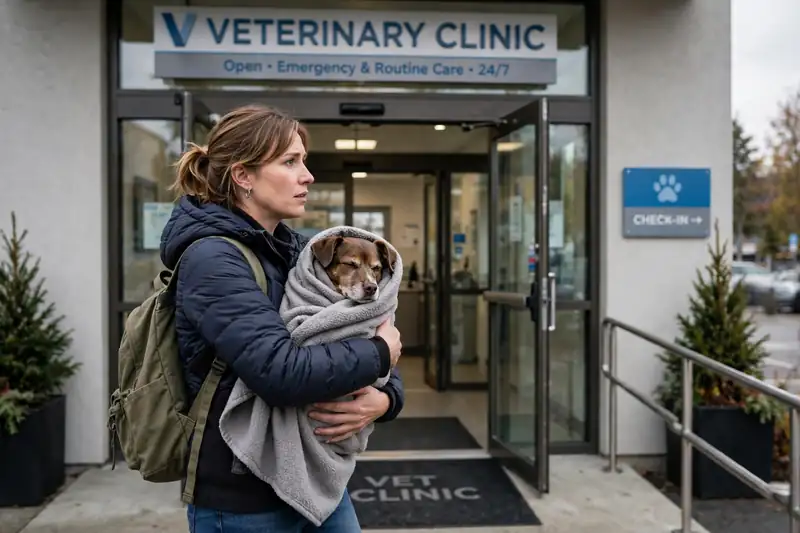
Bloody diarrhea deserves special attention. It can signal conditions like hemorrhagic gastroenteritis, parvovirus, or a foreign body, and PetMD advises that bloody diarrhea needs veterinary attention within 24 hours. Do not try to treat bloody diarrhea at home. Other red flags: the dog cannot keep water down, gums are pale or white, breathing seems labored, or the dog collapses. When several mild signs stack up, treat the stack as serious. One episode of vomiting in a bouncy adult dog is a wait-and-watch. Vomiting plus lethargy plus no water intake is a vet visit.
Puppies get fast-tracked
A puppy with vomiting and diarrhea can dehydrate in hours and may be facing parvovirus. Do not apply adult-dog patience to a puppy. Call the vet promptly.
What to expect at the vet
The vet starts with history and a physical exam: what the dog ate, vaccination status, current medications, and how the symptoms have progressed. The abdomen gets palpated for pain, bloating, or foreign material. Temperature, hydration, and gum color are checked.

Tests depend on severity. Mild cases may need nothing beyond the exam. A fecal test checks for parasites. Blood work screens for infection, dehydration, organ issues, and conditions like pancreatitis. X-rays or ultrasound come into play when a foreign body, blockage, or mass is suspected. Parvo tests are standard for unvaccinated puppies with these symptoms. The goal is to rule out the dangerous causes first, then treat what remains. Bring a fresh stool sample if you can, plus your timeline notes. Both genuinely help.
Ask what to watch for at home
Before you leave, make sure you know the recheck triggers: what would bring you back sooner, what the dog can eat, and which medications to give and which to stop.
Home care for mild cases
For a mild case in an otherwise healthy adult dog, vets often recommend a short rest for the gut. VCA’s guidance for acute stomach inflammation suggests withholding food for 8 to 12 hours, then offering small amounts of water frequently during the first day. If the dog cannot keep water down, that is a vet visit, not a home-care situation.

Once vomiting has stopped for around 12 hours, a small meal of something bland and easy to digest can be offered. Keep portions small and meals frequent rather than returning to full bowls immediately. Rest matters as much as food: no long walks, no play sessions, no exciting visitors. The gut heals faster when the dog is calm. Do not give human stomach medicines unless your vet specifically directs it. And if vomiting returns after refeeding, stop and call the vet rather than pushing through.
Water discipline
Small, frequent sips beat a full bowl that gets gulped and vomited back up. Ice chips work for dogs that drink too eagerly. Our guide to electrolytes for dogs covers hydration support for recovering dogs.
The bland diet, done right
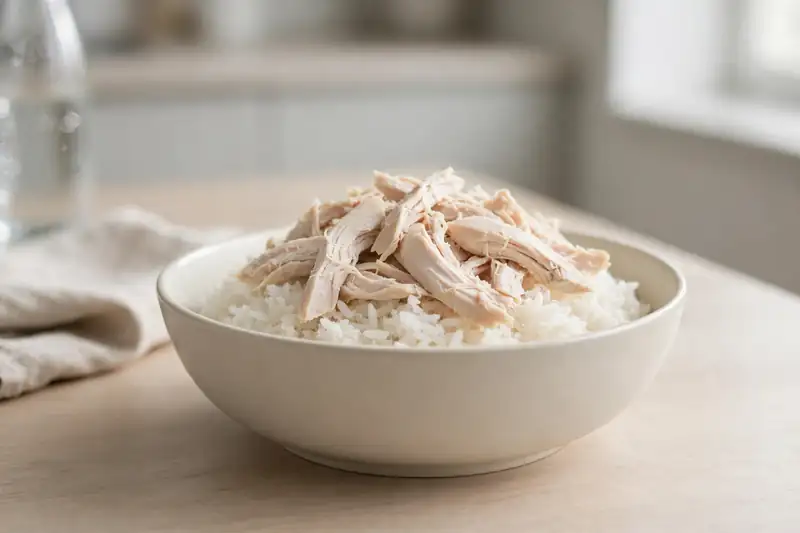
The classic bland diet is plain cooked chicken breast, boneless and skinless, with plain white rice. No seasoning, no oil, no skin, no bones. Feed small amounts several times a day, roughly half the normal daily volume split into four to six meals, then gradually increase over two to three days as the dog improves.
A spoonful of plain canned pumpkin, the pure kind with no spices, can help firm things up; our guide on pumpkin for dogs explains the details. Bone broth, unseasoned and onion-free, can encourage a reluctant dog to take fluids; see our bone broth guide for a safe version. Transition back to regular food slowly over several days by mixing increasing amounts into the bland meals. A sudden switch back can restart the whole episode. If the dog refuses the bland diet for more than a day, or gets worse on it, call the vet.
What not to feed
No dairy, no fatty foods, no treats, no table scraps during recovery. The gut needs boring. Excitement can wait until the stool is normal again.
How long recovery takes
Uncomplicated acute gastroenteritis usually resolves within a few days. VCA notes that most dogs recover from acute stomach inflammation in one to three days with supportive treatment. Appetite typically returns first, energy second, and normal stool last. Give the full timeline respect and do not declare victory at the first solid stool.
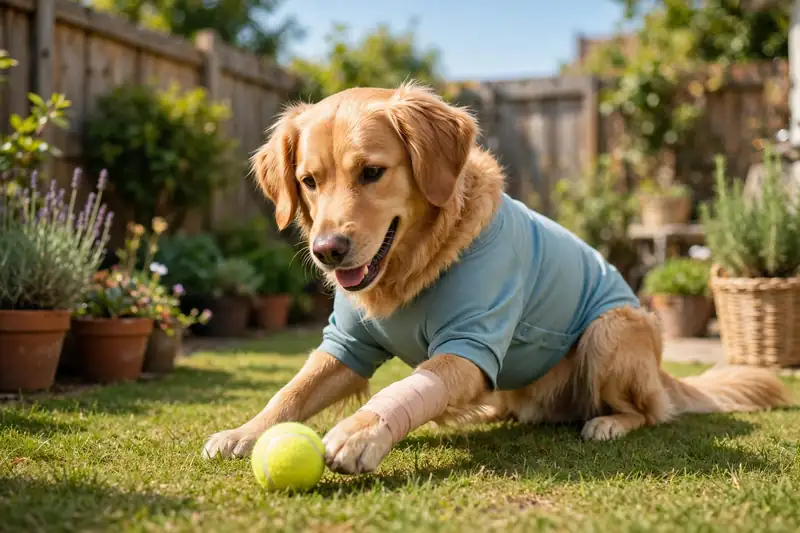
Do not rush the timeline. A dog that seems better on day two but still has soft stool on day four is still recovering. Keep meals bland and activity light until everything has been normal for a full day or two. If symptoms persist beyond three to four days, keep recurring, or were never clearly improving, the “mild case” assumption expires and the dog needs a workup. Chronic or recurrent gut trouble points to underlying issues like food sensitivity, inflammatory bowel disease, or organ problems that home care cannot fix.
The improvement test
Each day should be a little better than the last. Vomiting stops, then appetite returns, then energy, then stool firms up. Any reversal of that order deserves a call.
Preventing the next episode
You cannot prevent all gut trouble, but you can cut the odds. Secure the trash with a locking lid or a latched cabinet. Stop feeding table scraps, or at least stop the fatty, spicy, and rich ones. Change foods gradually over a week, not overnight.

Keep vaccinations current, since parvovirus and distemper both attack the gut and both are preventable. Stay on schedule with parasite prevention; worms and Giardia are classic repeat offenders. Supervise scavengers on walks, because the street offers a buffet of bad decisions. And know your dog’s particular triggers. Some dogs cannot handle a certain protein, a rich treat, or stress like boarding. Once you know the pattern, avoiding it is easy.
The garbage audit
After an episode, walk your house at dog height. Trash cans, compost bins, laundry rooms with dropped snacks, kids’ bedrooms. Fix what you find before the next episode finds you.
Gastroenteritis versus lookalikes
Several serious conditions wear the same symptoms. Pancreatitis brings vomiting and abdominal pain, often after fatty food, and needs specific treatment. An intestinal blockage from a swallowed object causes repeated vomiting and appetite loss and will not resolve on its own. Parvovirus in puppies means bloody diarrhea, severe lethargy, and rapid decline.

Bloat, or gastric dilatation-volvulus, is the true emergency: a swollen, hard abdomen with unproductive retching needs a vet in minutes. Hemorrhagic gastroenteritis, now called acute hemorrhagic diarrhea syndrome, strikes with sudden bloody diarrhea and rapid dehydration. You do not need to diagnose these yourself. You need to know they exist so that red-flag symptoms push you to the clinic instead of the wait-and-see pile. That is the real skill this article is trying to build.
Gastroenteritis in dogs is common, usually mild, and usually short. Rest the gut, rehydrate carefully, feed bland, and watch the trajectory. Most of the time that is the whole story. But keep the red flags memorized: blood, persistent vomiting, dehydration, severe lethargy, a painful belly, and any puppy with these symptoms. Those are the cases where hours matter. For the broader landscape of everyday food safety, our guide to what human food dogs can eat helps you avoid the dietary triggers in the first place.
Frequently Asked Questions
How long does gastroenteritis last in dogs?
Uncomplicated acute cases usually resolve within a few days, often one to three with supportive care. If symptoms persist beyond three to four days, keep recurring, or worsen at any point, the dog needs veterinary evaluation for underlying causes.
Should I withhold food from my dog with gastroenteritis?
For mild cases in healthy adult dogs, vets often advise withholding food for 8 to 12 hours to rest the gut, then reintroducing small bland meals. Always offer water in small frequent amounts. If the dog cannot keep water down, seek veterinary care.
What can I feed my dog with an upset stomach?
Plain cooked chicken breast with white rice is the standard bland diet, fed in small frequent meals. Plain canned pumpkin can help firm stool. Avoid dairy, fatty foods, treats, and table scraps until recovery is complete, then transition back to regular food gradually.
Is gastroenteritis in dogs contagious?
It depends on the cause. Viral and bacterial infections and parasites can spread to other dogs, while dietary indiscretion cannot. Keep a sick dog’s waste cleaned up promptly, wash your hands, and ask your vet about isolation if an infection is suspected.
When should I take my dog to the vet for vomiting and diarrhea?
Go promptly for blood in vomit or stool, repeated vomiting, signs of dehydration, a painful or bloated abdomen, extreme lethargy, or if the patient is a puppy, senior, or has health problems. When in doubt, call your vet and describe the symptoms.
Can stress cause gastroenteritis in dogs?
Yes. Stress colitis and stress-related gut upset are well recognized, often after boarding, travel, fireworks, or household changes. The symptoms look the same as other mild gastroenteritis. If episodes follow a clear stress pattern, mention it to your vet.
What is the difference between gastritis and gastroenteritis?
Gastritis is inflammation of the stomach lining alone, while gastroenteritis involves both the stomach and the intestines. In practice the symptoms overlap heavily, vomiting dominates gastritis, diarrhea joins in with gastroenteritis, and vets treat the underlying cause either way.
This article is general information only and is not a substitute for veterinary advice. If your dog is vomiting, has diarrhea, or shows any emergency signs, contact your veterinarian promptly.

20 thoughts on “Gastroenteritis in Dogs: What It Is and When to Worry”