
Can dogs eat brussels sprouts? Gas and safe portions
Brussels sprouts are the vegetable most famous for what they do after dinner, and dogs are not exempt. The answer is yes, dogs can eat brussels sprouts in small amounts. They are nutritious, carrying vitamins C and K, folate, and fiber. The catch is gas: these little cabbages ferment in the gut and produce it reliably. A sprout or two, steamed and halved, suits most dogs. A bowlful suits no dog, and nobody in the house will thank you.

Can dogs eat brussels sprouts? The short answer
Yes, dogs can eat brussels sprouts in moderation. They are not toxic, and they offer vitamins C, K, and A, folate, manganese, fiber, and antioxidants. Serve them steamed or boiled, plain, halved or quartered, in small portions. Expect gas. Skip seasoned holiday sprouts with bacon, onion, or garlic, and skip large servings for any dog.
The AKC’s guide to brussels sprouts for dogs gives the same cautious yes, with the gas warning front and center. Brussels sprouts are not a required food. A complete dog food already covers your dog’s nutrition. What sprouts offer is a vitamin-dense cruciferous extra for dogs that tolerate them, which not every dog does.

What brussels sprouts offer nutritionally
A sprout packs vitamin C for immune support, vitamin K for blood clotting, vitamin A, folate, manganese, fiber, and glucosinolates, the sulfur compounds behind the crucifer family’s sharp smell. A single sprout holds only about 8 calories, which makes them a light treat by weight.
Vitamin C is the practical standout. Dogs make their own, so they do not need it from food the way people do, but the extra does no harm. The fiber supports healthy digestion in small amounts, which is ironic given what the same fiber does in large amounts. The antioxidants are a bonus, not a reason to feed sprouts.
The honest framing is that no dog needs brussels sprouts. Their nutrition is real but modest at treat portions, and milder vegetables deliver similar benefits with less drama. Sprouts earn a place as variety for dogs that handle them, not as a staple.

Why they cause gas
Brussels sprouts are rich in raffinose, a complex sugar that dogs cannot fully digest, plus a good amount of fiber. Both ferment in the large intestine, and fermentation makes gas. This is biology, not a sign that something is wrong. The gassier the serving, the gassier the dog.
Some dogs produce more than others. Flat-faced breeds that swallow air, fast eaters, and dogs with sensitive stomachs tend to be the worst offenders. A dog that already clears rooms after broccoli will do the same or worse with sprouts, since the chemistry is nearly identical.
Portion size controls the outcome. One halved sprout might pass unnoticed. Three or four can turn an evening. There is no way to serve sprouts that avoids the gas entirely, which is why honest advice starts with: only feed them if your household can live with the result.

Gas vs bloat: knowing the difference
Ordinary sprout gas is smelly but harmless: flatulence, maybe some gurgling, a dog that feels fine. Bloat is a life-threatening emergency where the stomach fills with gas and twists. Every owner feeding gassy vegetables should know the difference.
Bloat looks like this: a visibly swollen, tight belly, restlessness and pacing, drooling, trying to vomit without producing anything, and clear distress. It comes on fast, usually after eating, and it does not pass on its own. Deep-chested breeds like Great Danes, German Shepherds, and Boxers carry the highest risk.
Brussels sprouts do not cause bloat by themselves, but any gas-producing food deserves respect in a high-risk breed. Feed sprouts in tiny portions to deep-chested dogs, never right before heavy exercise, and know the emergency signs cold. Gas that comes with a swelling belly and a distressed dog is a vet emergency, not a joke.

How to cook brussels sprouts for dogs
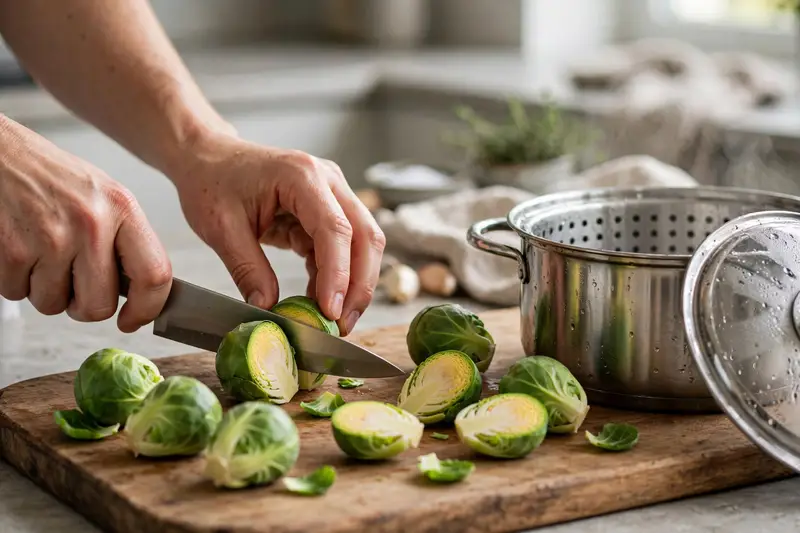
Steam or boil them plain, then halve or quarter each sprout. Steaming for five to eight minutes softens them enough to digest while keeping the nutrients. Halving matters more than people expect: whole sprouts are round, firm, and exactly the right size to lodge in a small dog’s throat.
Raw sprouts are not toxic, but they are the worst version for dogs. They are harder to digest, produce more gas, and carry the full choking risk of a firm round vegetable. Roasting is fine if it means plain with no oil, but steaming is simpler and adds nothing. Microwaving in a little water works too.
Whatever the method, the seasoning stays off. No salt, no butter, no oil, no garlic, no onion powder. Plain is the entire recipe. If the sprouts were cooked for humans first, they are not for the dog.
How many brussels sprouts are safe
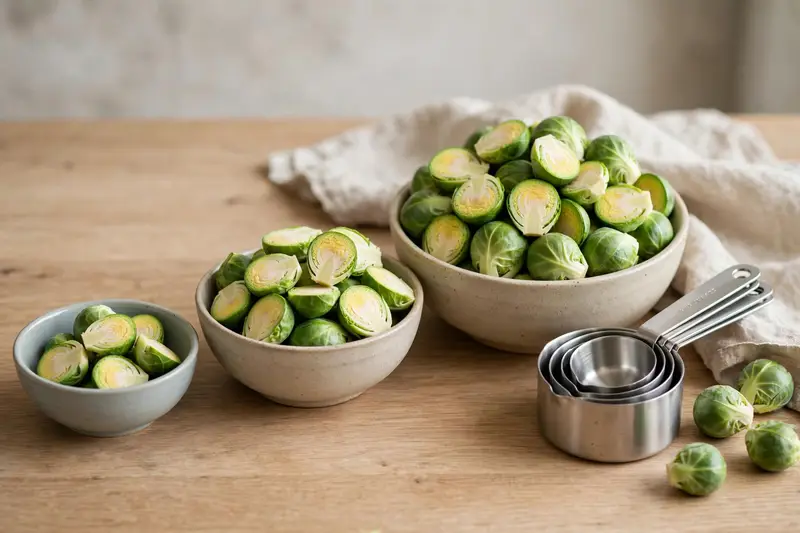
Think in sprouts, not servings. A small dog gets half to one sprout, halved. A medium dog gets one to two. A large dog gets two to three, halved or quartered. Once or twice a week at most, inside the 10 percent treat rule.
These are small numbers on purpose. The gas scales with the portion, and the fiber load that helps in tablespoons hurts in cupfuls. More than a few sprouts can also cause stomach upset and diarrhea, which is the gut saying the portion was too ambitious.
| Dog size | Safe amount (steamed, halved) | Frequency |
|---|---|---|
| Small (under 20 lbs) | Half to one sprout | Once a week |
| Medium (20 to 50 lbs) | One to two sprouts | Once a week |
| Large (over 50 lbs) | Two to three sprouts | Once or twice a week |
Start with half a sprout the first time, whatever the dog’s size. Then wait a day and judge by the household air quality and the stool. Your dog’s reaction sets the real limit, and some dogs set it at zero.
Brussels sprouts vs broccoli, cabbage, and cauliflower
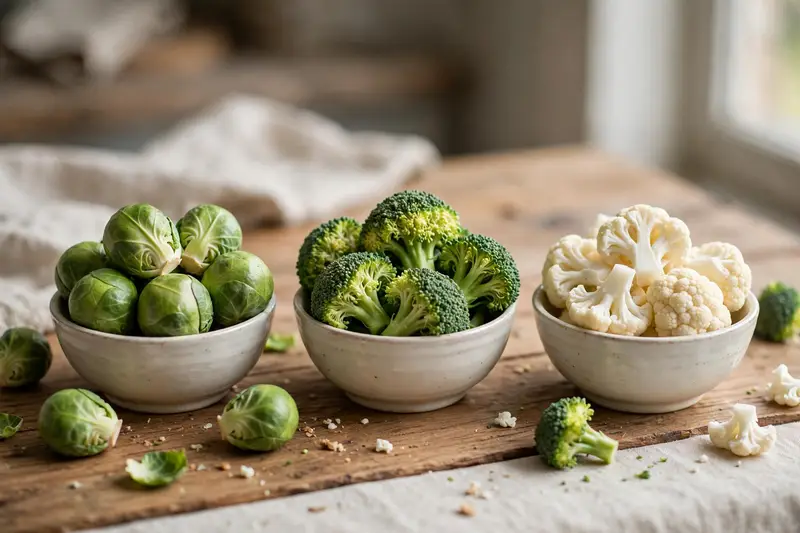
Broccoli is the closest relative and the easier choice. Same vitamin profile, same gas chemistry, but the florets are simpler to portion and most dogs find them milder. If your dog handles broccoli, sprouts are a small step sideways.
Cabbage and cauliflower share the cruciferous family traits: nutritious, fibrous, and gassy in quantity. Cabbage is the mildest of the group for most dogs. For a simple ranking by tolerance: carrots and green beans for everyday treating, broccoli and cauliflower for variety, brussels sprouts as the occasional extra for dogs that earn it.
The pattern across the family is consistent. The more fibrous and sulfurous the vegetable, the smaller the sensible portion. Sprouts sit at the intense end, which is why their portions are the smallest.
Seasoned sprouts: the holiday table danger
Holiday brussels sprouts are a different food from plain steamed ones, and the difference is dangerous. The classic preparations add bacon, pancetta, butter, garlic, onion, and heavy salt. Bacon brings fat and salt, onion and garlic are toxic to dogs, and the combination can trigger vomiting, diarrhea, or worse.
This is the scenario that sends dogs to the vet after holiday dinners: a dog that counter-surfs a serving dish of loaded sprouts. The ASPCA’s list of people foods to avoid names onion and garlic among the items to keep away from dogs, and holiday sprouts are a common delivery vehicle.
The rule for gatherings is simple. Human sprouts stay on the human table. If you want the dog included, steam two plain sprouts before the seasoning goes on and serve those. Dogs do not care about the bacon glaze, and their stomachs prefer it that way.

Can puppies and senior dogs eat brussels sprouts
Puppies can have a tiny taste once they are on solid food, but sprouts are a poor first vegetable. A puppy’s gut is still settling, and gassy food on top of that is asking for a messy night. If you introduce them, use half a soft steamed sprout, mashed, and watch for a day.
Senior dogs follow the adult rules with one extra thought. Older dogs are more likely to have sensitive digestion, and a food famous for gas is a questionable gift to an old gut. Pumpkin is the kinder fiber choice for seniors. A senior that already eats cruciferous vegetables without complaint can keep the occasional sprout.
For both ages, halving is non-negotiable. Puppies gulp, seniors sometimes chew poorly, and a whole round sprout is a choking hazard at any age.

When to call the vet
Gas alone never needs a vet. Call your vet if your dog shows repeated vomiting or diarrhea after sprouts, refuses food for more than a day, has a swollen or tight belly, tries to vomit without producing anything, or seems distressed and restless.
The bloat signs are the emergency: swollen hard belly, unproductive retching, drooling, pacing, collapse. Do not wait and do not try home remedies. Bloat kills in hours, and only surgery fixes a twisted stomach. The Merck Veterinary Manual covers food hazards and digestive emergencies for owners who want the clinical picture.
For a dog that raided seasoned holiday sprouts with onion or garlic, call your vet or poison control with an estimate of how much was eaten. Allium toxicity builds over hours, so early advice beats waiting for symptoms. When in doubt, the call costs nothing and buys certainty.

Frequently asked questions about dogs and brussels sprouts
Owners usually ask about the gas, raw sprouts, and holiday leftovers. The answers below cover the questions that come up most.
Can dogs eat raw brussels sprouts?
They can, but they should not. Raw sprouts are harder to digest, produce more gas, and carry the full choking risk of a firm round vegetable. A few minutes of steaming fixes all three problems.
Can dogs eat frozen brussels sprouts?
Yes, once cooked. Frozen sprouts are fine nutritionally. Thaw them, steam or boil until soft, halve them, and serve plain. Do not serve them still frozen, which is a choking hazard, or seasoned from a prepared bag.
Can dogs eat the stalk or outer leaves?
The stalk is too tough and fibrous. Discard it. Loose outer leaves are safe if washed and cooked, but they are usually wilted and not worth serving. Stick to the sprouts themselves.
How do I reduce the gas?
Smaller portions, thorough cooking, and halving. There is no trick that eliminates it. Some owners find that introducing sprouts gradually helps the gut adjust, but the honest answer is that gassy vegetables make gas, and the portion is the only dial.
Are brussels sprouts safe for gassy breeds?
They are safe but unwise as a regular treat. Bulldogs, pugs, and other flat-faced breeds already produce plenty of gas from swallowed air. Adding sprouts on top is a choice the whole household will regret.
Can dogs eat brussels sprouts every day?
No. Once or twice a week in tiny portions is the limit. Daily sprouts mean daily gas and a fiber load that can loosen the stool. They are an occasional extra, not a daily vegetable.
Can brussels sprouts cause allergies in dogs?
True allergy is rare, but any new food can disagree with an individual dog. Watch for itchy skin, paw chewing, or ear redness after introducing sprouts. The VCA’s guide to food allergies in dogs explains how vets confirm a food allergy with elimination trials. Stop feeding sprouts and call your vet if you see these signs.
Brussels sprouts are safe, nutritious, and socially hazardous. A sprout or two, steamed and halved, gives your dog vitamins and fiber with nothing toxic in the deal. The gas is the price, the portion is the control, and the holiday table version belongs nowhere near a dog. Feed them plain, feed them tiny, and keep the bloat warning signs in mind for deep-chested breeds. Your dog will enjoy them. Your living room may not.
*Disclaimer: This article is for general information only and is not veterinary advice. Every dog is different, and dogs with digestive conditions or a history of bloat may need different guidance. If you are unsure, or if your dog shows symptoms after eating brussels sprouts, contact your veterinarian.*


