

Yes, can dogs eat carrots? The answer is yes, and carrots are one of the best vegetables you can offer a dog. They are safe, low in calories, and the crunch does genuine work for your dog’s teeth. As always, the portion and the preparation decide how safe they stay. This guide covers both.
Why carrots are a standout treat
The American Kennel Club calls carrots “an excellent low-calorie snack”, and the nutrition backs it up. Carrots are high in fiber and beta-carotene, which the body converts into vitamin A, supporting vision and immune function. They also supply potassium and more fiber, all for very few calories.
Then there is the crunch. Chewing a raw carrot helps scrape away soft plaque from teeth, which is why the AKC notes that crunching on carrots is great for a dog’s teeth, and why carrots show up as an ingredient in many commercial dog foods. It does not replace tooth brushing, but as treats go, few earn their place the way a carrot does.
Raw or cooked, which is better?
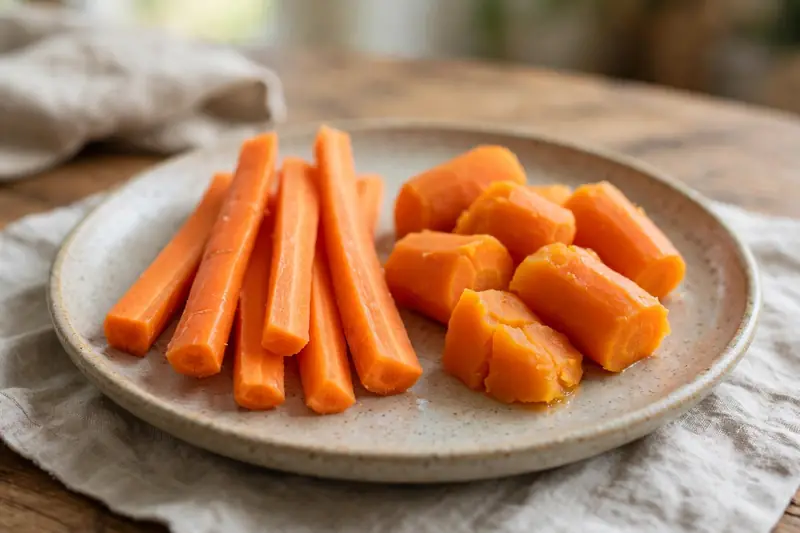
Both are safe; the choice depends on your dog:
- Raw: keeps the full crunch, which is the point for teeth. Best for healthy adult dogs with good chewing habits.
- Cooked plain: softer and gentler on sensitive stomachs. Good for puppies, seniors, or dogs with dental problems that make hard chewing painful.
Either way, the rule is plain, no butter, salt, oil, or seasoning. And one widely shared vet tip: frozen carrots make a cheap, soothing chew for teething puppies.

The choking rule

Carrots are firm, and firm plus gulped is a choking risk. Whole raw carrots, and even whole baby carrots, can be a hazard for small dogs and fast eaters. The fix is the same one that applies to every crunchy vegetable: cut carrots into bite-size pieces suited to your dog’s size before serving.
For a large dog that chews carefully, a whole large carrot can work as an edible chew toy under supervision. For small dogs, puppies, and gulpers, always go with small pieces or thin coins.

How much is safe
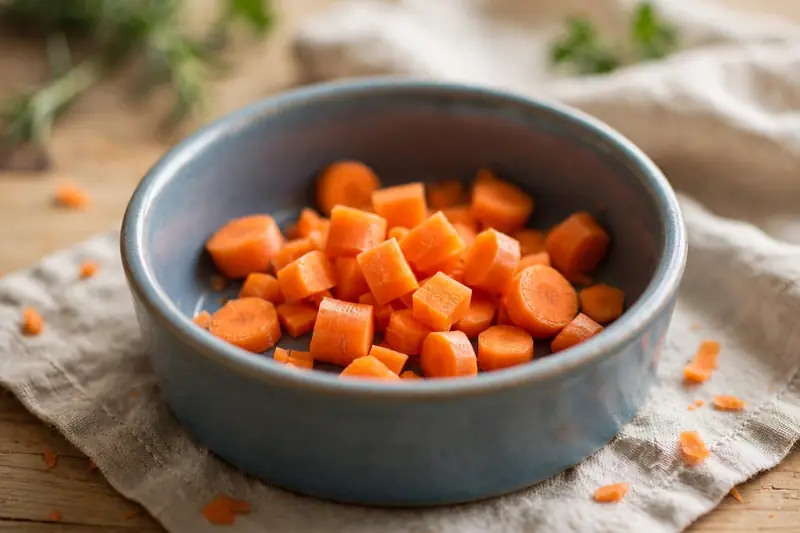
Treats of every kind, carrots included, should stay within about 10% of your dog’s daily calories. The rest of their nutrition should come from balanced dog food, not from extras.
As a rough guide for plain carrot pieces:
- Small dogs: a few small pieces or thin coins.
- Medium dogs: a small handful of pieces.
- Large dogs: a handful of pieces, or one whole carrot as a supervised chew.
Carrots contain natural sugars, so dogs with diabetes or weight problems should get them cautiously and only with a vet’s okay. When you offer carrots for the first time, start small and watch for digestive upset over the next day.
How to serve them safely
- Wash well to remove dirt and pesticide residue; peel if you prefer.
- Cut into bite-size pieces, coins, sticks, or chunks matched to your dog’s size.
- Serve raw or cooked plain. Steamed or boiled with nothing added is the cooked option.
- Supervise chewers. Even a safe treat deserves an eye on it the first few times.
Avoid glazed carrots, carrot cake, or anything from a seasoned dish, the sugar, butter, and spices are the problem, not the carrot.
Signs of too much
Too many carrots usually show up as digestive complaints: gas, bloating, loose stools, or vomiting. The fiber that makes carrots healthy in moderation can overwhelm a gut in excess. If signs are mild and pass within a day, simply cut back. If vomiting repeats, diarrhoea persists, or your dog becomes lethargic or goes off food, call your veterinarian.
Dogs who should be careful
Carrots suit almost every healthy dog, but check with your vet first if your dog has diabetes (natural sugars), chronic digestive problems, or kidney disease. Dogs on prescription diets should also get approval, since many therapeutic diets leave no room for extras. Allergic reactions to carrots are uncommon, watch for itching or swelling after a first taste, as with any new food.
The honest summary: carrots are one of the easiest wins in dog treats, low-calorie, fibrous, good for teeth, and most dogs love the crunch. They are also completely optional; your dog’s balanced food already covers the nutrition. If you share, share washed, cut small, and plain, and let the crunch do the work.
For the same plain-only, small-portion thinking across the foods dogs meet most often, see our wider guide to what human food dogs can eat. And for another vegetable with a firm portion rule, see our tomato guide.
Frequently Asked Questions
Can dogs eat carrots every day?
They can, within the 10% treat allowance, carrots are light enough for regular use. Keep portions modest and the preparation plain, and make sure the main diet stays balanced.
Are raw carrots or cooked carrots better for dogs?
Raw keeps the crunch that helps teeth; cooked plain is softer and gentler for sensitive stomachs, puppies, and seniors. Both are safe, the key is plain, with no seasoning.
Are carrots good for dogs’ teeth?
Yes. Chewing raw carrot helps scrape away soft plaque, which is why the AKC highlights the dental benefit. It supplements brushing, it does not replace it.
Can puppies eat carrots?
Yes. Cut them small for little mouths, and try a frozen carrot for a teething puppy, many vets recommend the cold crunch for soothing sore gums. Supervise, as always.
Can dogs eat too many carrots?
Yes. Excess fiber and natural sugars can cause gas, bloating, or loose stools, and diabetic dogs should be cautious. Stick to the 10% treat rule and introduce new foods gradually.
This article is general information only and is not a substitute for veterinary advice. If your dog has a health condition, is on a prescription diet, or you are unsure about any food, check with your veterinarian first.


14 thoughts on “Can Dogs Eat Carrots? Benefits, Portions & Safety”