
Your dog just stole a corn cob off the picnic table and you are wondering whether to panic. Short version: take it seriously. Dogs can eat plain corn kernels cut off the cob, but the cob itself should never go near a dog’s mouth. The kernels are a safe, starchy treat. The cob is one of the most common causes of emergency intestinal surgery in dogs, and it earns that reputation every summer.

Corn on the cob sits at the center of the cookout, within easy stealing range, smelling of butter. Dogs do not want the corn. They want the thing to chew, and the cob is exactly chew-shaped. That shape is the whole problem.
Can dogs eat corn on the cob? The short answer

No, dogs should never eat corn on the cob. The cob is a choking hazard and can cause a life-threatening intestinal blockage. If you want to share corn, cook it plain, cut every kernel off the cob, and serve only the kernels in a small amount.
PetMD’s corn guide puts it plainly: corn is safe for dogs in moderation, but it must always be served off the cob. The cob is not digestible. A dog’s stomach cannot break it down, so swallowed pieces travel whole until they wedge somewhere narrow. Small dogs face the highest risk, but large dogs swallow cobs too, sometimes whole. The published corn guide covers kernels in detail; this article is about the cob and the emergency it causes.
Why the cob is so dangerous

The cob’s danger is mechanical, not chemical. Corn contains no toxin for dogs. The cob is a cylinder of dense plant fiber, mostly cellulose, that digestive juices cannot dissolve. Dogs chew it into chunks, and the chunks are exactly the wrong size: small enough to swallow, too big to pass through the narrow parts of the intestines.
Two injuries follow. The first is choking, when a chunk lodges in the throat of a dog that gulped it. The second is intestinal blockage, when pieces travel into the gut and wedge tight.
A blocked intestine cuts off blood flow to the trapped section, and the tissue starts to die. This is the injury that needs emergency surgery, and veterinary sources describe surgical removal as the near-certain outcome once a cob piece lodges. Dogs do not need to eat the whole cob. A few swallowed chunks are enough.
Corn husks deserve the same warning. The husk is tough and fibrous, indigestible, and causes the same choking and blockage injuries as the cob. Dogs that raid the trash for cobs usually eat the husks too.
Here is the complicating fact most cob articles bury: dogs that neatly strip every kernel off the cob are still in danger. Owners watch a dog gnaw a cob clean and assume the chewing was the point. The stripped cob goes down next, or a chunk of it does, and the emergency starts hours later when the dog stops eating. Never hand a dog a cob “just to chew.” The chewing is the delivery mechanism.
My dog ate a corn cob: what to do right now
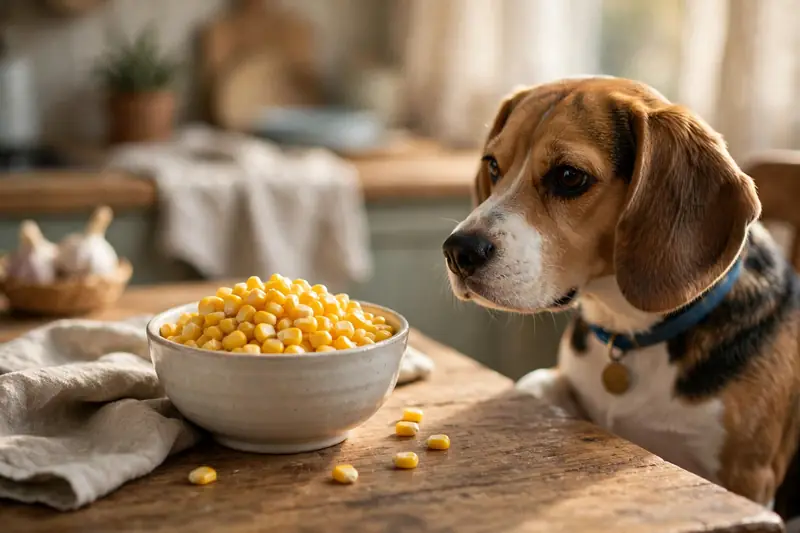
Call your vet immediately and do not wait for symptoms. A swallowed cob is a time bomb with an unpredictable fuse, and the vet needs to know now, not after the vomiting starts. Describe what the dog ate and when it happened, then follow the vet’s instructions exactly.
Watch for vomiting, loss of appetite, diarrhea, difficulty pooping, and stomach pain. Unusual tiredness rounds out the warning list. Repeated vomiting or retching without producing anything is the classic early sign of a blockage. A swelling belly with unproductive retching can also mean bloat, so knowing the signs of bloat helps you describe symptoms accurately to the vet.
A swollen or painful belly, or a dog that suddenly refuses food it normally inhales, also signals trouble. These signs can appear within hours or take a day or two, which is why waiting to “see how it goes” is the wrong move.
The vet may induce vomiting if the cob was eaten very recently, or may recommend monitoring with clear instructions on what triggers an emergency visit. X-rays sometimes show the blockage; sometimes the diagnosis comes from symptoms plus the known history.
Do not try home remedies. Do not feed bread or pumpkin to “push it through,” and do not give laxatives. A partial blockage can become a complete one while you experiment.
Save the ASPCA Animal Poison Control number in your phone before you need it. Cob season is every summer, and the call you make calmly in advance is worth more than the one you make in a panic.
What corn kernels offer nutritionally

Corn kernels bring starch, a little fiber, and small amounts of B vitamins and antioxidants. They are an energy food, not a nutrient powerhouse. Dogs digest cooked corn well, and the kernels add bulk and a bit of variety to the treat rotation.
Corn is filler with manners. It delivers calories and some fiber without the risks that come with richer treats. Nobody should call it a superfood, and nobody needs to fear it either.
The grain-free marketing of the last decade painted corn as a villain, but veterinary nutritionists treat plain corn as a digestible carbohydrate source for most dogs. True corn allergies exist and are uncommon; most dogs handle corn without any issue.
Portion discipline matters because corn is calorie-dense for a vegetable. A few tablespoons of kernels carry real energy, and the treat budget is only 10 percent of the day. Corn earns its place as an occasional extra, not a daily side dish.
How to share corn safely
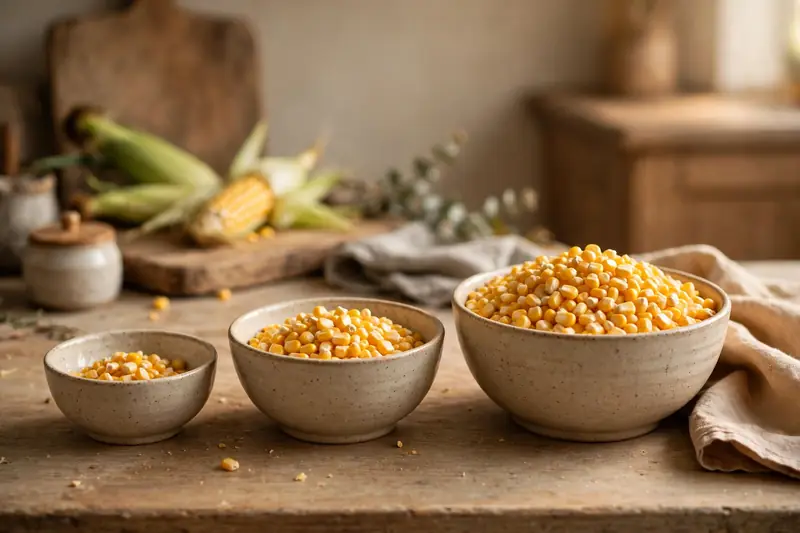
Cook the corn plain, let it cool, stand the cob upright, and slice every kernel off with a knife. Serve the kernels in a bowl. Throw the cob straight into a closed trash bin, not an open one, because dogs open trash the way safecrackers open safes.
Boiling and steaming are the best cooking methods. Grilling works if the corn goes on plain with no butter, oil, or seasoning.
Frozen kernels, thawed and warmed, are the easiest safe option. They skip the cob entirely. Raw kernels are not dangerous but are harder to digest and gassier than cooked, so cooking is worth the few minutes.
Cut kernels for small dogs even after they leave the cob. Whole kernels are a minor choking risk for tiny breeds and enthusiastic gulpers. A quick rough chop takes seconds and removes the question. Serve at room temperature, never hot off the grill.
The trash step is not optional. More cob emergencies start with trash raids than with hand-fed cobs. A closed bin, a latched cabinet, or a bag taken straight outside closes the most common route to the emergency clinic.
How much corn is safe to feed

Keep corn within the 10 percent treat budget that the VCA’s feeding guidelines set for all extras. For most dogs that means a few tablespoons of plain kernels, a few times a week at most. The table below breaks it down by size, and the first serving should always be smaller than the chart suggests.
| Dog size | Safe amount | Frequency |
|---|---|---|
| Small (under 20 lbs) | One tablespoon of kernels | A few times a week |
| Medium (20 to 50 lbs) | Two tablespoons of kernels | A few times a week |
| Large (over 50 lbs) | Quarter cup of kernels | A few times a week |
Too much corn at once causes gas and loose stool in sensitive dogs, and the starch load can unbalance the day’s nutrition if it becomes a habit. Dogs with a history of digestive trouble should get smaller test portions first. Repeated digestive upset after corn points to gastroenteritis or a genuine intolerance, and either one deserves a vet’s input rather than another bowl of kernels.
Butter, salt, and grill seasonings: what ruins safe corn

Plain kernels are safe. Nobody’s corn stays plain. Butter is the main offender: its high fat content can trigger pancreatitis in susceptible dogs and piles on empty calories in all of them. A corn cob dripping with butter is two hazards in one: the cob plus the fat.
Salt runs second. A heavily salted ear carries more sodium than a dog’s treat should, and salt poisoning is a real if uncommon outcome of salty scavenging.
Garlic powder and onion powder, common in grill seasoning blends, are the serious toxins in the lineup. Both damage red blood cells, and the ASPCA’s people foods to avoid names both as items that never belong in a dog’s bowl. Chili powder, cheese dust, or sugary glazes add stomach upset without adding danger, but they still disqualify the corn.
The practical rule: the dog’s corn comes off before the butter goes on. Cook a plain ear or a plain portion first, set it aside, and season the human batch freely. Five minutes of sequencing removes the whole problem.
Puppies and senior dogs
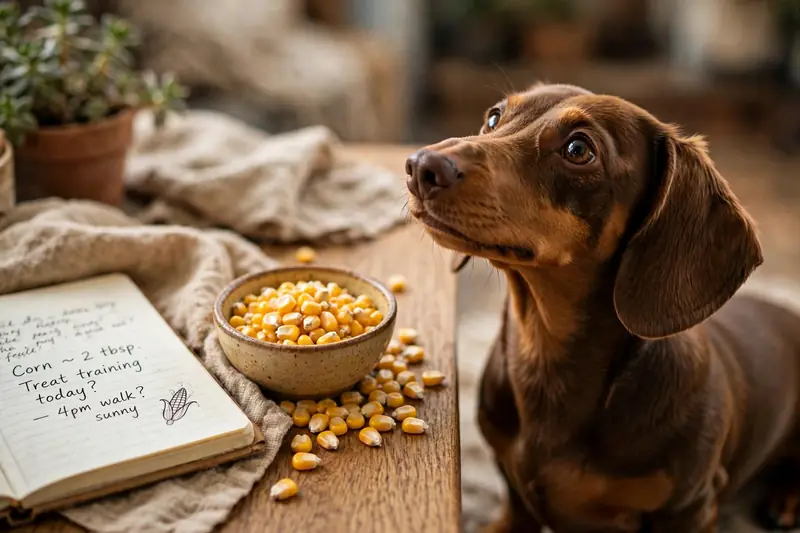
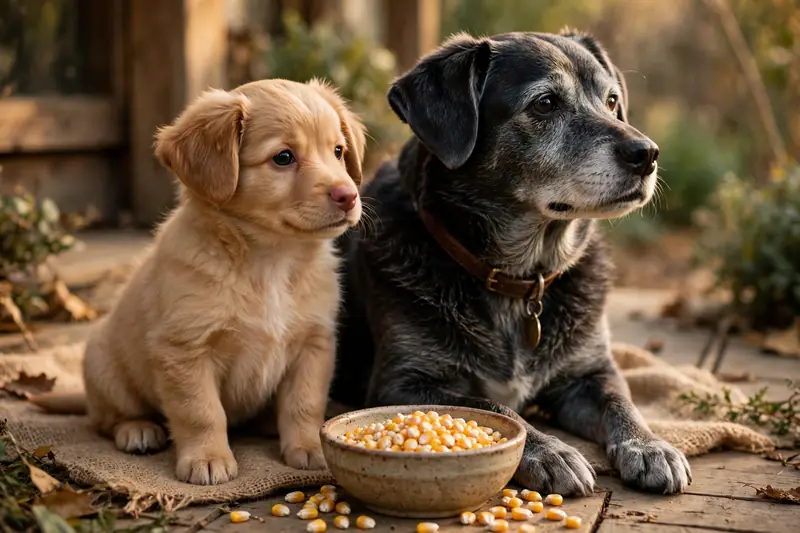
Puppies should never get corn on the cob, and the emphasis is stronger for them because puppies chew everything and swallow first. Plain kernels in tiny amounts are fine once a puppy eats solid food well, chopped small for tiny mouths. New foods arrive one at a time so the owner can trace any upset.
Senior dogs handle plain kernels well, and a few soft kernels can tempt a picky older eater. The cautions are dental and digestive.
Older teeth crack on hard foods, though kernels are soft enough to be safe. Older stomachs prefer routine, so keep the portion small and the schedule occasional. A senior with chronic digestive disease gets new foods only on the vet’s word.
The standing rule covers both ends of life. For puppies under eight weeks, nursing dogs, or any dog with a diagnosed condition, new foods wait for the vet’s approval. Corn is gentle as treats go, but gentle is relative.
The corn already in your dog’s food

Many complete dog foods list corn among their ingredients, and owners sometimes panic when they spot it. The panic is misplaced. Food-grade corn in kibble is ground and cooked, then formulated by nutritionists as a digestible carbohydrate source. It is not the same as a cob, and it carries none of the cob’s mechanical risk.
The grain-free trend taught a generation of owners to read corn as filler. Veterinary nutritionists push back: for dogs without a diagnosed grain allergy, corn is a legitimate energy source, and grain-free diets have their own documented concerns. The popcorn guide covers the other corn snack dogs beg for, with its own hull and seasoning rules.
Judge the ingredient list and the cob as separate questions. One is a nutrition debate for the vet. The other is an emergency waiting for a trash can lid.
Frequently asked questions about dogs and corn on the cob
Owners usually ask about stolen cobs, husks, and popcorn, plus canned corn. The answers below cover the questions that come up most often.
My dog ate a small piece of cob. Is that an emergency?
Treat it as one. Even a small piece can lodge in the intestines, and there is no safe size threshold. Call your vet now and describe exactly what happened rather than waiting for symptoms.
Can dogs eat corn husks?
Skip the husks. They are tough, fibrous, and indigestible, and they cause the same choking and blockage injuries as the cob. Keep husks out of reach and out of the trash.
Can dogs eat popcorn instead?
Plain air-popped popcorn in small amounts is a safer corn snack, with no cob involved. Skip butter, salt, and flavorings, and keep unpopped kernels away from the dog. The details live in the popcorn guide linked above.
Can dogs eat canned corn?
Plain canned corn with no added salt is acceptable in small amounts, though fresh or frozen kernels are better. Drain and rinse canned corn to cut the sodium, and check the label for added ingredients.
Can dogs eat corn every day?
Daily corn is too much of a starchy extra. A few times a week at most keeps the treat budget intact and the diet balanced. Dogs do not need dietary variety the way people imagine.
Will one corn kernel hurt my dog?
One plain kernel will not hurt a healthy dog. The danger was never the kernel. Keep the portion sensible and the cob in the bin, and corn stays a safe occasional treat.
Corn on the cob earns the clearest no in the vegetable drawer. The kernels are a fine occasional treat: plain, cooked, cut off the cob, and served in small amounts. The cob goes straight into a closed bin, every time, no exceptions for “just chewing.” Owners who share table foods often should keep the human foods dogs can eat list handy, and a bland diet for a day or two settles the mild stomach upset that too many kernels can cause.
Disclaimer: This article is general information, not veterinary advice; call your vet immediately if your dog swallows any part of a corn cob.


