Can dogs eat kale? Oxalates, thyroid and safe portions
Kale has a health-food reputation, and plenty of owners wonder if their dog should share the trend. The answer is yes, in small amounts, with two real cautions. Kale is not toxic to dogs, and it brings vitamins A, C, and K plus calcium and iron. But it is high in oxalates, which matters for stone-prone dogs, and very large amounts can affect the thyroid. A little steamed kale now and then suits a healthy dog. Kale chips and seasoned kale do not belong in the bowl.

Can dogs eat kale? The short answer
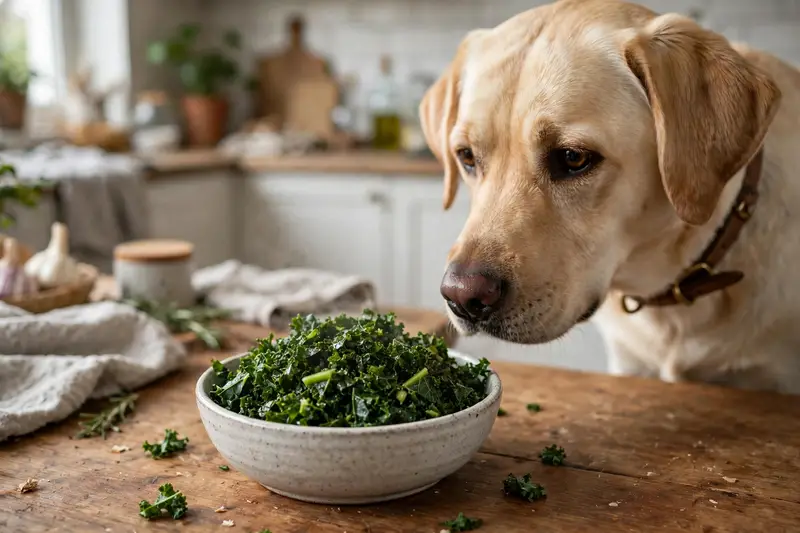
Yes, dogs can eat kale in moderation. The leaves are safe and carry vitamins A, C, and K, calcium, iron, and antioxidants. Serve it cooked and chopped, in small portions, as an occasional extra. Skip kale chips, seasoned kale, and large daily servings. Dogs with a history of bladder stones or kidney disease should avoid kale because of its oxalate content.
The AKC’s take on kale for dogs is a cautious yes: nutritious in small amounts, with a warning about oxalates for at-risk dogs. Kale is not a required food. A complete dog food already covers your dog’s nutrition. What kale offers is a vitamin-dense leafy extra for healthy dogs, as long as portions stay small and the cooking stays plain.
What kale offers nutritionally
Kale brings vitamin A for vision and immune health, vitamin C, vitamin K for blood clotting, calcium, iron, and plant antioxidants. A cup of chopped raw kale holds around 35 calories, which makes it a light addition by weight.
Vitamin A is the standout for dogs. They cannot make it themselves and need it from diet, and kale is one of the richer vegetable sources. The calcium and iron add up in a useful way too, though treat-size servings keep the actual amounts modest. The fiber supports healthy digestion, as it does with most leafy greens.
The honest caveat is bioavailability. Dogs digest plant matter less efficiently than people do, and tough raw kale gives up less of its nutrition than cooked. Light steaming breaks down the cell walls and makes the vitamins easier to absorb. Raw kale is not dangerous, but cooked kale is the version that actually delivers.

Oxalates: the kidney and bladder stone warning
Kale is high in oxalates, the same compounds that make beets and spinach a concern for stone-prone dogs. Oxalates can bind with calcium and form crystals, raising the risk of calcium oxalate bladder stones in susceptible dogs.
Healthy dogs handle dietary oxalates without trouble. The warning is specific: dogs with a history of bladder stones, especially the calcium oxalate type, and dogs managing kidney disease usually do best on low-oxalate diets, and kale does not fit. Spinach sits in the same category, so a dog already avoiding spinach for oxalates should skip kale too.
For a dog with no urinary history, a little kale will not cause stones. Stones build over time from diet, genetics, and urine chemistry together, not from one snack. But if your vet has ever mentioned crystals in the urine or prescribed a urinary diet, ask before offering kale. That conversation decides it.

Goitrogens and the thyroid question
Kale contains goitrogens, natural compounds that can interfere with thyroid function when eaten in very large amounts. This is the second caution, and it matters far less than the oxalate one for most dogs.
The dose makes the poison here. Thyroid effects show up in animals eating huge quantities of raw cruciferous vegetables, far beyond a treat-size serving of kale. A few bites will not touch your dog’s thyroid. Cooking reduces goitrogens further, which is another point for serving kale steamed rather than raw.
Dogs already on thyroid medication deserve a quick vet check before kale becomes a regular extra. The interaction risk at treat portions is tiny, but thyroid dosing is precise work, and your vet should know about any regular addition to the diet. For healthy dogs eating kale occasionally, the thyroid question is background noise, not a warning.

Raw vs cooked kale
Cooked kale wins on every count. A quick steam softens the tough leaves, makes the nutrients easier to absorb, reduces goitrogens, and removes the choking risk of big raw leaves. Two to three minutes of steaming is enough. No oil, no salt, no seasoning.
Raw kale is not toxic, but it is hard to digest and easy to gulp in large pieces. Finely chopped raw kale in tiny amounts is the only raw form worth considering, and even then it can cause gas and stomach upset in sensitive dogs. The stems are the toughest part. Remove the thick central ribs and chop the leaves fine, whether you serve it raw or cooked.
Massaged kale salads, the human preparation with oil and lemon, are not dog food. The oil adds unneeded calories and the lemon adds acidity a dog’s stomach does not want. Plain steamed kale, chopped small, is the whole recipe.

How much kale is safe
Keep kale small and occasional: a tablespoon or two of chopped cooked kale, once or twice a week, inside the 10 percent treat rule. A small dog gets a teaspoon. A medium dog gets a tablespoon. A large dog can handle two tablespoons.
The 10 percent rule protects the balance in your dog’s food. Kale brings vitamins without the protein and fat a dog runs on, so every kale bite replaces a bite of complete nutrition. Small amounts keep that trade harmless. Large amounts also raise the oxalate and goitrogen load, which is the second reason portions stay modest.
| Dog size | Safe amount (cooked, chopped) | Frequency |
|---|---|---|
| Small (under 20 lbs) | One teaspoon | Once a week |
| Medium (20 to 50 lbs) | One tablespoon | Once or twice a week |
| Large (over 50 lbs) | Two tablespoons | Once or twice a week |
Start below the chart the first time. A teaspoon for any dog, then a day of watching. Kale is fibrous, and a sensitive stomach can answer a new leafy food with gas or loose stool. Your dog’s reaction sets the real limit.

Kale vs spinach, broccoli, and green beans
Spinach is kale’s closest cousin for dog feeding. Both are nutritious leafy greens, both are high in oxalates, and both suit only healthy dogs in small portions. If your dog already eats spinach safely, kale follows the same rules.
Broccoli is the milder cruciferous option. It shares the goitrogen family but is easier on digestion and lower in oxalates, which makes it the safer pick for dogs that find kale too rich. Green beans are milder still: low calorie, gentle on stomachs, and safe for nearly every dog.
For a simple ranking: green beans for everyday treating, broccoli for variety, spinach and kale as occasional extras for healthy dogs only. A dog with any urinary or kidney history sticks to the mild end of the list.

Seasoned kale, kale chips, and kale smoothies
Kale chips are the version to keep away from dogs. Store-bought chips run high in salt, and many are seasoned with onion or garlic powder, both toxic to dogs. Homemade chips with just oil and salt are still too salty for a dog’s treat.
Seasoned sauteed kale from your plate carries the same problems: garlic, onion, salt, butter, and spices. A dog begging at the table should not get your kale side dish. The ASPCA’s list of people foods to avoid names onion and garlic among the items that never belong in a dog’s bowl.
Green smoothies with kale are a maybe, depending on the blender. A smoothie of plain kale and dog-safe fruit is fine in small amounts. Most human smoothies add ingredients dogs should not have: xylitol sweeteners, chocolate protein powder, macadamia milk, or citrus in quantity. When the recipe is yours and plain, a spoonful is fine. When it came from a shop, skip it.

Can puppies and senior dogs eat kale
Puppies can eat kale in tiny amounts once they are on solid food. Use soft, well-steamed pieces chopped very fine, and introduce them like any new food: a small taste, then a day of watching. A puppy’s gut is still settling, and fibrous greens can cause gas in young stomachs.
Senior dogs handle kale the same as adults, with the usual age caveat. Older dogs are more likely to carry kidney disease or a history of bladder stones, and either condition takes kale off the menu. A senior with clean bloodwork gets the same small portions as an adult. A senior on a prescription urinary or kidney diet gets no kale unless the vet signs off.
For both ages, preparation does the heavy lifting. Steamed soft, chopped fine, stems removed. Puppies swallow without chewing more than adults, which makes small pieces a safety issue.

When to call the vet
Most kale incidents need nothing more than watching. Call your vet if your dog shows repeated vomiting or diarrhea, refuses food for more than a day, strains to urinate, or seems to be in belly pain after eating a large amount of kale or seasoned kale products.
The seasoned-kale scenario is the one to take seriously. If your dog raids kale chips seasoned with onion or garlic powder, note how much was eaten and call your vet or poison control. Onion and garlic toxicity builds over hours, so early advice matters more than waiting for symptoms. The Merck Veterinary Manual covers food hazards including allium toxicity for owners who want the details.
For plain-kale overeating, a day of bland food and rest usually settles the stomach. Urinary symptoms never get the wait-and-see treatment. When in doubt, the call costs nothing and buys certainty.

Frequently asked questions about dogs and kale
Owners usually ask about kale chips, raw kale, and the thyroid worry. The answers below cover the questions that come up most.
Can dogs eat kale chips?
No. Store-bought kale chips are too salty and often seasoned with onion or garlic powder. Even plain homemade chips carry too much salt for a dog. Offer plain steamed kale instead.
Can dogs eat raw kale?
A tiny amount will not harm a healthy dog, but cooked is better in every way. Steaming softens the leaves, improves nutrient absorption, and reduces goitrogens. Raw kale in quantity causes gas and stomach upset.
Can dogs eat kale stems?
The thick stems are too tough and fibrous. Remove the central ribs and chop the leaves fine. Stems are a choking hazard for gulpers and offer nothing the leaves do not.
Is kale bad for a dog’s thyroid?
Not at treat portions. Goitrogens affect the thyroid only in very large amounts, far beyond a tablespoon or two of kale. Cooking reduces them further. Dogs on thyroid medication should check with their vet before kale becomes regular.
How often can dogs eat kale?
Once or twice a week in small portions is plenty. Kale works as an occasional extra, not a daily vegetable. Daily feeding raises the oxalate load for no added benefit.
Can dogs with kidney disease eat kale?
Usually not without vet approval. The oxalate load and mineral content both matter for kidney patients, and most kidney diets are carefully balanced. Ask your vet before offering kale to a dog with any kidney diagnosis.
Can kale cause allergies in dogs?
True kale allergy is rare, but any new food can disagree with an individual dog. Watch for itchy skin, paw chewing, or ear redness after introducing kale. The VCA’s guide to food allergies in dogs explains how vets confirm a food allergy with elimination trials. Stop feeding kale and call your vet if you see these signs.
Kale is a fine occasional extra for healthy dogs: vitamin-rich, low calorie, and safe in small steamed portions. The two cautions are the whole story. Oxalates keep kale away from stone-prone and kidney-compromised dogs, and the thyroid question only matters at quantities no treat portion reaches. Serve it plain, keep it small, and leave the kale chips for the humans.
*Disclaimer: This article is for general information only and is not veterinary advice. Every dog is different, and dogs with urinary, kidney, or thyroid conditions may need different guidance. If you are unsure, or if your dog shows symptoms after eating kale, contact your veterinarian.*