Solanine poisoning is the danger dog owners ask about with potatoes, and here is the odd part: the compound never appears in sweet potatoes. That fear belongs to white potatoes, and it has been borrowed by the wrong vegetable. Sweet potato skins carry no toxin for dogs, though raw skins are tough enough to choke on, so cooked skin in tiny amounts or peeling is the way to go. The skin question turns out to be about texture and cleanliness, not poison.

Sweet potato lands in dog bowls often. It is the orange behind many “wholesome” kibbles, the vet’s suggestion for mild stomach trouble, and the Thanksgiving leftover dogs beg for. The skin usually goes in the trash without a second thought. Whether it should is a better question than it looks, because the skin holds the densest fiber on the whole vegetable, even if getting it into a dog safely takes more work than most owners expect.
Can dogs eat sweet potato skins? The short answer

Dogs can eat sweet potato skins in small amounts when the skins are washed well, cooked until completely soft, and chopped tiny. Raw skins should never be served. Peeling remains the simplest and safest default, especially for puppies, small dogs, or dogs with sensitive stomachs.
PetMD’s sweet potato guide advises washing and peeling sweet potatoes before serving, noting that the skin, while free of toxins, can be difficult to digest and may increase choking risk. That is the mainstream veterinary position: not forbidden, but not recommended either. Cooked skin in moderation sits in the gray zone between those poles. The published sweet potatoes guide covers the flesh in detail; this article takes on the skin specifically.
What sweet potato skins offer nutritionally

The skin holds a concentrated share of the sweet potato’s fiber, along with antioxidants and small amounts of vitamins. Fiber is the main prize. It supports steady digestion and helps stool hold its form, and it arrives in the skin in a denser package than in the flesh.
The complication is dose. The same fiber that helps in small amounts causes gas, bloating, or loose stool when it arrives suddenly in a large amount. A dog that has never eaten skins and gets a whole baked skin will likely spend the evening gassy. The fiber for dogs that does real digestive work comes in gradual, modest servings, not in single large doses.
Vitamin A deserves a level-headed note. Sweet potato flesh and skin are rich in beta-carotene, which the body converts to vitamin A. Owners sometimes worry about vitamin A toxicity from skins, but that danger belongs to extreme overfeeding, whole sweet potatoes daily for extended periods, not to an occasional spoonful of skin. Normal treat-size servings stay far below any concern.
Raw vs cooked skins: the texture problem

Raw sweet potato skin is the problem. It is a sheet of tough cellulose fiber that a dog’s short digestive tract cannot break down efficiently. Chewed poorly, it becomes a choking hazard, and swallowed in pieces it can irritate the gut.
Dogs that gulp face the highest risk, since long stringy pieces slide down whole.
Cooking transforms it. Boiling or steaming for 15 to 20 minutes, until the skin yields easily to a fork, breaks down the rigid fiber structure. Baked skins soften too, though boiling gives the most even result. The test is simple: a fork should slide through with zero resistance, and anything less means more cooking time.
This is the step most skin-avoidance advice skips: the danger is mechanical, not chemical, and cooking solves the mechanical problem the way it does for every tough vegetable. Raw is the hazard. Cooked and chopped is a fiber source.
The green potato warning: sweet potatoes are not white potatoes

White potatoes and sweet potatoes share a name and a produce aisle, and almost nothing else. Raw white potatoes, especially green ones, contain solanine, a compound that is toxic to dogs, while sweet potatoes contain none. The Pet Poison Helpline makes this distinction explicitly, because owners routinely borrow the white potato fear and apply it to the sweet potato.
The practical upshot: a green-tinged white potato deserves real caution and a call to the vet if the dog eats a meaningful amount. A sweet potato of any color deserves only the normal preparation rules. The published potatoes guide covers white potatoes and their green parts in detail. Confusing the two leads owners to panic about the safe vegetable while underestimating the risky one.
Grocery store “yams” add to the confusion. In American stores, the orange things labeled yams are sweet potatoes, not true yams, and they follow sweet potato rules. True yams are a different species with their own concerns, but most owners will never meet one. When in doubt, the orange flesh and the “sweet potato” label on the bin are the identifiers that count.
Pesticides and washing: scrub before you serve

Sweet potatoes grow underground, and the skin is the part that touched the soil. That means dirt, bacteria, plus pesticide residues concentrate exactly where the dog would eat. A quick rinse under the tap does not cut it, so a real scrub is required.
Scrub each sweet potato under running water for at least 30 seconds with a stiff vegetable brush, getting into every crease and eye. A stiff-bristled brush reaches where a sponge just slides over the surface, and those creases are exactly where soil hides. This is non-negotiable if the skin will be served. Peeling after washing is the belt-and-suspenders option: wash first, then peel, so the knife does not drag surface contaminants into the flesh.
Organic versus conventional matters less than the washing itself. Organic skins still carry soil bacteria, and conventional skins still carry residues after a good scrub. Buyers who want extra margin can choose organic, but no label replaces the brush. The ASPCA’s people foods to avoid is worth a skim for the broader list of kitchen hazards while the vegetables are being prepped.
How to prepare sweet potato skins for your dog
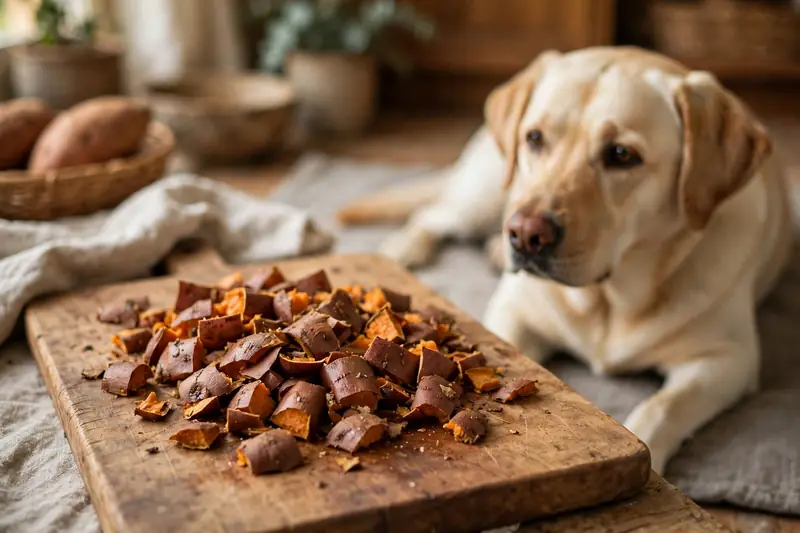
Wash and scrub the sweet potato, cook it whole or halved until completely soft, then chop the skin into tiny pieces. Serve plain, with no butter, salt, sugar, marshmallow, or spices. The Thanksgiving casserole version, with all its toppings, never goes in the dog’s bowl.
Boiling is the most reliable method: 15 to 20 minutes in plain water until fork-tender all the way through. Baking at 400 degrees Fahrenheit for 45 to 60 minutes works too, pierced with a fork first. Microwaving cooks unevenly and can leave hard spots, so it is the weakest option for skins specifically. Whatever the method, the skin should be soft enough to mash between your fingers.
Start with half a teaspoon of chopped skin mixed into the regular meal, then watch the stool for 24 hours before repeating. That tiny test portion reveals sensitive stomachs without causing a real incident. Increase gradually only if the dog handles it well, and keep the pieces pea-size or smaller for small dogs and gulpers.
How much skin is safe to feed

Keep sweet potato skin within the 10 percent treat budget that the VCA’s feeding guidelines set for all extras. In practice that means tiny amounts, a couple of times a week at most. Skin is a sometimes fiber boost, not a dietary staple.
| Dog size | Safe amount of cooked skin | Frequency |
|---|---|---|
| Small (under 20 lbs) | Half teaspoon, chopped | Once or twice a week |
| Medium (20 to 50 lbs) | One teaspoon, chopped | Once or twice a week |
| Large (over 50 lbs) | One tablespoon, chopped | Once or twice a week |
Dogs prone to gas or loose stool should stay at the low end or skip skins entirely and eat peeled flesh instead. The AKC’s upset stomach guide lists plain cooked pumpkin and sweet potato among the foods that may soothe mild digestive discomfort, and the flesh is the gentler vehicle for that job. Repeated digestive upset after skins points to gastroenteritis or simple intolerance, and either deserves a vet’s input.
Puppies and senior dogs

Puppies should skip sweet potato skins. Their digestive systems are still developing, and tough fiber is a poor early experiment. Peeled, cooked sweet potato flesh in tiny amounts is the puppy-appropriate version, introduced one food at a time once the puppy eats solid food well.
Senior dogs can handle small amounts of cooked skin if their digestion is sound, and the soft texture suits older mouths. The cautions grow with age and illness. A senior with kidney disease, chronic stomach trouble, or a history of pancreatitis gets skins only on the vet’s word, if at all. Older dogs also tend toward routine, so a new fiber source should arrive gradually and at the same modest portion each time.
The standing rule holds at both ends of life. For puppies under eight weeks, nursing dogs, or any dog with a diagnosed condition, new foods wait for the vet’s approval. Sweet potato is gentle as vegetables go, but the skin is its toughest part, and tough is relative to the stomach in question.
When to call the vet

Call your vet if your dog eats raw skins in quantity, vomits repeatedly, strains without producing stool, or shows a swollen or painful belly. Those signs point toward a blockage, which never improves with waiting. A dog that eats a large amount of white potato, especially green parts, needs a prompt call for the solanine risk.
A small taste of cooked skin needs no action beyond normal watching. Mild gas after a first serving usually passes on its own. A bland diet for a day or two settles most minor upsets. Blood in vomit or stool, repeated retching, or extreme tiredness means the emergency clinic rather than the regular appointment line.
Prevention is mostly habit. Peel by default, wash when serving skins, cook until completely soft, and keep portions tiny. The vet’s number and the nearest emergency clinic belong on the fridge before they are needed. Owners who share table foods often should keep the human foods dogs can eat list handy as a quick reference.
Frequently asked questions about dogs and sweet potato skins

Owners usually ask about raw skins, toxicity, and baking, plus peeling and daily feeding. The answers below cover the questions that come up most often.
Can dogs eat raw sweet potato skin?
Skip raw skins entirely. Raw skins are tough and fibrous, hard to digest, and they pose a choking and blockage risk. Always cook skins until completely soft, or peel the sweet potato and serve only the flesh.
Are sweet potato skins toxic to dogs?
No, the skins contain no toxin. Sweet potatoes do not produce solanine the way green white potatoes do. The risks are choking and digestive upset, plus pesticide residue, all of which proper preparation addresses.
Can dogs eat baked sweet potato skin?
Yes, if the skin is baked until completely soft and served in a tiny amount. Boiling gives a more even softness, but a fully baked skin, chopped small, is acceptable. Skip skins with butter, salt, or toppings.
Should I peel sweet potatoes for my dog?
Peeling is the simplest safe default and the right choice for puppies, small dogs, or sensitive stomachs. Serving washed, cooked skin in tiny amounts is acceptable for healthy adult dogs that handle it well.
Can dogs eat sweet potato skin every day?
Daily skin is too much fiber as a habit and risks chronic loose stool. Once or twice a week at most keeps the treat budget intact. Dogs that get sweet potato regularly should get the peeled flesh, not the skin.
My dog ate raw sweet potato peels. What should I do?
Watch for gagging first, since choking is the immediate risk. If the peels went down without trouble, keep an eye on stool and appetite for a day or two. Call your vet if vomiting repeats, the belly swells, or your dog strains without producing stool.
Sweet potato skins earn a conditional yes. Wash them well, cook them until completely soft, chop them tiny, and keep the portion small, and a healthy adult dog will handle them fine.
Peeling stays the simpler default, and it is the right call for puppies, small dogs, or sensitive stomachs. The skin holds no poison. It is simply the toughest part of a gentle vegetable, and tough parts demand respect.
Disclaimer: This article is general information, not veterinary advice; call your vet if your dog has a health condition or shows symptoms after eating sweet potato skins.