Freeze dried dog food is raw or cooked food with the water removed, so it stores without a fridge, but freeze drying does not kill germs, and raw versions need the same careful handling as raw meat. The format has grown fast, because it feels like a middle ground between kibble and raw: real meat, no fridge, long shelf life. The catch sits in that middle ground too. The food is light and dry, yet the bacteria in the raw meat survive the process in a dormant state and wake up when water returns. This article covers what freeze drying does, what it does not do, and how to feed it safely.

What is freeze dried dog food?
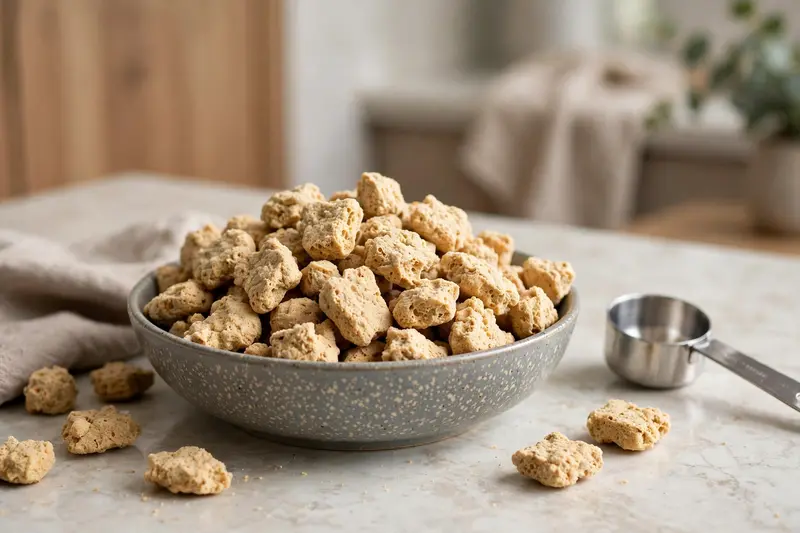
Freeze dried dog food is dog food that makers freeze, then place under vacuum so the ice turns straight into vapor, leaving dry, light pieces behind. It comes as nuggets, patties, or crumbles, and makers design most versions for rehydration with warm water before serving.
Some owners feed it dry as a topper or treat. The ingredient list usually leads with meat, organs, and bone, sometimes with vegetables and fruit, and sometimes with nothing else at all.
Most freeze dried foods on the market are raw, which means the meat was never cooked. Makers gently cook a smaller group before drying, and those products behave differently from a safety point of view. The bag should say which one it is, and the AAFCO statement should say whether it is complete and balanced for a life stage. If the bag carries no AAFCO statement, treat it as a topper or treat, not as a full diet. The FDA facts page on raw pet food diets groups freeze dried raw food with raw diets, and that grouping shapes every handling rule below.
How freeze drying works
Freeze drying, also called lyophilization, works in three steps. First the food is frozen solid. Then a vacuum pulls the pressure down until the ice sublimates, which means it turns from solid to gas without ever becoming liquid. Then the last traces of moisture are drawn out, leaving a dry product that weighs a fraction of the original.
Because makers use no high heat, the shape, color, and smell of the meat stay close to fresh, and dogs often find it very appealing.
The key point for owners is what the process does not do. Removing water stops bacteria from growing while the food stays dry, but it does not kill them. The bacteria sit dormant in the dry pieces, and they become active again the moment water returns, whether that water comes from rehydration, saliva, or a damp bowl. Heat kills bacteria. Cold and dryness only pause them. Any brand that suggests freeze drying alone makes raw meat safe is selling a misunderstanding of its own process.

Freeze dried vs kibble vs raw: how they compare
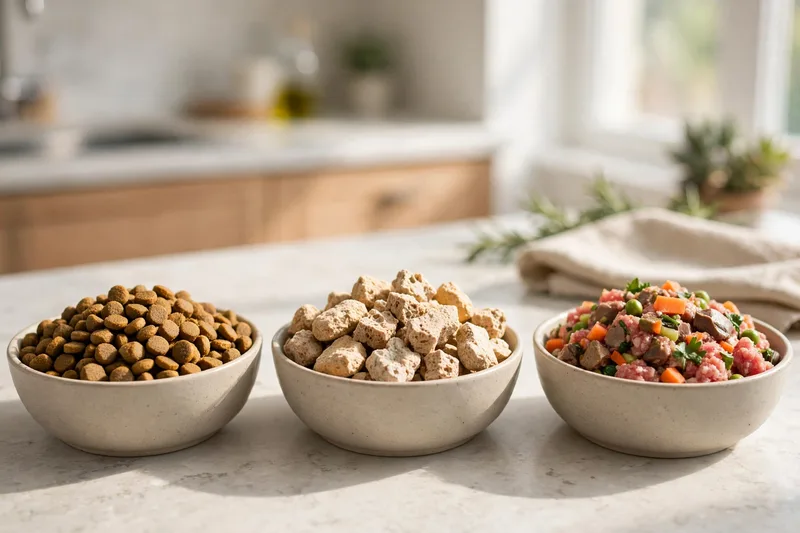
High heat during extrusion cooks kibble and kills most pathogens, and it stores dry for months with little handling care. Raw food is uncooked, needs freezer space, and carries the highest pathogen risk of the three. Freeze dried raw sits between them on convenience and beside raw on risk: it stores like kibble and handles like raw.
Freeze dried cooked food sits closer to kibble on safety, because the cooking step did the killing before drying.
Nutrition varies more by brand than by format. A freeze dried food can be complete and balanced, or a maker can sell a single protein with no added vitamins for supplemental feeding only. Kibble is almost always complete and balanced. Raw diets often are not, unless a vet nutritionist balanced them. Price follows the same pattern: freeze dried food usually costs more per pound than kibble, because drying removes water weight and the meat content runs high. Judge each bag on its AAFCO statement and its kill step, not on its format alone.
The benefits owners notice
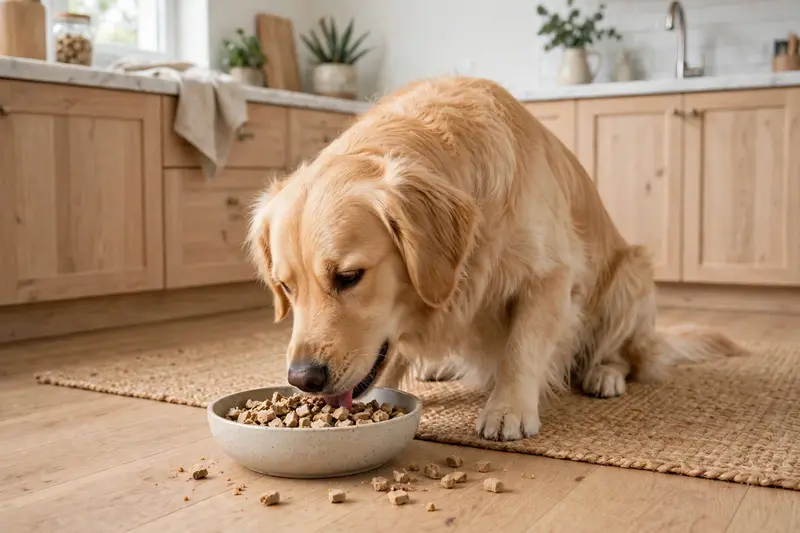
Owners switch to freeze dried food for three reasons, and all three are real. Palatability comes first: the meat smells and tastes close to fresh, and picky dogs that ignore kibble often eat freeze dried food with enthusiasm. The smell alone wins over many picky dogs.
Storage comes second: a sealed bag needs no fridge or freezer, travels well, and keeps for months, which suits road trips, camping, and small kitchens. Portion control comes third: the pieces are easy to measure, and the food works as a full meal, a topper, or a high value training treat.
There is a fourth benefit that marketing leans on and owners should weigh carefully: minimal processing. The ingredient list is often short and readable, with named meats and few additives. Short lists are good, but they are not proof of safety or balance. A short list can still hide a missing vitamin or a pathogen risk. The benefits are genuine, and they are the reason the format keeps growing. They are not a reason to skip the safety rules that follow.
The Salmonella question, answered straight
Freeze drying does not reliably kill Salmonella, E. coli, or Listeria. The CDC states it plainly: freeze drying, dehydrating, or freezing raw protein only reduces the amount of germs, and these processes do not kill all germs that might be on the food.
The FDA adds that raw pet food poses significant health risks to pets and owners, and that in its two year pet food study, raw pet food was more likely to be contaminated with disease causing bacteria than other types of pet food in the study.
Dogs often carry Salmonella without looking sick, which makes the risk easy to miss. A healthy adult dog can shed the bacteria in its stool for weeks after eating contaminated food, exposing children, elderly people, and anyone with a weak immune system in the house. Salmonella in dog food covers the signs in dogs, which include vomiting, diarrhea that is often bloody, fever, and lethargy, and the raw meat guide explains why raw feeding carries the same risks. Some makers add a separate kill step such as high pressure processing or irradiation, which lowers risk, but handle the food like raw meat all the same.
Safe handling at home
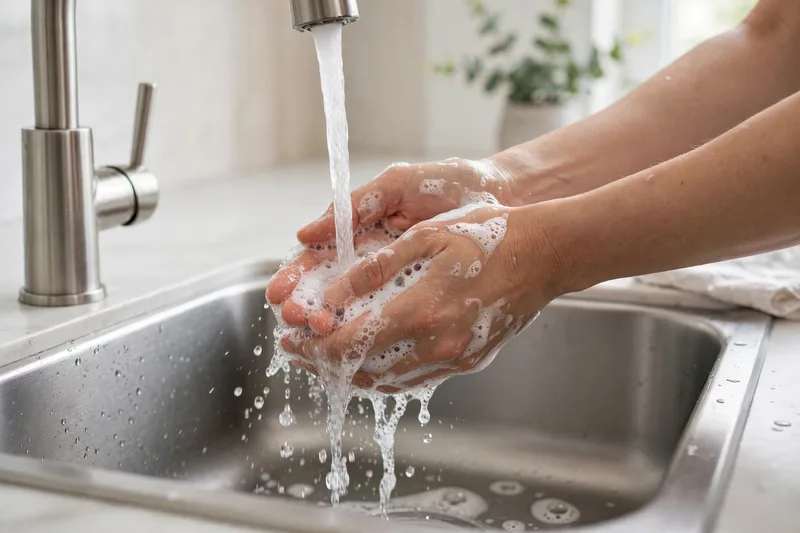
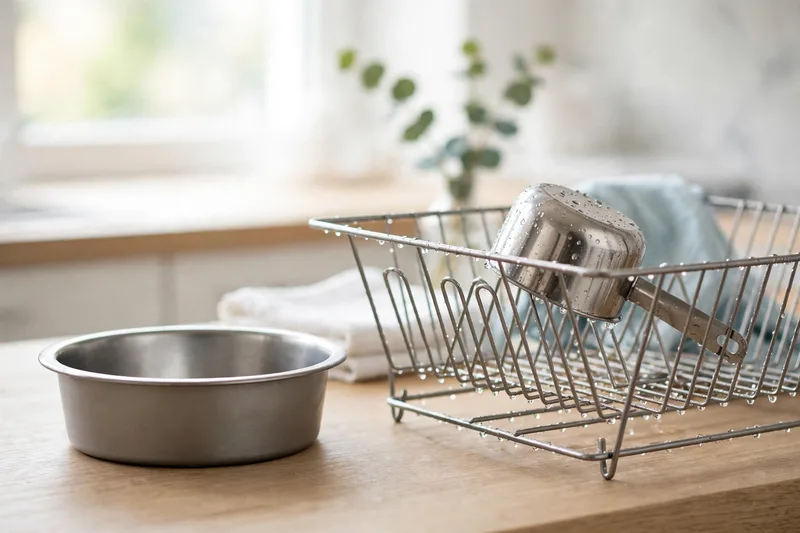
Treat freeze dried raw food like raw meat, because that is what it is. Wash your hands with soap and warm water for at least 20 seconds after handling it, and before and after preparing it. Wash the bowl, scoop, and any surface the food touched with hot soapy water.
Do not let the dog lick faces right after eating, and keep small children away from the bowl while the dog eats.
Storage rules are simple. Keep the dry product sealed, airtight, and away from moisture and heat, because humidity lets dormant bacteria wake up and grow. Once you add water, the food becomes perishable, so serve it within the hour and throw away what the dog leaves. Do not rehydrate a batch in the morning and serve it at night. The FDA tips for safe handling of pet food and treats cover the same steps for every raw product, and they are worth reading once and following every day.
Who should skip freeze dried raw food
Some households should skip freeze dried raw food entirely, or use only the cooked versions. Homes with children under five, pregnant people, elderly people, or anyone with a weak immune system face higher risk from Salmonella and Listeria, because those groups get sicker from smaller exposures.
The same caution applies to the dogs themselves: puppies, seniors, and dogs with weak immune systems or chronic illness handle foodborne germs worse than healthy adults.
Vets and the CDC do not recommend feeding raw pet food, including freeze dried raw, to dogs or cats. If someone in the house falls into a high risk group, the safest choice is a cooked complete diet, whether kibble, canned, or a cooked freeze dried product. If you still want the freeze dried format, pick a cooked version with a clear AAFCO statement and a named kill step, and ask your vet first. The convenience is not worth a hospital visit, for the dog or for a person in the house.

How to read the label
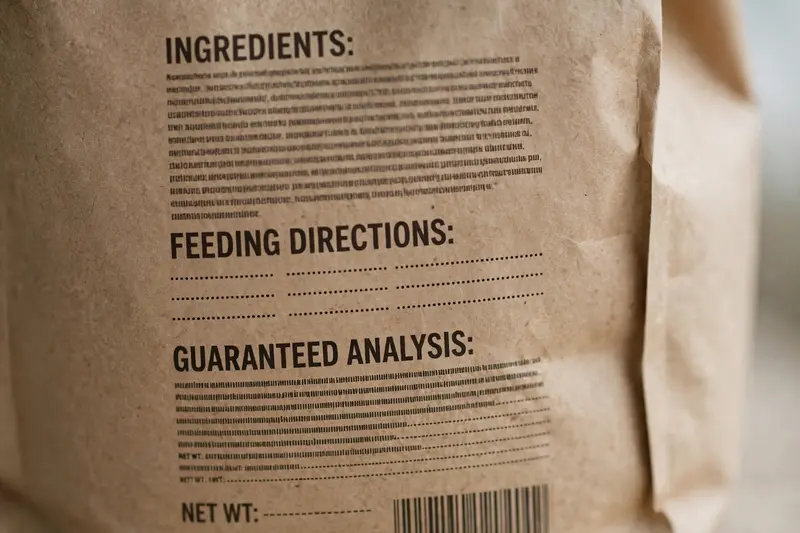
Start with the AAFCO statement. It should say the food is formulated to meet AAFCO nutrient profiles for a life stage, or that feeding tests substantiate complete and balanced nutrition for that life stage. If the food is for intermittent or supplemental feeding only, it is not a full diet, and feeding it as one will leave gaps.
The guaranteed analysis then tells you the minimum protein and fat and the maximum fiber and moisture, though moisture in a freeze dried food runs low by design.
Next, look for the kill step. Brands that run high pressure processing, irradiation, or a cooking step usually say so, because it costs money and they want credit for it. Brands that say nothing about pathogen control are usually freeze drying raw meat and shipping it. Check the ingredient list for named meats first, and check the best by date and the lot code. The VCA guide to raw food diets explains the carrier problem, where dogs shed bacteria without looking ill, and why that matters for the whole household.
How to switch a dog to freeze dried food
Switch slowly, over seven to ten days, the same way you would switch any food. Start with one quarter new food and three quarters old food for two or three days, then move to half and half, then three quarters new, then all new.
Watch the stool at each step. Soft stool or mild stomach upset means slow down and hold the current mix for a few extra days before moving on.
Rehydrate the food with warm water and let it sit five to ten minutes before serving, unless the bag says to serve it dry. Use about one part water to one part food as a starting point and adjust to the texture your dog likes. Serve the rehydrated food promptly and discard leftovers. For mild stomach upset during the switch, once the vet rules out anything serious, a bland diet for a day or two is the usual recovery path, and gastroenteritis is the term for the stomach upset owners are watching for.
Cost and storage realities
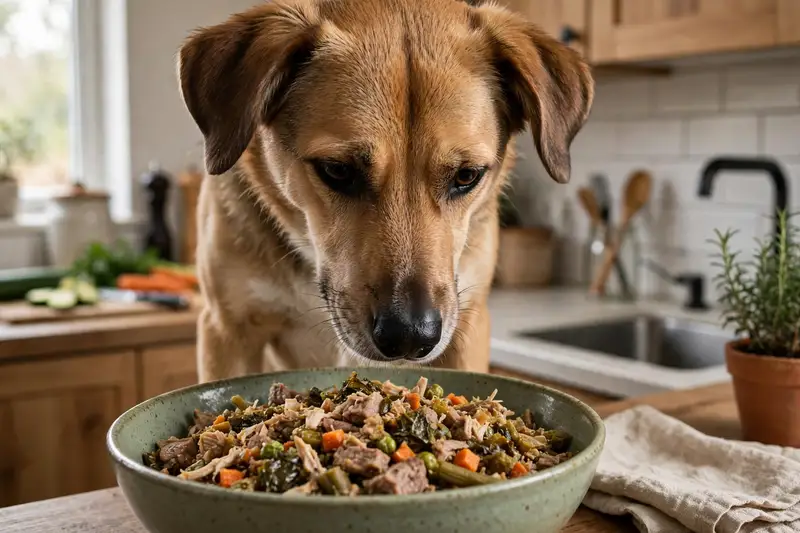
Freeze dried food costs more than kibble, often several times more per pound, because the drying process removes water and the meat content runs high. A bag that looks small can still feed a dog for weeks, because the food turns dense once you add water, so compare cost per day, not cost per bag.
Work out the daily feeding amount from the bag, divide the bag price by the days it lasts, and compare that number with the current food before you switch.
Storage is where the format earns its price. A sealed bag needs no fridge, survives a road trip, and keeps for months in a cool dry cupboard. Once opened, reseal it tightly and keep it dry, because moisture is the enemy of both safety and shelf life. The FDA recall page is worth a regular check, since raw and freeze dried products appear there more often than cooked foods, and a recall is lot specific far more often than brand wide. Dog food recalls and the Indiana dog food company recall show how lot codes decide whether a bag is affected.

Frequently asked questions about freeze dried dog food
Is freeze dried dog food raw?
Most of it is. Freeze drying removes water without cooking, so the meat stays raw unless the maker cooked it first. The bag should state whether the food is raw or cooked, and the CDC groups freeze dried raw food with raw diets.
Does freeze drying kill Salmonella?
No, not reliably. Freeze drying, dehydrating, and freezing only reduce germs. Some makers add a separate kill step such as high pressure processing or irradiation, which lowers risk, but the food should still be handled like raw meat.
Do I need to add water to freeze dried dog food?
Makers design most products for rehydration with warm water, about one part water to one part food, left for five to ten minutes. Some can be fed dry as a topper. Follow the bag, serve promptly, and discard leftovers.
Is freeze dried dog food good for puppies?
Only if the bag carries an AAFCO statement for growth or all life stages. Puppies need more protein and minerals than adults, and a supplemental only product will leave gaps. Ask the vet before switching a puppy.
How long does freeze dried dog food last?
Sealed and kept dry, it lasts for months, sometimes a year or more. Once opened, keep it airtight and dry. Once you add water, the food turns perishable, so serve it within about an hour.
Can I feed freeze dried food as a topper only?
Yes, and that is how many owners use it. A spoonful over kibble adds smell and taste without the full cost or the full handling burden. Keep the topper within the daily treat allowance, and wash your hands after handling it.
Freeze dried dog food is a good format with an honest risk attached. Dogs love it, it stores like a dream, and the ingredient lists are often short and clear. The risk is not hidden either: the drying step pauses bacteria instead of killing them, and raw versions carry the same Salmonella and Listeria risk as any raw meat. Cooked versions, a clear AAFCO statement, a named kill step, and careful handling close most of that gap. Pick the bag on those four points, wash your hands, serve rehydrated food promptly, and the format works well. Skip the handling rules, and the convenience is not worth the vet bill.
Disclaimer: This article is for information only and is not a substitute for veterinary advice. Raw pet food carries documented pathogen risks for pets and people. If anyone in your home is pregnant, under five, elderly, or immunocompromised, ask your vet before feeding any raw or freeze dried raw product.