Dogs can eat apples, bananas, blueberries, cantaloupe, mango, oranges, pears, raspberries, strawberries, and watermelon, served plain and in small portions. Fruit is a treat, never a meal, and it should stay inside the 10 percent rule for treats. Grapes, raisins, cherries, and avocado are toxic or unsafe, so they never belong in the bowl.

What fruits can dogs eat? The short answer
Dogs can eat apples, bananas, blueberries, cantaloupe, cranberries, mango, oranges, peaches, pears, pineapple, raspberries, strawberries, and watermelon. The American Kennel Club lists all of these as safe for dogs in moderation. Serve them plain, cut to a safe size, with seeds, pits, cores, and rinds removed.
Dogs are omnivores, so they have no real need for fruit in their diet. Fruit adds vitamins, fiber, and water, and most dogs love the taste, but a complete dog food already covers the nutrition. Think of fruit as a healthy snack. Never a meal replacement. A few pieces after a walk beat a bowl of fruit at dinner time, and the dog gets the fun without the sugar load.

Apples: the everyday safe fruit
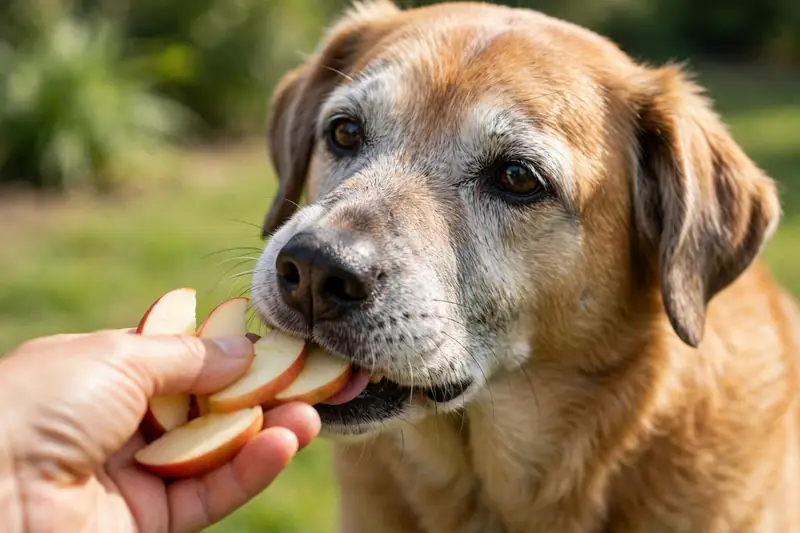
Apples are safe for dogs and one of the easiest fruits to share. They give vitamins A and C plus fiber, and they are low in protein and fat, which makes them a good snack for senior dogs. Remove the seeds and the core first, and cut the flesh into slices or chunks.
Apple seeds contain small amounts of cyanide compounds, and the core is a choking risk, so both go in the bin. A slice or two suits a small dog, and a few slices suit a large one. Try them frozen on a hot day for a crunchy cool treat. The full guide to apples for dogs covers portions by size and the seed question in detail.
Apples work well as training treats because they are firm, easy to hold, and most dogs like them. Wash the apple first, since orchard sprays sit on the skin. If your dog has never had apple, start with one small piece and watch for soft stool over the next day.

Bananas: sweet, so keep portions small
Bananas are safe for dogs in moderation, and they are a great low calorie treat. They carry potassium, vitamins, biotin, fiber, and copper, and they are low in cholesterol and sodium. Their sugar content is the catch, so bananas stay a treat and never become part of the main diet.
Half a banana is plenty for a large dog, and a few small slices suit a small dog. Peel the banana first, since the peel is hard to digest and can block a small dog’s gut. Mashed banana also works as a filler for a Kong or a lick mat, and frozen banana slices make a summer snack that lasts longer than a fresh piece.
Dogs with diabetes should get bananas rarely or not at all, because the sugar adds up fast. The bananas for dogs guide gives portion sizes by weight and the diabetes warning in full. If your dog is overweight, pick a lower sugar fruit like blueberries instead.

Blueberries: the small fruit with the biggest reputation
Blueberries are safe for dogs and rich in antioxidants, which protect cells from damage in dogs and people alike. They are packed with fiber and plant compounds, and their small size makes them a perfect training treat. Teaching a dog to catch treats in the air works well with blueberries.
A handful suits a large dog, and five or six berries suit a small one. Fresh or frozen both work, and frozen berries last longer on a hot day. Blueberries stain light fur and light floors, so feed them outside or over a bowl. The blueberries for dogs guide covers the antioxidant claims in detail and the portion limits by size.
Blueberries are one of the lowest sugar fruits on the safe list, which makes them a good pick for dogs that need to watch weight. They are also easy to portion, since one berry is one treat. Keep a bag in the freezer and you always have a healthy reward ready.

Cantaloupe, watermelon, and other melons
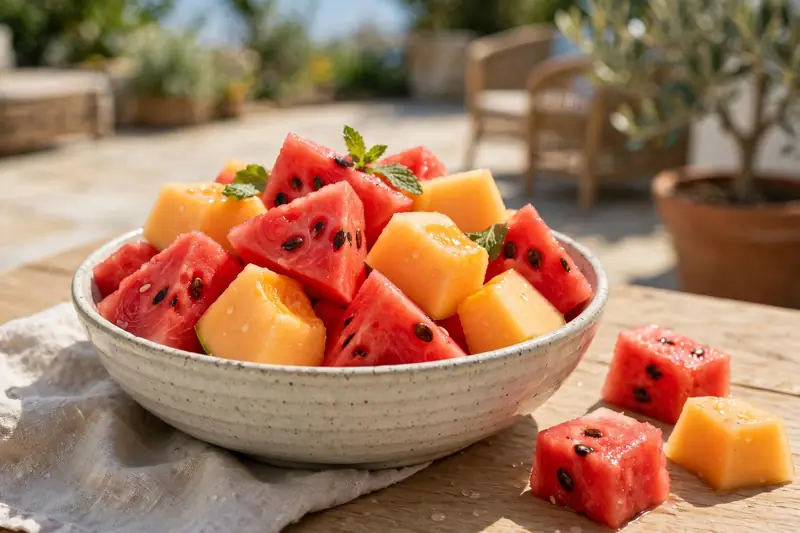
Cantaloupe is safe for dogs, packed with nutrients, low in calories, and a great source of water and fiber. It is high in sugar, so share it in moderation, especially with dogs that are overweight or diabetic. Remove the rind and seeds, and cut the flesh into bite size chunks.
Watermelon is the best summer fruit for dogs. It is mostly water, so it hydrates on hot days, and the flesh is gentle on stomachs. Remove the rind and all seeds, since seeds can block a small dog’s gut. A few chunks suit most dogs, and frozen watermelon cubes work as a cooling treat. The watermelon guide and the cantaloupe guide give the rind and seed rules in full.
Melons are easy to overfeed because they look light and harmless. A cup of melon still carries sugar, so count it inside the treat allowance. Serve melon after exercise on a hot day, when the water in it does the most good.

Mango, kiwi, and pears
Mango is safe for dogs once the pit and skin are removed. The flesh is sweet and rich in vitamins, but the pit is a choking risk and contains cyanide compounds, so it never goes to the dog. Cut the flesh away from the pit and serve a few chunks.
The mango guide covers the pit risk and portion sizes.
Kiwi is safe for dogs in small amounts. Peel it first, since the fuzzy skin can irritate the mouth and gut, and cut the flesh into small pieces. Kiwi is high in vitamin C and fiber, but it is also acidic, so dogs with sensitive stomachs may do better with a blander fruit. The kiwi guide has the serving rules.
Pears are safe for dogs, with the same rules as apples: remove the seeds and core, and serve the flesh in chunks. Pears are gentle on digestion and a good pick for dogs that find apples too acidic. The pears guide covers the seed warning and the best way to serve them.
Raspberries, strawberries, and cranberries
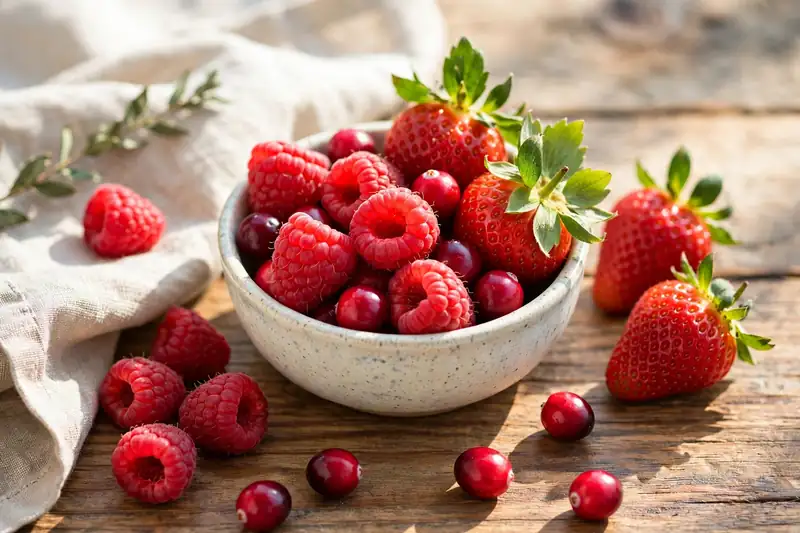
Raspberries are safe for dogs in small amounts. They are low in sugar and high in fiber, but they contain natural xylitol in tiny amounts, so portions stay small, under a cup for a large dog and far less for a small one. The raspberries guide explains the xylitol point and why a handful is the limit.
Strawberries are safe for dogs and easy to serve. Remove the green top, cut large berries in half for small dogs, and serve fresh or frozen. They carry vitamin C and an enzyme that may help whiten teeth, though that is a bonus, not a reason to feed them. The strawberries guide covers portions and the sugar limit.
Cranberries are safe for dogs, fresh or dried, but dried cranberries often carry added sugar, so fresh is better. A few cranberries suit most dogs, and they are tart enough that most dogs self limit. The cranberries guide has the dried versus fresh warning in full.
Fruits dogs must never eat
Grapes and raisins top the toxic list. Even a single grape can cause sudden kidney failure in some dogs, and the American Kennel Club warns owners never to feed them. The Pet Poison Helpline grape toxicity page explains the kidney risk and what to do if a dog eats one.
Call the vet at once, since early treatment matters.
Cherries are unsafe because the pits, stems, and leaves contain cyanide, and the pits can block the gut. A dog that eats a cherry with the pit faces both risks at once. The cherries guide covers the pit danger and the signs to watch for. Avocado is unsafe too, mostly because the pit is a choking and blocking risk, and the flesh is very high in fat. The avocado guide explains the pit and fat problems.
Citrus fruits need care. Oranges are safe in small amounts, and the oranges guide gives the portion rules, but lemons, limes, and grapefruit are too acidic and can cause stomach upset. The ASPCA list of people foods to avoid is the best single check before you share any new fruit.

How much fruit and how to serve it
Fruit should stay inside the 10 percent rule, meaning all treats together make up no more than 10 percent of a dog’s daily calories. A few pieces of fruit a day suits most dogs, and a whole fruit is too much for any dog.
Small dogs get a few bites, large dogs get a small handful, and the rest of the day stays on balanced dog food.
Serve fruit plain, washed, and cut to a safe size. Remove every seed, pit, core, stem, rind, and peel. Cut round fruit like grapes, cherries, and blueberries in half for small dogs, since whole round pieces can lodge in the throat. Dried fruit is a poor choice, because drying concentrates the sugar and many dried fruits carry added sugar or sulfur.
Introduce one new fruit at a time. Wait a day before adding another. That way, if the dog gets soft stool or an upset stomach, you know which fruit caused it. The human foods dogs can eat list is a good next read, since it covers the non fruit foods that follow the same rules.

Fruit for puppies, seniors, and diabetic dogs
Puppies can eat the same safe fruits as adult dogs, in smaller portions, once they are eating solid food. Cut pieces small, since puppies gulp, and skip fruit for the first few weeks of weaning. A blueberry or a small apple slice works as a training reward, and the sweetness helps a puppy learn fast.
Senior dogs do well with fruit, especially apples and blueberries, because both are low in fat and easy to chew. Remove seeds and cores, and cut pieces soft enough for worn teeth. A senior dog with kidney disease should get fruit only on the vet’s advice, since some fruits carry more potassium than a damaged kidney handles well.
Diabetic dogs need the strictest fruit rules. Fruit sugar raises blood sugar, so low sugar fruits like blueberries and raspberries in tiny portions are the only safe picks, and only with the vet’s say-so. Bananas, mango, and grapes are out, and dried fruit is out too. When in doubt, skip the fruit and use a plain low calorie treat instead.
Frequently asked questions about fruits dogs can eat
What is the safest fruit for dogs?
Apples and blueberries are the safest picks for most dogs. Apples are low in fat and easy to portion once the seeds and core are out, and blueberries are low in sugar, bite sized, and rich in fiber.
Can dogs eat fruit every day?
Yes, in small amounts. A few pieces a day inside the 10 percent treat rule is fine for a healthy dog. Fruit every day is fine, but a large serving every day is not.
What fruits are toxic to dogs?
Grapes and raisins are the most toxic, since even one can cause kidney failure in some dogs. Cherries are unsafe because of cyanide in the pits, and avocado is unsafe because the pit can block the gut and the flesh is very fatty.
Can dogs eat pineapple?
Yes, dogs can eat pineapple in small amounts, with the prickly peel and crown removed. The pineapple guide covers the peel rule and portions.
Can dogs eat oranges?
Yes, dogs can eat oranges in small amounts, with the peel and seeds removed. Some dogs dislike the strong smell, and too much orange can cause stomach upset, so start with one segment.
Can dogs eat dried fruit?
Dried fruit is best avoided. Drying concentrates the sugar, and many dried fruits carry added sugar. Raisins are dried grapes, so they are toxic, and dried cranberries often carry added sugar too.
Fruit is one of the easiest treats to get right. Pick from the safe list, remove the seeds, pits, and rinds, keep the portion small, and stay inside the 10 percent treat rule. The individual guides for apples, bananas, blueberries, mango, and cantaloupe give the portion sizes for each fruit, and the AKC fruits and vegetables list and the AKC human foods list cover the full safe and unsafe lists. When a fruit is new to your dog, one small piece and a day of watching beats a full bowl every time.
Disclaimer: This article is for general information only and is not veterinary advice. If your dog eats grapes, raisins, or cherry pits, contact your veterinarian or the Pet Poison Helpline promptly.