
So, can dogs eat mango? Yes — ripe mango flesh is safe for most dogs as an occasional treat, as long as you remove the peel and the pit and keep the portion small. The soft, sweet flesh is full of useful nutrients, and most dogs love the taste. The catch is sugar: mango is naturally high in it, so it belongs in the treat category, not the food bowl.
Why Mango Can Be a Good Treat
Mango earns its place as a treat because it is genuinely nutritious. According to the American Kennel Club (AKC), mango is high in fibre and vitamins A, B6, C, and E. PetMD adds potassium and antioxidants such as alpha-carotene and beta-carotene to that list. Fibre supports healthy digestion, vitamin A supports vision and skin, and vitamin C supports the immune system. Ripe mango is also soft, easy to chew, and naturally hydrating, which makes it a pleasant summer snack. Because the flavour is strong and sweet, a single small cube can work well as a high-value training reward — you do not need a large piece to get your dog’s attention.

The Two Parts You Must Always Remove
Only the flesh is for sharing. Everything else should stay out of your dog’s reach.
The pit is the real danger. It is large, hard, and smooth, which makes it a serious choking hazard, especially for small dogs. If swallowed, it can get stuck in the stomach or intestines and cause a blockage that may need surgery. The AKC also notes that the pit contains small amounts of cyanide. In practice, a swallowed pit is far more likely to cause a blockage than poisoning, because a dog would have to crack the hard pit open to release much of anything — but either way, the pit should never be offered, played with, or left in a bin your dog can raid.
The peel is less dangerous but still not worth sharing. It is tough and fibrous, which makes it hard to digest, and it can irritate the stomach. Some dogs are also sensitive to compounds in the skin. A large strip could even be a choking concern for a small dog. Peeling takes a few seconds and removes the whole problem.

How Much Mango Is OK?
Think of mango the way vets think of all treats: it should make up no more than 10% of your dog’s daily calories, with the rest coming from a complete and balanced diet. That rule comes from both the AKC and PetMD, and it is the simplest way to keep portions honest.
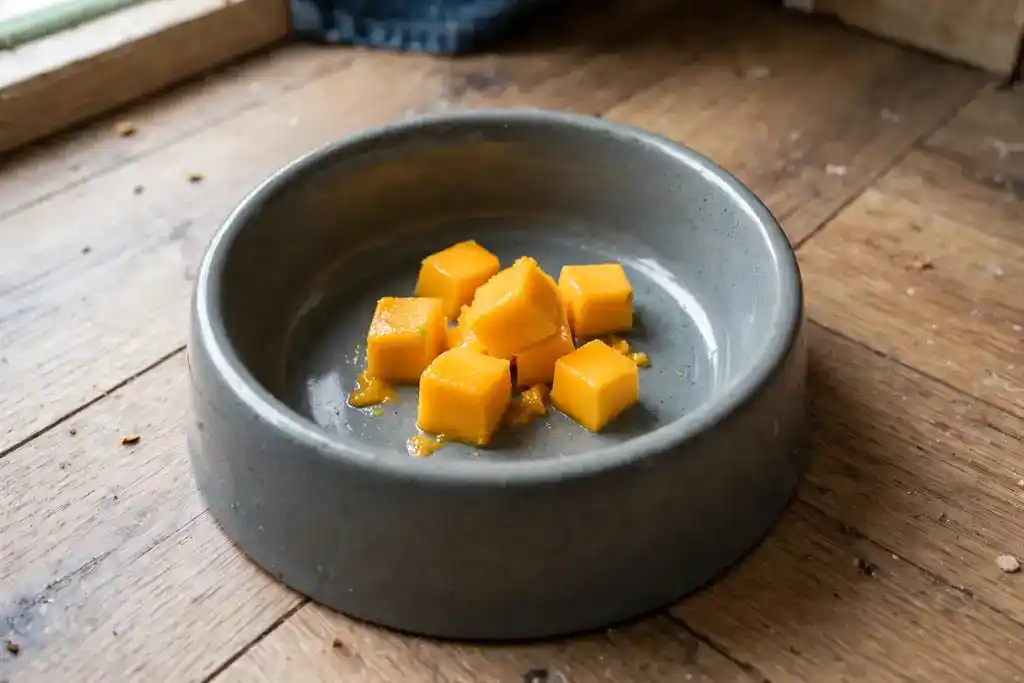
In practical terms, that means a few small cubes — not half a mango. Small dogs need only one or two small pieces, while larger dogs can handle a few more. If it is your dog’s first time trying mango, start with a single small cube and watch for the next day. Loose stools or a gurgly stomach mean the portion was too big or the fruit does not agree with them.
Mango is best kept as an occasional treat, a few times a week at most, rather than a daily habit. The sugar adds up quickly, and a dog that fills up on fruit may start ignoring its regular food.
How to Serve Mango Safely
Preparation is simple, and it is worth doing properly every time:
- Choose a ripe mango — it should give slightly when pressed and smell sweet at the stem end. Unripe mango is hard and sour, and overripe or spoiled fruit should be thrown away.
- Wash the outside, then peel the skin off completely.
- Cut the flesh away from the pit, keeping the pit well away from your dog.
- Dice the flesh into small, bite-size cubes suited to your dog’s size.
- Serve plain — no sugar, syrup, or seasoning.
Frozen cubes are a good warm-weather option: freeze plain cubes on a tray and offer one or two at a time. Keep the pieces small even when frozen, since a hard, large chunk is harder to manage.

Dried Mango and Other Mango Products
Dried mango is where most people get caught out. Drying concentrates the sugar, so a small strip can carry far more sugar than the same amount of fresh fruit. Most store-bought dried mango also has added sugar. It is best skipped altogether; if you ever offer unsweetened dried mango, keep it to a tiny piece, rarely.
The same caution applies to mango juice, canned mango in syrup, mango desserts, and mango-flavoured sweets. These are mostly sugar, and some packaged products contain xylitol, a sweetener that is dangerous for dogs even in small amounts. Always read the label before sharing anything packaged. Fresh flesh is the simplest, safest option, and dog treats made with mango from a trusted brand are a reasonable alternative if you would rather skip the cutting board.

When Mango Is Not a Good Idea
Most healthy dogs can enjoy mango, but a few should skip it or only have it with vet approval. Dogs with diabetes or weight problems should generally avoid mango because of its sugar content — PetMD makes this point directly. Dogs with sensitive stomachs, a history of pancreatitis, or a food allergy should also be introduced carefully, if at all.
Puppies can eat mango, but they need extra care. Their digestive systems are still developing, so a tiny piece first, followed by a watch for loose stools, is the right approach. If your dog is on a vet-managed diet or takes regular medication, ask your vet before adding any new food.
Warning Signs: When to Call the Vet
Too much mango usually causes nothing worse than diarrhoea, vomiting, or gas, and it often settles once the fruit passes. Call your vet if vomiting or diarrhoea lasts more than a day, or if your dog seems in pain.
A swallowed pit is more urgent. Call your vet right away, and watch for vomiting, loss of appetite, tiredness, straining to poop, or a swollen or painful belly — these can signal a blockage. Do not try to make your dog vomit unless your vet tells you to.
Also watch for signs of an allergic reaction after a first taste: itching, hives, swelling around the face, or repeated vomiting. These are uncommon, but they warrant a vet call. If your dog is choking — gagging, pawing at the mouth, or struggling to breathe — treat it as an emergency.
If your dog enjoys mango, it joins a small group of fruits that make safe occasional treats when prepared properly. Apples and blueberries, for example, follow the same rules: plain flesh, small pieces, and moderation. For a broader look at what is safe and what is not, see our guide to what human food dogs can eat.
Frequently Asked Questions
Can dogs eat mango skin?
No. Peel it off first — the skin is tough, hard to digest, and can upset your dog’s stomach.
Can dogs eat the mango pit?
Never. The pit is a choking and blockage hazard, and it contains small amounts of cyanide. Throw it away where your dog cannot reach it.
Can puppies eat mango?
Yes, in tiny amounts. Offer one small piece of ripe, peeled flesh and watch for an upset stomach over the next day before offering more.
Can dogs eat dried mango?
It is best avoided. Store-bought dried mango usually has added sugar, and drying concentrates the sugar. Unsweetened dried mango, if offered at all, should be a tiny piece on rare occasions.
How often can dogs eat mango?
As an occasional treat only — a few times a week at most — and always within the 10% treat allowance.
What should I do if my dog swallows a mango pit?
Call your vet right away, even if your dog seems fine. Watch for vomiting, loss of appetite, tiredness, straining, or belly pain, and do not try to induce vomiting unless your vet instructs you to.
Sources:
This article is for general information only and is not a substitute for professional veterinary advice. Every dog is different, and health conditions, age, and medication can change what is safe. If you are unsure about a new food, talk to your veterinarian first.