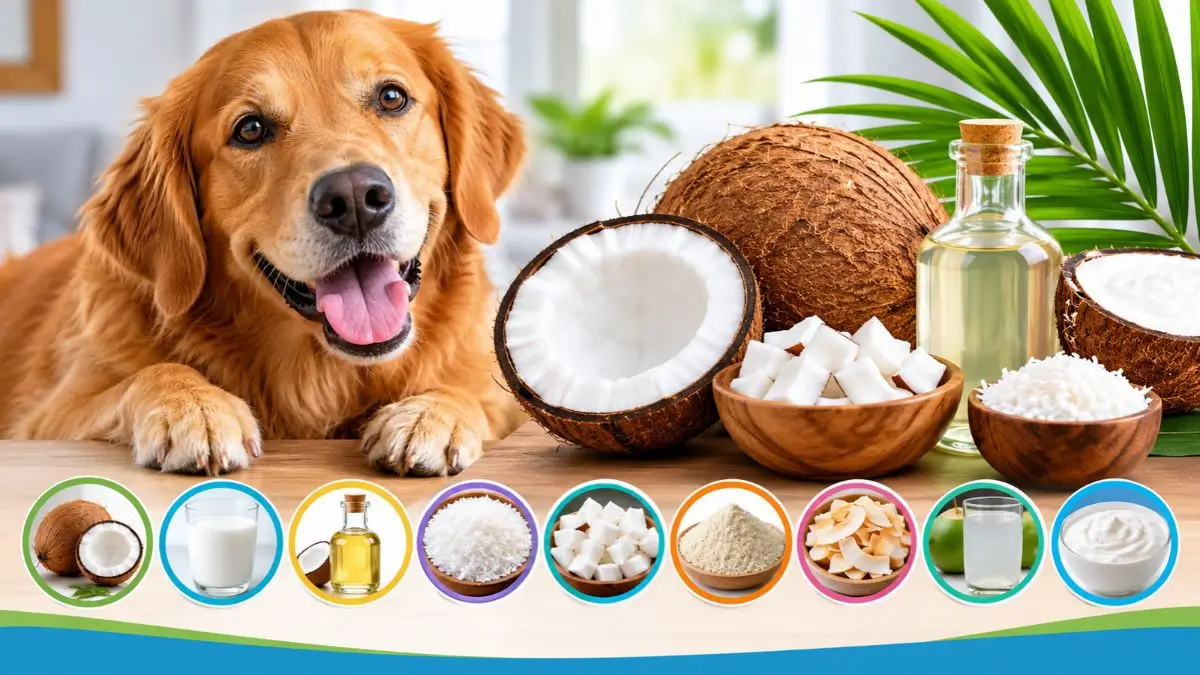
Can dogs eat coconut? Yes, most healthy dogs can eat a little plain coconut. The flesh, water and oil are not toxic, but coconut is very high in fat. Keep portions tiny, remove the shell, and skip sweetened or xylitol products.
For this guide we compared the vet-reviewed coconut articles from the American Kennel Club (reviewed by Dr. Jolee Stegemoller, DVM, updated August 2026), PetMD and Purina, then checked their numbers against USDA nutrient data. They agree on the basics. They split on coconut milk and coconut oil, and some pet blogs suggest doses far larger than any of them. Below you will find where the advice differs, safe portions by weight, a calorie check for real dog sizes, and the dogs that should skip coconut.
Prefer to watch first? A vet from Pet Circle answers “can dogs eat coconut?” in this short video on dogs and coconut.
Can dogs eat coconut safely?
Yes, dogs can eat coconut safely in small amounts. The ASPCA says small amounts of coconut products are unlikely to cause serious harm, although the oils in the flesh and milk can upset the stomach. Fat, sugar, sweeteners and the shell cause most problems.
The ASPCA Animal Poison Control Center warns that coconut flesh and milk “may cause stomach upset, loose stools and diarrhea.” PetMD and the AKC both state that coconut is not toxic to dogs. So an accidental nibble of fresh coconut is not a poisoning emergency.
That does not make coconut a health food. A dog eating a complete and balanced diet does not need coconut for any nutrient. Treat it as an occasional extra that fits inside the treat allowance, never as part of the meal plan. If you are unsure about a specific treat or recipe, run it through our dog treat ingredient checker before it reaches the bowl.
What nutrients are in coconut?
Raw coconut meat has about 354 calories and 33.5 grams of fat per 100 grams, and most of that fat is saturated. It also has 9 grams of fiber and some potassium. Sweetened shredded coconut adds more than 40 grams of sugar per 100 grams.
| Coconut food | Amount | Calories | What stands out |
|---|---|---|---|
| Raw coconut meat | 100 g | 354 | 33.5 g fat (29.7 g saturated), 9 g fiber, 356 mg potassium |
| Dried coconut, unsweetened | 100 g | 660 | Nearly twice the calories of fresh, because the water is gone |
| Sweetened shredded coconut | 100 g | 501 | 43.2 g sugar |
| Sweetened flaked coconut | 100 g | 456 | 36.8 g sugar |
| Coconut water | 1 cup | About 46 | About 600 mg potassium and 6 g sugar |
| Coconut oil | 1 tablespoon | About 120 | 13.5 to 14 g fat, almost nothing else |
Figures come from USDA FoodData Central entries for each food. Coconut fat is rich in lauric acid and other medium chain fatty acids, which is why coconut oil is often sold as a source of MCTs (medium chain triglycerides). Those fats are the reason behind most of the health claims, and also behind most of the risks.
Which coconut products can dogs eat?
Fresh coconut meat and plain unsweetened flakes are the safest forms in tiny amounts. Coconut water, plain coconut flour, coconut oil and unsweetened milk need small servings and extra care. Sweetened coconut, coconut desserts, and the shell or husk are poor choices or unsafe.
Here are nine common coconut forms ranked from best to worst for dogs.
| Rank | Coconut form | Verdict for dogs | Main reason |
|---|---|---|---|
| 1 | Fresh coconut meat | Best choice, small pieces | No added sugar, easy to cut small and portion |
| 2 | Unsweetened flakes, chips, shredded or desiccated coconut | Tiny amounts | AKC’s vet says unsweetened flakes and chips are safe in small amounts; dried coconut is very calorie dense |
| 3 | Plain coconut water | Occasional sips | About 600 mg potassium per cup; never a replacement for drinking water |
| 4 | Plain coconut flour | A pinch in homemade treats | No vet guide covers it directly, so check every other ingredient in the recipe |
| 5 | Coconut oil | Tiny amounts, ask your vet first | Nearly pure fat; large amounts cause diarrhea and raise pancreatitis concerns |
| 6 | Coconut milk or cream | A lick at most, or skip | AKC allows unsweetened milk, PetMD says give none because of the fat |
| 7 | Sweetened shredded or flaked coconut | Skip | Up to 43 g sugar per 100 g; Purina says never feed sweetened coconut |
| 8 | Coconut desserts (macaroons, ice cream, coconut yogurt) | Skip | Sugar and fat, plus possible chocolate, macadamia nuts or xylitol |
| 9 | Shell and husk | Never | Choking and intestinal blockage |
Coconut milk is where vets disagree most. The AKC’s reviewing vet says only the unsweetened kind, free of xylitol, is acceptable. PetMD says that “because coconut milk is naturally high in fat, you shouldn’t give any to your dog.” With experts split like that, the cautious choice is a lick, not a bowl. Our sister site covers coconut water for dogs and ice cream for dogs in more detail.
How much coconut can a dog eat?
PetMD’s vet-reviewed guide suggests 1/8 teaspoon of coconut meat a day for dogs up to 20 pounds, 1/2 teaspoon for 21 to 50 pounds, and 1 to 1 1/2 teaspoons for larger dogs, all inside the 10 percent treat rule.
| Dog weight | Fresh coconut meat per day (PetMD) | Coconut oil per day (ask your vet first) |
|---|---|---|
| 2 to 20 lb | Up to 1/8 teaspoon | Skip, or a few drops at most |
| 21 to 30 lb | Up to 1/2 teaspoon | 1/4 teaspoon at most |
| 31 to 50 lb | Up to 1/2 teaspoon | 1/4 to 1/2 teaspoon at most |
| 51 to 90 lb | 1 to 1 1/2 teaspoons | Up to 1 teaspoon |
| 91 lb and over | 1 to 1 1/2 teaspoons | Up to 1 teaspoon |
The coconut meat amounts come straight from PetMD. The oil limit for large dogs matches the AKC vet’s advice that “up to a teaspoon or so for a large dog is okay.” The oil amounts for smaller dogs are our own conservative scaling of that figure, because a small body has less room for a calorie-dense fat.
Whatever the form, coconut counts toward the treat allowance. The World Small Animal Veterinary Association advises keeping treats under 10 percent of daily calories. Our dog treat calculator works out that budget for your dog’s weight. Offer coconut a few times a week rather than daily, and never on top of a full day of other treats.
What does a spoonful of coconut mean in calories?
A 20 pound adult dog needs roughly 585 calories a day, so its treat budget is about 58 calories. One teaspoon of coconut oil uses about 70 percent of that budget, and one tablespoon uses about double the whole daily allowance.
We ran this calorie check because the spoon sizes in pet articles vary so much. We used the resting energy formula from the AAHA nutrition guidelines (70 times body weight in kilograms to the power of 0.75), multiplied by 1.6 for a typical neutered adult, and USDA calorie values for each coconut form.
| Dog | Daily calories | Treat budget (10%) | 1 tsp fresh shredded coconut (about 6 kcal) | 1 tsp coconut oil (about 40 kcal) | 1 tbsp coconut oil (about 120 kcal) |
|---|---|---|---|---|---|
| 20 lb adult | About 585 | About 58 | About 10% of the budget | About 69% of the budget | About 205% of the budget |
| 50 lb adult | About 1,164 | About 116 | About 5% of the budget | About 34% of the budget | About 103% of the budget |
The numbers make the point clearly. A tablespoon of coconut oil, a dose some pet blogs suggest, uses up more than a 50 pound dog’s entire treat budget for the day. A teaspoon of fresh shredded coconut barely registers. That gap is the main reason fresh meat is a more forgiving choice than oil. Real needs vary with age, activity and body condition (AAHA gives a range of 1.4 to 1.6 for neutered adults), so treat these as estimates, not targets.
Does coconut have real health benefits for dogs?
Coconut has fiber and medium chain fats, but the evidence that it helps dogs is weak. The AKC says fish oil has stronger evidence for skin, and a veterinary dermatologist notes there are no controlled trials of coconut oil for canine skin problems.
Is coconut good for dogs’ skin and coat? It is the most repeated claim, and the AKC’s own FAQ says coconut “may help moisturize skin, but omega-3 fatty acids like fish oil have stronger evidence for improving skin health.” Board-certified veterinary dermatologist Dr. Andrew Simpson, DACVD, told dvm360 in 2025 that there are no placebo-controlled, randomized studies on coconut oil for skin disease in dogs. He also described a 2019 lab study on canine skin cells in which coconut oil disrupted cell membranes, a result he said raised concern.
Brain and seizure claims rest on a different product. The dog studies behind them used purified MCT oil built into a complete diet, not spoonfuls of coconut oil. In a Royal Veterinary College trial of 21 dogs with epilepsy, three became seizure free and seven had at least 50 percent fewer seizures on an MCT-enriched diet. Purina notes that MCTs can fuel the aging brain, but says it “can’t recommend giving coconut as a reliable way to get the benefit.”
For digestion, a 2023 study of 18 dogs with chronic gut disease added virgin coconut oil to a home-cooked diet. The dogs tolerated it, but the researchers credited the improvement to the new diet, so the study shows the oil was tolerated, not that it helped.
The flea claim comes from a 2018 USDA study in which fatty acids extracted from coconut oil repelled ticks, flies and bed bugs. The authors wrote that “coconut oil itself had little repellency,” and they tested no fleas and no dogs. We found no study at all on coconut and bad breath in dogs. The one practical use with vet backing is coconut water: the AKC’s vet offers it to her own dogs after dog sport events for extra electrolytes.
What are the risks of feeding coconut to dogs?
The main risks are diarrhea, weight gain and pancreatitis from coconut’s high fat, plus sugar in sweetened products, xylitol in some sugar-free items, choking on large chips, and blockage from shell or husk. Coconut water’s potassium matters for dogs with kidney disease.
Loose stool, greasy diarrhea and vomiting are the usual signs of too much, and coconut oil causes them more often than the flesh. The AKC’s coconut oil guide adds that long-term feeding of coconut oil can lead to obesity and trigger pancreatitis.
Pancreatitis is the serious one. Tufts veterinary nutritionist Dr. Cailin Heinze explains in her Petfoodology article on pancreatitis that it is linked to dogs eating high-fat foods they are not used to, and that being overweight may also be a risk factor. No study shows coconut itself causes pancreatitis, but coconut is one of the fattiest foods people share with dogs.
Coconut is also high in potassium. The AKC vet advises caution for dogs with kidney disease or other electrolyte problems, which matters most for coconut water.
Sweeteners deserve a label check every time. PetMD warns that some coconut drinks can contain xylitol, and the FDA says xylitol can drop a dog’s blood sugar within 10 to 60 minutes. It can also appear on labels as birch sugar or wood sugar. Feed only fresh coconut, and throw out any that smells sour or looks slimy or moldy. The shell and husk are a separate hazard. The AKC vet compares eating them to eating sticks or wood, and large pieces can block the intestine.
Which dogs should skip coconut?
Skip coconut for dogs with a history of pancreatitis, high blood fats, obesity, kidney disease or a vet-prescribed low-fat diet. Miniature Schnauzers need extra care too, because high blood triglycerides are common in the breed and are linked to pancreatitis risk.
A study in the Journal of the American Animal Hospital Association found high triglycerides in 32.8 percent of 192 Miniature Schnauzers tested. Tufts adds that dogs who have had pancreatitis are usually moved to a lower-fat diet with regular blood work, and a spoon of coconut oil works against that plan. Any dog on a prescription diet should only get extras that the vet has approved.
True coconut allergy looks uncommon. A review of food allergy studies in dogs lists beef (34 percent of reported cases), dairy (17 percent), chicken (15 percent) and wheat (13 percent) as the most common triggers, and coconut does not appear on the list. It can still happen, so watch for itching, ear infections, vomiting, diarrhea or facial swelling after the first taste.
Can puppies and senior dogs eat coconut?
Puppies can try a very small amount of plain coconut occasionally, while healthy senior dogs follow the same small portions as adults. Neither group needs coconut, and young or older dogs with sensitive stomachs or weight problems should check with a vet first.
The AKC says puppies can have coconut “in very small amounts and only occasionally,” introduced slowly to avoid stomach upset. Cut the meat into pieces small enough for a puppy’s mouth, because puppy food is already calorie dense and a fatty extra can upset a young gut.
For seniors, weight is the bigger issue, since an older dog that moves less gains weight easily. Many older dogs also take a pain medicine such as carprofen (Rimadyl). Its FDA-approved label lists decreased appetite, vomiting and diarrhea among possible side effects, so a new fatty treat makes it harder to tell what caused an upset stomach. Our carprofen dosage guide for dogs covers the warning signs to watch for. Ask your vet before adding coconut to a medicated senior’s routine.
How do you feed coconut to a dog safely? 7 essential rules
Use plain fresh or unsweetened coconut, remove all shell and husk, cut it small, and start with a taste. Watch your dog for a day, count the calories, and keep coconut to a few times a week at most, never as a daily habit.
- Pick plain coconut. Use fresh meat or unsweetened flakes, and read the label for sugar, chocolate and xylitol (also called birch sugar or wood sugar).
- Remove every bit of shell and husk. Scrape the white flesh away and check for hard brown fragments.
- Cut it to size. Use pea-size bits for small dogs and small cubes for large dogs, and break up large chips.
- Start with a quarter of the table amount. Watch for vomiting, loose stool or itching over the next 24 hours.
- Count it as a treat. Keep coconut and every other extra under 10 percent of daily calories.
- Limit how often. The AKC says daily coconut is not recommended, so a few times a week is plenty.
- Keep it fresh. Store opened coconut in the fridge, use it within a few days, and throw out anything sour or moldy.
What should you do if your dog ate coconut?
A few bites of plain coconut is rarely an emergency, so stay calm, watch your dog and hold back any more. Call a vet right away if the product contained xylitol, your dog swallowed shell pieces, or vomiting, belly pain or lethargy appears.
If your dog ate a lot of plain flesh or oil, expect possible diarrhea within hours. Offer fresh water, skip the next treat, and call your vet if loose stool lasts more than a day or vomiting repeats. Signs of pancreatitis include a hunched posture, belly pain, repeated vomiting and unusual tiredness, and they need a vet visit the same day.
If a sugar-free product might have contained xylitol, do not wait for symptoms. Call your vet or an emergency clinic, or contact the ASPCA Animal Poison Control Center at (888) 426-4435 or the Pet Poison Helpline at (855) 764-7661. Both lines are open 24 hours and may charge a consultation fee.
If your dog swallowed pieces of shell or husk, watch for repeated vomiting, a swollen belly, refusal to eat or no stool, which can signal a blockage. Facial swelling or trouble breathing after any coconut needs an emergency visit.
Which fruit treats are easier than coconut?
Low-fat fruits such as blueberries, apples, bananas, watermelon, strawberries, pineapple and peeled orange segments make easier everyday treats than coconut for most dogs. Each still needs the right portion, removal of seeds, peel or rind, and the 10 percent treat rule.
If fat is your worry, these swaps are friendlier. Our guides cover blueberries, apples, bananas, watermelon, strawberries, pineapple and orange segments without the peel. The wider list of human foods dogs can eat helps when you want more variety. Avocado is another fatty fruit with its own rules, covered in this dog avocado safety guide.
How we checked this guide
We compared vet-reviewed coconut guides from the AKC, PetMD and Purina, checked nutrient figures in USDA FoodData Central, ran the calorie math with the AAHA formula, and read the studies behind the skin, seizure and flea claims before writing any advice.
Four findings shaped the advice above. The AKC and PetMD disagree on coconut milk, so we gave the cautious answer and showed both views. PetMD’s guide was last updated in April 2023 and the AKC’s in August 2026, so where they differ we name the source. The tablespoon doses on some pet blogs turned out to exceed a medium dog’s full treat budget. And the most shared flea claim traces back to a study that tested compounds extracted from coconut oil, not coconut oil, and never tested fleas.
We did not feed coconut to test dogs for this article, and nothing here replaces an exam by your own vet. You can read how we research and update articles in our editorial policy, and meet the people behind the site on our team page.
Final verdict: can dogs eat coconut?
Yes, dogs can eat coconut as an occasional small treat. Fresh or unsweetened meat in tiny pieces is the safest form. Skip the shell, sweetened coconut and coconut desserts, and avoid coconut entirely if your dog has pancreatitis, high blood fats or weight problems.
Coconut is not a superfood for dogs, and it does not need to be on the menu at all. The vet sources agree on the shell, the sweeteners and the fat. They disagree on milk and oil, which tells you exactly where to be careful. Start with a small taste, watch for a day, and count the calories against your dog’s treat limit.
If your dog has a medical condition, takes daily medication or eats a prescription diet, ask your vet before adding coconut in any form. For other foods you are wondering about, the dog treat ingredient checker gives a quick first answer.
Frequently asked questions about dogs and coconut
Coconut is fine for most dogs as a rare, small, plain treat. Fresh meat is the best form, oil and milk need extra caution, and shells, sweetened coconut and anything with xylitol are off the table. Ask your vet if your dog has health issues.
Is coconut toxic to dogs?
No. Coconut meat, water, milk and oil are not toxic to dogs, according to the ASPCA, AKC and PetMD. Problems come from eating too much, which causes diarrhea, from added sugar or xylitol, and from swallowing pieces of shell or husk.
Can dogs eat coconut every day?
Daily coconut is not recommended. The AKC advises small, occasional amounts to avoid digestive upset and extra calories. A few times a week in tiny portions is a safer pattern, and dogs with weight or pancreas problems should not have coconut at all.
Can dogs eat coconut oil?
Dogs can have a very small amount of plain coconut oil, but it is almost pure fat. The AKC suggests up to about a teaspoon for a large dog, and less for smaller ones. Skip it completely if your dog has had pancreatitis.
Can I put coconut oil on my dog’s skin?
The AKC’s coconut oil guide suggests applying it to dry skin about once a week, but no controlled trials prove it works in dogs. A veterinary dermatologist urges caution, dogs often lick it off, and itchy skin deserves a vet check.
Does coconut oil kill fleas on dogs?
No reliable evidence shows that it does. A USDA study found that compounds extracted from coconut oil repelled ticks and flies, but plain coconut oil had little effect, and no fleas or dogs were tested. Use a vet-approved flea preventive instead.
Can dogs drink coconut milk?
Vets disagree here. The AKC allows a little unsweetened, xylitol-free coconut milk, while PetMD says to give none because of the high fat. The safest approach is a small lick at most, and none for dogs with pancreatitis or weight problems.
Can dogs drink coconut water?
Plain coconut water is safe in small sips, but a cup holds about 600 milligrams of potassium, and it should never replace fresh drinking water. Check the label for added sugar and xylitol, and ask your vet first if your dog has kidney disease.
Can dogs eat coconut flakes or toasted coconut?
Unsweetened flakes and chips are fine in small amounts, according to the AKC’s vet, and plain toasted coconut follows the same rule. Most store-bought toasted and baking coconut is sweetened, with up to 43 grams of sugar per 100 grams, so check labels.
Can dogs eat coconut macaroons?
Coconut macaroons are a poor choice for dogs. They are made with sweetened coconut and lots of sugar, and some are dipped in chocolate or sweetened with xylitol, both toxic to dogs. Call your vet if your dog ate chocolate or sugar-free macaroons.
Can dogs eat coconut ice cream or coconut yogurt?
These are best skipped. Coconut ice cream and coconut yogurt are high in sugar and fat, and sugar-free versions may contain xylitol. If your dog steals a lick of a plain, unsweetened product, watch for diarrhea, and call a vet if it contained a sweetener.
Is coconut good for dogs with diarrhea?
No. Coconut is more likely to cause loose stool than fix it, because of its high fat. The ASPCA lists diarrhea as a known effect of coconut flesh and milk. For a dog with diarrhea, skip all treats and call your vet if it lasts.
Are dogs allergic to coconut?
Coconut allergy appears uncommon in dogs, since beef, dairy, chicken and wheat top the published allergy lists. It can still happen, with itching, vomiting, diarrhea, ear infections or facial swelling after eating it. Stop feeding coconut and call your vet if you see these.
Can dogs eat coconut shell or chew coconut husk toys?
Dogs should not chew raw coconut shells or husks, because pieces can cause choking or an intestinal blockage. No vet research covers commercial coconut fiber toys, so if you use one, supervise every session and throw it away once it starts to shred.
Can dogs with pancreatitis eat coconut?
Dogs with a history of pancreatitis should avoid coconut, coconut oil and coconut milk unless their vet says otherwise. Tufts nutritionists link pancreatitis to high-fat foods, and these dogs usually need a lower-fat diet with regular blood work to prevent another episode.
Against guidance from the AKC, PetMD, Purina, the ASPCA, Tufts University, the FDA, USDA FoodData Central and published veterinary research. This guide is general information and does not replace advice from your own veterinarian. See our disclaimer for details.