

Yes, dogs can have cinnamon in small amounts. A light sprinkle of ground cinnamon mixed into a batch of homemade dog treats is generally fine for a healthy adult dog. But the word “small” is doing a lot of work in that sentence. The form of the spice, the type in the jar, and the other ingredients in the food all change the answer — and a few cinnamon products should never reach your dog at all. If you are checking other kitchen foods too, see our general guide to human foods.
How Much Cinnamon Is Safe for a Dog?
There is no official safe dose for dogs, so the honest rule is small and occasional. The Pet Poison Helpline, cited by the American Kennel Club (AKC), says it takes more than a teaspoon of powder to cause problems for most pets, and small breeds may react to smaller amounts. That is a ceiling, not a target. A practical approach is a pinch mixed into a whole batch of treats, given now and then — not a daily spoonful and not a supplement. Dogs with liver problems, diabetes, or those on medication should skip it unless their vet says otherwise, because a large overdose can lower blood sugar and strain the liver. Puppies, with their more sensitive stomachs, are also better off without it until you have checked with your vet.
Ceylon or Cassia: Why the Type Matters
Most jars labelled simply “cinnamon” are Cassia, the cheaper, stronger-tasting variety sold in nearly every supermarket. Ceylon, often sold as “true cinnamon”, is a different species with a milder flavour — and far less coumarin. Coumarin is a natural compound that, in large or regular amounts, can strain the liver. That is why Ceylon is the better choice if you bake dog treats with cinnamon more than rarely, and why it is worth checking the label for the word “Ceylon” or “true cinnamon”. For a one-off pinch, the type matters less than the amount — but for anything regular, choose Ceylon and still keep the amount tiny.

Three Forms to Keep Away From Dogs
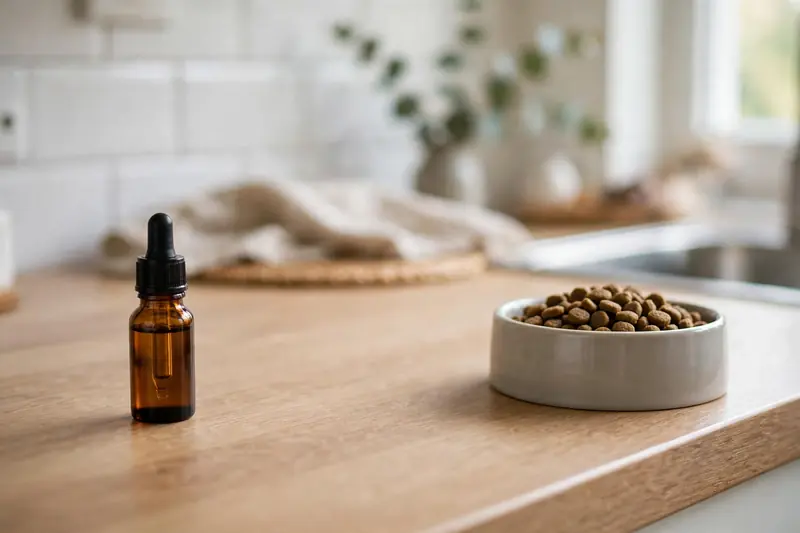
Cinnamon essential oil. This is the dangerous one. The oil is far more concentrated than the ground spice, and the AKC notes that cinnamon essential oil can be toxic to dogs, while PetMD lists cinnamon oil among the essential oils to avoid around dogs. Never diffuse it, apply it to your dog, or let them lick it, and store bottles where a curious nose cannot reach them. Even small amounts of oil can cause problems at doses far lower than the powder.
Dry powder by the spoon. Never offer dry powder directly, and never let your dog lick a spoonful. Inhaled powder can make a dog cough, choke, and struggle to breathe, according to the AKC. Always mix ground cinnamon into food so it cannot be inhaled.

Cinnamon sticks. Chewing a stick can irritate your dog’s mouth, and sticks belong in the spice rack, not in a dog’s mouth. Keep them out of reach, especially if your dog counter-surfs.
The Real Danger Hides in Cinnamon Foods
If your dog steals a bite of your cinnamon roll, the spice is usually the least of your worries. Human baked goods are high in sugar, fat, and butter, which over time can lead to obesity, diabetes, and pancreatitis, and some sugar-free products contain xylitol, which the AKC describes as very toxic to dogs. The same treats often hide raisins or chocolate, and raw yeast dough is very dangerous for dogs. So the answer to sharing your cinnamon roll is no — not because of the cinnamon, but because of everything baked around it. If you want the flavour, bake plain dog treats with a pinch of cinnamon instead.
Don’t Confuse Cinnamon With Nutmeg
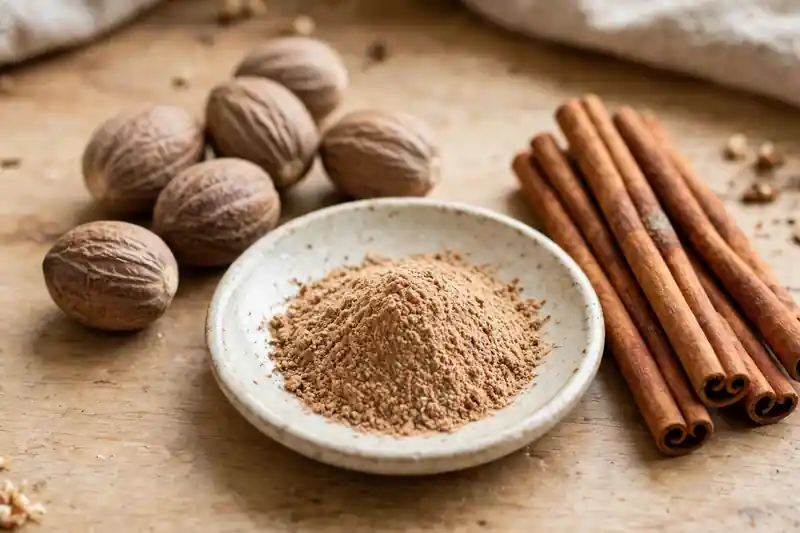
Nutmeg is a different spice, but it often appears in the same recipes — and it is the one that can be genuinely toxic. Nutmeg contains myristicin, which in larger amounts can cause hallucinations, increased heart rate, disorientation, high blood pressure, abdominal pain, dry mouth, and even seizures, with symptoms lasting up to 48 hours, according to the AKC. The small amount in a slice of cake is generally safe, but never add nutmeg to dog treats on purpose. Check spice blends too: pumpkin pie spice and similar mixes usually combine cinnamon with nutmeg, so read the label before using them in anything for your dog.
Safe Ways to Offer Cinnamon
Keep it simple. Mix a small pinch into a batch of plain homemade dog treats — pumpkin, peanut butter, or oat biscuits made for dogs are all good bases. Or stir a little into their regular food once in a while. Cinnamon pairs naturally with apple in homemade treats, which is a good excuse to use both in moderation. What not to do: use cinnamon daily, use it as a health supplement, or use it to manage blood sugar or any medical condition. The AKC is clear that cinnamon’s health benefits have not been proven for dogs, so if you are considering it for a health reason, talk to your vet first.

Warning Signs to Watch For
Most small exposures cause nothing, but watch for vomiting, diarrhea, drooling or pawing at the mouth, and coughing or laboured breathing after powder has been inhaled. A large overdose can also bring lethargy and changes in heart rate. If your dog ate a large amount of cinnamon, any amount of essential oil, or is showing any of these signs, call your veterinarian promptly and tell them what and how much was eaten. For a tiny accidental taste, offer water and keep an eye on them for the rest of the day — but never wait it out if breathing is affected.
Frequently Asked Questions
Can my dog eat a cinnamon roll?
As a habit, no. The small amount of cinnamon is not the main problem — the sugar, fat, and butter are, and some rolls also contain xylitol, nutmeg, or raisins. A single stolen bite is unlikely to be an emergency, but do not make a habit of sharing baked goods.
Is Ceylon or Cassia cinnamon better for dogs?
Ceylon. It contains far less coumarin, the compound that can strain the liver in large or regular amounts. Keep the amount small either way.
Is cinnamon essential oil safe for dogs?
No. Cinnamon essential oil is toxic to dogs — do not diffuse it, apply it, or let your dog lick it. PetMD lists it among the essential oils to avoid around dogs.
Is cinnamon safe for puppies?
Best to skip it for puppies. Young dogs have more sensitive stomachs, so wait until they are adults and check with your vet first.
My dog licked some cinnamon powder — should I worry?
A small lick is usually fine. Offer water and watch for coughing, vomiting, or diarrhea for the rest of the day. Call your vet if a large amount was eaten, or if any essential oil was involved.
Is cinnamon actually good for dogs?
There is no proven health benefit for dogs. Do not use cinnamon to treat diabetes or any other condition — that is a job for your veterinarian.
This article is for general information only and is not a substitute for veterinary advice. Every dog is different, and dogs with liver disease, diabetes, or other health conditions may react differently. If your dog eats a large amount of cinnamon or any cinnamon essential oil, or shows worrying symptoms, contact your veterinarian or an animal poison helpline right away.
Sources: