You come home with a small bottle after your dog’s surgery or arthritis diagnosis, and the label reads something like “½ caplet twice daily.” Simple enough — until your dog gains eight pounds, or spits half the tablet into the water bowl. Carprofen is the most widely prescribed pain reliever in canine medicine, and it has kept millions of dogs moving comfortably. It is also an NSAID, which means the gap between a helpful dose and a harmful one is narrower than most owners expect.
This guide explains carprofen dosage for dogs the way a veterinarian would in the exam room: how the drug works, why it’s prescribed, and how much a dog should receive by body weight. You’ll find a weight-based dosing chart, practical instructions for giving each dose at home, and the factors that push a vet toward a lower amount. We’ll also cover which dogs should never take it, the drug combinations that make it dangerous, and the alternatives worth discussing. Read it to understand your dog’s prescription, never to replace it.
What Is Carprofen and How Does It Work in Dogs?
Carprofen is a prescription non-steroidal anti-inflammatory drug of the propionic acid class, sold as Rimadyl and as generics including Novox, Vetprofen, Carprieve, and Quellin. In the United States it is approved for dogs only.

Pain and swelling inside an inflamed joint are driven by prostaglandins, produced by two enzymes. COX-1 handles maintenance work: protecting the stomach lining and supporting blood flow through the kidneys. COX-2 ramps up wherever tissue is injured. Carprofen preferentially blocks COX-2 while leaving COX-1 relatively intact, which is why it eases joint pain far more safely than the NSAIDs in your own medicine cabinet. Ibuprofen, naproxen, and aspirin are genuinely dangerous for dogs and must never be substituted.
It comes as scored caplets and flavored chewable tablets in 25 mg, 75 mg, and 100 mg strengths, plus a 50 mg/mL injectable solution used inside the clinic. Most dogs feel the effect within one to two hours. The elimination half-life is roughly eight hours, which is why twice-daily dosing lands twelve hours apart — and why a missed dose isn’t an emergency, but a doubled one can be. In chronic arthritis, the full benefit takes a week or two to judge fairly.
When Do Veterinarians Prescribe Carprofen for Dogs?
Carprofen carries two FDA-approved indications, and both are common reasons a bottle comes home.
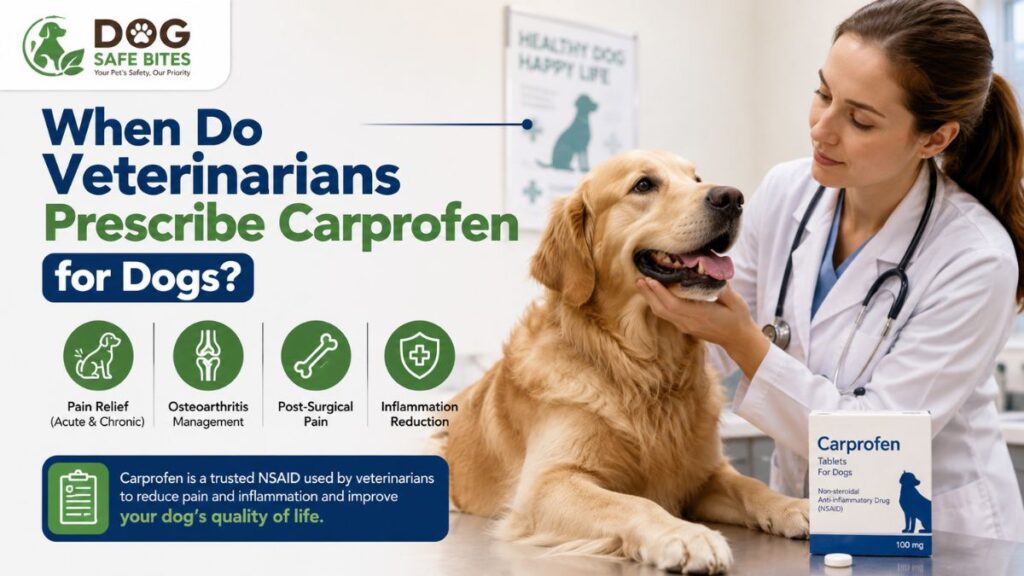
The first is osteoarthritis. A nine-year-old Labrador who takes an extra second to stand, hesitates at the stairs, or stops jumping into the car is showing classic degenerative joint disease. Carprofen doesn’t reverse the arthritis, but lowering inflammation inside the joint restores enough comfort that the dog moves normally again — and movement maintains the muscle that supports the joint.
The second is post-operative pain following soft tissue and orthopedic surgery. A dog undergoing a spay, a mass removal, or a cruciate ligament repair usually receives an injectable dose in the clinic, then goes home with tablets for several days while the tissue heals.
Veterinarians also use short off-label courses for sprains, soft tissue injuries, and dental extractions, always after an exam. A limp that hasn’t been diagnosed is not a reason to open an old bottle, because the cause changes the treatment.
Carprofen Dosage for Dogs by Weight (Dosing Chart)
The FDA-approved dose is 2 mg per pound of body weight (4.4 mg/kg) per day. That total may be given once daily, or divided into two equal doses of 1 mg per pound (2.2 mg/kg) about twelve hours apart. Controlled field studies found both schedules effective, so the choice usually comes down to your dog’s stomach and your own routine.
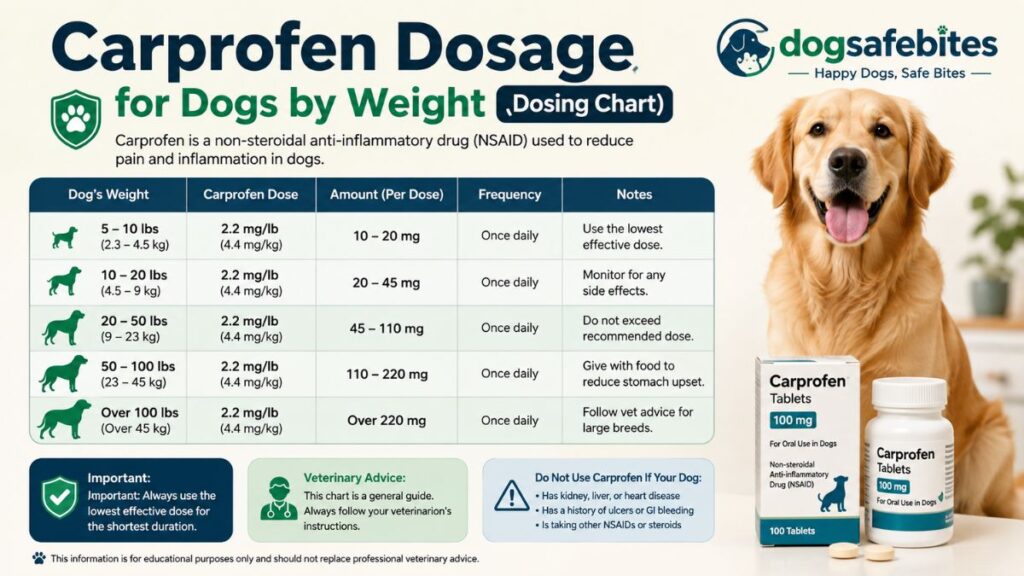
| Dog’s Weight | Weight (kg) | Total Daily Dose | If Split — Each Dose |
| 10 lb | 4.5 kg | 20 mg | 10 mg every 12 hours |
| 20 lb | 9.1 kg | 40 mg | 20 mg every 12 hours |
| 30 lb | 13.6 kg | 60 mg | 30 mg every 12 hours |
| 40 lb | 18.1 kg | 80 mg | 40 mg every 12 hours |
| 50 lb | 22.7 kg | 100 mg | 50 mg every 12 hours |
| 60 lb | 27.2 kg | 120 mg | 60 mg every 12 hours |
| 75 lb | 34.0 kg | 150 mg | 75 mg every 12 hours |
| 100 lb | 45.4 kg | 200 mg | 100 mg every 12 hours |
Treat these numbers as a reference for understanding the prescription you were given, not as a formula to dose from. Because caplets are scored, real prescriptions are written in half-caplet increments, so your vet rounds to a practical combination of the three strengths. A 55-pound dog needing roughly 110 mg daily is usually written up as one 100 mg caplet once daily rather than an awkward fraction.
Two points outrank the chart. For surgery, the first dose is given about two hours beforehand so blood levels are therapeutic when the dog wakes. For long-term arthritis, the rule is the lowest effective dose for the shortest duration, and many vets taper after the first recheck.
How to Give Carprofen to Your Dog Safely
Give every dose with food. A meal buffers the stomach and meaningfully reduces the digestive upset behind most side effects. Keep fresh water available at all times, since good hydration protects the kidneys on any NSAID.
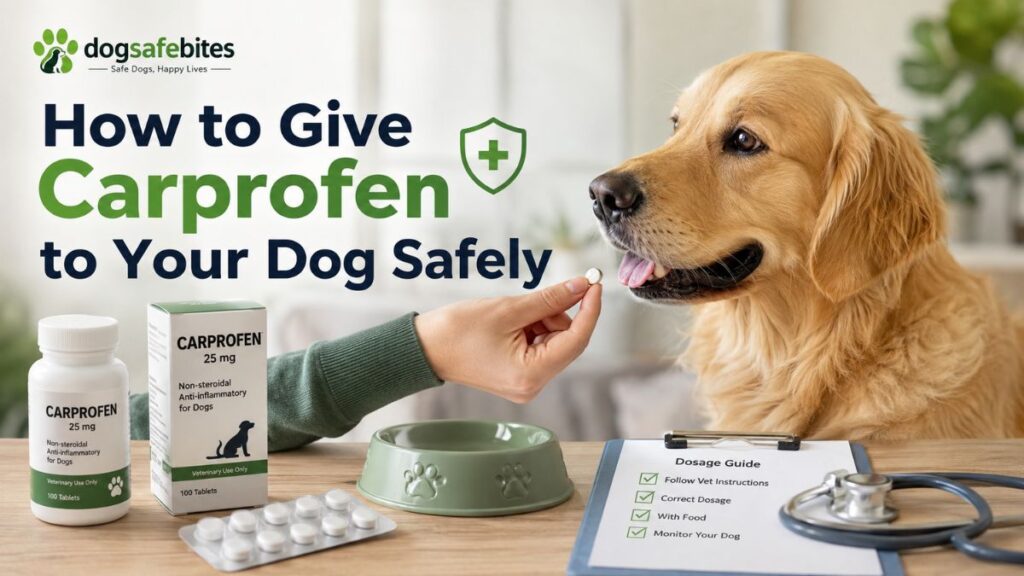
Consistency helps: twelve-hour intervals for twice-daily prescriptions, a fixed meal for once-daily ones. If you miss a dose, give it when you remember, unless the next one is close — in which case skip it and carry on. Never double up to catch up.
Chewable carprofen is flavored to taste like a treat, which is exactly why it belongs in a closed cabinet rather than on the kitchen counter. A raided bottle of 100 mg chewables is one of the more common serious poisonings emergency clinics see.
Two habits prevent avoidable mistakes. Never share medication between dogs, because a dose calculated for a 70-pound shepherd can seriously harm a 20-pound terrier. And finish the course after surgery even if your dog seems fine on day two; the inflammation is still there, and stopping early often means a painful setback overnight.
Factors That Affect the Right Carprofen Dosage
Body weight sets the starting number, but several things shift it.
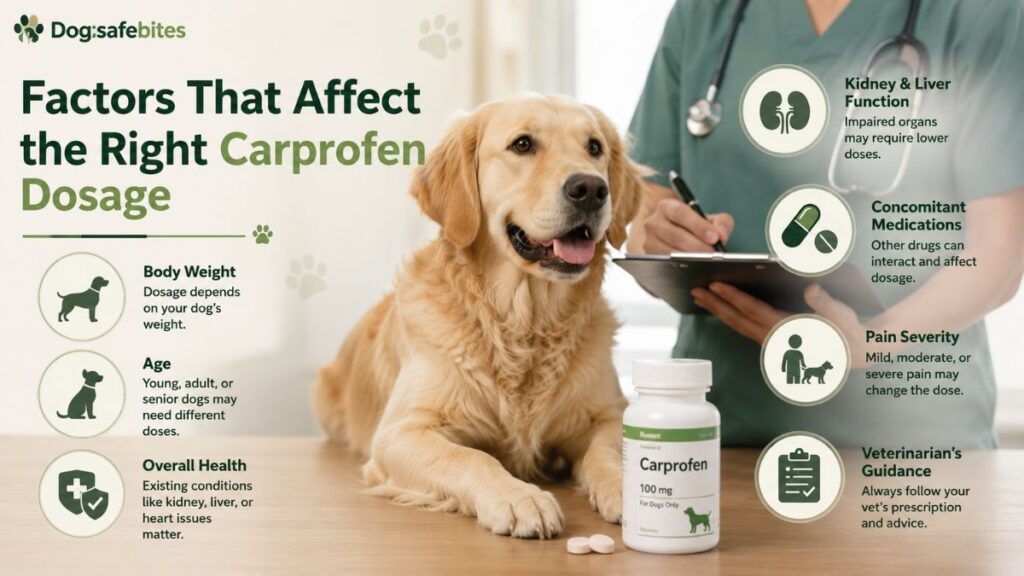
Current weight, not last year’s. Dogs on long-term therapy should be weighed at every recheck. An arthritic dog who loses ten pounds needs the prescription recalculated, and that weight loss reduces joint pain on its own.
Age. Carprofen has not been evaluated in puppies under six weeks, so it isn’t used in very young dogs. Seniors sit at the other end of the problem: reduced liver and kidney reserve leads many vets to start low, split the daily dose, and recheck bloodwork more often.
The condition being treated. A three-day post-surgical course and an indefinite arthritis prescription are managed differently. Chronic cases are reassessed two to four weeks in, then trimmed to the smallest amount that holds the dog steady.
Organ function and hydration. Baseline liver and kidney values influence whether carprofen is used at all, and at what dose. A dehydrated dog faces a higher risk of kidney injury from any NSAID.
Other medications and breed history. Concurrent drugs can force a change of plan entirely. Labrador Retrievers appeared disproportionately in early reports of carprofen-associated liver injury, and many vets still watch the breed closely.
Common Side Effects of Carprofen in Dogs
Most dogs tolerate carprofen well, and the side effects that do appear are usually digestive: a softer stool, a skipped meal, or one episode of vomiting during the first few days. These often settle as the dog adjusts, especially when doses are given with food. Mention them to your vet anyway, because a pattern matters more than a single episode.
Less commonly, owners notice lethargy or a subtle change in behavior. Rare but serious reactions involve the liver, the kidneys, or the gastrointestinal lining, with ulceration and bleeding at the severe end. Liver injury from carprofen is idiosyncratic — it isn’t tied to how much was given — and the FDA-approved label states plainly that serious reactions can occur with or without warning signs beforehand.
That unpredictability is the entire reason for monitoring. Standard practice is a chemistry panel and urinalysis before starting long-term therapy, a recheck two to four weeks in, then repeat bloodwork roughly every six months. Organ changes show up in blood values long before they show up in your dog’s behavior.
Signs of Carprofen Overdose and When to Contact a Veterinarian
Overdoses reach the clinic two ways: a dog who chews through the bottle, and a household where two people each gave the evening dose.
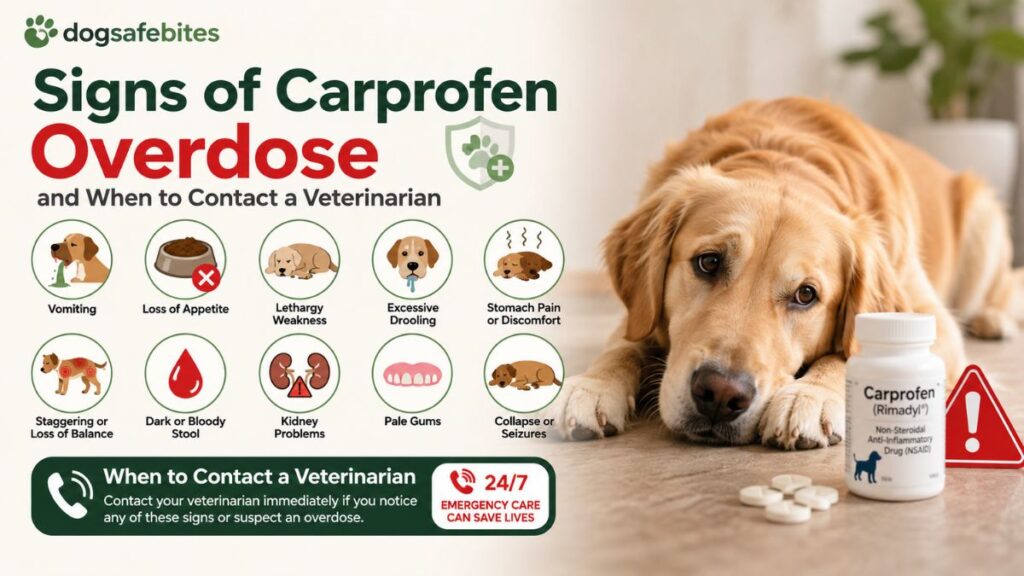
Warning signs include repeated vomiting, especially vomit containing blood or resembling coffee grounds, along with black, tarry, or bloody stool, refusal to eat, sudden marked lethargy, and a noticeable jump in thirst and urination. Pale gums suggest internal bleeding; yellowing of the gums, eyes, or inner ears points toward the liver. Very large ingestions can progress to unsteadiness, tremors, or seizures.
Don’t wait for symptoms to confirm your suspicion. Treatment started before the drug is fully absorbed is far more effective than treatment started after organ damage begins. Call your veterinarian or the nearest emergency hospital, or reach the ASPCA Animal Poison Control Center at (888) 426-4435 or the Pet Poison Helpline at (855) 764-7661; both may charge a consultation fee. Have the packaging ready, estimate how many tablets are missing and when, and do not induce vomiting unless a professional instructs you to.
Dogs That Should Not Take Carprofen
Carprofen is a dog medication, and the clearest rule is that it must never be given to cats. Cats clear it very slowly, and even a single 25 mg tablet can cause serious harm.
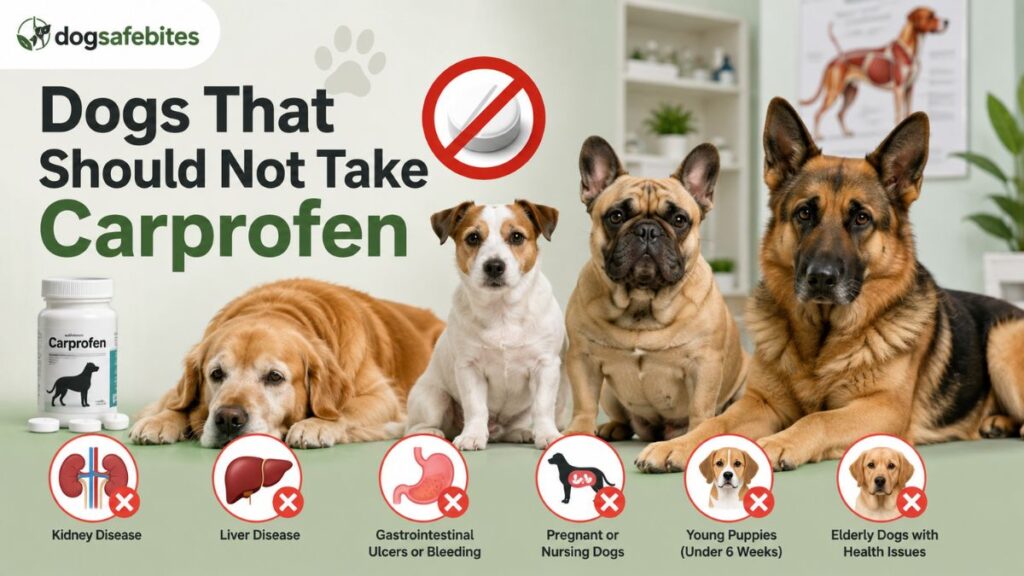
Among dogs, it is avoided or used only under close supervision in these situations:
- Known hypersensitivity or a previous bad reaction to carprofen
- Existing liver disease, since the liver clears the drug
- Kidney disease, reduced renal blood flow, or ongoing dehydration
- A history of stomach ulcers or gastrointestinal bleeding
- Bleeding or clotting disorders, because NSAIDs affect platelet function
- Pregnant, nursing, or breeding dogs, where safety has not been established
- Puppies under six weeks of age
- Dogs already receiving another NSAID or a corticosteroid
None of this rules carprofen out permanently. A twelve-year-old with early kidney changes may still be a candidate at a reduced dose with tighter monitoring, or the vet may choose a different strategy. That decision needs bloodwork, not a guess.
Drug Interactions and Safety Precautions Before Using Carprofen
The most dangerous combinations are also the easiest to stumble into. Carprofen must never be given alongside another NSAID, including over-the-counter aspirin, or with a corticosteroid such as prednisone or dexamethasone. Stacking them sharply raises the risk of stomach ulceration, perforation, and kidney injury.
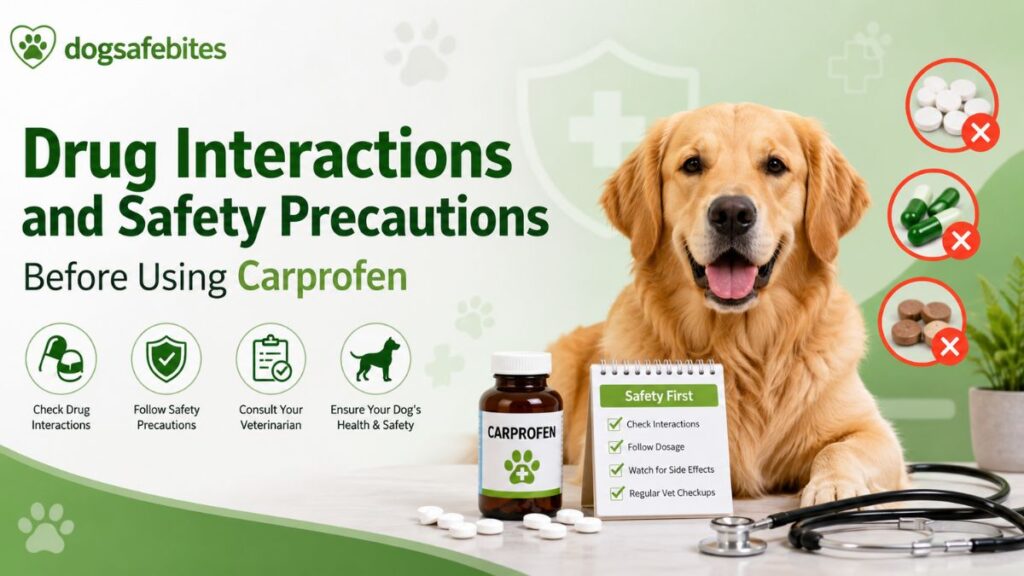
This is why switching medications requires a washout period. Moving from one NSAID to another, or between an NSAID and a steroid, means the first drug must clear the system before the second begins. The length depends on the specific drugs and their half-lives, and only your veterinarian should set it.
Other interactions worth raising at the appointment: ACE inhibitors and diuretics such as furosemide, which combine with NSAIDs to stress the kidneys; anticoagulants and digoxin, since carprofen is highly protein-bound and can displace other tightly bound drugs; aminoglycoside antibiotics; and phenobarbital.
Before the prescription is written, give your vet a complete list: prescription drugs, joint supplements, flea and tick products, and anything bought over the counter. Mention carprofen to any surgeon or emergency vet who treats your dog, since it affects anesthetic planning.
Alternatives to Carprofen for Dogs
When carprofen isn’t tolerated or isn’t appropriate, veterinarians have real options, and most modern arthritis plans combine several rather than leaning on one drug.

| Option | Type | How It’s Given | Typical Role |
| Meloxicam (Metacam) | NSAID | Oral liquid or tablet | Common carprofen substitute |
| Firocoxib (Previcox) | COX-2 selective NSAID | Daily chewable tablet | Arthritis and post-surgical pain |
| Grapiprant (Galliprant) | EP4 receptor antagonist | Daily tablet | Gentler option for early arthritis |
| Bedinvetmab (Librela) | Anti-NGF monoclonal antibody | Monthly injection at the clinic | For dogs who can’t take NSAIDs |
| Gabapentin | Nerve pain modifier | Oral capsule | Add-on, not a standalone replacement |
Bedinvetmab works through a different pathway entirely, blocking nerve growth factor rather than reducing inflammation, which makes it useful for dogs with liver or kidney limitations. It has been widely adopted since approval, though the FDA has continued to review post-marketing adverse event reports, so it deserves a proper conversation with your vet rather than a quick switch.
Supportive care often delivers more than owners expect. Weight loss is the single most effective non-drug intervention for an arthritic dog. Controlled exercise, physical rehabilitation or hydrotherapy, omega-3 fatty acids, polysulfated glycosaminoglycan injections (Adequan), rugs on slick floors, and a ramp instead of a jump all reduce how much medication a dog needs.
Conclusion
Carprofen remains one of the most reliable tools in canine pain management, and the dosing itself is simple: 2 mg per pound of body weight daily, given once or split in two. What turns that number into safe treatment is everything around it — food with every dose, an honest weight, a locked cabinet, and bloodwork you show up for. The dogs who do best are the ones whose owners treat carprofen as an ongoing conversation with the vet rather than a bottle to refill.
Watch your dog rather than the calendar. Appetite, energy, stool, and stiffness tell you more about how the medication is working than any schedule can. If something changes, stop and call, because you will never regret asking early.
Frequently Asked Questions
How much carprofen can I give my dog per day?
The labeled amount is 2 mg per pound of body weight daily, given once or split into two 1 mg/lb doses, exactly as prescribed.
Can I buy carprofen without a prescription?
No, carprofen is prescription-only in the United States and requires a veterinary exam and diagnosis.
How long does carprofen take to work in dogs?
Most dogs show relief within one to two hours, though arthritis improvement is best judged after one to two weeks.
Should carprofen be given with food?
Yes, always give it with a meal, since food significantly reduces the risk of stomach upset.
What should I do if I miss a dose?
Give it when you remember unless the next dose is due soon, and never give two doses together to make up for it.
Can dogs take carprofen long term?
Yes, many arthritic dogs stay on it for years at the lowest effective dose with regular liver and kidney bloodwork.
Is carprofen safe for cats?
No, carprofen is approved for dogs only, and even one tablet can be dangerous for a cat.