Yes, dogs can eat small amounts of cooked pasta with nothing added as an occasional treat. Cooked pasta with nothing added is safe for dogs, though it carries little nutrition, so it should never replace balanced dog food. Pasta with sauce, garlic, onion, butter, or cheese is a different story, and that version is unsafe.

Can dogs eat pasta? The direct answer
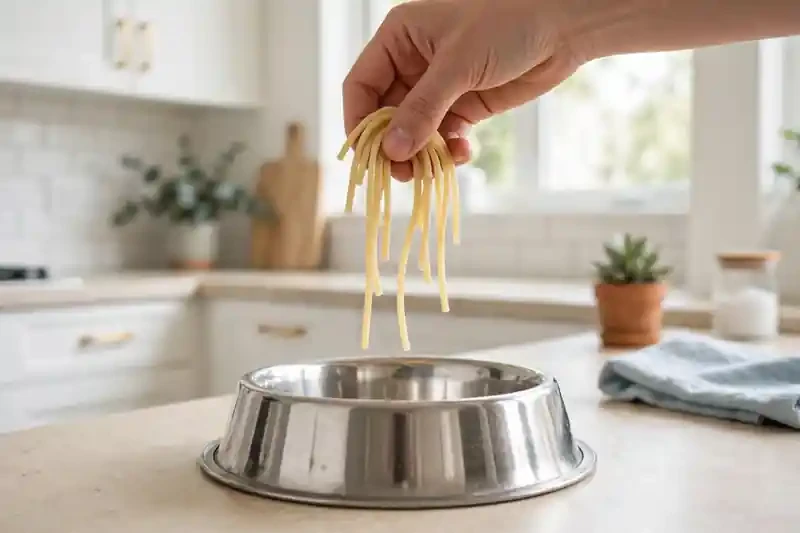
Dogs can eat plain cooked pasta in small amounts, and most vets consider it safe. Plain means boiled in water with nothing added: no salt, no butter, no oil, no sauce, and no seasoning. A few pieces of plain spaghetti or penne make a harmless occasional treat for a healthy dog.
Pasta sits in a gray zone. Veterinarians describe foods like this as empty calories for dogs: filling, but not nourishing, and safe only in small amounts. The danger is never the noodle itself. It is what people put on the noodle, and how much of it the dog eats.

What plain pasta is made of
Plain pasta is made from wheat flour, water, and sometimes egg. That is the whole recipe for most dried pasta, and it is why plain pasta is safe: none of those ingredients is toxic to dogs. Egg noodles add egg to the mix, and plain cooked egg is safe for dogs too.
Fresh pasta follows the same rule, as long as it is plain. Pasta dough made with flour, water, and egg, boiled and served with nothing on it, is safe in small amounts. The problems start with filled pasta, flavored pasta, and pasta made with extra ingredients like spinach, tomato, or cheese filling. Those extras can carry ingredients a dog should not eat.
Whole wheat pasta is the same as white pasta for safety, with a little more fiber. Rice pasta and legume pasta are also safe when plain, and they suit dogs with wheat sensitivity. The flour type matters less than the toppings, and the toppings decide whether the bowl is safe.

The nutrition problem: empty calories
Plain pasta offers quick energy through carbohydrate, but dogs do not need carbohydrate as a primary energy source the way people do. Their bodies run on protein and fat, and pasta adds calories without the nutrients a dog needs. A dog that fills up on pasta eats less of its balanced food, and that gap is where problems start.
Overfeeding pasta leads to weight gain, and weight gain leads to the long list of problems that follow fat dogs: sore joints, diabetes, heart strain, and a shorter life. Pasta is easy to overfeed because it looks light and harmless, and a handful of noodles carries more calories than most owners guess. Treats of all kinds should stay inside the 10 percent rule, meaning they make up no more than 10 percent of the dog’s daily calories.
Wheat is also one of the foods that most often triggers allergies in dogs. The American Kennel Club notes that the five ingredients that most often trigger food allergies in dogs are beef, dairy, wheat, chicken, and egg, in that order, so wheat is the only grain on the list. A dog that itches, gets ear infections, or has soft stool after wheat foods may be reacting to the wheat itself, and pasta is a wheat food.

Sauces: where pasta turns dangerous
Sauces turn safe pasta into a dangerous meal. Tomato sauce, cream sauce, pesto, and cheese sauce all carry fat, salt, and seasoning a dog should not eat. Rich fatty sauces can trigger pancreatitis in susceptible dogs, a painful inflammation of the pancreas that causes vomiting, belly pain, and dehydration.
Tomato sauce is a double problem. Tomatoes themselves are acidic and can upset a dog’s stomach, and most sauces add garlic and onion for flavor. The VCA guide to pancreatitis in dogs explains how a rich fatty meal triggers the condition and why some dogs end up in hospital after one. Cheese sauce adds fat and salt on top, and butter adds pure fat.
Alfredo and other cream sauces are the worst of the set, because they combine butter, cream, cheese, and garlic in one bowl. A dog that eats a plate of alfredo pasta faces fat, salt, dairy, and alliums at once. The ASPCA list of people foods to avoid covers the sauce ingredients that cause the most trouble, and garlic and onion top it.

Garlic, onion, and other toxic add-ins
Garlic and onion are the toxic add-ins that show up most in pasta, and both damage a dog’s red blood cells. Garlic in any form is unsafe, and the Pet Poison Helpline garlic toxicity page explains the dose and the delayed anemia that follows a meal.
Onion powder is toxic to dogs just like fresh onion, and powdered forms are concentrated, so a spoonful of mix carries more allium than the same spoonful of fresh cooked sauce.
Jarred sauces hide these ingredients well. A label that lists garlic powder or onion powder in the middle of a long ingredient list is easy to miss, and restaurant pasta is worse, because there is no label at all. When the ingredient list is unknown, assume the alliums are in there and keep the pasta away from the dog.
Other add-ins cause trouble too. Mushrooms in a sauce can be safe or toxic depending on the type, and chili flakes, black pepper, and hot sauce irritate the gut. Meatballs in sauce add fat and seasoning, and sausage in pasta adds both plus salt. The noodle is safe. The company it keeps is not.
How much pasta is safe
A few pieces of plain cooked pasta, once or twice a week, is a safe amount for most healthy dogs. The portion should fit inside the 10 percent treat rule, and it should never replace a meal. A small dog gets a few noodles, and a large dog gets a small handful.
The rest of the day stays on balanced dog food.
Size changes the math. A small dog crosses the line faster because every risk scales with body weight, and a few noodles are a bigger share of a small dog’s day. Dogs with pancreatitis, kidney disease, heart disease, diabetes, or a wheat allergy should not get pasta at all, even plain. The vet can confirm whether pasta fits a dog with a health condition.
Frequency matters as much as amount. A few noodles once at a family dinner is one thing, but pasta as a daily topper is a habit that quietly loads a dog with carbohydrate meal after meal. If your dog ate a real portion of sauced pasta, watch for vomiting, diarrhea, belly pain, and unusual thirst over the next 24 to 48 hours, and call the vet if any of them show up or repeat.

Pasta types: spaghetti, penne, egg noodles, and more
Spaghetti, penne, macaroni, and egg noodles are all safe for dogs when plain and cooked. The shape does not matter, and the dog will not care. Cut long spaghetti into short pieces for small dogs, since long strands can be hard to chew and easy to gulp.
Egg noodles are safe in the same small amounts as other pasta, and they suit dogs that need a softer texture. Rice noodles and chickpea pasta are safe when plain, and they work for dogs with wheat sensitivity. Whole wheat pasta adds a little fiber, but it is still mostly carbohydrate, so the portion rules do not change.
Stuffed pasta is the exception. Ravioli, tortellini, and other filled pastas carry cheese, meat, or spinach filling, and the filling is where the risk sits. Flavored pasta, like tomato or spinach pasta, adds ingredients that may not suit a dog. Skip stuffed and flavored pasta, and stick to plain shapes with nothing inside them.

Raw and dry pasta: never feed it
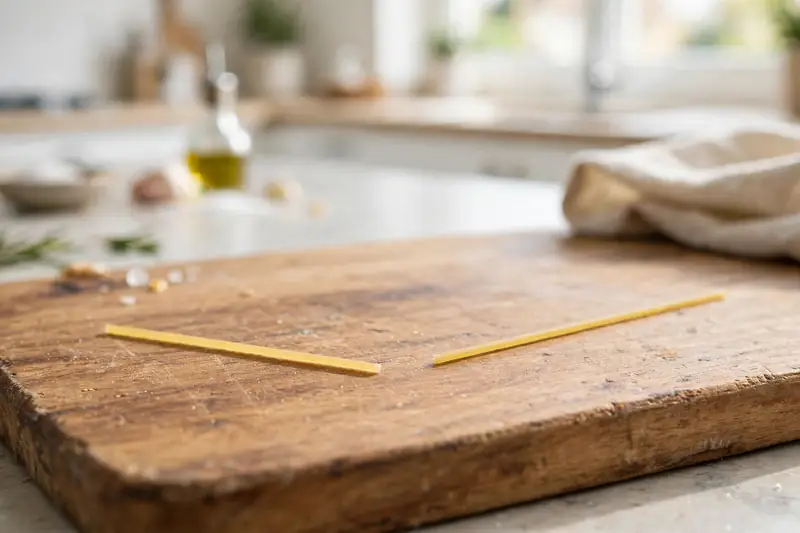
Raw or dry pasta is hard to digest and poses a choking hazard, especially for small dogs that gulp. Dry pasta can also swell in the stomach as it absorbs water, and sharp broken pieces can irritate the gut. Cooked pasta is the only form that belongs in a dog’s bowl.
Pasta water carries salt and starch, which can irritate a dog’s stomach, and a dog that laps up a lot of it can take in too much sodium. Rinse cooked pasta with clean water before serving, and throw the cooking water away. The same rule covers broth and soup liquids: seasoned or salty liquids do not belong in a dog’s bowl.
A dog that steals a piece of dry pasta off the floor will most likely be fine, since one piece is a tiny dose. Watch for coughing, gagging, or stomach upset, and call the vet if the dog struggles to swallow or vomits repeatedly. Keep the pasta box on a high shelf, because a dog that reaches it can eat far more than one piece.
Pasta for puppies, seniors, and sick dogs
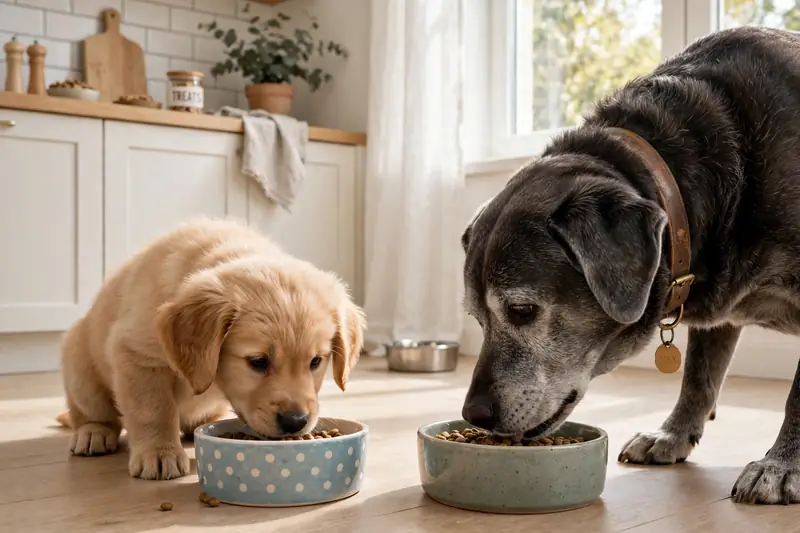
Puppies can eat plain cooked pasta in tiny amounts once they are eating solid food, but they do not need it. A puppy’s food is already balanced for growth, and pasta adds calories without the nutrients a growing body needs. Cut the pieces small, since puppies gulp, and skip pasta entirely for the first few weeks of weaning.
Senior dogs handle plain pasta the same way adult dogs do, in small amounts, but seniors often carry the exact conditions that pasta punishes: extra weight, weak kidneys, and touchier pancreases. A senior dog that is already overweight should skip pasta and get a lower calorie treat instead. The rice guide covers a gentler carbohydrate that suits seniors better.
Sick dogs need the vet’s say-so before any pasta. Plain cooked pasta can be part of a bland diet for dogs with diarrhea, but only as a small part, and only when the vet recommends it. The usual bland diet is plain boiled chicken and rice, and pasta is a substitute for the rice, not an addition to it. If vomiting or diarrhea lasts more than 48 hours, or comes with blood or lethargy, get the dog to the vet.
Better carb swaps for dogs
Rice is the best carb swap for pasta, and it is gentler on the stomach. Plain cooked rice is safe for most dogs, and it is the carbohydrate vets reach for in a bland diet. Oats are another good pick, and the American Kennel Club notes that oatmeal is high in fiber and helps keep a dog’s skin strong.
Sweet potatoes beat pasta on nutrition, with fiber, vitamins, and a slower sugar release. Plain boiled or baked sweet potato, with no butter or seasoning, is a treat that actually feeds the dog. Plain bread is another occasional option, though it is the same empty carbohydrate story as pasta, so the portion stays small.
The best swap is often no carbohydrate at all. A piece of plain chicken, a few blueberries, or a carrot stick gives the dog a treat with real nutrition behind it. Pasta is fine as a rare share from your plate, but it should never be the treat you reach for every day.

Frequently asked questions about dogs and pasta
Can dogs eat spaghetti?
Yes, dogs can eat plain cooked spaghetti in small amounts, with no sauce, oil, salt, or seasoning. Cut long strands into short pieces for small dogs, and keep the portion inside the treat allowance.
Can dogs eat mac and cheese?
Mac and cheese is unsafe. The dish combines pasta with cheese sauce, butter, and salt, and the fat load can trigger pancreatitis. The pasta is safe, but the cheese sauce is not, so keep the whole dish away from the dog.
Can dogs eat ramen noodles?
Ramen noodles are unsafe. The seasoning packet is very salty, and the flavoring often includes garlic and onion powder. Plain ramen noodles with no seasoning are still very salty, so skip ramen entirely.
Can dogs eat pasta sauce?
Pasta sauce is not safe. Tomato sauce, cream sauce, and pesto all carry garlic, onion, fat, and salt. A lick of sauce off the floor is unlikely to harm a healthy dog, but sauce is never something to serve on purpose.
Can dogs eat lasagna?
Lasagna is unsafe. The dish layers pasta with cheese, sauce, and often garlic and onion, and the fat and salt load is far too high for a dog. Keep the whole dish off the dog’s plate.
My dog ate pasta with garlic sauce. What should I do?
Call your vet or the ASPCA Animal Poison Control Center at (888) 426-4435. Note how much the dog ate and when, and watch for vomiting, diarrhea, weakness, or pale gums over the next few days, since garlic anemia shows up late.
Plain cooked pasta is safe in small amounts, and sauced pasta is not. The noodle itself is harmless, and everything people put on it is where the risk lives. Serve a few plain noodles once in a while, skip the sauce, the butter, the cheese, and the garlic, and keep the portion inside the 10 percent treat rule. The AKC human foods list gives the full safe and unsafe list for the rest of the plate, and plain rice or sweet potato beats pasta whenever you want a treat that actually feeds the dog.
Disclaimer: This article is for general information only and is not veterinary advice. If your dog eats pasta with garlic or onion sauce, or shows repeated vomiting or belly pain, contact your veterinarian promptly.