

Yes, can dogs eat rice? Plain, cooked rice is safe for dogs and is one of the foods veterinarians most often recommend: it is the classic bland-diet staple for upset stomachs, an easy-to-digest carbohydrate, and a useful way to make medication or a reduced appetite more manageable. The rules are simple: plain only, cooked, no seasoning, and it should complement a balanced diet, never replace it. This guide covers white vs brown rice, the bland diet protocol, portions, and the situations where rice is the wrong choice.
White rice vs brown rice, which is better for dogs
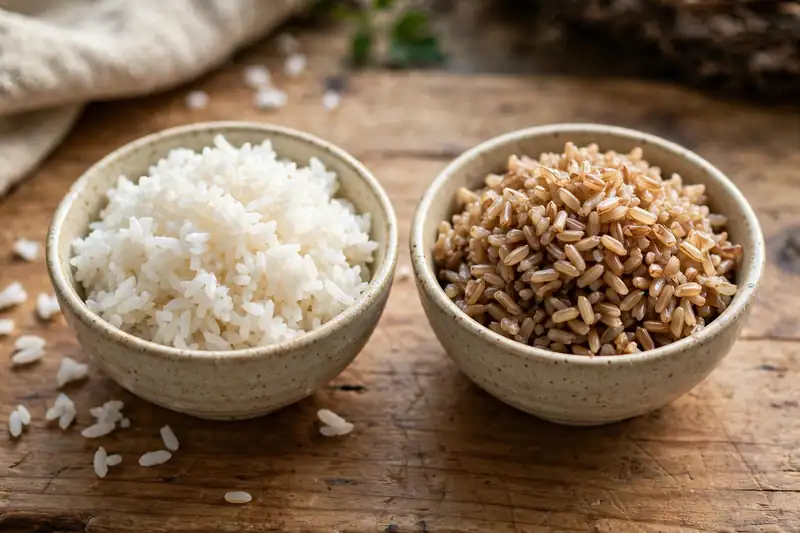
Both are safe, but they serve different purposes:
- White rice, the vet’s pick for digestive trouble. It is lower in fiber, easier to digest, and binding, which is exactly what you want during diarrhoea or vomiting recovery. PetMD’s guidance on bland diets centers on white rice for this reason.
- Brown rice, more nutritious on paper (more fiber, B vitamins, minerals, and antioxidants in the bran layer) but harder to digest. For healthy dogs with normal digestion, it is a fine whole-grain addition. For upset stomachs, its extra fiber can actually worsen diarrhoea, so white wins during recovery.
The practical rule most vets follow: white rice for sick days, brown rice (or white) for healthy days. Neither should be seasoned. And if your dog has never had brown rice, introduce it gradually, the fiber jump can cause gas in sensitive dogs.
Rice for upset stomachs, the bland diet

This is rice’s most important job. When a dog has mild vomiting or diarrhoea, vets commonly prescribe a short-term bland diet: plain boiled white rice mixed with plain boiled boneless, skinless chicken breast (or lean ground turkey), in roughly a 2:1 or 3:1 rice-to-protein ratio.
The protocol, per standard veterinary guidance:
- Fast briefly if advised, some vets recommend withholding food for 12-24 hours for acute vomiting (never fast puppies, diabetics, or tiny breeds without explicit vet instruction).
- Start small, a few tablespoons of the bland mix, offered several times a day.
- Watch for 24-48 hours, if vomiting/diarrhoea resolve and energy returns, continue 2-3 days.
- Transition back gradually, mix increasing amounts of regular food into the bland diet over 3-5 days. Never switch abruptly back.
Critical limits: the bland diet is short-term only (a few days). It is not nutritionally complete, long-term use causes deficiencies. And it is for mild cases: vomiting that will not stop, bloody diarrhoea, lethargy, abdominal pain, or a puppy with symptoms all mean “call the vet now,” not “try rice.”
What rice actually gives your dog
Rice is primarily an energy source, digestible carbohydrate, with modest extras:
- Carbohydrates, quick, gentle energy; the main point of rice.
- B vitamins, small amounts, more in brown rice.
- Manganese and magnesium, trace minerals, more in brown rice.
- Very little protein, fat, or fiber (white rice), which is why it is gentle but incomplete.
Dogs do not need rice, complete dog foods already supply carbohydrates, but it is a useful, safe, inexpensive tool: for bland diets, for hiding pills in a soft ball of rice, for tempting a dog with low appetite, and as an occasional mixer. Think of it as a utility player, not a starter. And like any utility player, its value comes from being used at the right moments, bland-diet days, pill-hiding duty, appetite-tempting, rather than from being on the field all the time.
The arsenic question, should you worry?
Rice absorbs arsenic from soil and water more readily than most grains, that is an established fact, and it applies to rice meant for humans too. Before you panic: the levels in commercial rice are regulated, and rice remains a staple for billions of people. For dogs eating rice occasionally or short-term, the risk is minimal. A few sensible habits reduce it further:
- Rinse rice before cooking, removes surface contaminants including some arsenic.
- Cook in excess water (like pasta, then drain), studies show this removes significantly more arsenic than the absorption method.
- Vary grains, if your dog gets grain mixers regularly, rotate rice with oats or barley rather than serving rice daily for months.
- Source matters, rice from regions with lower soil arsenic (often cited: California, India, Pakistan basmati) tends to test lower.
This is perspective, not alarm: the occasional bowl of rice is not an arsenic event. It is simply worth knowing if rice becomes a frequent menu item, and these three habits (rinse, excess water, rotate) cost nothing and meaningfully reduce whatever exposure exists.
How much rice can dogs have

Rice is calorie-dense, a cup of cooked white rice carries roughly 200 calories, so portions matter, inside the 10% treat/food-extra allowance:
- Small dogs (under 20 lbs): 1-2 tablespoons mixed into food.
- Medium dogs (20-50 lbs): 1/4 to 1/2 cup.
- Large dogs (over 50 lbs): 1/2 to 1 cup.
During a bland diet, the vet sets the amounts, follow those exactly, since the ratios and duration are therapeutic, not casual. Outside bland diets, rice is an occasional addition, not a daily filler. A dog whose bowl is half rice every day is getting diluted nutrition, the same warning that applies to any single-ingredient topper, from pumpkin to chicken.
How to cook rice for dogs

- Rinse the rice under cold water.
- Cook plain, water only. No salt, no butter, no oil, no stock, no seasoning.
- Cook fully, soft and tender; undercooked rice is harder to digest.
- Cool completely, serve at room temperature, never hot.
- Store safely, refrigerate leftovers within an hour; use within 3-4 days. Cooked rice can harbor Bacillus cereus if left at room temperature, the same food-safety rule as human rice.
What never goes in the dog’s rice: fried rice (oil, soy sauce, egg, vegetables like onion), seasoned rice mixes, rice with garlic or onion powder, and risotto-style preparations with cheese and wine. Plain means plain.
When rice is NOT the answer

Rice is gentle, but it is not right for every dog or situation:
- Diabetic dogs, white rice has a high glycemic index and spikes blood sugar. Diabetic dogs need vet-approved carbohydrate sources and portions; do not freelance this.
- Dogs with grain allergies, true grain allergies are uncommon in dogs (protein allergies are far more common), but they exist. If rice triggers itching, ear issues, or GI signs, stop and tell your vet.
- Overweight dogs, rice adds calories without much nutrition; it is the wrong filler for a weight-loss plan.
- Pancreatitis, during active pancreatitis, feeding protocols are strict and vet-directed; do not improvise with rice.
- Chronic diarrhoea, a bland diet covers a few days; diarrhoea lasting beyond 48 hours needs diagnosis, not more rice.
Rice in commercial dog food, why it is already there
If you read dog food labels, rice shows up constantly, and that is not a red flag. Pet food nutritionists use rice (and other grains) deliberately: it is a highly digestible carbohydrate source, it helps kibble hold its shape during manufacturing, and decades of feeding trials support its safety. “Grain-free” marketing once cast suspicion on all grains, but veterinary nutritionists widely note that grain-free diets offer no proven benefit for most dogs, and the FDA’s investigation into diet-associated heart disease (dilated cardiomyopathy) made many vets actively prefer diets that include grains like rice.
The takeaway: rice in your dog’s kibble is a feature, not a filler. Adding a little extra plain rice at home is consistent with what nutritionists already formulate, just keep the extras small so the carefully balanced ratios in the kibble stay roughly intact.
Rice for senior dogs
Older dogs often do well with a little rice in the mix. Senior dogs can have more sensitive digestion, reduced appetite, and dental issues that make hard kibble less appealing, soft, plain rice mixed into food can tempt eating and ease digestion. It is also useful for hiding medications when cheese or peanut butter are off the table (weight or pancreatitis concerns).
The senior caveats: older dogs are more likely to be managing kidney disease, diabetes, or weight issues, all conditions where carbohydrate type and amount need vet oversight. And seniors need more high-quality protein, not less, so rice must never displace the protein portion of the meal. A spoonful as a mixer, with the vet’s blessing, is the right scale.
Puppies and rice
Yes, puppies can eat plain cooked rice, and the bland-diet protocol applies to them too, with one big difference: never fast a puppy without explicit vet instruction, and call the vet sooner. Puppies dehydrate faster, their blood sugar drops faster, and what looks like mild tummy trouble can escalate quickly. For healthy puppies, tiny amounts of plain rice as an occasional mixer are fine; their complete puppy food remains the foundation, and every extra should be small enough not to unbalance it.
The honest summary: rice is one of the safest, most useful human foods for dogs, the backbone of the vet-recommended bland diet, gentle on stomachs, and easy to prepare. Keep it plain and cooked, choose white for sick days and brown (or white) for healthy days, respect portions, and remember it is a genuinely useful tool and a treat, not a diet. Used that way, it earns its place in every dog owner’s kitchen playbook.
For the same plain-only, small-portion thinking across the foods dogs meet most often, see our wider guide to what human food dogs can eat. For another gentle vegetable often paired with rice in bland diets, our carrot guide covers safe portions.
Frequently Asked Questions
Can dogs eat white rice?
Yes. Plain cooked white rice is safe and is the standard vet recommendation for bland diets during digestive upset. Serve it plain, cooled, and unseasoned.
Is brown rice better than white rice for dogs?
Nutritionally, brown rice has more fiber, vitamins, and minerals. But for upset stomachs, white rice is better, easier to digest and binding. For healthy dogs, either is fine.
Can dogs eat rice every day?
Small amounts mixed into a balanced diet are fine, but rice should not become a daily staple that displaces complete dog food, it is not nutritionally complete. Variety and balance matter.
How much rice can I give my dog?
Roughly: 1-2 tablespoons for small dogs, 1/4-1/2 cup for medium dogs, 1/2-1 cup for large dogs, within the 10% extras allowance. During a vet-prescribed bland diet, follow the vet’s amounts exactly.
Can dogs eat fried rice?
No. Fried rice contains oil, soy sauce (very high sodium), and often onion, garlic, or egg cooked with seasoning, all wrong for dogs. Only plain cooked rice.
Is rice good for dogs with diarrhoea?
Yes, plain boiled white rice (often with boiled chicken) is the classic vet-recommended bland diet for mild diarrhoea. Use it short-term (a few days); if diarrhoea persists beyond 48 hours, see your vet.
Can diabetic dogs eat rice?
Only under veterinary guidance. White rice has a high glycemic index and can spike blood sugar. Diabetic dogs need carefully managed carbohydrate sources, do not add rice without your vet’s approval.
Should I worry about arsenic in rice for my dog?
For occasional or short-term feeding, no. To minimize exposure, rinse rice before cooking, cook in excess water and drain, and rotate grains rather than serving rice daily for months.
This article is general information only and is not a substitute for veterinary advice. If your dog has diabetes, a health condition, or is on a prescription diet, check with your veterinarian before adding rice.



2 thoughts on “Can Dogs Eat Rice? Plain Cooked Is Safe”