
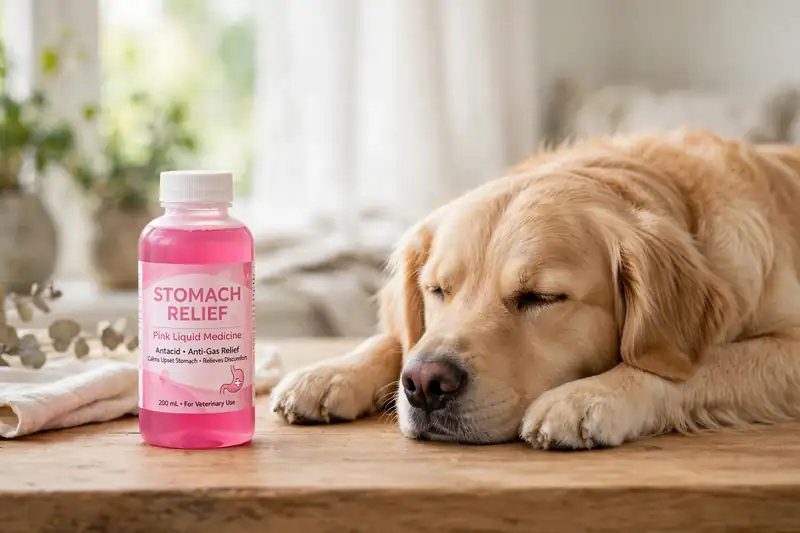
Pepto-Bismol sits in millions of medicine cabinets, and when a dog gets diarrhea, reaching for the pink bottle feels natural. The honest veterinary answer is more cautious than most owners expect: Pepto-Bismol is technically safe for dogs, but many vets rarely recommend it, and some dogs should never get it. This guide explains what the drug does, the salicylate risk behind the caution, the dosage vets cite when they do approve it, and the safer alternatives most vets prefer.
Is Pepto-Bismol safe for dogs?
Technically yes, but with real reservations. The AKC‘s Chief Veterinary Officer, Dr. Jerry Klein, says he rarely recommends Pepto-Bismol for dogs because its salicylates could cause gastric bleeding, and the bismuth turns stool black, which can mask that bleeding. Many vets now prefer other options for mild digestive upset.
“Technically safe” is doing heavy lifting in that sentence. It means the drug is not a poison at appropriate doses, not that it is a good idea. The veterinary community has drifted away from Pepto-Bismol over the years as the risks became clearer and better alternatives became standard. That drift is worth respecting. When the profession’s own chief veterinary voice says he rarely reaches for it, the default should be to ask the vet first rather than dose from the cabinet. This does not make Pepto-Bismol dangerous in every case. It makes it a drug with a narrower safe lane than its over-the-counter status suggests, and the rest of this guide maps that lane exactly.
How Pepto-Bismol works
The active ingredient is bismuth subsalicylate. The bismuth coats and soothes the stomach and intestinal lining, has mild antibacterial effects, and reduces inflammation. The salicylate part, related to aspirin, adds anti-inflammatory action. Together they can calm nausea, mild diarrhea, and indigestion, which is why the drug helps humans and, in principle, dogs.

The coating action is the useful part. Bismuth forms a protective layer over irritated gut lining, which eases the cramping and urgency of mild digestive upset. Its mild antibacterial effect can help when the upset involves bacterial overgrowth. The salicylate component is the double-edged part: it contributes anti-inflammatory action, but salicylates are the aspirin-family compounds dogs handle poorly. Dogs absorb nearly all of the salicylate, and it adds to the effects of any aspirin, NSAID, or steroid the dog may already take. That interaction is invisible to the owner and significant to the vet. Understanding this split, helpful bismuth plus risky salicylate, explains the entire veterinary debate in one paragraph.
The salicylate risk vets worry about
Salicylates can irritate the stomach lining and cause gastric bleeding in dogs, especially with repeated doses. Dogs are more sensitive to salicylates than humans, small dogs most of all. Overdose can cause vomiting, lethargy, rapid breathing, and in severe cases organ damage. This is the core reason vets urge caution.
The risk is dose- and duration-dependent, which is why the guidance stresses one or two doses, not a week-long course. A single appropriate dose in a healthy medium or large dog is unlikely to cause harm. The trouble starts with repeated dosing, where salicylate accumulates, or in dogs with existing vulnerabilities: a stomach already ulcerated, kidneys already struggling, or another salicylate-containing drug already on board. Small dogs face higher risk because the margin between a helpful dose and a harmful one narrows with body weight. Signs of salicylate trouble include vomiting (sometimes with blood), dark or tarry stool beyond the expected bismuth darkening, lethargy, loss of appetite, and rapid breathing. Any of these after dosing means stop the drug and call the vet.
Dosage: what vets actually say
Only give Pepto-Bismol with your vet’s approval, and confirm the dose for your dog’s weight. The commonly cited guidance, from the AKC’s Dr. Klein, is 1 teaspoon of regular-strength liquid per 10 pounds, every six to eight hours, for no more than one or two doses. If diarrhea persists, stop and call your vet.

Note what is missing from that guidance: tablets, extra-strength formulas, and long courses. The teaspoon-per-10-pounds figure refers to the regular-strength liquid. Tablet dosing differs and should come from your vet directly. The Merck Veterinary Manual notes there is no precise established dose for animals, which is itself a warning: this drug was never optimized for dogs. Measure with a proper dosing syringe, not a kitchen spoon. Give the dose with a small amount of food unless your vet says otherwise. And respect the dose limit strictly. “A little more can’t hurt” is exactly how salicylate problems start. If you are unsure about any part of the dosing, the safe move is a phone call to the vet before the first dose, not after the third.
Dogs who must never get Pepto-Bismol
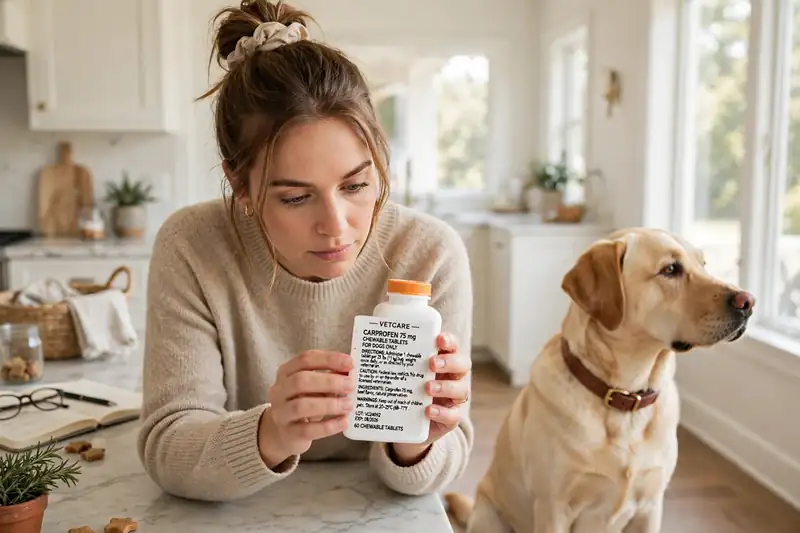
Do not give Pepto-Bismol to dogs with bleeding disorders, dogs that are pregnant or nursing, puppies under 12 weeks old, or dogs taking NSAIDs such as carprofen or deracoxib, aspirin, steroids, or blood thinners. Dogs with kidney or liver disease or known aspirin sensitivity are also at higher risk and need veterinary direction first.

Each exclusion has a reason. Bleeding disorders plus a drug that can cause gastric bleeding is an obvious no. Pregnancy and nursing matter because salicylates cross into developing puppies and milk. NSAIDs, aspirin, and steroids stack their effects with salicylates, multiplying the bleeding and ulcer risk. Kidney or liver disease impairs the body’s ability to clear the drug, raising toxicity risk. These are not rare edge cases. Plenty of senior dogs take daily NSAIDs for arthritis, which puts a large share of the dogs most likely to get diarrhea squarely in the do-not-dose group. When in doubt about interactions, list every medication and supplement your dog takes and read it to the vet or pharmacist. Five minutes of checking beats a bleeding ulcer.
The black stool problem
Bismuth reacts with sulfur in the digestive tract and turns the stool dark gray or black. This is expected and harmless in itself, but it looks exactly like melena, the black tarry stool that signals digested blood from stomach or intestinal bleeding. That masking effect is a major reason vets are cautious.

Here is the practical problem. Suppose you give Pepto-Bismol for mild diarrhea, and the salicylate irritates the stomach enough to cause minor bleeding. The stool turns black from the bismuth either way. You cannot tell drug effect from warning sign, and neither can your vet without testing. The symptom you would normally watch for has been erased. This is why Dr. Klein flags it specifically. If your dog is on Pepto-Bismol and you see black stool, do not assume it is just the drug. Watch for the company it keeps: vomiting, lethargy, loss of appetite, or abdominal pain alongside black stool warrant a vet call regardless. And tell the vet the dog received bismuth, because it also affects how they interpret the stool and can even show up on X-rays.
Check the label: xylitol and formulations
Use only the original regular-strength Pepto-Bismol unless your vet directs otherwise. Some chewable, ultra, or “with probiotics” formulations of bismuth products may contain xylitol or other added ingredients, and xylitol is severely toxic to dogs. Read the full ingredient list on the exact product in your hand before dosing.

The classic pink liquid rarely contains xylitol, but product lines change and store brands vary. Chewable tablets are the highest-risk category for hidden sweeteners, since xylitol is a common sugar-free sweetening agent. Look for xylitol under its aliases too: birch sugar, wood sugar, birch bark extract, or E967. If any of those appear, do not give the product to your dog under any circumstances. This check takes thirty seconds and prevents a catastrophe, because xylitol poisoning is a genuine emergency with a fast clock. Also avoid “extra strength” versions for dosing simplicity: the teaspoon-per-10-pounds guidance assumes regular strength, and stronger concentrations shrink the safety margin. When your vet approves Pepto-Bismol, confirm exactly which product and strength they mean.
When Pepto-Bismol might be appropriate
The narrow appropriate case is a healthy adult dog with mild, short-term digestive upset, no contraindications, no interacting medications, and a vet who has approved the dose. Even then, most vets limit it to one or two doses. It is a bridge for mild symptoms, not a treatment plan.

Picture the scenario: a healthy three-year-old dog with one episode of soft stool after stealing a rich scrap, otherwise bright, eating, and drinking. The vet, reached by phone, approves a single dose. That is the lane. Outside it, the drug earns its caution. Recurring diarrhea needs diagnosis, not repeated pink doses. Diarrhea with vomiting, lethargy, or blood needs a vet visit, not a home remedy. Puppies, seniors on medication, and dogs with any chronic condition need individual guidance. Some vets prefer the dog-formulated bismuth product, Corrective Suspension, when bismuth is genuinely indicated, since it is made for canine dosing. Ask your vet whether that or another option suits your dog better than the human product.
Safer alternatives for upset stomach
For mild digestive upset, most vets prefer a short bland diet of boiled chicken and white rice, plain canned pumpkin for gentle fiber, a canine probiotic, and time. These address the symptoms without salicylate risk, drug interactions, or masked warning signs, and they work for the great majority of mild cases.

The bland diet is the workhorse. Plain boiled chicken and white rice, fed in small frequent meals for a couple of days, settles most mild upsets on its own; our rice guide covers the preparation. A spoonful of plain canned pumpkin adds soluble fiber that firms loose stool; see our pumpkin guide for amounts and the pie-filling trap. Canine probiotics support the gut flora during recovery. None of these mask bleeding, interact with NSAIDs, or risk salicylate toxicity. They also treat the dog rather than the symptom: rest and easy food let the gut recover, while bismuth merely coats it. For anything beyond a mild, brief episode, the alternative is not a different home remedy. It is the vet, who can prescribe dog-specific anti-diarrheal medication with a known safety profile.
When to skip home treatment and call the vet
Skip home remedies and call your vet for bloody or black tarry diarrhea, repeated vomiting, refusal to eat or drink, lethargy or collapse, abdominal pain or bloating, fever, or symptoms lasting more than a day or two. Puppies, seniors, and dogs on medication should be seen sooner. Suspected poisoning is always an emergency.

Home treatment has a short leash. A bright dog with one soft stool can be watched. A dog with several red-flag symptoms needs professional care, and no over-the-counter product changes that. Bloody diarrhea can signal anything from dietary indiscretion to parvovirus to hemorrhagic gastroenteritis, and the treatments differ completely. Repeated vomiting plus diarrhea dehydrates dogs quickly, especially small ones. Abdominal pain or bloating raises the specter of obstruction or bloat, both surgical emergencies. The cost of an unnecessary vet visit is money. The cost of a delayed one can be the dog. When the symptoms do not fit the mild-and-brief pattern, or when your gut says something is wrong, trust the second instinct and call.
The takeaway on Pepto-Bismol: it is not the harmless pink helper its drugstore status suggests. Technically usable, rarely the best choice, and off-limits for a long list of dogs. When your vet approves it, dose exactly as directed and stop early. For most mild upsets, the bland diet in our rice guide and the fiber in our pumpkin guide do the job with none of the baggage. And for any food question during recovery, the human food guide is the safe reference.
Frequently Asked Questions
Can I give my dog Pepto-Bismol for diarrhea?
Only with your vet’s approval. It is technically safe at the right dose, but many vets rarely recommend it because of salicylate risks and the black-stool masking effect. Mild diarrhea often resolves with a bland diet alone. Never give it to dogs on NSAIDs, pregnant dogs, or dogs with bleeding disorders.
How much Pepto-Bismol can I give my dog?
The commonly cited veterinary guidance is 1 teaspoon of regular-strength liquid per 10 pounds of body weight, every six to eight hours, for no more than one or two doses. Always confirm the dose with your vet first, and stop if diarrhea persists after a few doses.
Why is Pepto-Bismol risky for dogs?
Its salicylate component, related to aspirin, can cause gastric bleeding, especially with repeated doses or in small dogs. Dogs absorb nearly all of the salicylate, and it interacts with NSAIDs, aspirin, and steroids. The bismuth also turns stool black, which can hide signs of intestinal bleeding.
Can puppies have Pepto-Bismol?
Puppies under 12 weeks should not get it, and older puppies need veterinary guidance first. Puppies dehydrate quickly and their symptoms can signal serious conditions like parvovirus, so a vet visit matters more than any home remedy at that age.
What if my dog is on Rimadyl or other NSAIDs?
Do not give Pepto-Bismol. The salicylates stack with NSAIDs like carprofen (Rimadyl) and deracoxib, multiplying the risk of stomach ulcers and bleeding. This combination is one of the clearest contraindications. Ask your vet for a safe alternative.
Does Pepto-Bismol contain xylitol?
The classic liquid formula typically does not, but some chewable or specialty formulations might. Always read the ingredient list on your exact product, watching for xylitol and its aliases (birch sugar, wood sugar, E967). If xylitol is listed, do not give it to your dog.
What can I give instead of Pepto-Bismol?
A short bland diet of boiled chicken and white rice, plain canned pumpkin for fiber, and a canine probiotic cover most mild cases. For anything persistent or severe, your vet can prescribe dog-specific medication with a well-established safety profile.
This article is general information only and is not a substitute for veterinary advice. Never give your dog any human medication without checking with your veterinarian first.


1 thought on “Pepto-Bismol for Dogs: What Vets Want You to Know”