

Yes, pumpkin is good for dogs, and it is one of the few home remedies that veterinarians genuinely recommend. PetMD lists plain, cooked pumpkin (or plain canned pumpkin with no additives) as safe for dogs, calling it rich in fiber, vitamins, and minerals that support digestion. Vets reach for it for two opposite problems, mild diarrhea and mild constipation, because its soluble fiber works in both directions. It is cheap, easy to find, and most dogs like the taste. But the details matter: the wrong kind of pumpkin, or too much of the right kind, can make things worse instead of better. Here is how to use it the way vets intend.
Why Vets Recommend Pumpkin
Pumpkin’s reputation in veterinary offices rests on one thing above all: soluble fiber. Soluble fiber absorbs water and forms a gel-like substance in the digestive tract, and that single mechanism helps in two seemingly opposite situations.
For mild diarrhea, the fiber absorbs excess water in the gut, adding bulk and firmness to loose stool. It does not stop diarrhea the way medication does, it gives the digestive tract something to work with while the gut settles.
For mild constipation, the same fiber adds bulk and moisture to the stool, which stimulates normal movement through the intestines. PetMD notes that pumpkin’s fiber and high water content make it useful for both conditions.
Beyond the fiber, pumpkin brings a solid nutritional profile: vitamin A (important for vision and immune function), vitamin C, vitamin E, potassium, and iron, all in a low-calorie package. That combination, gentle fiber plus micronutrients, with very few calories, is why pumpkin shows up in so many veterinary recommendations for digestive support and weight management alike.
The Two-Way Fiber Trick, Explained Simply
It sounds contradictory that one food helps both diarrhea and constipation, so here is the plain version. Soluble fiber is like a sponge. In a watery gut (diarrhea), the sponge soaks up the excess water and firms things up. In a dry, slow gut (constipation), the sponge holds onto water and adds soft bulk that gets things moving. The fiber itself is not a drug pushing the gut in one direction, it normalizes conditions in both directions by managing water and bulk. That is why vets describe pumpkin as a regulator rather than a treatment, and why it is appropriate for mild cases but not a substitute for diagnosis when something is genuinely wrong.
Which Pumpkin Is Safe (and Which Is Not)
This is the section that matters most, because the wrong pumpkin product can harm your dog:
Safe: plain canned pumpkin (100% pumpkin). Look for a can whose ingredient list says “pumpkin” and nothing else. No spices, no sugar, no additives. This is the product vets mean when they say “give pumpkin.”

Safe: plain cooked fresh pumpkin. Peeled, seeded, boiled or baked until soft, with nothing added. More work than the can, equally fine.

NOT safe: pumpkin pie filling. This is the critical distinction. Pumpkin pie filling, the can right next to the plain pumpkin on the shelf, contains sugar, spices like nutmeg and cinnamon, and other additives. Nutmeg in quantity is problematic for dogs, the sugar load is unhealthy, and some sugar-free versions may contain xylitol, which is toxic to dogs. Always read the label: if it says “pie filling” or lists anything beyond pumpkin, put it back.

Caution: raw pumpkin. A small piece of raw pumpkin flesh is not toxic, but raw pumpkin is harder to digest, and large amounts can cause stomach upset. Cooked is gentler and is what vets recommend.
Avoid: the stem and tough skin. The stem is a choking hazard and the skin is difficult to digest. Serve only the soft flesh.
Caution: pumpkin seeds. Plain, roasted pumpkin seeds are not toxic, and some sources note they contain beneficial nutrients, but they are high in fat and can be a choking hazard for small dogs. If you offer them, they should be plain, unsalted, and given sparingly. They are optional, not necessary.
Safe Portions by Dog Size
Start small, a teaspoon or two, and watch how your dog responds before working up to a full serving. Once you know your dog tolerates it, veterinary guidance generally follows these lines:
- Small dogs (under 15 lbs): 1 teaspoon per meal, once or twice daily.
- Medium dogs (15-40 lbs): 1-2 teaspoons to 1 tablespoon per meal.
- Large dogs (40+ lbs): 1 tablespoon per meal, once or twice daily.

A commonly cited rule of thumb is about 1 teaspoon of plain pumpkin per 10 pounds of body weight per day, split across meals. Treat pumpkin as a supplement or topper, a spoonful mixed into regular food, not as a meal replacement. And remember the 10% rule that governs all extras: treats and toppers combined should stay under roughly 10% of your dog’s daily calories.
How to Serve It
The easiest method is also the best: spoon the plain canned or cooked pumpkin directly onto your dog’s regular food and mix it in. Most dogs eat it without hesitation, the mild sweetness is appealing to them.
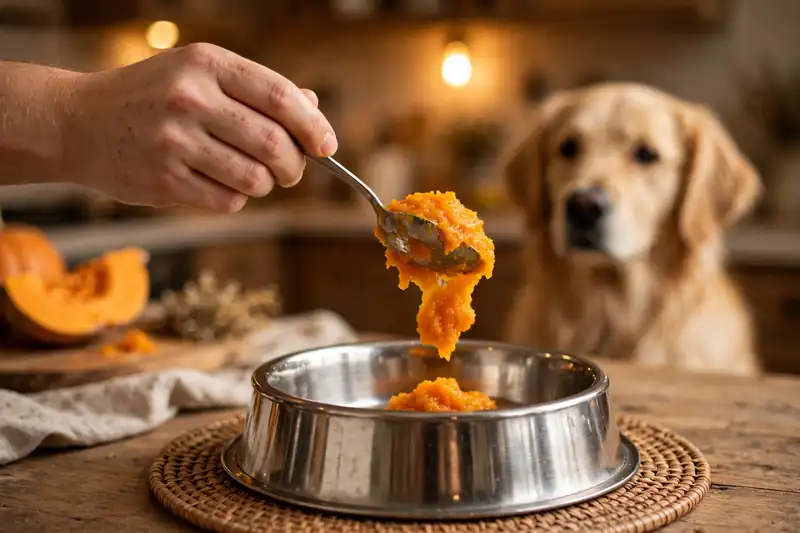
For a dog with mild diarrhea, serve it with a bland base: plain boiled chicken and white rice with a spoonful of pumpkin mixed in is the classic veterinary bland diet, and the pumpkin adds the fiber that firms things up.
For constipation, make sure your dog is drinking water alongside the pumpkin, fiber needs water to work, and adding fiber without adequate hydration can make constipation worse rather than better.
You can also freeze spoonfuls of plain pumpkin in a silicone mold or Kong for a cooling enrichment treat, which works well in warm weather.
Fresh vs. Canned: Which Pumpkin Is Better?
Both work, and the honest answer is that canned usually wins on practicality:
Canned 100% pumpkin is consistent, the same fiber content every time, available year-round, and pre-cooked to the soft texture vets recommend. It is the default choice in most veterinary guidance for exactly these reasons. Just verify the label says “pumpkin” with no other ingredients, and never grab pie filling by mistake.
Fresh pumpkin, peeled, seeded, and boiled or baked until soft, is equally safe and lets you control everything. It is more work, and water content varies, but some owners prefer it. Sugar pie pumpkins (the small baking kind) have sweeter, denser flesh than big carving pumpkins; either is fine once cooked.
One seasonal warning: Halloween jack-o’-lanterns that have sat carved for days grow mold and bacteria, never feed those to dogs, no matter how much pumpkin is left. Fresh means freshly prepared, not freshly decorative.
When Pumpkin Is NOT the Answer
Pumpkin is for mild, uncomplicated cases. Call your vet instead of reaching for the can if:
- Diarrhea or constipation lasts more than 24-48 hours.
- There is blood in the stool, or the stool is black and tarry.
- Your dog is also vomiting, lethargic, refusing food, or in visible pain.
- Your dog is straining to defecate repeatedly with no result (possible obstruction).
- The patient is a very young puppy, a senior dog, or a dog with a chronic condition, these dogs have less margin, and digestive symptoms deserve professional evaluation sooner.
- You suspect your dog ate something toxic or a foreign object. Pumpkin does not treat poisoning or blockages.
Pumpkin is a supportive measure, not a diagnosis. If the underlying cause is parasites, infection, pancreatitis, or an obstruction, pumpkin will not fix it, and waiting too long can make the real problem worse.
Too Much Pumpkin: What Overdoing It Looks Like
Because pumpkin is gentle and natural, owners sometimes assume more is better. It is not. Too much fiber too fast commonly causes exactly the symptoms you were trying to fix: gas, bloating, cramping, and loose stools. In some dogs, a large amount of pumpkin can cause diarrhea on its own.
The fix is simple: scale back to a small amount and increase gradually over several days, giving the gut bacteria time to adjust. If symptoms appeared after a big serving and resolve when you reduce it, you have your answer. Persistent symptoms after reducing the amount mean it is time to call the vet.
Pumpkin for Weight Management
Because pumpkin is low in calorie density and high in fiber, vets sometimes suggest it as a tool for overweight dogs: replacing a portion of regular food with plain pumpkin reduces calories while the fiber helps the dog feel full. This should be done as part of a vet-supervised weight-loss plan, not by guessing at portions, because cutting regular food also cuts the balanced nutrition in it. But as one component of a plan your vet designs, pumpkin is genuinely useful.
The Honest Bottom Line
Pumpkin earns its reputation. It is one of the rare home remedies with real veterinary backing: plain pumpkin’s soluble fiber genuinely helps with mild diarrhea and mild constipation, it is nutritious, low-calorie, and most dogs enjoy it. The rules are simple, plain 100% pumpkin only, never pie filling, start with a small amount, and treat it as a supplement rather than a cure. And know its limits: pumpkin supports a mildly upset gut; it does not diagnose or treat disease. When symptoms persist beyond a day or two, or when anything looks bloody, painful, or severe, the can stays on the shelf and the vet gets a call.
To see where pumpkin fits in the bigger picture of safe extras, read our guide to what human food dogs can eat. And for another fiber-rich vegetable that vets commonly recommend alongside pumpkin, see our article on whether dogs can eat carrots.
Frequently Asked Questions
Is pumpkin good for dogs with diarrhea?
Yes, for mild diarrhea. The soluble fiber in plain pumpkin absorbs excess water in the gut and adds bulk to loose stool. It is a supportive measure, not a cure, if diarrhea lasts more than 24-48 hours, contains blood, or comes with vomiting or lethargy, see your vet.
Is pumpkin good for dogs with constipation?
Yes, for mild constipation. The fiber adds bulk and holds moisture in the stool, which helps stimulate normal bowel movements. Make sure your dog drinks water alongside it, fiber without hydration can worsen constipation.
Can dogs eat pumpkin pie filling?
No. Pumpkin pie filling contains sugar, spices (including nutmeg), and additives that are unhealthy or harmful for dogs, and sugar-free versions may contain xylitol, which is toxic. Only use plain 100% canned pumpkin with no other ingredients.
How much pumpkin can I give my dog?
Start with 1-2 teaspoons and work up gradually. A common guideline is about 1 teaspoon per 10 pounds of body weight per day, or roughly 1 tablespoon per meal for large dogs. Keep all extras under 10% of daily calories.
Can dogs eat raw pumpkin?
A small amount of raw pumpkin flesh is not toxic, but it is harder to digest than cooked pumpkin and large amounts can cause stomach upset. Vets recommend plain cooked or canned pumpkin. Avoid the stem and skin.
Can dogs eat pumpkin seeds?
Plain, unsalted pumpkin seeds are not toxic, but they are high in fat and can be a choking hazard for small dogs. They are optional, the flesh is the part vets recommend. If offered, keep the amount tiny.
Can puppies have pumpkin?
In small amounts, plain pumpkin is generally safe for puppies, but digestive symptoms in very young puppies deserve a vet visit sooner rather than home treatment, puppies dehydrate faster and have less reserve. When in doubt, call your vet first.
Does pumpkin help dogs express their anal glands?
Pumpkin’s fiber adds bulk to the stool, and firmer, bulkier stools can help naturally express the anal glands during defecation. PetMD notes this as one of pumpkin’s benefits. It is supportive, not a treatment for impacted or infected glands, those need a vet.
This article is for informational purposes only and is not a substitute for professional veterinary advice. If your dog’s digestive symptoms persist, worsen, or include blood, vomiting, or lethargy, contact your veterinarian promptly.



9 thoughts on “Is Pumpkin Good for Dogs? The Vet-Approved Digestive Helper”