Yes, dogs can eat cucumbers, and this vegetable has a trick no other common treat can match. A half cup of sliced cucumber carries about 8 calories against 40 in a medium dog biscuit, which makes cucumber the best training treat for dogs watching their weight. Serve it raw, plain, and cut small. The catch is the cut: thick rounds and long spears can choke a gulpy dog, so the shape matters as much as the vegetable.

Most cucumber guides stop at “safe in moderation” and move on. That undersells it. Cucumber is roughly 95 percent water, nearly fat-free, and very low in sugar, which puts it in a different category from fruit treats and biscuits. For owners training a food-motivated dog, or managing a dog that needs to lose a few pounds, cucumber changes the economics of rewarding. The math is simple. This guide covers the calorie math, the cuts that prevent choking, the pickle trap, and the dogs that benefit most. For the broader safety basics, our cucumber safety guide covers the fundamentals.
Can dogs eat cucumbers? The direct answer
Yes, dogs can eat plain raw cucumbers. The vegetable is non-toxic, low in calories, and high in water, and both the skin and the seeds are safe for most dogs. Veterinary sources including PetMD and the AKC agree on the verdict. Wash the cucumber, cut it into small bite-size pieces, and skip pickles, dips, salt, and seasoning entirely.
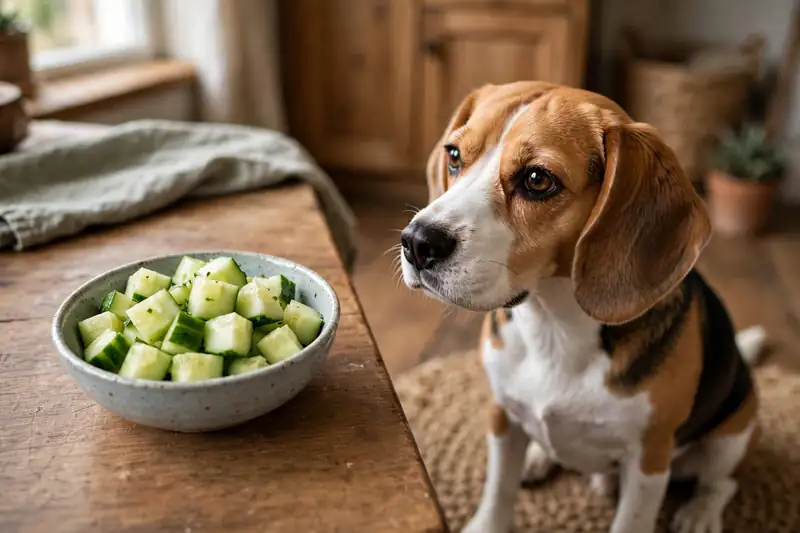
Cucumber will not unbalance a diet the way rich treats do, because a dog can eat a satisfying volume of cucumber for almost no calories, which is rare among treats and exactly why trainers love it. That said, cucumber is a treat, not a food group. It stays inside the 10 percent treat allowance like everything else, and the bulk of nutrition keeps coming from the dog’s complete food. Think of cucumber as the free space on the treat budget. Not an exemption from it, just the cheapest line item.
Some dogs will not care for cucumber, and that is fine. Dogs have preferences, and no vegetable is mandatory. Offer a small piece, and if the dog sniffs and walks away, try carrots or green beans instead. Never force a dog to eat something it dislikes. The treat only works if the dog wants it.
The calorie math that makes cucumber special
The numbers explain cucumber’s reputation among trainers. A half cup of sliced cucumber holds about 8 calories, while one medium dog biscuit carries around 40. One cup of sliced cucumber runs about 16 calories. The vegetable is roughly 95 percent water. In a half-cup serving of about 52 grams, nearly 50 grams are water, which is why a few slices do real hydration work on a hot day. Those figures come from USDA data cited across veterinary nutrition sources, and they are the reason vets reach for cucumber when owners ask about diet treats.

Compare that with the usual training rewards. Cheese cubes, commercial biscuits, and freeze-dried meat treats all run 20 to 50 calories per piece. A fifteen-minute training session can burn through a dozen rewards, and the calorie bill lands entirely on the dog’s waistline. With cucumber, the same session costs the dog barely 30 calories. The savings are real. For a dog on a weight-loss plan, that difference decides whether training fits the day’s budget.
Water content does quiet work beyond calories. Cucumber hydrates without sugar, which makes it a smart warm-weather reward. It does not replace the water bowl. A few cool slices on a hot day still do double duty as reward and refreshment. Apples offer a similar crunch with more sugar, so cucumber wins wherever calories are the constraint.
Why raw beats cooked
Raw is the best way to serve cucumber, and there is no reason to cook it. Raw cucumber keeps the crunch that most dogs enjoy, holds its full water content, and needs no prep beyond washing and chopping. Cooking will not harm the dog, though it turns the pieces soft and dulls the texture that makes cucumber appealing.

Heat also costs you the convenience, since the whole point of cucumber as a treat is grab-and-go simplicity: wash, chop, reward, with no stove and no waiting involved. Boiling or steaming adds a step and a wait for zero nutritional gain. If a recipe calls for cooked cucumber, the dog’s portion should come from the raw pile before cooking starts.
One exception proves the rule. Some owners lightly warm cucumber for senior dogs with few teeth, and that is harmless. But softening is about the individual dog’s mouth, not the vegetable. For the vast majority of dogs, raw and crunchy is the correct serving, and it is the form behind every calorie figure in this guide.
Skin and seeds: the fine print
Cucumber skin is safe for dogs, as long as the cucumber has been washed thoroughly. The skin holds a share of the vegetable’s nutrients and fiber, and most dogs digest it without trouble. Washing matters because conventionally grown cucumbers can carry pesticide residue on the skin. A good rinse under running water, or a produce wash, handles it. Peeling is always an option for owners who prefer it, and peeled cucumber is just as safe.
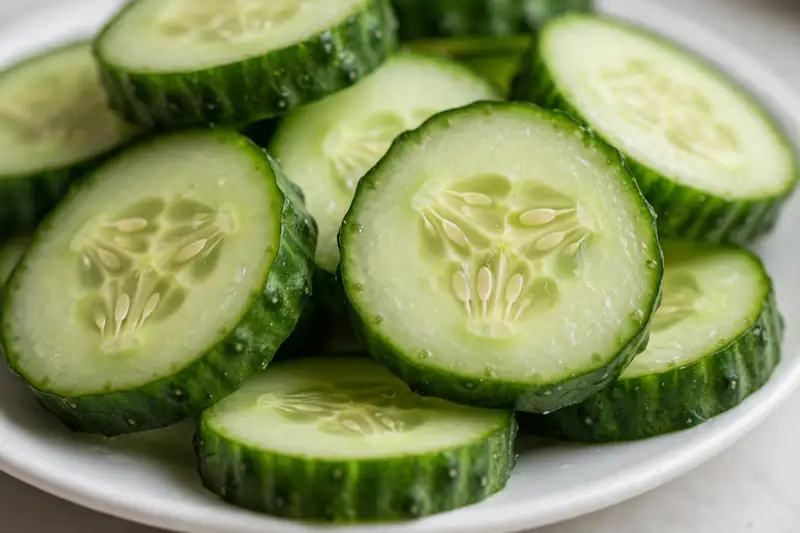
Seeds are non-toxic, and most dogs pass them without noticing. Here is the fine print worth knowing: some small dogs and puppies have trouble digesting seeds, and a seed-heavy serving can bring mild gas or loose stool in sensitive stomachs. English and Persian cucumbers carry fewer, smaller seeds than standard slicing cucumbers, which makes them the better pick for tiny dogs. For a large dog, the seed question barely registers.
Wax is the minor footnote here, since some store cucumbers wear an edible wax coating for shelf life that is food-safe for humans but worth peeling off for dogs. It is food-safe for humans, but peeling waxed cucumbers before serving them to dogs is the cautious habit. Farmers-market cucumbers usually skip the wax entirely, which is one more reason they make the better dog treat.
The cut matters more than the cucumber
Choking is the main real risk with cucumbers, and it is entirely about shape. A thick round can lodge in the throat of a gulping dog. A long spear can do the same. Small dogs, puppies, fast eaters, and flat-faced breeds like pugs and bulldogs face the highest risk, since their airways and eating styles leave less margin. Cut cucumber into small cubes or thin half-moons, never whole rounds or spears, and stay nearby while the dog eats.

Size the pieces to the dog. Pea-size cubes suit small breeds and puppies. Thumbnail-size pieces suit medium and large dogs. The test is simple: the piece should be too small to block the throat but large enough to require a chew or two. Dogs that inhale food get the smallest cut, and no dog gets a whole cucumber to gnaw, not even a large one. Swallowed large pieces can cause intestinal blockage as well as choking.
Supervision is part of the serving. Stay in the room while the dog works through cucumber pieces. This matters most with a new dog or a known gulper. Slow-feeder bowls and snuffle mats pair well with cucumber cubes, since they force the dog to work for each piece instead of vacuuming the bowl. The cut prevents most problems. Watching prevents the rest. Both are easy.
Pickles are a different food entirely
Pickles are cucumbers the way cake is wheat: the base ingredient survives, but everything added changes the verdict. Commercial pickles swim in salt, and many recipes add garlic, onion, dill, mustard seed, and chili. Garlic and onion are toxic to dogs, and the salt load alone disqualifies pickles as a treat. Sweet pickles add sugar on top of the salt.

Fermentation does not rescue them. Fermented or “probiotic” pickles still carry the salt and seasonings, and the sour brine upsets dog stomachs. Homemade pickles are no better unless they were made plain, which defeats the purpose of pickling. The ASPCA’s people-foods list flags excess salt among everyday hazards, and a few pickle chips deliver more sodium than a dog’s treat should ever carry.
Keep the pickle jar closed and the counter clear when pickles are out. The jar stays shut. Dogs love strong smells, and pickle brine is a strong smell. A dog that steals a pickle chip will likely face nothing worse than thirst and mild stomach upset. Break the habit early anyway. Offer a plain cucumber cube as the legal alternative, and the dog gets the crunch without the brine.
Cucumbers for overweight and diabetic dogs
Overweight dogs are cucumber’s ideal audience. Weight-loss plans live or die on treat calories, and most owners underestimate how fast training rewards add up. Swapping biscuits for cucumber cubes can cut a training session’s treat calories by three-quarters or more, which keeps the dog motivated without breaking the diet. “This non-toxic vegetable is perfectly safe for dogs to eat, in moderation,” veterinarian Dr. Rebecca MacMillan told PetsRadar, calling cucumbers “a great option for dogs watching their waistlines.”

Diabetic dogs benefit from the same math. Cucumber is very low in sugar and nearly fat-free, so it does not spike blood glucose the way fruit treats can. That makes it one of the safer reward options for diabetic dogs, though portions and timing still belong in the vet’s diet plan. For a diabetic dog, veterinary guidance still decides every treat choice. Cucumber is simply the option vets question least.
The weight angle has a limit worth stating. Cucumber helps with the treat side of weight loss, not the food side. A dog eating too much kibble will not slim down on cucumber rewards alone. Pair the treat swap with the vet’s feeding plan, measured meals, and real exercise. Cucumber is a tool in the plan, not the plan.
Frozen cucumber: the summer chew
Frozen cucumber slices make a cooling enrichment treat for hot days. Slice a cucumber, spread the pieces on a tray, freeze them solid, and offer a few as a crunchy cold snack. Dogs get the novelty of a new texture. They get a few minutes of engaged chewing. They get a small hydration boost on a day when water matters most. Supervise frozen treats the same as fresh ones, since the choking rules do not change with temperature.

Frozen pieces suit teething puppies especially well. The cold soothes sore gums, and the mild flavor does not overwhelm a young dog. Keep the pieces small and the sessions short, and stop if the puppy tries to swallow chunks whole. For adult dogs, frozen cucumber works as a low-effort enrichment on afternoons when the heat keeps everyone inside.
Do not overdo the cold. A few frozen slices are a treat, not a meal, and a sensitive stomach can object to too much cold at once. Start with one or two pieces and watch. Cold is a change too. Most dogs handle frozen cucumber the same as fresh, but the gradual introduction rule applies to temperature changes too.
How much cucumber: the real limit
The practical limit on cucumber is the dog’s stomach, not its calories. Even very low-calorie treats should stay under 10 percent of daily calories, per the VCA’s feeding guidelines, but cucumber barely dents that budget. The binding constraint is digestive: too much cucumber at once, or too much too fast, brings gas, loose stool, or vomiting from the water and fiber load.

Introduce cucumber gradually like any new food. Start with two or three small pieces and watch the stool over the next day. A clean result means the portion can grow. Most medium and large dogs handle a half cup of pieces comfortably once adjusted. Small dogs do better with a few tablespoons. There is no prize for maximum volume, and the treat works best as a steady small habit rather than an occasional cucumber feast.
Spread the day’s cucumber across sessions instead of loading it into one bowl. A few cubes per training round, a few as an afternoon snack, keeps the gut happy and the motivation high. Dogs that get all their cucumber at once are the ones that get the loose stool, and then owners blame the vegetable instead of the serving pattern, which is unfair to one of the gentlest treats in the kitchen.
When to skip it or call the vet
True cucumber allergy is rare in dogs, but any new food deserves a watched introduction. After the first serving, check for vomiting, diarrhea, itching, or face rubbing over the next 24 hours. A clean first day means cucumber joins the rotation. Any reaction means it leaves the menu and the vet hears about it at the next visit.

Mild stomach upset after too much cucumber usually resolves on its own within a day, since the cause is volume rather than toxicity. Withhold food for a few hours, then offer a bland diet and watch. Call your vet for repeated vomiting, bloody stool, extreme tiredness, or signs of choking or blockage such as repeated retching, drooling, or a painful belly. Cucumber emergencies are almost always about the cut or the quantity, not the vegetable.
Dogs with chronic digestive conditions get cucumber only on the vet’s word. The fiber and water that make cucumber gentle for most dogs can complicate conditions like inflammatory bowel disease or chronic pancreatitis management. When the gut is already a medical project, every new food goes through the vet first.
Frequently asked questions about dogs and cucumbers
Can dogs eat cucumber skin?
The skin is safe as long as the cucumber is washed well. It is nutritious and most dogs digest it fine. Peel waxed cucumbers, and consider peeling for very small dogs or sensitive stomachs.
Can dogs eat pickles?
Skip pickles. They carry heavy salt plus garlic, onion, and spices in most recipes. Offer plain cucumber cubes instead for the same crunch without the brine.
Can puppies eat cucumber?
Puppies can have cucumber in tiny pieces. Cut it very small, since puppies gulp, and introduce it gradually. Frozen slices can soothe teething gums under supervision.
Will cucumber give my dog diarrhea?
Too much too fast can. The water and fiber in a large serving may loosen stool, especially in a dog new to the vegetable. Start with a few pieces and build up over several days.
English or regular cucumbers: which is better for dogs?
Both are safe. English cucumbers have thinner skin and fewer, smaller seeds, which makes them the easier choice for small dogs and puppies. Regular slicing cucumbers work fine for larger dogs.
How do I get my dog to eat cucumber?
Do not force it. Offer a small piece by hand, mix cubes into the regular meal, or spread them on a lick mat with a smear of dog-safe peanut butter. Some dogs take to cucumber by the third or fourth offering. Some never do, and that is fine.
Cucumber earns its place as the thinking owner’s treat: almost no calories, real hydration, a satisfying crunch, and a price that beats every bag in the pet aisle. Cut it small, keep it raw and plain, skip the pickle jar, and let the 8-calorie math do the rest. Your dog’s waistline will notice before you do.
Disclaimer: This article is for general information only and is not veterinary advice. Every dog is different, and dogs with diabetes, digestive conditions, or other health issues may need different guidance. If your dog shows symptoms after eating cucumber, contact your veterinarian.