
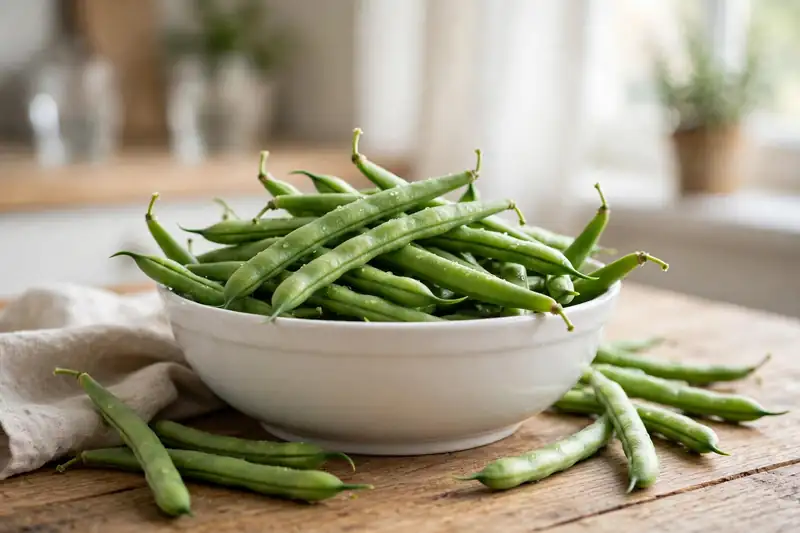
Yes, can dogs eat green beans? Absolutely. Green beans are one of the safest, healthiest treats you can share with a dog: low in calories, high in fiber, packed with vitamins, and loved by most dogs for their satisfying crunch. Veterinarians routinely recommend them as a treat swap for overweight dogs. Serve them plain, raw, steamed, or frozen, and keep them within the usual treat allowance. This guide covers the nutrition, the best preparations, the famous “green bean diet” (and why half of it is wrong), and exact portions.
Why vets love green beans

Ask a vet to name a perfect dog treat and green beans come up constantly. The numbers explain why. According to USDA FoodData Central, green beans contain only about 31 calories per cup, compare that with roughly 350+ calories per cup of typical crunchy dog biscuits. That means you can reward generously without blowing the calorie budget.
But they are not empty crunch. Green beans deliver real nutrition:
- Fiber, supports healthy digestion, helps dogs feel full, and aids regular bowel movements.
- Vitamin A, supports eye health and immune function.
- Vitamin C, an antioxidant that helps reduce inflammation.
- Vitamin K, essential for normal blood clotting and bone health.
- Manganese, supports metabolism and bone structure.
- Folate and iron, in smaller amounts, contributing to cell health.
The American Kennel Club’s guidance is straightforward: plain green beans are safe for dogs, and their low-calorie, high-fiber profile makes them an excellent choice, particularly for dogs that need to lose a few pounds. They are one of the rare treats that is both genuinely enjoyable for the dog and genuinely sensible for the owner.
Raw, cooked, frozen, or canned?
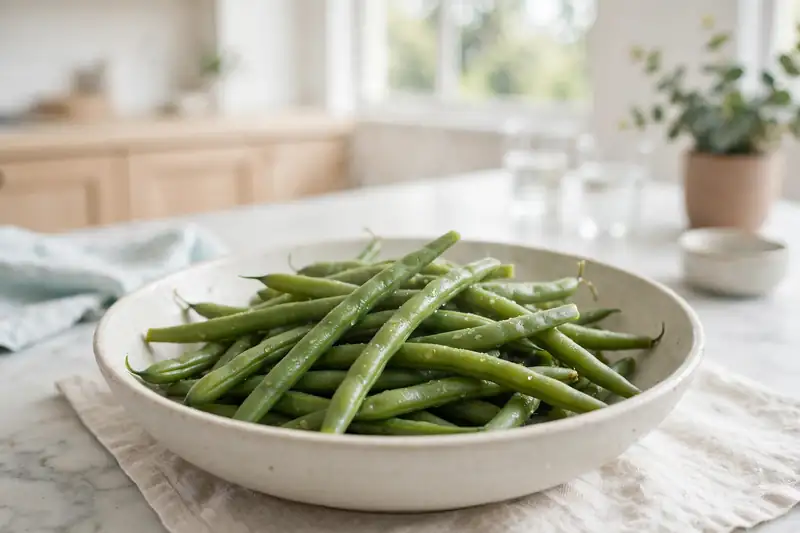
All four work, with one important condition on canned:
- Raw, perfectly safe. Wash well, trim the ends, and cut into bite-size pieces. The crunch is the point for many dogs.
- Steamed or boiled (plain), slightly softer, gentler on sensitive stomachs. Cook with nothing added, no salt, butter, or oil, and cool before serving.
- Frozen, a fantastic option, especially in summer. Serve thawed, or frozen as a crunchy, soothing chew. Many dogs prefer them straight from the freezer.
- Canned, acceptable ONLY if no-salt-added. Standard canned green beans pack 270-400mg of sodium per serving, far too much for dogs. If you only have regular canned beans, rinse them under running water for a full minute (which cuts sodium by roughly 40%), but no-salt-added is the real answer.
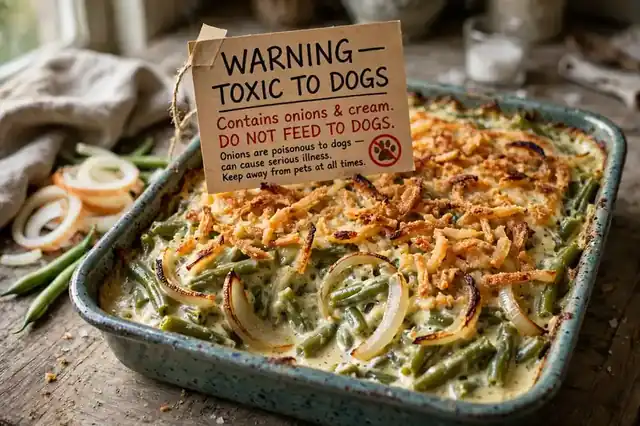
What never works: green bean casserole. The classic holiday dish layers beans with cream of mushroom soup, fried onions, salt, and butter, onions are toxic to dogs, and the fat and sodium load is entirely wrong. Casserole is for the human table only.
Green beans for weight management
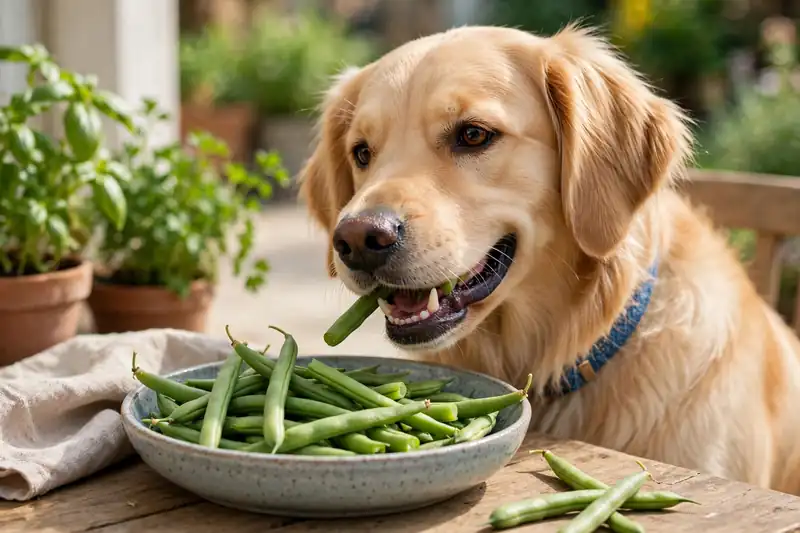
This is where green beans genuinely shine. With roughly 59% of US dogs classified as overweight, vets are constantly looking for ways to cut treat calories without cutting the joy of treating, and green beans are the standard answer.
The strategy is treat replacement, not meal replacement: swap the biscuit for a handful of green beans and you cut perhaps 90% of the treat’s calories while keeping the ritual, the happy moment, the training reward, the bedtime snack, completely intact. Dogs barely notice the swap; waistlines do.
Use them for training treats (pea-sized pieces work for small rewards), for “something to chew” moments, and as a low-guilt goodnight snack. Pair the swap with proper meals, measured food portions, and real exercise, and you have a vet-approved weight plan component. But always build the full plan with your vet, treats are one lever among several.
The “green bean diet” myth, read this before trying it
You may have heard of the “green bean diet”: replacing a portion of the dog’s regular food with green beans to cut calories. It sounds logical. It is also potentially dangerous if done wrong, and multiple veterinary sources warn against the DIY version.
The problem: dog food is precisely balanced, protein, fat, vitamins, minerals in ratios your dog needs. Replace a third of it with green beans and you dilute everything, not just calories. Done for weeks, that means malnutrition: dull coat, muscle loss, weakened immunity. Green beans are a superb treat and a fine topper, but they are not a diet.
If your vet designs a weight-loss plan that includes green beans as a measured component of a balanced, calorie-counted diet, great, follow it exactly. What you should never do is freelance it: halving the kibble and filling the bowl with beans on internet advice. Weight loss in dogs, like everything nutritional, deserves professional supervision.
How many green beans can dogs have

Even a near-perfect treat obeys the 10% rule: all treats combined should stay within about 10% of daily calories.
- Small dogs (under 20 lbs): a small handful of pieces.
- Medium dogs (20-50 lbs): a larger handful.
- Large dogs (over 50 lbs): a generous handful.
Because green beans are so light, these portions look generous, that is the beauty of them. Start with a few pieces the first time and watch for digestive response over the next day; the extra fiber can loosen stools in sensitive dogs if introduced too fast. Once tolerated, they can become a daily staple of the treat routine.
How to serve them safely
- Wash thoroughly, especially important for raw beans.
- Trim the ends and cut into bite-size pieces matched to your dog’s size.
- Serve plain, raw, steamed, boiled, or frozen. No salt, butter, oil, garlic, or onion. Ever.
- If canned, go no-salt-added, and rinse if unsure.
- Introduce gradually, a few pieces first, more the next day if all is well.
Cutting matters more than people think: whole long beans can be awkward for small dogs and enthusiastic gulpers. A quick chop into inch-long pieces takes ten seconds and removes the only real physical risk.
When to be careful
Green beans suit almost every healthy dog, but a little caution applies:
- Sensitive stomachs, introduce slowly; the fiber that helps most dogs can cause gas or loose stools in sensitive ones if rushed.
- Dogs on prescription diets, check with your vet first; therapeutic diets are precisely balanced and some leave no room for extras.
- Kidney issues, green beans contain moderate oxalates and potassium; dogs with kidney disease should get vet approval.
- Puppies, fine in tiny amounts, but their primary nutrition must come from complete puppy food.
None of these are bans, they are “check first” situations, which is true of every new food.
Green beans vs other vegetable treats
Green beans do not compete alone in the healthy-treat space. How do they compare with the other vegetables vets recommend?
- Carrots, slightly higher in natural sugar and calories, but richer in beta-carotene for eye health. Equally beloved. Many owners alternate the two.
- Broccoli, more nutrient-dense, but the isothiocyanates mean strict portion limits (under 10% of diet, ideally 5%). Green beans have no such ceiling.
- Cucumbers, even lower in calories, but mostly water; less fiber and fewer nutrients than green beans.
- Celery, similarly low-calorie with a satisfying crunch; a mild natural diuretic effect some vets note.
- Sweet potato (plain, cooked), nutritious but notably higher in calories and starch; more of a food topper than a free treat.
The verdict: green beans sit in the sweet spot, more substantial than cucumber, safer in quantity than broccoli, less sugary than carrots. Variety is still best; rotating vegetables gives your dog a broader nutrient mix and keeps treat time interesting. A weekly rotation of green beans, carrots, and cucumbers covers most bases beautifully.
Batch prep and storage tips
A bag of green beans goes a long way with a little Sunday prep:
- Fresh: wash, trim, and chop into dog-size pieces; store in a sealed container in the fridge for up to 4-5 days.
- Steamed: blanch a batch, cool completely, refrigerate up to 4 days.
- Frozen: the easiest bulk option. Buy plain frozen green beans (no seasoning, no sauce), keep the bag in the freezer, and portion straight from it, thaw or serve frozen.
- Canned: keep a can or two of no-salt-added beans in the pantry for emergencies; drain and rinse before serving.
Pre-portioning is the pro move: divide the week’s beans into small containers or bags so the daily amount is decided once, not negotiated every evening. And label clearly, a bag of plain beans for the dog should never be confused with the seasoned ones for dinner.
Puppies and green beans
Yes, puppies can have green beans, and they make excellent puppy training treats: soft enough to eat quickly, low-calorie enough for frequent rewards, and crunchy enough to be interesting. Cut them small for little mouths, keep portions tiny relative to body size, and introduce gradually. As with all extras, the complete puppy food remains the foundation; green beans are the fun, healthy garnish.
The honest summary: green beans are about as close to a perfect dog treat as nature makes, 31 calories a cup, fiber-rich, vitamin-packed, vet-recommended, and genuinely liked by dogs across all breeds and sizes. Use them as a treat swap for weight control, serve them plain in any form, respect the 10% rule, and never turn them into a DIY diet. Your dog gets the crunch; you get the peace of mind. That is a trade every owner should take.
For the same plain-only, small-portion thinking across the foods dogs meet most often, see our wider guide to what human food dogs can eat. For another crunchy vegetable with firm portion rules, our broccoli guide and carrot guide follow the same approach.
Frequently Asked Questions
Can dogs eat green beans every day?
Yes, in appropriate portions. There is no cumulative toxicity concern with plain green beans. Keep them within the 10% treat allowance and vary preparations, fresh, frozen, or steamed.
Can dogs eat canned green beans?
Only no-salt-added varieties. Standard canned green beans are far too high in sodium. If you must use regular canned, rinse under running water for a full minute to cut sodium by about 40%.
Are frozen green beans safe for dogs?
Yes, frozen green beans (thawed, or served frozen as a crunchy chew) are perfectly safe and many dogs love them, especially in warm weather.
Can green beans help my dog lose weight?
As a treat replacement, yes, swapping biscuits for green beans cuts treat calories dramatically and vets routinely recommend it. But never replace balanced meals with green beans without a vet-designed plan; that risks malnutrition.
How many green beans can I give my dog?
A small handful for small dogs, a larger handful for medium dogs, a generous handful for large dogs, all within the 10% daily treat allowance. Start small and increase gradually.
Can dogs eat green bean casserole?
No. Casserole contains cream soup, fried onions (toxic to dogs), salt, and butter. Serve beans plain only, never from a seasoned dish.
Do green beans cause gas in dogs?
They can, especially if introduced too quickly, the fiber is the cause. Start with a few pieces and increase gradually; most dogs adjust within days.
Are raw green beans safe, or should they be cooked?
Both are safe. Raw keeps the crunch; lightly steamed is gentler for sensitive stomachs. Either way: plain, washed, and cut to size.
This article is general information only and is not a substitute for veterinary advice. If your dog has a health condition, is on a prescription diet, or you are unsure about any food, check with your veterinarian first.


1 thought on “Can Dogs Eat Green Beans? Yes — a Vet Favorite”