Simparica for dogs is a monthly prescription chew that kills fleas and controls several tick species, using the active ingredient sarolaner. It does not prevent heartworm disease and it does not treat gut worms, so it is a flea and tick product, not an all in one preventive. Owners who want heartworm cover in the same chew need the combination version instead. This guide covers what plain Simparica does, how fast it works, and the safety warning every owner should read before the first dose.

What is Simparica for dogs?
Simparica for dogs is a chewable tablet made by Zoetis, given by mouth once a month to treat and prevent flea infestations and to control ticks. Its single active ingredient is sarolaner, a drug from the isoxazoline class. The chew comes in liver flavor, and most dogs eat it willingly from the hand or with a small amount of food. It is prescription only, so a vet visit comes before the first tablet.
Plain Simparica is easy to confuse with Simparica Trio, and the mix up matters. Trio adds moxidectin and pyrantel to the same sarolaner base, which extends the cover to heartworm disease, roundworms, and hookworms. Plain Simparica has none of that. If the box says Trio, the dog is getting three drugs. If it says Simparica alone, the dog is getting flea and tick cover only, and heartworm prevention has to come from a separate product. The Simparica Trio guide covers the combination version in full for owners comparing the two.

Which fleas and ticks does Simparica kill?
Simparica kills adult fleas and controls six tick species named on the label. The tick list covers the Gulf Coast tick, the American dog tick, the black legged tick, the Lone Star tick, the brown dog tick, and the Asian longhorned tick. That list covers the ticks behind Lyme disease, Rocky Mountain spotted fever, and ehrlichiosis in most of the United States, which is why vets reach for it in tick heavy regions. Fleas die within hours of biting a treated dog, and ticks die within a day of attaching.
The chew does not repel parasites. A flea or tick has to bite the dog before the drug reaches it, so owners may still see a tick attached to a treated dog. The VCA guide to flea control in dogs explains why a bite has to happen first, and the VCA guide to ticks in dogs covers the species the chew targets. The difference is that the tick dies before it can feed long enough to pass most infections. Simparica also does not kill flea eggs or larvae in the home, so a heavy infestation needs house cleaning alongside the chew. Vacuuming, washing bedding, and treating the yard break the life cycle that the chew alone cannot reach.

How does sarolaner work?
Sarolaner blocks the nervous system of fleas and ticks, overstimulating their nerves until they die. The drug binds to chloride channels that insects and arachnids rely on, and the block stops the normal off switch in their nerves. Mammals use different versions of those channels, which is why the drug can kill parasites at doses dogs tolerate. The chew is absorbed from the gut into the bloodstream, so a flea that bites gets a lethal dose from the blood meal.
Fleas start dying within 3 hours of the dose, and the chew keeps killing fleas for 35 days, a little past the monthly mark. Ticks start dying within 8 hours, and the kill stays strong across the full month. That 35 day window gives owners a small buffer if a dose lands a few days late, though the label still calls for monthly dosing. The drug does not wash off, since it works from inside the body, so swimming and baths do not cut its power the way they can with a topical product.
How do you give Simparica to your dog?
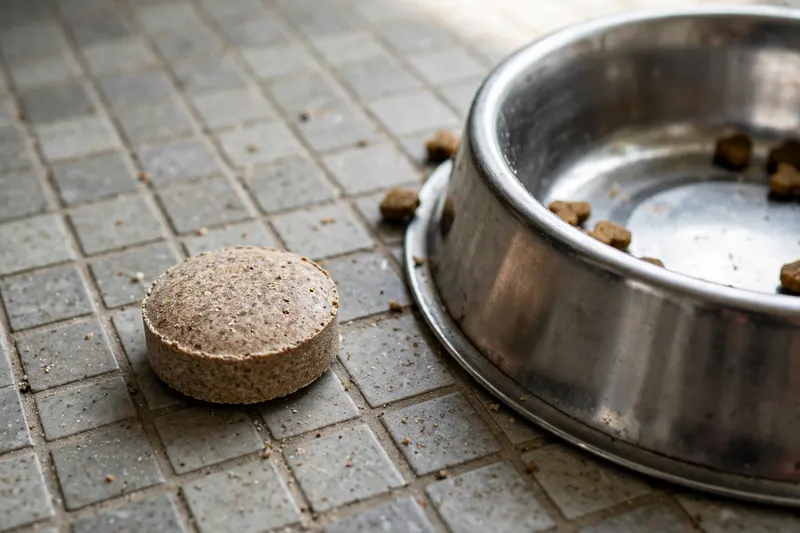
Give one chewable tablet by mouth once a month, with or without food. Most dogs take it as a treat, and a fussy dog may need it tucked into a small piece of food or a pill pocket. Make sure the dog swallows the full tablet. A chew that lands on the floor half eaten is not a dose, and the vet should be asked before a replacement is given.
The vet picks the tablet strength from the dog’s weight, with packs from 2.8 pounds up to 132 pounds. The minimum dose on the label is 2 mg of sarolaner per kilogram of body weight, and the packs are built to deliver at least that much across each weight band. The vet sets the dose by weight and condition, so weigh the dog before each new box. Puppies grow fast, and a pack that fit last month may underdose this month. The label limits plain Simparica to dogs 6 months of age and older that weigh at least 2.8 pounds, a higher age floor than Trio, which starts at 8 weeks.

How fast does Simparica work, and how long does it last?
Simparica starts killing fleas within 3 hours and ticks within 8 hours of the first dose. That speed makes it a good pick for a dog that already has fleas, since the itching eases the same day. Full flea kill takes longer, with most fleas dead within a day, and the chew then holds the line for 35 days. Ticks die over the first day after the dose, and new ticks that attach later in the month die the same way.
The 35 day span is a buffer, not an invitation to stretch the schedule. Monthly dosing keeps the drug level steady, and a late dose lets the level fall while fleas in the home keep laying eggs. Owners who find fleas on a treated dog should check the home, not just the dog, because flea eggs in carpets and bedding hatch for weeks after the first treatment. The chew kills the adults on the dog, and cleaning kills the next generation waiting in the house. Capstar can knock down adult fleas fast in a bad infestation, and the vet can say whether it fits alongside the chew.

What side effects can Simparica cause?
Vomiting and diarrhea are the most commonly reported reactions to Simparica, and both are usually mild and short lived. Some dogs show lethargy, a smaller appetite, or itching after the first dose, and those signs tend to fade within a day or two. Benadryl for dogs may ease itching if the skin flares, and a bland diet for a day or two is the usual recovery path once the vet rules out anything serious. A dog that vomits once after the chew and then eats normally is not an emergency, though repeated vomiting or a dog that refuses food needs a vet call.
The serious warning sits in a class of its own. Sarolaner belongs to the isoxazoline class, and in September 2018 the FDA issued an alert that isoxazoline flea and tick products have been linked to neurologic adverse events in some dogs, including muscle tremors, loss of coordination, and seizures. The events occurred in dogs with and without a prior seizure history, and the FDA required the warning on every label in the class. The agency also stated that the products remain safe and effective for most animals, and it did not recall any of them. The FDA fact sheet on isoxazoline flea and tick products repeats that neurologic warning and the agency’s view that the drugs suit most dogs.

Which dogs should not take Simparica?
Plain Simparica is labeled for dogs 6 months of age and older weighing at least 2.8 pounds. Dogs below that age or weight should not take it, and the vet will pick a different product for a young puppy. The safe use of Simparica in breeding, pregnant, or lactating dogs has not been evaluated, so the vet weighs the risk for those dogs case by case. Dogs with a history of seizures or neurologic disorders need a careful talk with the vet before starting any isoxazoline, since the class warning applies to them most directly.
Dogs with liver or kidney disease also need vet review, because the drug is processed through those organs. A dog that reacted badly to another isoxazoline, such as NexGard or Bravecto, should not simply switch to Simparica and hope for a different result, since the class warning covers all of them. The vet may instead suggest a non isoxazoline option, such as a topical product or a different drug class. Tell the vet about every drug the dog takes, including heartworm preventives, since the combination of products is a decision for the clinic, not the kitchen table.

What if you miss a dose or your dog vomits the chew?
Give the missed chew as soon as you remember, then go back to the normal monthly date. A dose a few days late leaves only a small gap, since the chew protects for 35 days. A gap of several weeks is different, because fleas and ticks in the home keep breeding while the drug level falls, and the infestation may need a fresh start. Do not give two chews to catch up. One tablet is the dose, and doubling it adds risk without adding protection.
If the dog vomits shortly after swallowing the chew, call the vet before giving another one. The vet will ask how soon the vomiting happened and whether the tablet came up whole, then decide if a redose is safe. A dog that vomits repeatedly, shows tremors, stumbles, or has a seizure after a dose needs urgent vet care, not a wait and see approach. Keep the box and the lot number handy when you call, since the vet and the manufacturer will both ask for it. Gastroenteritis covers the stomach upset that follows a bad reaction, and bloody diarrhea is the sign that always earns a prompt vet visit.

Simparica or Simparica Trio: how do you choose?
The choice comes down to one question: does the dog already have heartworm cover? A dog on a separate heartworm chew does fine on plain Simparica, and the split lets the vet change one drug without touching the other. A dog with no heartworm product needs Trio or a separate heartworm chew alongside plain Simparica. Trio also adds roundworm and hookworm treatment, which plain Simparica lacks entirely.
Age tips the choice too. Trio starts at 8 weeks, while plain Simparica starts at 6 months, so a young puppy that needs flea and tick cover will usually get Trio or a different product. Cost runs the other way: plain Simparica costs less per month than Trio, since it carries one drug instead of three. Owners who already pay for a heartworm chew may save money by keeping the two jobs separate. The vet can run the numbers for the dog’s weight and the local parasite risk, and that math beats any general rule.

Living with fleas and ticks while on Simparica
A chew alone does not clear a house full of fleas. Flea eggs fall off the dog into carpets, bedding, and cracks in the floor, and they hatch for weeks. Wash the dog’s bedding in hot water, vacuum the floors and the sofa, and empty the vacuum outside, since the eggs survive inside the bag. Yard work helps too: mow the grass short, clear leaf litter, and keep the dog out of tall brush where ticks wait. The ASPCA guide to fleas and ticks covers the home side of the job in plain terms.
Check the dog for ticks after walks in grass or woods, running hands over the ears, the neck, the belly, and between the toes. A tick found on a treated dog is usually dead or dying, but remove it with tweezers and watch the spot for redness. Keep the chew schedule steady through winter as well, because fleas survive indoors all year and ticks wake on warm days. A monthly chew works best when the home and the yard get the same attention as the dog.

Frequently asked questions about Simparica for dogs
Does Simparica for dogs prevent heartworm?
Plain Simparica covers fleas and ticks only, so it does not prevent heartworm. Heartworm prevention needs a separate product, or the combination version, Simparica Trio, which adds moxidectin and pyrantel.
How old must a dog be to take Simparica?
6 months old and at least 2.8 pounds. Younger puppies need a different product, and Simparica Trio starts earlier, at 8 weeks of age.
Can Simparica cause seizures?
It can, in rare cases. Sarolaner is an isoxazoline, and the FDA warned in 2018 that the class has been linked to tremors, loss of coordination, and seizures, even in dogs with no seizure history. Dogs with a seizure history need vet review first.
Does Simparica kill flea eggs?
Simparica kills adult fleas on the dog, but eggs and larvae in the home survive. Vacuuming and washing bedding are part of clearing an infestation.
Can I split a Simparica chew between two dogs?
Splitting is not safe, since the tablet strength matches one dog’s weight and splitting it underdoses both dogs. Each dog needs its own chew in the right size.
Is Simparica safe for pregnant dogs?
Its safe use in breeding, pregnant, or lactating dogs has not been evaluated. The vet decides case by case, and another product may be the safer pick.
This article is for information only and is not a substitute for veterinary advice. Simparica for dogs is a fast, monthly flea and tick chew, and its limits are as clear as its strengths. It kills fleas within hours and ticks within a day, it needs a vet prescription, and it carries the FDA isoxazoline warning that owners of dogs with a seizure history should never skip. Pair it with a heartworm preventive, keep the monthly date steady, and clean the home alongside the chew. The drug does its job from inside the dog, and the owner does the rest from outside.