

Yes, can dogs eat cheese? Most dogs can enjoy small amounts of plain cheese safely, and the American Kennel Club even calls cheese a great training reward, especially for puppies. But cheese is rich in fat and salt, many dogs are partly lactose intolerant, and a few cheeses are genuinely risky. The trick is picking the right cheese and keeping portions tiny. This guide covers which cheeses are safe, how much to share, and which ones to keep far from the bowl.
The short answer on cheese
Cheese is not toxic to dogs, that is the headline. Unlike grapes, garlic, or chocolate, there is no poison in a cube of cheddar. The AKC’s answer to whether dogs can eat cheese is a plain yes, with the emphasis on how much and which kind.
The catches are threefold: fat, salt, and lactose. Cheese is calorie-dense, and feeding too much too often can lead to weight gain, obesity, and in serious cases pancreatitis, a painful, potentially fatal inflammation of the pancreas. Salt adds up quickly in a small dog. And while cheese contains far less lactose than whole milk, dogs with severe lactose intolerance can still react to it.
So cheese sits in the “safe treat, strict rules” category: a small cube as a reward is fine for most dogs; a handful every day is not. The rest of this guide shows you exactly where that line sits.
Why dogs love cheese (and why that is a trap)
Dogs go crazy for cheese for the same reasons humans do: fat and salt taste good, and the smell is irresistible to a canine nose. That enthusiasm is exactly the trap. A dog that would gently take one cube will inhale five if offered, and an owner who reads joy as nutritional approval will keep sharing.
Remember what the joy means: palatability, not healthiness. Cheese’s strong smell and rich taste make it a high-value reward, which is useful for training, but they also make it easy to overfeed. Decide the portion before you start sharing, not while your dog is staring at you. One small cube, then the cheese goes away. Dogs do not negotiate, but they absolutely exploit hesitation, and those eyes are professionals.
Lactose intolerance in dogs, what to know
Dogs produce lactase, the enzyme that digests lactose, but most produce less of it after weaning, which is why so many adult dogs are partly lactose intolerant. The AKC explains the nuance well: cheese contains little lactose compared with whole milk, so many dogs handle small amounts fine. But dogs with severe lactose intolerance may react to cheese even in small quantities.
Signs your dog is not digesting dairy well, usually within 30 minutes to 2 hours:
- Loose stools or diarrhoea
- Gas, bloating, and abdominal discomfort
- Nausea or vomiting
The first time you share cheese, give a tiny piece and watch. If all is well over the next day, small amounts are fine going forward. If not, skip dairy entirely, your dog is telling you clearly. Fermented cheeses (like aged cheddar) tend to be lower in lactose than fresh ones, which is one reason they are often better tolerated. And remember that tolerance can change with age; a dog that handled cheese as a puppy may become more sensitive as a senior, so re-check occasionally.
The best cheeses for dogs
When the AKC and veterinary nutritionists name safe picks, the same names come up. Stick to plain, low-fat, low-salt varieties:
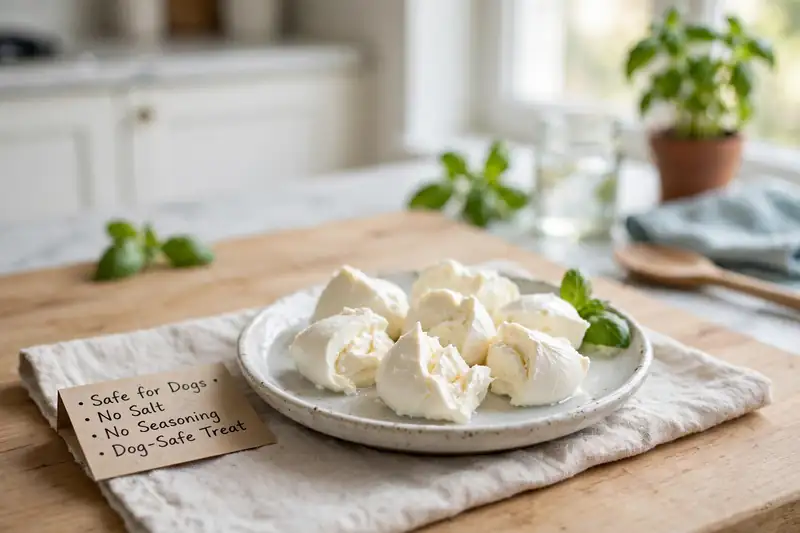
- Mozzarella (plain, low-fat), mild, lower in fat and salt than many cheeses; on nearly every vet-approved list.
- Cottage cheese (plain, low-fat), soft, bland, and gentle; the AKC notes it is a good option, and its mildness makes it useful for dogs recovering from stomach upset.
- Soft goat cheese (plain), generally well tolerated and lower in lactose than cow’s milk cheeses.
- Mild cheddar (small amounts), fine as an occasional tiny cube; higher in fat and salt, so keep it truly occasional.
The pattern: plain, mild, and modest. If a cheese is aggressively flavored, heavily salted, or rich enough to make you pause, it is wrong for your dog.

Cheeses to avoid
Some cheeses cross from “unwise” into “keep away”:
- Blue cheese, Roquefort, Gorgonzola, Stilton, the molds in blue cheeses produce compounds that can cause vomiting, diarrhoea, fever, and in serious cases seizures in dogs. Never share blue cheese.
- Cheese flavored with garlic, onion, or chives, the AKC specifically flags these as toxic to dogs. Flavored cheese spreads and “garden vegetable” cream cheeses often hide them.
- Heavily processed cheese, spray cheese, processed slices, and cheese sauces bring excess salt, additives, and sometimes onion/garlic powder.
- Very salty cheeses, feta, Parmesan, and similar in more than a crumb; the sodium load is the issue.
- Moldy cheese from the fridge, anything with unintended mold goes in the trash, not the dog bowl.
- Any cheese, if your dog is lactose intolerant, the intolerance overrides the cheese type.
When in doubt, read the ingredient label. If you cannot pronounce half of it, your dog should not eat it.

Cheese as a training treat
This is where cheese earns its place. The AKC specifically highlights cheese as a great training reward, and trainers agree: few things motivate like a cheese cube. It is high-value enough for difficult behaviors, soft enough to eat quickly (keeping training rhythm tight), and easy to portion into pea-sized pieces.
Best practices:
- Pre-cut tiny pieces, pea-sized or smaller. A training session can involve dozens of rewards; each must be minuscule.
- Reserve it for hard tasks, use cheese for the difficult stuff (recall, new behaviors) and lower-value treats for easy wins. This keeps its motivational power and limits quantity.
- Pill hiding, a small ball of soft cheese around a pill is the classic trick, and vets endorse it. Just keep the cheese ball as small as will hold the pill.
- Count it, training treats come out of the 10% daily treat allowance. Twenty cheese cubes is not “a few treats”; it is a meal’s worth of fat.

How much cheese is safe
Cheese is calorie-dense, a single ounce of cheddar carries over 110 calories, so portions must be genuinely small, inside the 10% treat allowance:
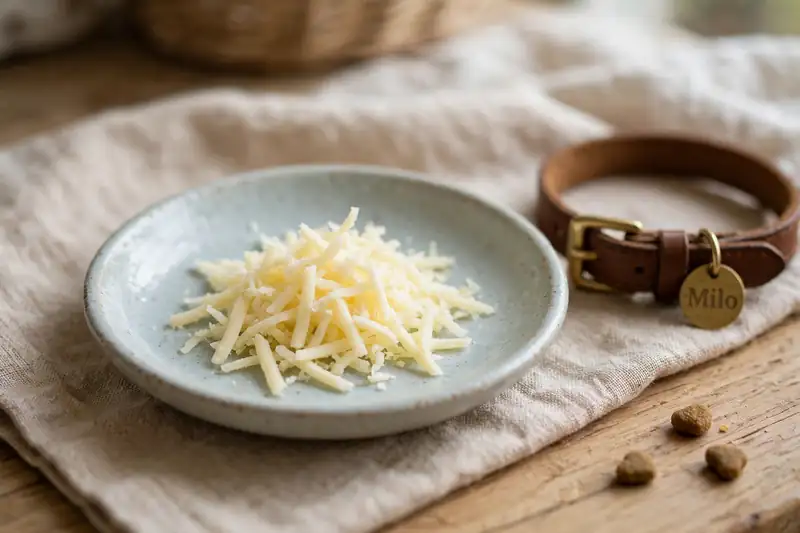
- Small dogs (under 20 lbs): a pea-sized shred or two, occasionally.
- Medium dogs (20-50 lbs): one small cube (about the size of a die), occasionally.
- Large dogs (over 50 lbs): two small cubes at most, occasionally.
“Occasionally” means a few times a week at most, not daily. Dogs that are overweight, prone to pancreatitis, or managing diabetes should get cheese rarely or never; ask your vet. And cheese should never become a meal topper habit, the fat adds up silently.
Signs cheese does not agree with your dog
Even with the right cheese and portion, watch for:
- Soft stools or diarrhoea within a few hours
- Excessive gas or bloating
- Vomiting
- Itchy skin or ear scratching (possible dairy sensitivity)
- Refusal to eat the next meal (too rich)
Mild, one-off softness after a first taste often resolves, just reduce the amount next time. But repeated vomiting, persistent diarrhoea, or any sign of abdominal pain (hunched posture, whimpering, restlessness) warrants a vet call, especially in breeds prone to pancreatitis.
Dairy alternatives if cheese is off the table
If your dog cannot handle cheese, severe lactose intolerance, pancreatitis history, or a vet’s no-dairy order, you are not out of training-treat options. Plenty of high-value rewards work just as well:
- Tiny pieces of plain cooked chicken or turkey, the gold standard training treat.
- Freeze-dried meat treats, single-ingredient, intensely smelly, dogs love them.
- Small bits of banana or blueberry, sweet, soft, and easy to portion.
- Carrot coins, crunchy and satisfying for dogs that like texture.
- Commercial training treats, look for soft, pea-sized, low-calorie options.
The point of cheese in training was never the dairy, it was the smell, the softness, and the speed of eating. Any treat with those three qualities does the same job. Do not mourn the cheese; replace its function.
Puppies and cheese
The AKC specifically mentions cheese as a great training reward for puppies, and it is, with puppy-sized caution. Use crumb-sized pieces, keep sessions short, and remember that a puppy’s total daily calories are small, so even a little cheese is a bigger share than it looks. Introduce dairy gradually and watch for intolerance signs. For very young puppies still transitioning foods, check with your vet before adding extras at all.
The honest summary: cheese is a safe, beloved, genuinely useful treat, for training, for pills, for the occasional joyful moment, as long as it stays plain, low-fat, and tiny in portion. It is not a health food, not a meal component, and not for every dog. Pick mozzarella or cottage cheese, cut a small cube, enjoy the happiest two seconds of your dog’s day, and put the cheese away.
For the same plain-only, small-portion thinking across the foods dogs meet most often, see our wider guide to what human food dogs can eat. And for another snack that works brilliantly in training, our honey guide covers safe portions for a sweet reward.
Frequently Asked Questions
Can dogs eat cheddar cheese?
Yes, in small amounts as an occasional treat. Mild cheddar is fine in tiny cubes, but it is higher in fat and salt than mozzarella or cottage cheese, so keep portions truly small.
Can dogs eat blue cheese?
No. The molds in blue cheese, Roquefort, Gorgonzola, and Stilton produce compounds that can cause vomiting, diarrhoea, fever, and even seizures in dogs. Keep blue cheese away from dogs entirely.
Can dogs eat cream cheese?
Only a tiny amount, and plain only. Cream cheese is high in fat and lactose, so it is best limited to pill-hiding duty, a small ball around a pill, not a snack.
Can dogs eat cottage cheese?
Yes, plain, low-fat cottage cheese is one of the best cheese choices for dogs. It is mild, lower in fat and salt, and gentle enough for dogs recovering from stomach upset.
How much cheese can I give my dog?
Very little: a shred or two for small dogs, one small cube for medium dogs, two at most for large dogs, a few times a week, inside the 10% treat allowance. Cheese is calorie-dense, so tiny is the rule.
Can cheese cause pancreatitis in dogs?
A large amount of fatty cheese can trigger pancreatitis, a serious and potentially fatal illness, which is why the AKC warns against feeding too much cheese regularly. Breeds prone to pancreatitis should avoid cheese or get vet approval first.
Can puppies eat cheese?
Yes, in crumb-sized pieces as training rewards, the AKC specifically recommends it for puppies. Keep portions minuscule relative to their size and watch for intolerance.
My dog ate a whole block of cheese, what should I do?
Do not panic, but do call your vet, especially for a small dog. Watch for vomiting, diarrhoea, bloating, abdominal pain, or lethargy over the next 24-48 hours. A large fatty meal can trigger pancreatitis, which needs veterinary treatment.
Can dogs eat cheese every day?
It is better not to. Cheese works best as an occasional reward, a few times a week at most. Daily cheese adds steady fat and salt that can creep into weight gain, and it keeps the treat “special” for training purposes too.
This article is general information only and is not a substitute for veterinary advice. If your dog has a health condition, is on a prescription diet, or you are unsure about any food, check with your veterinarian first.


6 thoughts on “Can Dogs Eat Cheese? Yes, in Small Amounts”