The orange dust is on your dog’s nose, the bag is tipped over, and you are googling with one hand while watching the dog with the other. Here is the situation in one breath. No, dogs should not eat Hot Cheetos. The Flamin’ Hot seasoning combines onion and garlic powder, heavy sodium, and chili heat, and dogs get nothing pleasurable from any of it. A stolen piece is rarely an emergency. A stolen bag is a vet call. The details below sort your exact scenario.

Can dogs eat hot cheetos? The short answer
Dogs should not eat Hot Cheetos. The seasoning is built on onion powder, garlic powder, and cayenne, with artificial colors and a heavy salt load on a fried corn base. Onion and garlic damage red blood cells with effects delayed one to five days. A single piece stolen once will not hurt a healthy dog with water available, but no amount is good for one, and the red dye will alarm you on the way through.

Hot Cheetos are cornmeal puffs, fried and coated in the Flamin’ Hot seasoning blend. The corn base is the innocent part; everything after the frying is the problem. The seasoning exists to deliver maximum impact per square millimeter, which means concentrated salt, concentrated alliums, concentrated chili, and concentrated color. Dogs meet all four at full strength in a food engineered for human thrill-seeking.
Veterinary-reviewed guidance puts it plainly: a few pieces are rarely an emergency in a healthy dog with water available. Genuine salt poisoning needs far more than a handful. That reassurance covers the first hours. It does not cover the allium delay, the pancreatitis risk from a binge, or the small dog whose margins are thinner. Read the whole article, then act on your specific scenario.
What is in the Flamin’ Hot dust
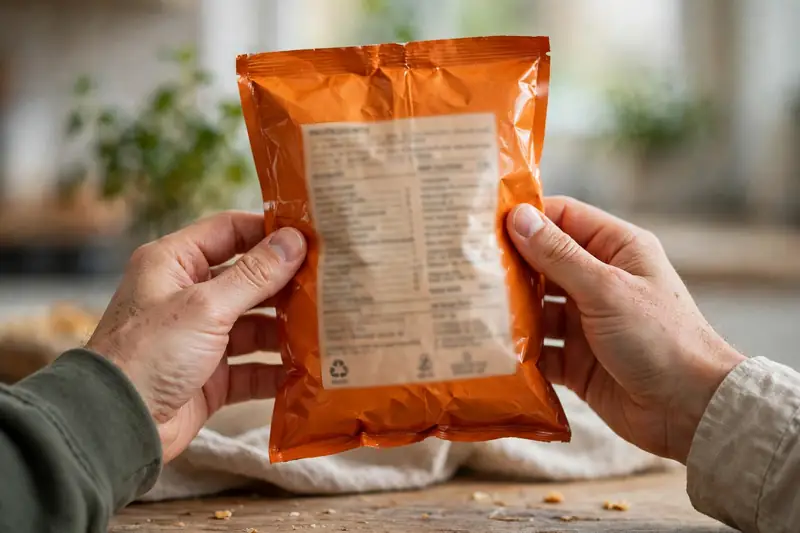
The seasoning blend is where every risk lives. Cornmeal, oil, and cheese powder form the base; the dust on top carries the hazards. Ingredient lists name salt, onion powder, garlic powder, cayenne and chili pepper, citric acid, artificial colors including Red 40, and sodium-based flavor enhancers like disodium inosinate and sodium diacetate. Each one matters for a different reason.
| Ingredient | Risk level | What it does to dogs |
|---|---|---|
| Onion powder | High | Red blood cell damage; anemia in 1 to 5 days |
| Garlic powder | High | Same red blood cell damage as onion |
| Cayenne and chili | Medium | Burns mouth, throat, stomach; GI upset |
| Sodium and sodium salts | Medium | Thirst, dehydration; salt poisoning in quantity |
| Artificial colors | Low | No nutrition; stains vomit and stool red |
| Cheese powder and fat | Medium | Lactose upset; pancreatitis risk in binges |
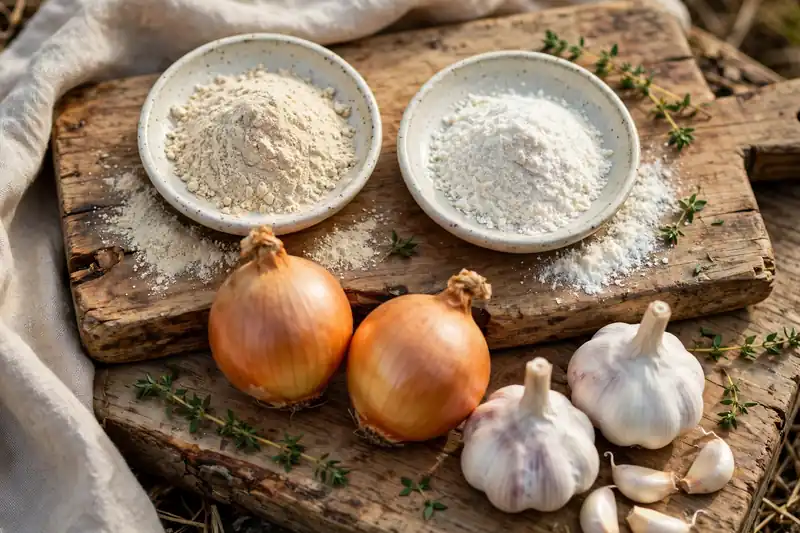
The AKC’s onion guidance and the ASPCA’s toxic plant entry for onion establish the allium danger, and powdered forms are several times more concentrated than the fresh vegetable. The seasoning does not disclose its onion-to-garlic ratio, so the dose is unknowable from the bag. Unknown dose of a known red-blood-cell toxin is the entire argument against sharing, compressed into one sentence.
Onion and garlic powder: the delayed anemia
Allium compounds oxidize hemoglobin, the spleen clears the damaged red blood cells, and the dog slides into hemolytic anemia. The process takes one to five days, which breaks the cause-and-effect link in the owner’s mind. The dog eats the Cheetos on movie night and turns lethargic with pale gums on Thursday, and the bag is long gone from memory. This delay is the most dangerous feature of the snack, because delayed problems get missed.
Watch for the specific signs: unusual tiredness, pale or yellowish gums, rapid breathing, dark or reddish urine, and appetite loss appearing days after the incident. These are blood signs, not stomach signs, and they mean the vet promptly. Blood work confirms allium anemia quickly, and treatment ranges from monitoring mild cases to transfusion in severe ones. Mention the Hot Cheetos explicitly when you call, even days later. Emergency vets see the symptoms; they need you to supply the history.
How much onion it takes to harm a dog scales with weight and concentration, and some breeds, particularly Japanese breeds, show extra sensitivity. A few Cheetos will not deliver an anemic dose to a large dog, and the honest articles say so. But the dose from a seasoning blend is unknowable, the damage accumulates across repeated small exposures, and the habit is the hazard. The dog that steals Cheetos weekly is running an experiment with a delayed readout. Stop the experiment.
Sodium beyond table salt
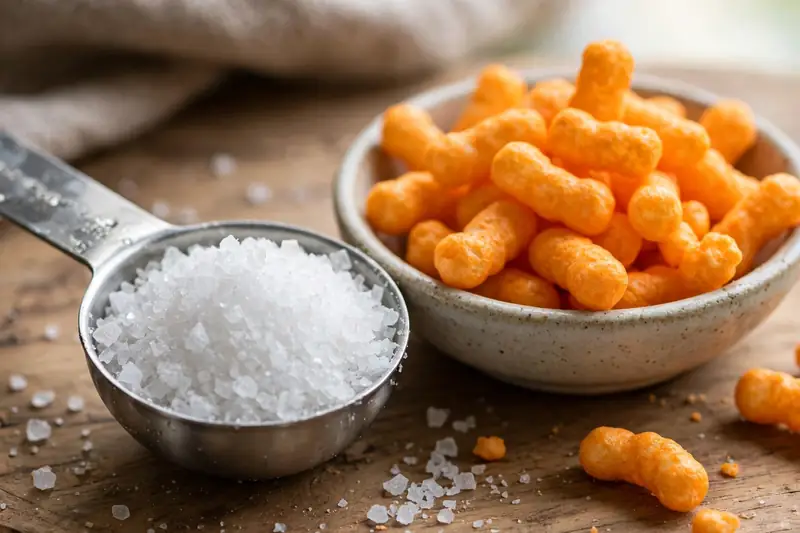
Hot Cheetos carry more sodium chemistry than the salt shaker suggests. Beyond table salt, the seasoning includes disodium inosinate, sodium diacetate, and disodium guanylate, flavor enhancers that add sodium without tasting purely salty. A one-ounce bag holds roughly 250 milligrams of sodium, and the sodium salts push the effective load higher than the headline number. Dogs need some sodium, but their requirement is small, and a snack engineered for human salt thrill overshoots it fast.
The body’s response to a salt load is straightforward: pull water from cells to dilute it, which is why the dog drinks heavily afterward. With free water access, a healthy dog manages a small overload without drama. Signs of genuine salt trouble begin around 1 to 2 grams of salt per kilogram of body weight, far more than a few Cheetos, but small dogs reach concerning territory sooner, and dogs with heart or kidney disease have much less margin for sodium swings. Those dogs should not get the “a few pieces are fine” reassurance.

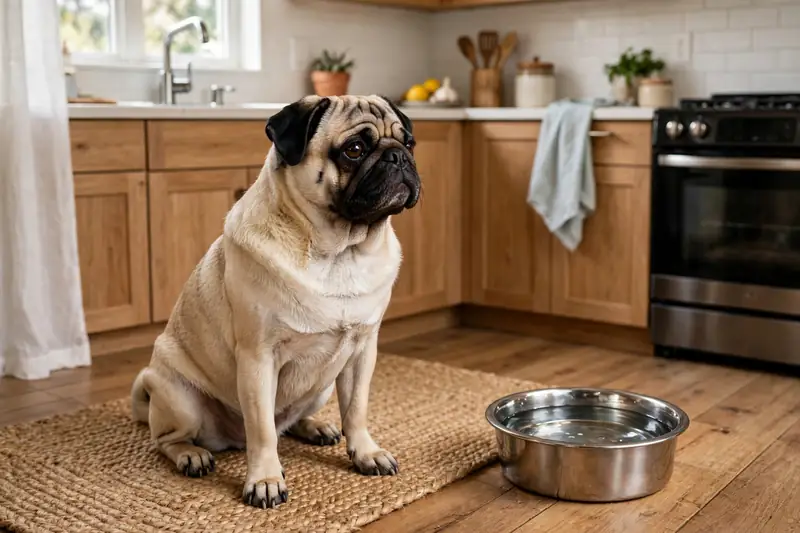
Keep fresh water available after any salty snack theft; do not restrict it. Watch for extreme thirst, vomiting, or lethargy in the following hours. Salt is the most visible of the hazards: it announces itself with thirst and stomach upset the same day. Visible hazards get attention, which perversely makes salt the least worrisome of the big three. The allium damage stays invisible for days, and invisibility is what makes it dangerous.
Capsaicin: all pain, no pleasure
Chili heat activates pain receptors, and the dog gets the pain without the human pleasure response. People who enjoy spicy food experience a mixed signal of burn and reward; dogs experience the burn straight, as pure discomfort.
Capsaicin irritates the mouth, throat, esophagus, and stomach lining, producing drooling, lip licking, panting, pawing at the muzzle, and visible distress. The dog cannot describe the burning, so it performs it: pacing, anxiety, frantic drinking that does not help because water does not dissolve capsaicin.
The gut continues the story downward. Vomiting, diarrhea, and abdominal cramping follow within hours as the irritant travels. This is tissue irritation, not poisoning, and it resolves when the irritant passes. But the distinction comforts the owner more than the dog. A dog that eats a handful of Hot Cheetos can have a miserable evening, and the only treatments are time, water, and a bland diet once the vomiting stops.
Dogs that eagerly eat spicy food are responding to fat, salt, and shared-food excitement, not enjoying the heat. Dogs are unreliable judges of their own dietary limits, which is the entire premise of supervision.
Fat, cheese powder, and the lactose question
Hot Cheetos are fried, which makes them a fat delivery system with seasoning on top. A binge-level intake can trigger pancreatitis in susceptible dogs: pancreatic inflammation causing severe belly pain, repeated vomiting, lethargy, and appetite loss. Pancreatitis ranges from mild to fatal, and rich human snacks are among its classic triggers. Small breeds, overweight dogs, and dogs with prior episodes carry the highest risk, and for those dogs a bag raid is dangerous.
The cheese powder adds a lactose footnote. Most adult dogs are lactose intolerant to some degree, and cheese-flavored coatings can add gas, bloating, and diarrhea on top of everything else. The lactose load in a few Cheetos is small, but in a sensitive dog it stacks with the capsaicin irritation and the fat load into a thoroughly unhappy gut. Cheese itself is a sometimes food for dogs in plain form; cheese powder engineered onto a fried chili puff is not the same product.
Chronic sharing builds the slower problems. Regular fatty snacks add weight, and weight stresses joints, heart, and metabolism. The ASPCA’s people-foods list keeps seasoned fried snacks off the menu for exactly this combination of reasons. No single ingredient in the fat story is exotic. The combination, repeated, is what does the damage.
The red-stain panic: dye vs blood
Red 40 and the chili coloring pass through the dog tinted, and the result terrifies owners. Red vomit, red-streaked stool, orange-tinged drool: all of it looks like bleeding and almost none of it is. Food dye red is bright, almost neon, and sits on the surface. Blood red is darker, browner, and tarry when digested. Learning the difference saves a midnight emergency visit, though when in doubt the vet would rather see you than hear about it later.
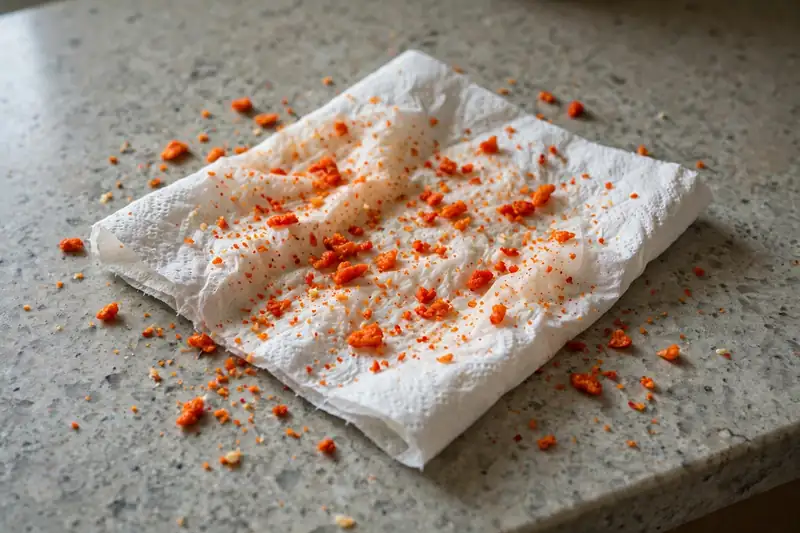
The staining also complicates diagnosis: dye masks the visual cues vets use, so report the snack, amount, and timing with any GI symptoms. A photo of the vomit or stool helps the vet distinguish dye from blood faster than any description.
This dye effect is worth knowing for the reverse reason too. Bright red stool after Hot Cheetos is expected and harmless. Dark, tarry stool days later is not, and could signal the GI bleeding that sometimes accompanies severe irritation or the dark urine of red blood cell breakdown. The color timeline tells the story: bright red early is dye, dark changes late are disease. When the colors shift from bright to dark, call.
What to do if your dog eats Hot Cheetos
Remove the bag and assess the amount first. A piece or two in a healthy dog means fresh water, a watchful few hours, and no panic. Count or estimate what went down if you can, note the time, and check the floor for scattered pieces, because dogs that find one Cheeto conduct thorough follow-up searches. Put the bag somewhere the dog cannot reach: closed, high, and behind a cabinet door.
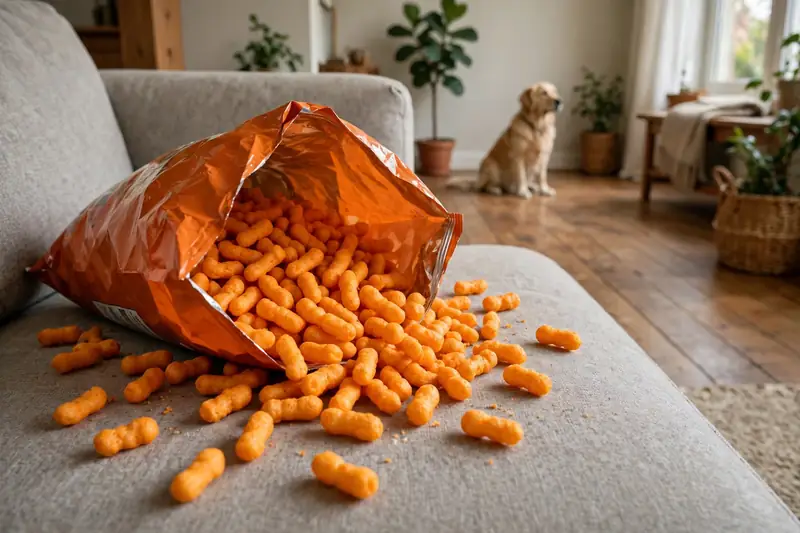
Offer water freely and watch for four to six hours. Mild drooling, thirst, and possibly a single vomit are the expected course for a small theft. Call your vet if vomiting repeats, diarrhea is bloody or profuse, the dog seems painful or unusually tired, or a small dog ate more than a taste. A whole bag, or a large amount in a small dog, means calling now rather than watching: the combined salt, fat, and allium load is a genuine toxicity risk, and early guidance beats late regret.
Do not induce vomiting at home unless the vet directs it. The irritants can injure the throat on the way back up, and decontamination decisions depend on timing and amount. For the recovery phase, a short bland diet of rice and plain chicken rests the gut. Then comes the delayed watch: check gums and energy for five days for the allium window, because the most dangerous ingredient works on a delay.
Safe alternatives with actual crunch
The craving behind the begging is crunch plus inclusion, and both have safe answers. Plain popcorn, air-popped with nothing on it, is the closest texture match to a cheese puff and a genuine dog-safe snack. Baby carrots bring cold crunch and fiber. Apple slices, cored, bring sweet crunch. Commercial crunchy dog treats exist in cheese-adjacent flavors formulated for canine digestion.

Retrain the snack ritual rather than just the snack. Takis fail the same safety tests for the same reasons, so neither belongs in the sharing rotation. Dogs beg because it works, and every shared Cheeto funds the next begging campaign. Teach a settle-on-mat behavior during human snack time and reward it with a safe treat. The dog still participates, you still eat in peace, and the orange dust stays out of the dog’s system. Households with kids need the rule stated plainly to the children too: spicy snacks are never dog treats, because kids share from love and dogs accept without judgment.
Sort snacks: the vet-call column holds Hot Cheetos and anything with onion or garlic seasoning. Merely unhealthy snacks, the watch column, include plain chips and cheese in small amounts. Knowing the column before the incident decides the response speed, and Hot Cheetos sit firmly in the column with the phone number.
When to call the vet
Call your vet for more than a taste, for any theft by a small dog or a puppy, for repeated vomiting, bloody or profuse diarrhea, belly pain, or lethargy. Call in the following days for pale gums, dark urine, yellowing, or appetite loss, the delayed allium signs. Call emergency services for collapse, seizures, unproductive retching with a swollen belly, or breathing difficulty. A single piece in a healthy large dog with no symptoms is a monitoring case, not an emergency.
Give the full history every time: flavor, estimated amount, time since eating, dog’s weight and age, and all symptoms in order. Mention the allium delay explicitly if you are calling days later; the connection is easy to miss, including for a clinic seeing the dog fresh.

Blood work checks red blood cell damage directly and is a simple, fast test. Requesting it after a seasoning-heavy snack incident is reasonable, not overprotective.
Frequently asked questions about dogs and Hot Cheetos
Owners usually ask about single pieces, plain Cheetos, puffs, red stool, and puppies. The answers below cover the repeat questions.
My dog ate one Hot Cheeto. Will it be okay?
For a healthy medium or large dog, almost certainly. Expect possible drooling or mild stomach upset, offer water, and watch the evening. Keep the five-day allium watch in mind, though the dose in one piece is tiny.
Are plain Cheetos safer than Hot Cheetos?
Marginally. Plain Cheetos skip the chili but keep the salt, fat, cheese powder, and often onion or garlic powder in the seasoning. They are still junk food for dogs, just without the burn.
What about Cheeto Puffs vs Crunchy?
No meaningful safety difference. Both are fried cornmeal with seasoned coatings. The puff texture does not change the ingredient risks.
Why is my dog’s poop red after Hot Cheetos?
Food coloring, most likely. The red dyes pass through bright and alarming. Dark, tarry stool is the concerning color and means the vet. When in doubt, photograph it and ask.
Can puppies eat Hot Cheetos?
Puppies have smaller bodies, developing organs, and no margin for the salt, allium, or chili load. Keep all seasoned snacks completely away from puppies.
How long should I watch my dog afterward?
Six hours of close watching for the immediate effects, then five days of loose watching for delayed allium signs: pale gums, lethargy, dark urine, appetite loss. The two windows cover the two hazard types.
Hot Cheetos concentrate everything dogs handle badly into one orange puff: allium powder with a delayed fuse, salt beyond the dog’s needs, chili heat the dog cannot enjoy, and dye that mimics bleeding. Keep the bag closed and high, keep the dog on real treats, and keep the vet’s number within reach for the day the bag tips over.
Disclaimer: This article is for general information only and is not veterinary advice. Onion and garlic toxicity can be serious: if your dog eats Hot Cheetos in quantity or shows pale gums, dark urine, or lethargy in the days afterward, contact your veterinarian promptly.