

Onions are in everything: sauces, soups, stuffing, pizza, baby food, seasoning blends. And dogs are everywhere food is. That combination makes onion one of the most common food poisonings vets see, especially around holidays. The question owners ask first is always about amount. How much onion is toxic to dogs? The veterinary answer is smaller than most people expect: as little as 0.5% of a dog’s body weight can cause poisoning. For a small dog, that is a matter of ounces. This guide translates that number into real amounts for real dogs, explains why onion is so sneaky, and lays out exactly what to do if your dog eats some.
How much onion is toxic to dogs?
For dogs, onion becomes toxic at just over 0.5% of body weight, roughly 5 grams of onion per kilogram. That means a 10-pound dog can be poisoned by less than an ounce of onion, while a 60-pound dog would need several ounces. Onion powder is far more concentrated, so even smaller amounts count. Any suspected ingestion deserves a vet call.

That 0.5% figure comes from veterinary toxicology references, including the American College of Veterinary Pharmacists, and it is the number poison control professionals work with. It is a threshold for concern, not a guarantee of safety below it. Sensitivity varies between dogs, and onion damage can be cumulative, meaning repeated small exposures add up. The practical takeaway is that there is no safe snack amount of onion for dogs. A slice here and there is playing odds you cannot see.
Think in percentages, not slices
A “small piece” means very different things for a Chihuahua and a Labrador. The percentage rule keeps the math honest across sizes.
Toxic amounts by dog size
Percentages are hard to picture in a kitchen, so here is what 0.5% of body weight looks like as actual onion. These figures follow the veterinary toxicology table published by the American College of Veterinary Pharmacists. Use them as concern thresholds, not exact poison doses, since individual dogs vary.

For extra-small dogs, 1 to 10 pounds, the concern starts above roughly 0.075 ounces, barely a bite. Small dogs, 11 to 25 pounds, cross the line above about 0.85 ounces, a couple of tablespoons of chopped onion. Medium dogs, 26 to 40 pounds, at about 2 ounces. Large dogs, 41 to 70 pounds, at roughly 3.25 ounces. Extra-large dogs, 71 to 90 pounds, at around 5.5 ounces, and giant breeds over 90 pounds at about 7.3 ounces. A medium onion weighs 5 to 6 ounces, so one medium onion can threaten any dog under about 70 pounds. These are thresholds for toxic concern, not precise poison doses. Individual dogs vary, and powders concentrate the danger.
The onion in your hand
Pick up a medium onion. That is roughly 150 grams. For a 30-pound dog, less than half of it crosses the concern threshold. The amounts are that small.
Why every form of onion counts
Raw, cooked, fried, dried, powdered, dehydrated: all of it is toxic. Cooking does not break down the harmful compounds. Neither does drying. The American College of Veterinary Pharmacists is explicit that no matter the state of the onion, the toxicity concern remains.
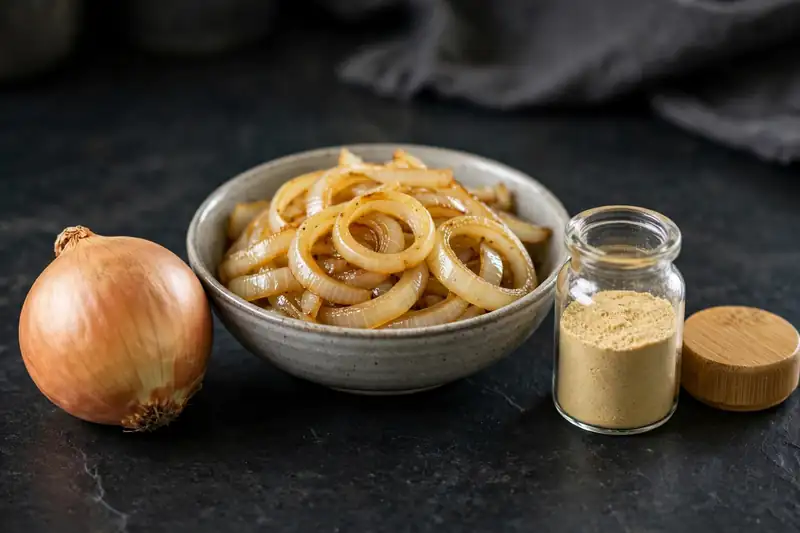
Powders are the worst by weight. Onion powder is concentrated, so a teaspoon of powder carries far more of the toxic compounds than a teaspoon of chopped fresh onion. Seasoning blends, soup mixes, and bouillon often list onion powder deep in the ingredients, where owners miss it. Dehydrated onion flakes fall in the same category. Garlic, leeks, chives, and shallots belong to the same plant family and share the toxicity, with garlic being even more potent per gram. The “it was cooked into the sauce” defense fails completely. Heat changes flavor, not chemistry.
Read the small print
Onion powder hides in gravy mixes, stuffing, meatballs, and “savory” flavorings. If a product lists onion in any form and your dog ate a meaningful amount, mention it on the vet call.
How onion poisons a dog
Onions contain organosulfur compounds, including thiosulfates, that damage red blood cells. In dogs, these compounds cause oxidative damage to hemoglobin, the molecule that carries oxygen. Damaged hemoglobin clumps into structures called Heinz bodies, and the body destroys the damaged cells. The result is hemolytic anemia: too few working red blood cells.

Dogs are especially vulnerable because their red blood cells have lower levels of certain protective enzymes compared to many other species. As red cells break down, the dog cannot carry enough oxygen. Gums go pale, energy collapses, breathing quickens as the body tries to compensate. In severe cases the urine turns dark or reddish from the destroyed cells. This is not a stomach bug. It is the slow destruction of the blood’s oxygen supply, which is why onion poisoning is measured in days, not hours.
Anemia, not indigestion
The vomiting and diarrhea that sometimes follow onion ingestion are side effects. The real damage is happening in the bloodstream, silently, over days.
Why symptoms are delayed
Here is the cruelest part of onion poisoning: your dog can look completely fine for days. The American College of Veterinary Pharmacists notes that signs may not appear until several days after ingestion. Red blood cells do not all break down at once. The damage accumulates as more cells are destroyed faster than the body replaces them.

This delay tricks owners twice. First, it suggests nothing happened, so no call gets made. Second, when symptoms finally appear days later, nobody connects them to the onion incident. By then the anemia can be advanced. This is the single strongest argument for calling your vet or poison control immediately after any suspected onion ingestion, before symptoms exist. Professionals can assess the dose, advise monitoring or treatment, and schedule the blood work that catches the damage early. Waiting for symptoms means waiting for the damage to declare itself.
The monitoring window
If your vet advises home monitoring after a small exposure, expect instructions to watch for several days, not hours. Pale gums, lethargy, rapid breathing, and dark urine are the signs that end the wait.
Breeds and dogs at higher risk
Not all dogs face equal risk. Japanese breeds, Akitas, Shiba Inus, and Jindos, are known to be more sensitive to onion toxicity because of differences in their red blood cells. They can develop anemia at lower doses than other breeds.

Cats are considerably more sensitive than dogs overall, which matters in multi-pet homes where a shared food drop lands in the wrong bowl. Dogs with existing anemia, liver disease, or other health problems have less reserve to absorb red cell losses. Puppies and seniors are more vulnerable for the usual reasons: developing or declining organ function. None of this changes the rule for other dogs. Lower sensitivity is not immunity. But if your dog is in a higher-risk group, say so on the vet call, because it raises the urgency.
Multi-pet households
A dropped onion slice is a dog problem and a cat emergency. In homes with both, the cat gets priority concern at even smaller amounts.
Signs of onion poisoning
When symptoms arrive, usually one to four days after ingestion, they reflect both gut irritation and developing anemia. Early signs include vomiting, diarrhea, drooling, and abdominal pain. As red blood cell destruction progresses, the dog becomes lethargic and weak, loses interest in food, and breathes rapidly.

The hallmark signs of the anemia itself are pale or whitish gums, weakness or collapse with exercise, rapid heartbeat, and dark or reddish-brown urine. Jaundice, a yellow tinge to the gums or eyes, can appear in severe cases. These are not subtle changes in a dog you know well. A normally pink-gummed, energetic dog that goes pale and flat days after raiding the kitchen is telling you exactly what happened. Any of these signs after known or suspected onion exposure is an emergency visit, not a phone consultation.
Check the gums now
Lift your dog’s lip and look at the gums today, while healthy, so you know the normal color. That baseline makes pale gums obvious later when it matters.
What to do if your dog ate onion
Call your veterinarian, an emergency clinic, or a poison control line immediately. Do not wait for symptoms. The ASPCA Animal Poison Control Center is available 24 hours at 888-426-4435, and the Pet Poison Helpline at 855-764-7661. Have three facts ready: your dog’s weight, what form of onion was eaten and roughly how much, and when it happened.

Your vet may induce vomiting if ingestion was very recent, typically within a couple of hours, but only under professional direction. Never induce vomiting on your own with salt, peroxide, or anything else unless specifically instructed. Activated charcoal may be given to limit absorption. For significant ingestions, the vet will likely schedule blood work over the following days to track red blood cell counts, and treatment may include IV fluids, oxygen support, or in severe cases a blood transfusion. Our food-safety article on onions for dogs covers the broader picture, and our vet-directed guide to inducing vomiting in dogs explains the procedure professionals use.
What not to do
Do not “wait and see.” Do not try home remedies. Do not assume a small amount was fine because the dog looks normal. The delay is the trap.
Onion hiding in everyday foods
Most onion poisonings do not come from a dog eating a raw onion like an apple. They come from human food. Pizza, pasta sauce, gravy, stuffing, meatloaf, meatballs, stir-fries, soups, and stews all commonly contain onion. Baby food, historically a sneaky source, sometimes contains onion powder. Bouillon cubes, soup mixes, and seasoning packets concentrate it.

Holidays are peak season: Thanksgiving stuffing, Christmas roasts with onion-laden gravy, Super Bowl snacks. Table scraps given with love are the classic delivery method. A plate scraped into the dog’s bowl can easily contain more onion than the 0.5% threshold for a small dog. The fix is cultural as much as practical. Human food is not dog food, and “just a little” of an onion-containing dish is not a safe category. When guests offer the dog a plate, that is your moment to intervene with a proper treat instead.
The plate-scrape math
A quarter cup of onion-heavy stuffing can hold an ounce or more of onion. For a 15-pound dog, that single serving crosses the toxic threshold. Holiday generosity needs boundaries.
Onion-proofing your kitchen
Prevention is straightforward once you respect the amounts involved. Keep onions, whole and chopped, out of counter-surfing range. Store them in closed cabinets or high shelves, not in low open baskets. Chop over a contained area and sweep up drops immediately, because a single fallen slice is a full toxic dose for a tiny dog.
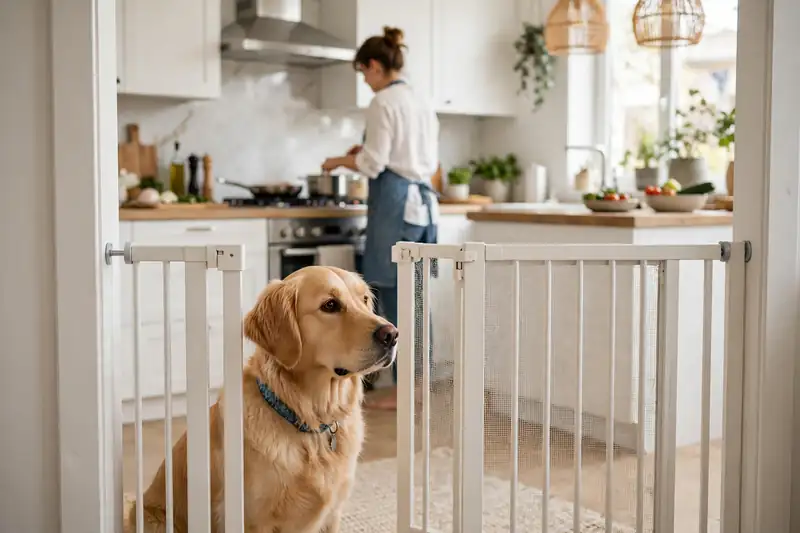
Train a solid “leave it” and a kitchen boundary if your dog is a food opportunist. Secure the trash with a locking lid. During cooking, consider gating the dog out of the kitchen entirely; it removes the dropped-food lottery. Brief guests and kids on the rule: no feeding the dog from plates, no exceptions, with a jar of dog treats by the door as the alternative. And keep the poison control numbers in your phone now. The ASPCA line and Pet Poison Helpline are both 24-hour, and the call is cheapest insurance you will ever buy.
How much onion is toxic to dogs is a question with an uncomfortably small answer: just over half a percent of body weight, in any form, with powders hitting hardest and symptoms hiding for days. Respect the number, watch the hidden sources, and call for help the moment onion goes missing into a dog. For the full food-safety reference, see our guide to what human food dogs can eat.
Frequently Asked Questions
Can a small piece of onion kill a dog?
A single small piece is unlikely to kill a healthy medium or large dog, but for a very small dog even an ounce can cross the toxic threshold, and powders are far more concentrated. Any ingestion deserves a vet call, because sensitivity varies and damage can be cumulative.
Is cooked onion safe for dogs?
No. Cooking does not destroy the toxic compounds in onion. Raw, cooked, fried, dried, and powdered onion are all toxic to dogs. The “it was cooked in” defense does not work.
How long after eating onion will a dog get sick?
Signs are often delayed one to four days after ingestion, because red blood cell destruction accumulates over time. This delay is why you should call your vet immediately rather than waiting for symptoms.
Are onion rings toxic to dogs?
Yes. Onion rings contain real onion, plus they are fried and salty, which adds stomach upset to the toxicity risk. If your dog ate onion rings, estimate how many and call your vet with the details.
Is garlic worse than onion for dogs?
Garlic belongs to the same plant family and is more potent per gram than onion, roughly several times more toxic by weight. The same rules apply: no amount is a safe treat, and any ingestion warrants a vet call.
What is the antidote for onion poisoning in dogs?
There is no specific antidote. Treatment is supportive: decontamination if caught early, IV fluids, monitoring of red blood cell counts over several days, oxygen support if needed, and blood transfusion in severe cases. Early veterinary care makes the biggest difference.
Can dogs eat food cooked with onion if the onion is removed?
No. The toxic compounds leach into the food during cooking, so picking out the pieces does not make the dish safe. Gravy, broth, and sauces cooked with onion should all be kept away from dogs.
This article is general information only and is not a substitute for veterinary advice. If your dog has eaten onion in any form, contact your veterinarian or a poison control line immediately.


6 thoughts on “How Much Onion Is Toxic to Dogs? Less Than You Think”