Ham sits in an awkward spot for dog owners. It is not poisonous the way chocolate or grapes are, but it is a long way from a good treat. A crumb of plain ham off your plate will not hurt a healthy dog. The trouble is how ham is made: cured with salt, loaded with fat, and usually coated in garlic, onion, pepper, sugar, or honey. The fat is what sends dogs to the vet, because one rich meal can trigger pancreatitis. Ham bones are their own emergency, since cooked bones splinter and can tear the gut. The short version: never feed ham on purpose. Plain cooked chicken or turkey gives the same meaty flavor with none of the risk.

Can dogs eat ham? The short answer
A tiny piece of plain ham will not poison most dogs, but ham is not something you should feed your dog on purpose. It is very high in sodium and fat, and many hams carry garlic, onion, or spice rubs that are harmful to dogs. Plain cooked chicken or turkey is a far safer meaty treat.
The confusion around ham comes from the word “toxic.” Ham is not toxic the way onions or xylitol are. There is no compound in plain pork that poisons dogs. The AKC guide to human foods dogs can and cannot eat treats plain cooked meats as acceptable in small amounts, with a warning to keep fatty and seasoned foods away from dogs. Ham fails on both counts.
Your dog’s body is built for lean protein and moderate fat from balanced dog food. Ham is the opposite: salt-cured and fat-marbled for human taste buds. A stolen crumb is a blip; a slice handed over as a treat is a gamble, and a bigger one for small dogs.

Why ham’s sodium level is a problem for dogs
A single ounce of ham can carry 300 to 400 milligrams of sodium, which is a large share of a dog’s daily salt need. Too much salt leads to heavy thirst and frequent urination, and a very large amount can cause salt poisoning. Dogs with heart or kidney disease should not get salty foods at all.
Dogs need far less sodium than people do, and regular dog food already covers the daily requirement, so ham is pure surplus on top. One small piece will not tip a healthy dog into danger. The risk builds with amount.
Salt poisoning takes a genuinely large amount of salt at once. Signs include vomiting, diarrhea, extreme thirst, lethargy, and in severe cases tremors or seizures. A dog that counter-surfs a whole holiday ham needs watching and possibly a vet call.
Salty food also makes dogs gulp water fast, and rapid water intake is one factor vets associate with bloat risk in deep-chested breeds. The signs of bloat in dogs are worth learning before you ever need them.

The fat problem: why pancreatitis is the main danger
Ham is a fatty meat, and a sudden load of fat is the most common dietary trigger of pancreatitis in dogs. Pancreatitis is a painful inflammation of the pancreas that can require hospitalization. Dogs that have had it before, and breeds like miniature schnauzers, face higher risk than others.
The pancreas makes digestive enzymes and insulin. When a rich, fatty meal overwhelms it, those enzymes can activate inside the pancreas itself and start digesting the organ. That is pancreatitis, ranging from mild vomiting to a life-threatening emergency. Cases spike after holidays, when rich table scraps are everywhere. The Merck Veterinary Manual lists fatty meals among the recognized dietary risk factors.
Some dogs are more vulnerable: miniature schnauzers have a known predisposition, and so do overweight dogs, dogs with high blood fat, and dogs that have had pancreatitis before. For these dogs, one fatty meal is a likely trigger, not a small gamble.
The fattiest pieces are the worst: the rind, the fat cap, and the greasy trimmings cut off people’s plates. If your dog has any history of pancreatic trouble, fatty table scraps should be off the table entirely.

Seasonings, glazes, and flavorings that make ham worse
Most hams are rubbed or glazed with garlic, onion, black pepper, mustard, brown sugar, or honey. Garlic and onion damage a dog’s red blood cells and can cause anemia over time. A glazed holiday ham is worse than plain cooked ham because of the added sugar and spices on top of the salt and fat.
Plain pork is not the problem here. The coating is. Garlic and onion are alliums, and both are toxic to dogs: they damage red blood cells, which can lead to anemia. The damage is cumulative, so small amounts over days add up, and dried powders in rubs are more concentrated than fresh cloves. This guide to onion toxicity in dogs walks through the amounts, and the garlic safety guide covers garlic’s thresholds.
Holiday glazes add a second layer. Brown sugar, honey, maple, and mustard turn an already salty, fatty meat sugary too. Sugar does not poison dogs, but it adds empty calories and upsets the stomach.
The practical rule: the more a ham has been flavored for human enjoyment, the less suitable it is for your dog. A plain boiled ham slice is a bad treat. A honey-glazed, garlic-rubbed holiday ham is a worse one.

Why ham bones are never safe for dogs
Never give your dog a ham bone, cooked or smoked. Cooked bones splinter into sharp pieces that can cut the mouth, throat, or intestines, and large chunks can block the digestive tract. Smoked ham bones are extra risky because they are brittle and dogs chew them into shards.
This is the one part of the ham question with no gray area. Cooking makes bone brittle. A dog’s jaws can crack a cooked ham bone, and the splinters can puncture the esophagus, stomach, or intestines. A gut puncture is a surgical emergency. Large fragments can also lodge in the throat or block the intestines.
Smoked ham bones, sometimes sold as dog treats, deserve special mention. Smoking dries the bone further and makes it more likely to shatter, and they tend to be very salty. The guide to bones for dogs explains which bones carry the highest risk.
If your dog already grabbed a ham bone, take the remaining pieces away calmly and watch. Choking, gagging, drooling, vomiting, or bloody stool afterward all warrant a prompt vet call. Never try to pull a lodged fragment from your dog’s throat yourself.

Deli ham vs cooked ham vs holiday ham
Deli ham is the saltiest option and often contains nitrates, nitrites, and preservatives, which makes it the worst choice of the three. Plain cooked ham is less salty but still fatty. Holiday glazed ham adds sugar, honey, and spices on top of the salt and fat. None of them belong in a dog’s diet.
It helps to see the three side by side, since “ham” covers very different products:
| Type | Salt level | Fat level | Extra concerns | Verdict for dogs |
|---|---|---|---|---|
| Deli ham | Very high | Moderate | Nitrates, nitrites, preservatives | Worst option, avoid entirely |
| Plain cooked ham | High | High | Fat cap and trimmings | Bad treat, keep away |
| Holiday glazed ham | High | High | Sugar, honey, garlic, onion, spices | Worst for seasoning load, avoid entirely |
Deli ham earns its reputation. It is made for a long shelf life: heavy salting plus curing agents. A few thin slices can carry as much sodium as a much larger piece of cooked ham. Processed pork sits in the same category as bacon: salty, fatty, and made for human taste buds.
Butcher-counter cooked ham is the least processed of the three, but “least bad” is not good. It still carries the full fat load behind the pancreatitis risk, and holiday ham combines every problem in one roast.

What to do if your dog ate ham
Stay calm and work out how much your dog ate and what kind of ham it was. A single small bite of plain ham in a healthy adult dog usually needs nothing more than watching. Remove the rest of the ham, put down fresh water, and watch for vomiting, diarrhea, or belly pain over the next 24 to 48 hours.
Start with the details, because they change the advice. How much: a crumb, a slice, or half the platter? What kind: plain, deli, or glazed? Any history of pancreatitis, heart, or kidney disease? A healthy fifty-pound dog that stole one plain slice is in a very different spot from a twelve-pound dog with a sensitive pancreas that ate a glazed ham end.
For the common case, a bite or two of plain ham, the plan is simple: take the ham away, put down fresh water, and feed the next meal as normal. Mild stomach upset or extra thirst usually passes within a day.
Do not induce vomiting unless your vet specifically tells you to. Ham is not a poison where emptying the stomach is the standard move, and vomiting on command carries its own risks. If your vet does advise it, follow the safe vomiting induction guide exactly and call the vet back with the result.

Pancreatitis warning signs to watch for
Watch for repeated vomiting, a hunched stance or the “prayer position” with the front end down and rear end up, belly pain or tenderness, loss of appetite, lethargy, and diarrhea. These signs can appear 12 to 72 hours after a fatty meal. If you see them, call your vet promptly.
The prayer position is the classic sign owners notice first: front legs flat on the floor, rear end in the air, held because the belly hurts. Repeated vomiting is the other early flag. Once can be a fluke, but vomiting several times, or vomiting that will not stop, points to something more serious.
Belly pain also shows as whimpering when touched, a tucked-up abdomen, restlessness, or reluctance to lie down. Appetite disappears and energy drops. Signs do not always arrive together, which is why the 24 to 72-hour watch window matters.
Do not wait these signs out. Pancreatitis can worsen quickly, and early treatment with fluids, anti-nausea medication, and pain control gives the best outcome. The VCA Hospitals resource library explains how vets diagnose and treat it.

Safer meat treats your dog can have instead
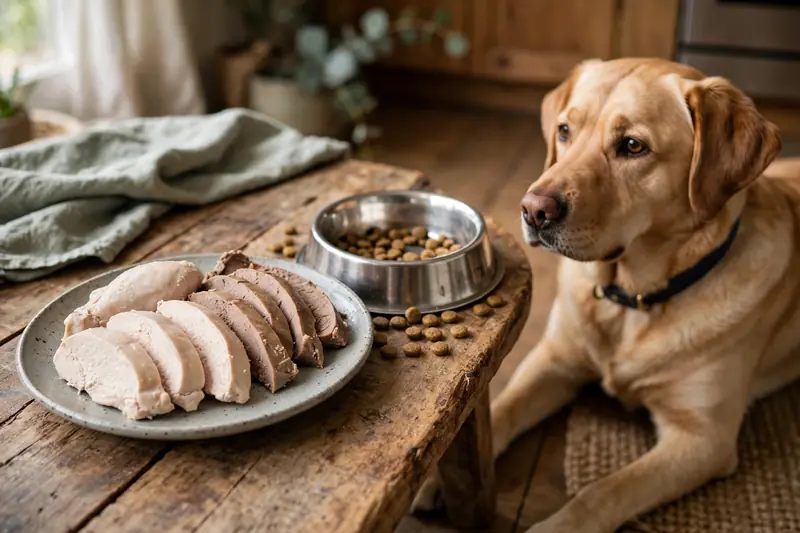
Plain cooked chicken breast and plain cooked turkey are the safest meaty treats for most dogs. Serve them unseasoned, with skin and bones removed, cut into small pieces. Lean cooked beef works too. Keep all treats, meat included, under 10 percent of daily calories.
Dogs love ham for its rich, meaty flavor. Plain poultry delivers the meaty part without the salt and fat. Boil or bake chicken breast with no oil, butter, or seasoning, then dice it small. Turkey breast gets the same treatment, skin removed. The chicken feeding guide and the turkey feeding guide cover portions in detail.
Lean beef is the third option: lean cuts, visible fat trimmed, cooked plain, diced small. Avoid deli turkey and deli chicken, which carry the same sodium problem as deli ham, plus seasoned rotisserie chicken rubbed with garlic and onion.
Portion discipline matters even with safe meats. A few small pieces as a training reward is the right scale, not a bowlful. The ten percent rule keeps treats in their place.
When to call the vet
Call your vet if your dog ate a large amount of ham, ate ham seasoned with garlic or onion, swallowed any ham bone, or shows vomiting, diarrhea, belly pain, extreme thirst, tremors, or lethargy. For after-hours emergencies, the ASPCA Animal Poison Control hotline can advise you on what to do next.
Use this as a decision guide, not a reason to panic. One stolen bite in a healthy dog: watch at home. Half a holiday ham in a small dog: call now. Garlic-rubbed ham in any real amount: call with the ingredient list. A swallowed bone fragment with choking or vomiting: emergency visit.
When you call, have the details ready: your dog’s weight, the kind of ham, roughly how much, when it happened, and symptoms seen. Vets would rather hear early about a maybe-nothing than late about a real problem.
For nights and weekends, the ASPCA Animal Poison Control hotline is the resource most vets recommend. It may charge a consultation fee. Keep the ham packaging nearby when you call, since the ingredient list guides the advice.

Frequently asked questions about dogs and ham
Owners ask the same handful of ham questions in vet clinics and in search results. The answers below cover the ones that come up most. Your vet’s guidance wins for any dog with a medical condition.
Is ham toxic to dogs?
No, not in the poisonous sense. No compound in plain ham poisons dogs the way onion or xylitol does. The danger is the salt, fat, and seasonings, which can cause anything from stomach upset to pancreatitis.
Can dogs eat ham bones?
No. Cooked and smoked ham bones splinter into sharp pieces that can cut the digestive tract or cause blockages. No exceptions to this rule. If your dog grabs one, take the rest away and watch for choking, vomiting, or bloody stool.
Can dogs eat deli ham?
Deli ham is the worst kind for dogs: the saltiest, usually with nitrates, nitrites, and preservatives. Even a few slices carry a heavy sodium load. Keep it away from your dog entirely.
My dog ate a small piece of ham. Will he be okay?
Most likely yes, if your dog is a healthy adult and the piece was small and plain. Watch for vomiting, diarrhea, or belly pain for a day or two, and call your vet if symptoms appear.
Can dogs eat ham every day?
No. Daily ham means a steady overload of sodium and fat, straining the heart, kidneys, and pancreas over time. Even small daily amounts add up. Plain cooked chicken is the better daily treat habit.
What is the safest meat to give a dog?
Plain cooked chicken breast: lean, easy to digest, unseasoned. Plain cooked turkey breast is a close second. Serve both boneless, skinless, cut small, within the ten percent treat rule.
Can puppies eat ham?
Puppies should not get ham. Their developing digestion handles rich, salty food poorly, and they dehydrate faster from salty foods. Stick to puppy food and vet-approved treats.
Skip ham on purpose and the whole problem disappears. If your dog already got into some, you know what to watch for and when to call. The meaty flavor dogs love comes risk-free in plain cooked chicken or turkey.