

If you are asking can dogs eat raw bacon, the answer is a hard no. Raw bacon stacks two sets of dangers on top of each other: the bacteria and parasites found in uncooked pork, plus bacon’s extreme fat, salt, and preservative load. This guide breaks down exactly why it is so risky, what pancreatitis and sodium poisoning look like, and what to do if your dog already grabbed a strip off the counter.
The Short Answer: No, Dogs Should Never Eat Raw Bacon
No. Raw bacon is one of the worst foods a dog can eat. It combines raw pork’s bacterial and parasite risks with bacon’s extreme fat and salt load. Even a small piece can trigger vomiting, diarrhea, or pancreatitis in sensitive dogs. Keep it out of reach and never offer it as a treat.
Cooked bacon is not a health food either, but raw bacon adds a whole extra layer of danger. Bacteria like Salmonella and the parasite Trichinella can live in uncooked pork, and both can make dogs seriously ill. Add in bacon’s roughly 42 percent fat content and sky-high sodium, and you get a food that threatens your dog from three directions at once.
Most dogs that snatch a single small strip will be fine after some monitoring, but the risk is never zero. Smaller dogs, puppies, seniors, and dogs with a history of pancreatitis or digestive trouble are the most vulnerable. If your dog ate raw bacon, watch closely for the warning signs covered later in this article.
What Raw Bacon Actually Contains
Raw bacon is cured pork belly, and its nutrition profile is rough for dogs. A slice can be around 42 percent fat by calories, with sodium levels far beyond anything a dog’s body is built to handle. Added to that are the curing agents, nitrites and nitrates, which preserve the meat and give it that pink color.
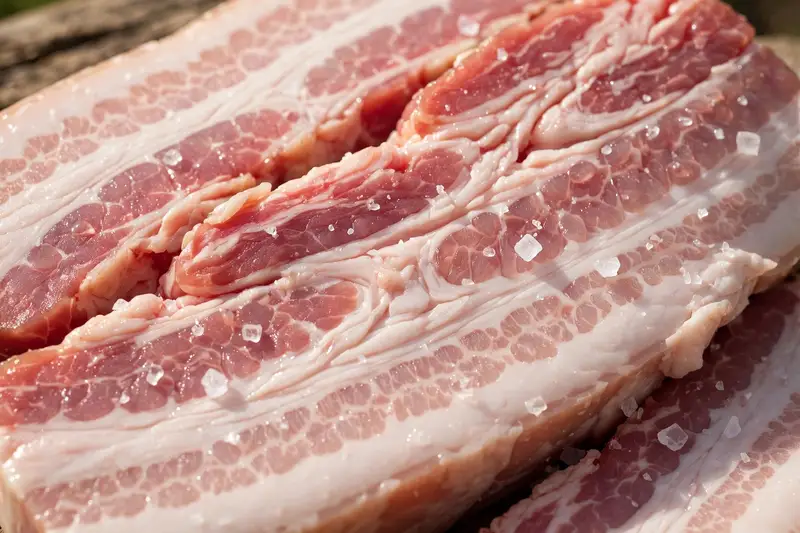
A dog’s daily sodium needs are tiny compared to what one strip of bacon delivers. Too much salt at once can lead to sodium ion poisoning, which starts with heavy thirst and vomiting and can progress to tremors and seizures. The fat content matters just as much. A sudden, heavy fat load is one of the classic triggers for pancreatitis, a painful and sometimes life-threatening inflammation of the pancreas.
The nitrites and nitrates deserve a mention too. They are used to cure bacon, and while a single exposure is unlikely to poison a dog on its own, they add to the overall chemical load of an already risky food. None of these ingredients serve any nutritional purpose for your dog.
Raw Bacon vs. Cooked Bacon: Is One Safer?
Neither is good for dogs, but raw bacon is clearly the more dangerous of the two. Cooking kills most of the bacteria and parasites that make raw pork hazardous, so cooked bacon at least removes the infection risk. It does not remove the fat, the sodium, or the preservatives.
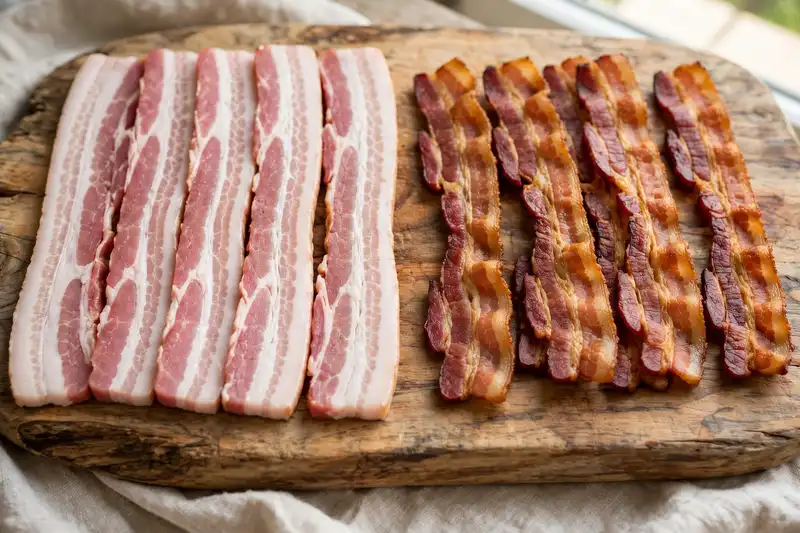
Some owners wonder if a tiny piece of cooked bacon as an occasional treat is acceptable. Most vets say a thumbnail-sized piece once in a great while is unlikely to harm a healthy adult dog, but it should never become a habit. Raw bacon gets no such pass. There is no safe amount of raw bacon, because even a small piece can carry bacteria or parasites that cooking would have destroyed.
If you want to share meat with your dog, plain cooked chicken or turkey with no seasoning is a far better choice. Our guide on what human food dogs can eat walks through the safer options.
Pancreatitis: The Biggest Danger
Pancreatitis is the number-one reason vets worry about bacon. It is an inflammation of the pancreas triggered by a sudden overload of fat, and bacon’s roughly 42 percent fat content makes it a textbook trigger. The condition ranges from mild and self-limiting to severe and life-threatening.

The classic signs show up within 12 to 72 hours: repeated vomiting, loss of appetite, a hunched or prayer-like posture from belly pain, lethargy, and sometimes diarrhea. Small breeds like Miniature Schnauzers, Yorkshire Terriers, and Cocker Spaniels are genetically more prone, but any dog can develop it after a fatty meal.
Pancreatitis needs a vet, full stop. Treatment usually means IV fluids, anti-nausea medication, pain control, and a period of fasting followed by a low-fat diet. Dogs that have had one episode are more likely to have another, which is why fatty foods should stay off the menu permanently afterward.
Recovery is slow even in mild cases. Most dogs need several days of bland, low-fat feeding before their appetite and energy return to normal, and your vet may want follow-up blood work to confirm the pancreas has settled. Do not rush the return to regular food; a second fatty meal during recovery can restart the whole episode.
Salmonella and Bacterial Contamination Risks
Raw pork can carry Salmonella, Listeria, and E. coli, and raw bacon is no exception. Dogs are somewhat more resistant to Salmonella than humans, but they are not immune. Puppies, seniors, and dogs with weakened immune systems can develop serious gastrointestinal illness from contaminated raw meat.
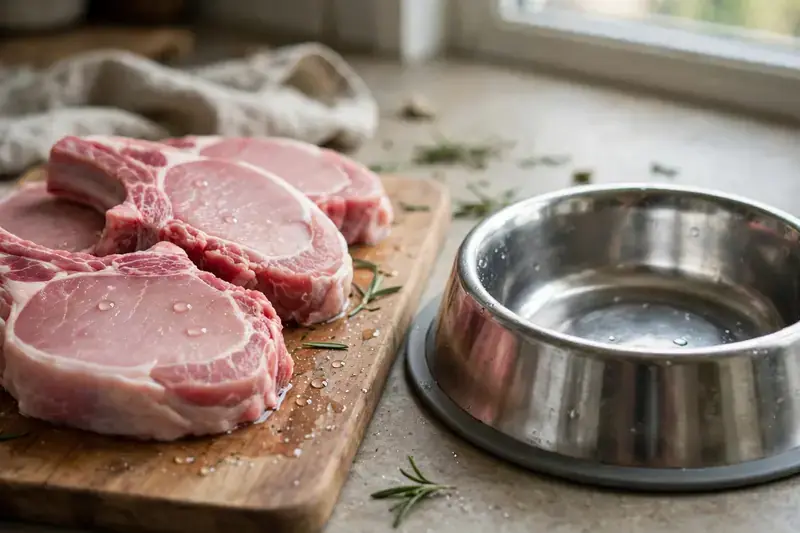
The signs of bacterial food poisoning in dogs look like a bad stomach bug: vomiting, diarrhea (sometimes bloody), fever, lethargy, and refusal to eat. Symptoms usually appear within 6 to 72 hours of eating the contaminated meat. There is also a household angle here. Dogs shedding Salmonella in their stool can pass it to people, especially kids and anyone immunocompromised, which is one reason vets caution against raw pork diets in general.
The veterinary team at PetMD regularly covers food-safety risks in raw meats, and their guidance consistently steers owners toward cooked proteins. If several days pass with no symptoms after a small accidental bite, the bacterial risk has likely passed, but keep watching.
Trichinella: The Parasite in Raw Pork
Trichinella is a parasitic roundworm that causes trichinosis, and raw or undercooked pork is its classic vehicle. Modern commercial pork production has made trichinosis much rarer than it once was, but the risk is not zero, especially with pork from small farms, wild boar, or home-butchered meat.

In dogs, trichinosis can cause vomiting, diarrhea, muscle pain, stiffness, and fever as the larvae migrate into muscle tissue. Severe cases are rare in dogs, but the infection is painful and difficult to treat once the larvae embed. Cooking pork to a safe internal temperature destroys the parasite completely, which is exactly why the raw version of bacon carries a risk the cooked version does not.
This parasite risk is the main reason raw bacon is worse than raw chicken or beef from a safety standpoint. Pork has its own specific parasite profile, and bacon’s curing process does not reliably kill Trichinella larvae.
Sodium Ion Poisoning From Bacon
Bacon is one of the saltiest foods in a typical kitchen, and dogs tolerate excess salt poorly. A large amount of bacon eaten quickly can cause sodium ion poisoning, also called salt poisoning. Early signs include extreme thirst, heavy drooling, and vomiting, progressing to tremors, seizures, and in severe cases, coma.
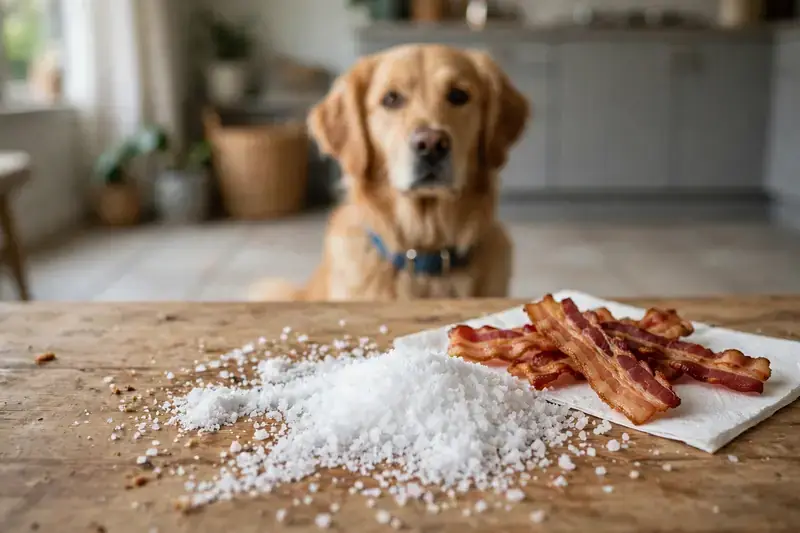
Small dogs are at the greatest risk because the toxic dose is measured per pound of body weight. A few strips that would only upset a Labrador’s stomach could genuinely endanger a Chihuahua. This is also why dogs with kidney disease need strict sodium control and should never get bacon of any kind.
If your dog ate several strips, do not withhold water, but do not force extra water either. Offer fresh water freely and call your vet or an animal poison control line for dose-specific guidance. The Pet Poison Helpline can walk you through exactly how much salt is dangerous for your dog’s size.
My Dog Ate Raw Bacon: What to Do Right Now
First, do not panic. Remove any remaining bacon so your dog cannot eat more, and try to estimate how much was eaten and how big your dog is. A single small bite in a large, healthy dog usually calls for watchful waiting rather than an emergency vet dash.
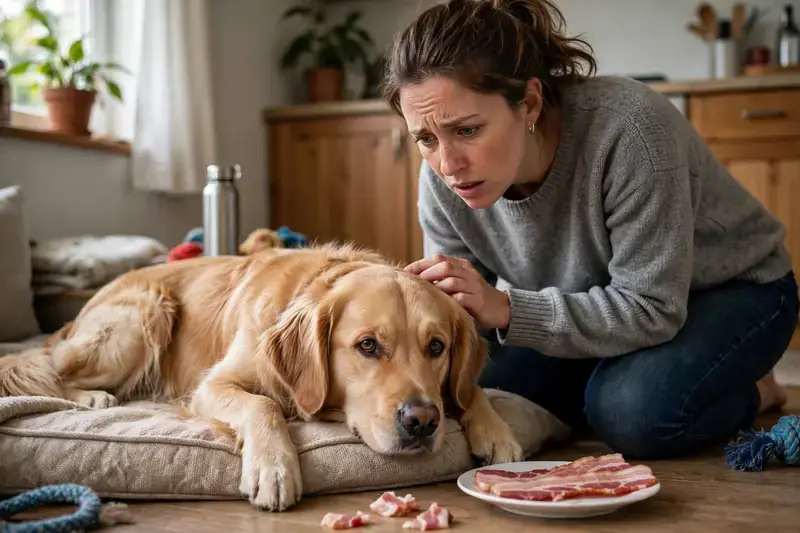
Do not try to induce vomiting unless your vet specifically tells you to. Vomiting can be dangerous with certain foods, and with bacon the main risks (fat, salt, bacteria) play out over hours, not minutes. Write down the time your dog ate the bacon so you can track when symptoms appear.
For the next 48 to 72 hours, watch for vomiting, diarrhea, loss of appetite, belly pain, unusual thirst, or lethargy. Keep meals light. A short course of bland diet for dogs (plain boiled chicken and rice) is a sensible way to settle the stomach if mild GI signs appear. If your dog vomits repeatedly or shows any neurological signs, skip the waiting and call the vet.
Keep a simple log while you monitor: the time of each vomit or bout of diarrhea, whether your dog drinks water, and their energy level morning and evening. If you end up calling the vet, this timeline helps them judge how fast things are progressing. Memory gets fuzzy during a stressful night; written notes do not.
Warning Signs That Need a Vet Visit
Some symptoms after eating raw bacon mean the situation has moved past home monitoring. Repeated vomiting or vomiting that will not stop, bloody diarrhea, a swollen or painful abdomen, and the hunched prayer posture of pancreatitis all warrant a prompt vet visit.
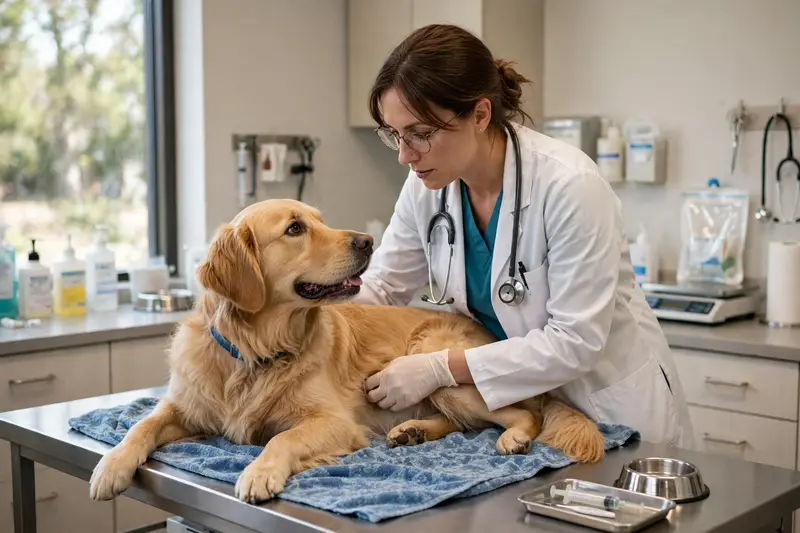
Neurological signs are the red flags for salt poisoning: wobbliness, tremors, disorientation, or seizures. These need emergency care. Fever, muscle stiffness, or ongoing GI trouble several days out could point to a bacterial infection or, rarely, trichinosis.
When you call the vet, have three facts ready: your dog’s weight, roughly how much bacon was eaten, and when it happened. The nutrition experts at AKC also recommend keeping your vet’s number and a poison control number saved in your phone for exactly these moments. Fast, accurate information gets your dog the right care sooner.
Safer Meat Treats to Offer Instead
The good news is that dogs love plenty of meats that will not put them in danger. Plain cooked chicken breast, lean turkey, and cooked lean beef, all prepared with no seasoning, oil, or onion and garlic, make excellent high-value treats. Cut them into small training-sized pieces.

Fish is another solid option. Salmon skin prepared plainly gives dogs omega-3s without bacon’s salt bomb, and a spoonful of bone broth for dogs poured over kibble adds flavor dogs go wild for. If your dog tends toward an upset stomach, electrolytes for dogs can help with rehydration after any GI episode.
The simplest rule: if a meat is plain, cooked, lean, and unseasoned, it is probably fine in moderation. If it is cured, smoked, salted, or raw, keep it away from the dog bowl.
Frequently Asked Questions
How much raw bacon is dangerous for a dog?
There is no established safe amount. A single bite may cause nothing in a large dog, but the same bite could upset a small dog or one prone to pancreatitis. The danger depends on the dog’s size, health history, and whether the meat carried bacteria or parasites. Treat any amount as a reason to monitor closely.
Can one small piece of raw bacon kill a dog?
Extremely unlikely, but not impossible in edge cases. A tiny piece will not deliver a lethal salt dose to most dogs, and bacterial infection from one bite is uncommon. The realistic worst case from a small piece is vomiting, diarrhea, or a pancreatitis flare in a susceptible dog, which itself can become serious without treatment.
Is cooked bacon safe for dogs then?
Safer than raw, but still not a good idea. Cooking removes the bacteria and parasite risk, yet the fat, sodium, and nitrites remain. A crumb-sized piece very rarely will not harm a healthy dog, but regular bacon treats raise the risk of pancreatitis, obesity, and salt-related problems over time.
What are the first signs of pancreatitis in dogs?
Repeated vomiting, refusal to eat, obvious belly pain (hunched back or prayer position with front down and rear up), lethargy, and sometimes diarrhea. Signs often start 12 to 72 hours after the fatty meal. Pancreatitis always needs veterinary care, so call your vet at the first combination of these symptoms.
Is raw pork different from raw bacon for dogs?
Yes. Plain raw pork carries the bacterial and Trichinella risks but not bacon’s extreme salt, fat concentration, and nitrites. Raw bacon is raw pork plus curing, which makes it worse on every front. Neither should be fed to dogs, but bacon is the more dangerous of the two.
What about bacon grease? Can dogs lick the pan?
No. Bacon grease is concentrated fat and salt with zero nutritional value for dogs, and licking up a panful is a classic pancreatitis trigger vets see regularly. Wipe pans clean and dispose of grease where your dog cannot reach it.
Should I call poison control if my dog ate raw bacon?
For a small amount in a healthy large dog, monitoring at home is usually enough. Call your vet or poison control if your dog is small, ate several strips, is very young or old, has pancreatitis or kidney history, or shows any worrying symptoms. The hospital vets at VCA Hospitals publish helpful guidance on when a dietary indiscretion becomes an emergency.



1 thought on “Can Dogs Eat Raw Bacon? Why the Answer Is a Firm No”