
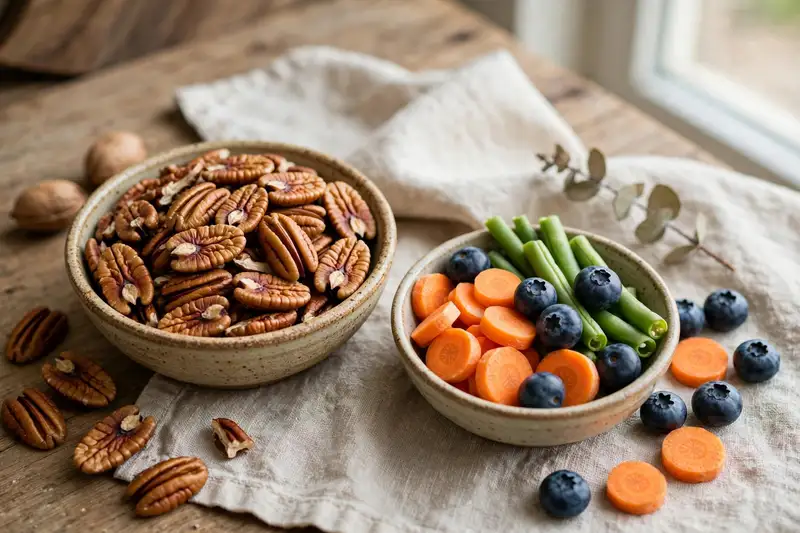
If you are wondering can dogs eat pecans, the answer is no. Pecans are not as instantly toxic as chocolate or grapes, but they bring a stack of problems: the compound juglone, a real risk of mold and aflatoxin poisoning, choking hazards, and enough fat to trigger pancreatitis. Here is the full picture, including what to do if your dog already ate some.
The Short Answer: No, Pecans Are Not Safe for Dogs
No, dogs should not eat pecans. They contain juglone, a compound from the walnut family that can upset dogs, and fallen pecans grow molds that produce aflatoxins, which can cause tremors and seizures. Their very high fat content can also trigger pancreatitis. One fresh pecan is unlikely to harm a large dog, but pecans should never be given as treats.
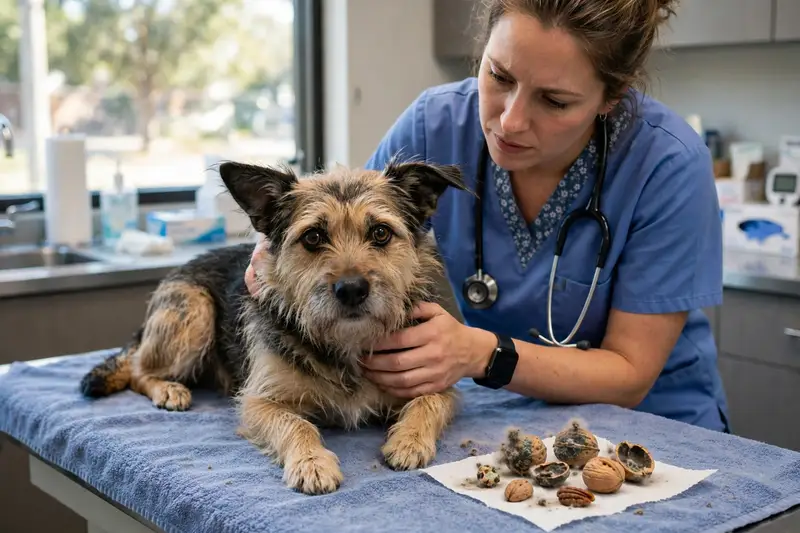
The tricky part about pecans is that the danger is not one single toxin. It is the combination. A fresh, shelled pecan from a bag is mostly a fat and calorie problem. A pecan that fell in the yard and sat in the damp for a week is a mold problem that can turn genuinely dangerous. Knowing which scenario you are dealing with changes how worried you should be.
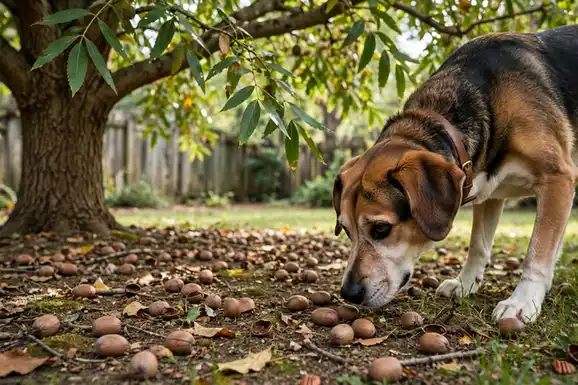
If your dog has a pecan tree in the yard, this article matters even more. Fallen pecans are a daily temptation for curious dogs, and cleanup is the single best prevention.
Juglone: The Walnut-Family Compound
Pecans belong to the same plant family as walnuts, and both produce juglone, a natural chemical the tree uses to suppress competing plants. Juglone levels in pecans are lower than in black walnuts, which is why pecans are considered less acutely toxic, but the compound is still present in the nuts, shells, and leaves.

In dogs, juglone exposure typically causes gastrointestinal upset: drooling, vomiting, and diarrhea. It is not usually life-threatening from pecans alone, but it is one more reason these nuts do not belong in a dog’s diet. The shells and husks concentrate more juglone than the nut meat, so a dog that chews through shells gets a bigger dose.
The veterinary toxicologists at Pet Poison Helpline list tree nuts among the foods that warrant a call when a dog eats a meaningful quantity. If your dog ate several pecans with shells, that call is worth making.
Mold and Aflatoxin: The Hidden Killer
This is the danger most owners underestimate. Pecans that fall to the ground and sit in moisture grow molds, and some of those molds produce aflatoxins and tremorgenic mycotoxins. These toxins attack the nervous system, and the symptoms are frightening: muscle tremors, wobbliness, agitation, high body temperature, and in severe cases seizures.

Aflatoxin poisoning can also damage the liver over time. Dogs are more sensitive to aflatoxins than many other animals, which is why even pet food recalls sometimes trace back to moldy grain ingredients. The FDA monitors aflatoxin levels in animal feeds for exactly this reason.
The practical takeaway: a pecan of unknown age from the yard is far more dangerous than a fresh one from a sealed bag. If you cannot tell whether a pecan is fresh, assume it is not. Rake up fallen pecans regularly during dropping season.
Mold growth follows a predictable pattern, and knowing it helps you judge risk. Warm, damp conditions speed it up dramatically, so pecans that sat through a rainy week are far more suspect than ones that fell yesterday onto dry ground. Look for dark discoloration, a musty smell, or a shriveled shell, and treat any nut with those signs as contaminated.
Timing matters for symptoms too. Tremorgenic mycotoxin signs can appear within a few hours or take most of a day to show, which is why the monitoring window stretches to 48 hours. A dog that looks fine at bedtime is not necessarily in the clear. Keep watching, keep notes on what you see, and call the vet at the first sign of tremors rather than waiting to see if they pass.
Fat Content and Pancreatitis Risk
Pecans are roughly 70 percent fat, which puts them among the fattiest nuts you can buy. For dogs, a sudden load of dietary fat is one of the classic triggers for pancreatitis, the painful inflammation of the pancreas that can range from a rough few days to a life-threatening emergency.

It does not take a bowlful. A handful of pecans can deliver more fat than a small dog should eat in an entire day. Dogs with a history of pancreatitis, seniors, and breeds prone to the condition (Miniature Schnauzers, Yorkshire Terriers, Cocker Spaniels) are at the highest risk. Our guide to what human food dogs can eat flags other high-fat foods to keep away from the dog bowl.
Even without pancreatitis, a fatty pecan binge usually means vomiting and diarrhea for a day or two. That alone is reason enough to keep the nut bowl out of reach.
What If My Dog Already Ate Pecans?
Stay calm and work out the details. How many pecans, were they fresh or from the yard, did the dog eat shells, and how much does your dog weigh? A single fresh pecan in a large dog is a watch-and-wait situation. A mouthful of old yard pecans in a small dog is a call-the-vet situation.
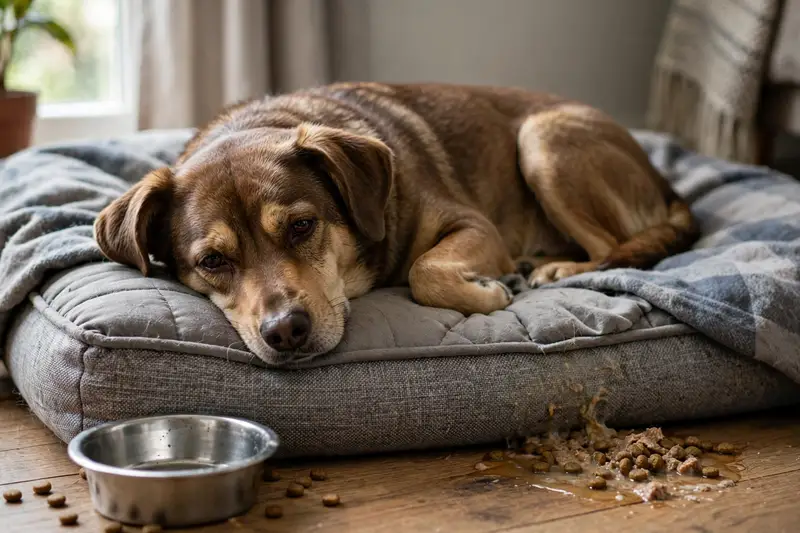
Do not induce vomiting unless your vet tells you to. For the next 24 to 48 hours, watch for vomiting, diarrhea, loss of appetite, and lethargy. If the pecans may have been moldy, extend the watch and look specifically for tremors, restlessness, or wobbliness, which can appear hours after ingestion.
Keep your dog’s meals light while you monitor. A day or two of bland diet for dogs helps settle mild GI upset, and electrolytes for dogs can help if vomiting or diarrhea caused fluid loss. Save the pecan shells or packaging so you can describe exactly what was eaten if you call the vet.
Symptoms That Mean an Emergency
Most pecan incidents end with an upset stomach, but certain symptoms mean you should not wait. Repeated vomiting that will not stop, bloody stool, extreme lethargy, or signs of belly pain (hunched posture, whimpering when touched) all warrant a prompt vet visit.
The neurological symptoms are the true red flags: muscle tremors, twitching, stumbling, disorientation, or seizures. These point to mycotoxin poisoning from moldy nuts and need emergency care. A dog showing these signs may need IV fluids, anti-seizure medication, and temperature management at the clinic.
There is also a mechanical risk worth mentioning. Whole pecans and shell fragments can lodge in the throat or intestines, especially in small dogs. Gagging, drooling, repeated swallowing attempts, or a suddenly bloated belly after eating nuts should be checked quickly. The vets at VCA Hospitals advise treating any suspected blockage as urgent.
Pecan Pie Is Even Worse
If plain pecans are bad, pecan pie is a disaster in a dish. The pie adds sugar, butter, and often chocolate or bourbon to the pecan base, and each of those brings its own problems. Chocolate contains theobromine, which is genuinely toxic to dogs, and the sugar and butter load multiplies the pancreatitis risk.

Holiday season is peak pecan pie season, and it is also peak counter-surfing season. A whole pie eaten by a dog is an emergency vet visit, not a wait-and-see situation. The combination of chocolate toxicity, extreme fat, and sugar can hit a dog from multiple directions at once.
Keep desserts pushed back from counter edges and never leave a cooling pie where a determined dog can reach it. Dogs remember where the good smells came from and will check that spot again.
Safer Nut Alternatives for Dogs
Dogs do not need nuts at all, but if you want a nutty-flavored treat, plain peanuts are the standard safe choice. Unsalted, unflavored peanut butter (always check that it contains no xylitol, which is toxic to dogs) is a favorite for stuffing Kongs and rewarding training.
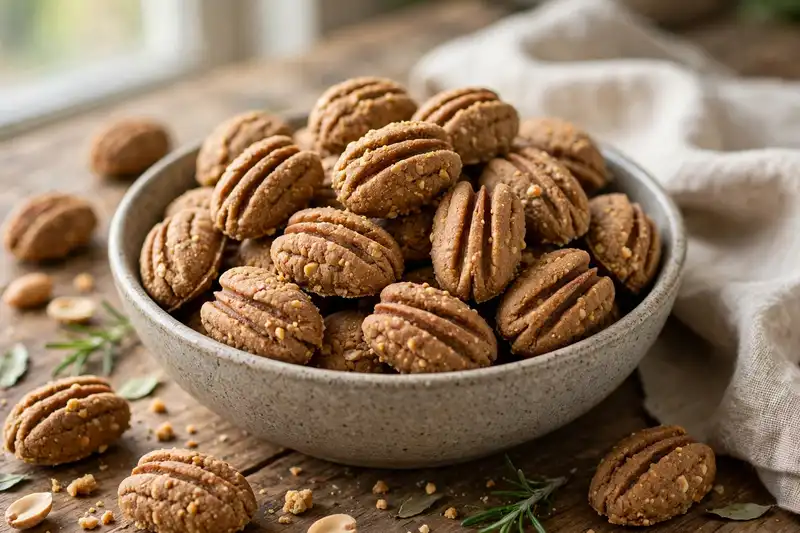
Cashews are generally tolerated in small amounts, and a sliver of almond now and then is fine for most dogs, though almonds are hard to digest and easy to choke on. Keep portions small with any nut: even safe nuts are calorie-dense, and overweight dogs face joint, heart, and metabolic problems down the road.
The nutrition team at AKC maintains updated lists of foods dogs can and cannot eat, and plain peanut butter consistently makes the safe list. When in doubt, skip the nut aisle entirely and reach for a purpose-made dog treat.
Portion discipline is the part most owners skip. Even with safe nuts, measure the serving instead of eyeballing it: a tablespoon of peanut butter for a medium dog is plenty, and smaller dogs need less. Nut calories add up fast, and an extra hundred calories a day is enough to push a small dog toward obesity over a few months.
Storage matters for safe nuts too. An open jar of peanut butter left where a counter-surfing dog can reach it is an invitation to eat a week’s worth of calories in one sitting, and the resulting GI upset will look a lot like a pecan incident. Keep nut products sealed and put away, the same as you would with the pecans themselves.
Yard Cleanup: Living With a Pecan Tree
If you have a pecan tree, prevention is a daily habit, not a one-time fix. Rake up fallen pecans frequently during dropping season, before they sit long enough to mold. Pay special attention after rain, when damp nuts mold fastest.

Train a solid “leave it” cue and use it around the tree. For dogs that cannot resist, supervise yard time during peak drop or fence off the area under the tree. It sounds like a lot of work, but it beats an emergency vet bill and a very sick dog.
Also watch the leaves and husks. Dogs that chew fallen branches or green husks get a bigger juglone dose than from nut meat alone. A quick daily scan of the yard takes two minutes and removes the temptation before your dog finds it.
Storing Pecans Safely at Home
Indoor pecans need the same respect as outdoor ones. Store them in sealed containers on high shelves or in closed cabinets, never in a low bowl on the coffee table during the holidays. Dogs are excellent at counter-surfing when something smells like fat.

If you bake with pecans, clean up shells and spills promptly. A few shell fragments on the kitchen floor are easy for a dog to hoover up before you notice. For a broader look at keeping risky foods contained, see our bone broth for dogs guide for safe ways to add flavor to meals instead, or offer chicken broth as a savory treat that will not put your dog at risk.
Teach everyone in the household the rule, especially kids. A toddler handing the dog “just one pecan” is how most indoor incidents start.
Frequently Asked Questions
How many pecans are dangerous for a dog?
There is no fixed toxic number. One fresh pecan is unlikely to harm a large dog, but a handful can trigger vomiting, diarrhea, or pancreatitis, and moldy pecans can cause tremors and seizures at small doses. As a rough rule, more than one pecan per 10 pounds of body weight is worth a call to your vet.
Are pecans as toxic as walnuts for dogs?
Pecans are less acutely toxic than black walnuts because they contain less juglone, but they share the same family risks: mold and aflatoxin contamination, extreme fat content, and choking hazards. Vets treat both as nuts dogs should not eat.
Can dogs eat pecan shells?
No, and shells are worse than the nut meat. They concentrate more juglone, splinter into sharp fragments that can cut the mouth and throat, and pose a serious intestinal blockage risk, especially in small dogs. If your dog ate shells, monitor closely and call your vet.
What should I do if my dog ate a moldy pecan?
Watch for tremors, twitching, wobbliness, or agitation over the next several hours, and call your vet or poison control promptly rather than waiting for symptoms. Mycotoxin poisoning can escalate quickly. Note when the pecan was eaten and try to save a sample of the suspect nuts.
Can dogs have pecan pie filling without the crust?
No. The filling is the worst part: concentrated sugar, butter, eggs, and often chocolate or corn syrup. A small lick is unlikely to cause lasting harm, but any meaningful amount risks chocolate toxicity plus severe GI upset and pancreatitis.
Are peanuts really safer than pecans for dogs?
Yes, significantly. Plain unsalted peanuts and xylitol-free peanut butter are widely considered safe for dogs in moderation. They lack juglone and the walnut-family mold profile, though they are still fatty, so portions should stay small.
Will my dog be okay after eating one pecan off the ground?
Probably, if the pecan was fresh and your dog is medium to large. Watch for vomiting or diarrhea over the next day. If the pecan looked old, dark, or moldy, or your dog is small, call your vet for guidance rather than assuming the best.
2 thoughts on “Can Dogs Eat Pecans? Why These Nuts Are Off Limits”