Crunchy O dog treats are Fromm Family Foods’ line of crunchy, O-shaped training treats, with each piece carrying about 2 calories and bags sold in 6-ounce pouches. Fromm launched the line in 2019, and the hook is simple: a crunchy biscuit small enough for repetitive training rewards. The marketing calls them “recklessly crunchy.” The label says they are intended for intermittent or supplemental feeding. Both statements are worth unpacking before you buy.
What Crunchy O’s actually are
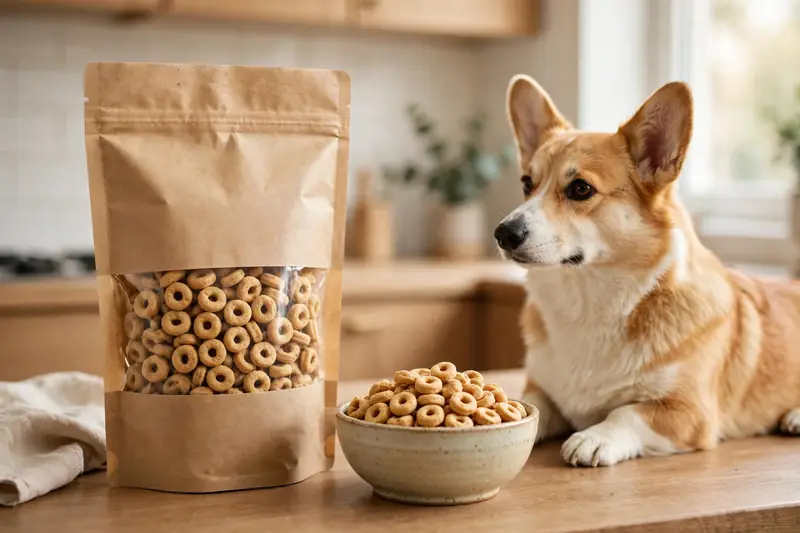
Crunchy O’s are small baked O-shaped dog treats from Fromm, a fifth-generation family-owned pet food company based in Wisconsin, sold in 6-ounce bags across multiple flavors. Fromm has made pet food since 1908 and sells through independent pet retailers rather than mass-market chains, which is why many owners meet the brand at a local shop, not a supermarket aisle. The treats are baked, not extruded, and the O shape is sized for training: small enough to reward often, crunchy enough to feel like a real treat.

The 2-calorie figure is the number that matters most. At 2 calories per piece, a trainer can deliver twenty rewards for 40 calories, well inside the VCA’s 10-percent treat guideline for most dogs. Compare that to a typical large biscuit at 30 to 50 calories, which blows the training budget in three rewards. PetMD’s healthy treats guide repeats the 10-percent rule and flags dental treats as a separate useful category. The whole product makes sense only through that math.
“Intended for intermittent or supplemental feeding only” is the standard AAFCO-adjacent phrasing for treats. It means the bag is not balanced nutrition and should not replace meals. Every treat on the market carries some version of this line. It is not a warning about this product specifically.
The flavor lineup, verified
Fromm’s Crunchy O line includes at least seven flavors: Banana Kablammas, Peanut Butter Jammers, Blueberry Blasts, Smokin’ Cheese Plosions, Pumpkin Kran POW, Pot Roast Punchers, and Slammon’ Smoked Salmon. Flavor names read like cartoon episodes, and each bag carries its own mascot character. The lineup mixes grain-inclusive recipes (built on sorghum, oatmeal, and barley) with grain-free ones (built on chickpeas and peas).
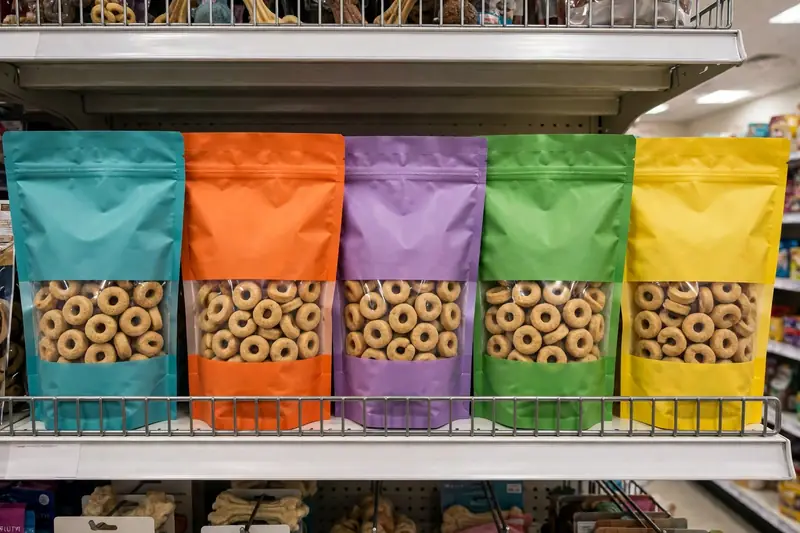
Two flavors show the range. Peanut Butter Jammers blend peanut butter with strawberry and blueberry for a sweet profile, and peanut butter safety for dogs comes down to the xylitol check; Fromm’s own ingredient panel lists whole grain sorghum, oatmeal, pearled barley, peanut butter, dried egg product, and dried whey up front. Pot Roast Punchers go savory with beef, pork liver, oats, potatoes, and vegetables. Pumpkin Kran POW runs grain-free with turkey, chickpeas, cranberries, and pumpkin.
Availability shifts. Fromm expands and retires flavors over time (Peanut Butter Jammers and Slammon’ Smoked Salmon joined the line in 2021), and independent retailers stock different subsets. Check the current lineup on Fromm’s site or your local shop’s shelf rather than assuming every flavor is always available.
Reading the ingredient panels straight
The grain-inclusive Crunchy O recipes lead with whole grain sorghum, oatmeal, and pearled barley, with real named proteins and no artificial colors, flavors, or preservatives. That is a solid, unremarkable panel: whole grains as the base, named protein sources (peanut butter, beef, chicken, turkey, salmon depending on flavor), dried egg product for protein, and mixed tocopherols (vitamin E) as the preservative. There is nothing exotic and nothing alarming. The AKC’s guide to reading treat ingredient lists explains the AAFCO ordering rule: ingredients run from most to least by weight, so the first few items are the treat.
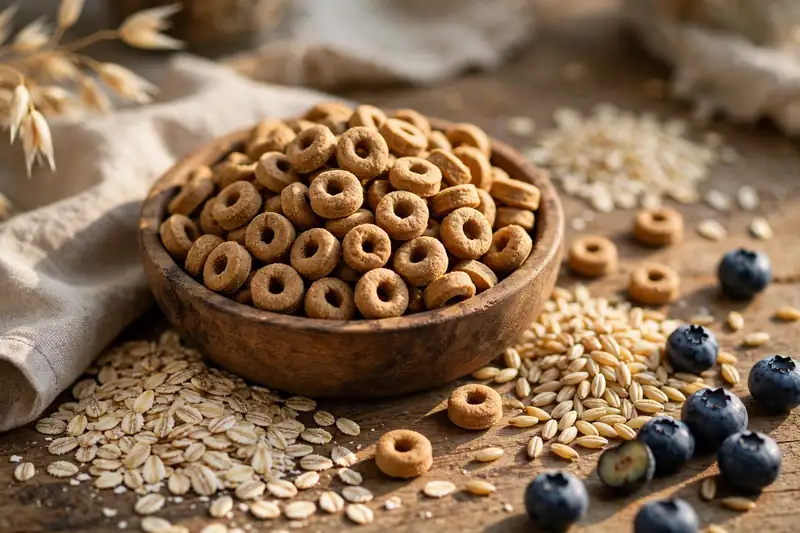
The grain-free variants swap the grain base for chickpeas, peas, and pea starch, with coconut or sunflower oil for fat. Blueberry Blasts, for example, lists chickpea, peas, chicken, and potatoes first, and blueberries are a safe fruit for dogs in treat-size amounts. Grain-free here is a formulation choice for dogs with grain sensitivities, not a quality upgrade; the grain-inclusive recipes are equally sound for dogs without sensitivities. Do not pay extra or switch lines chasing the grain-free label alone.
Crude protein runs in the mid-teens (around 17 percent minimum on the peanut butter recipe), which is normal for a baked training treat. Think of them as flavored crunchy carbs with enough protein to taste like food. The 2-calorie sizing is the real nutritional story, not the protein percentage.
The two-calorie math that matters
Twenty Crunchy O’s cost about 40 calories, which lets you train a full session without touching the dog’s meal budget. A 30-pound dog eating roughly 700 calories a day gets about 70 treat calories under the 10-percent rule. That is 35 Crunchy O’s. A single large milk bone can eat half that budget in one reward.
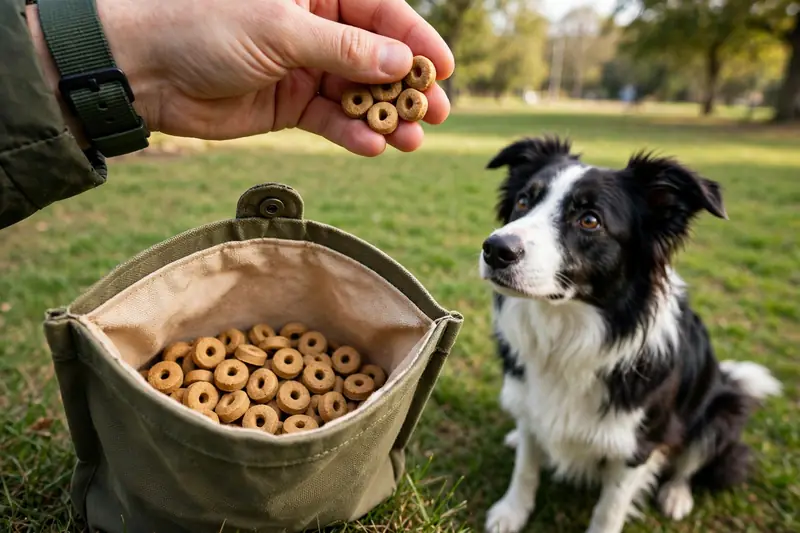
This is where crunchy training treats beat soft ones and lose to them at the same time. Crunchy pieces take a few seconds to eat, which breaks a dog’s focus in rapid-fire training loops. Soft treats disappear instantly and keep the rhythm. But crunchy treats survive in a pocket without turning to paste, and many dogs find the crunch itself rewarding. For pattern training with pauses (place work, loose-leash walking), the crunch is fine. For rapid marking (agility contacts, trick chains), a soft treat keeps better flow.
Bag math stays friendly. A 6-ounce bag holds a few hundred pieces, and at training quantities it lasts weeks for one dog. That makes the per-bag price less important than the per-session cost, which stays low in practice. Fromm sits in the premium bracket per ounce, but ounces are the wrong unit; rewards per bag is the right one.
Who these treats suit best
Crunchy O’s suit owners who train in sessions, stuff puzzle toys, or need a low-calorie daily reward for a food-motivated dog. The O shape wedges into Kong-style toys and snuffle mats, where the crunch adds texture interest. Picky dogs that ignore plain biscuits often engage with the flavor variety; rotating flavors across weeks keeps novelty up without changing the calorie math.

Small-dog owners get a particular win. Most training treats are sized for medium dogs, and breaking them creates crumbs. Crunchy O’s come small enough that a Chihuahua gets a whole piece, which matters for precise reward timing. The small-dog nutrition guide covers why calorie precision matters more at low body weights.
Multi-dog households benefit from the neutral base. The flavors are distinct enough to rotate but similar enough in calories that one bag’s math applies to all of them. Keep one flavor per dog if anyone has a sensitivity, and label the bags; the cartoon packaging all looks similar on a shelf.
Who should skip them or choose carefully
Dogs with grain allergies should pick the grain-free flavors, dogs with peanut sensitivities should avoid Peanut Butter Jammers, and dogs with dental pain should skip crunchy treats entirely. The line works as a family of flavors rather than a single product, and the right choice depends on the dog. A chicken-sensitive dog does fine on the peanut butter or salmon recipes and poorly on Blueberry Blasts.

Hardness is the honest limitation. “Recklessly crunchy” is marketing for a texture that some dogs cannot handle: seniors with worn teeth, dogs with slab fractures, and puppies under about six months do better with soft treats. If your dog crunches reluctantly or drops pieces, the texture is wrong for that mouth, not the flavor.
The peanut butter flavor deserves a household note. It contains real peanut butter, which is fine for dogs, but homes with a human peanut allergy should treat the bag like any peanut product: sealed, separate, hands washed. The flavor is for the dog; the allergen risk is for the people.

Crunchy O’s vs the crunchy competition
Against Old Mother Hubbard and Nutro Crunchy, Fromm’s line wins on calorie control and flavor variety; against homemade biscuits, it loses on ingredient simplicity and price per reward. Old Mother Hubbard’s classic biscuits run larger and harder, better for a single long chew, worse for training. Nutro’s crunchy berry treats are closer in size and also skip artificial ingredients, and they compete directly on the training-treat shelf.

Homemade biscuits beat every commercial option on ingredient control and cost. A batch of homemade dog treats costs a fraction of the bag price and contains exactly what you put in. What homemade cannot do is sit in a training pouch for a week without going stale, or deliver identical 2-calorie pieces without a scale. The AKC’s treat-choosing guide makes the same point about reviewing the ingredient list before choosing any commercial treat. Convenience is the product you are actually buying.
The fair summary: Crunchy O’s are a well-made commercial training treat with straightforward labeling and a calorie count trainers can actually use. They solve one problem well without claiming to solve every problem. They solve the “too many training calories” problem in a crunchy format, and they do it without junk ingredients.
What owners report vs what the label promises
Retailer reviews consistently praise the small size and the dog appeal, with the recurring complaints being price per ounce and occasional bag-to-bag hardness variation. Dogs like them; that part is consistent across listings. Owners like the training math. The gripes are familiar commercial-treat gripes: premium price for six ounces, and some bags run harder than others, which matters for older dogs.
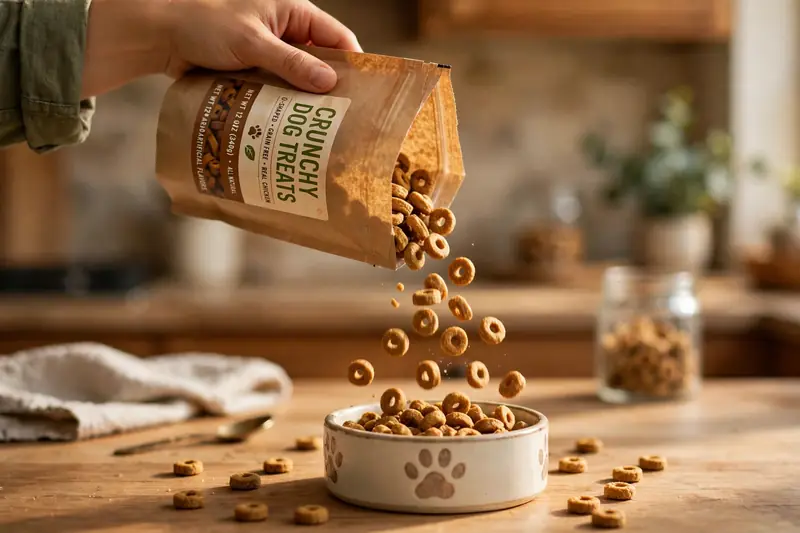
Treat every star rating as a snapshot, not a fact. Ratings shift with inventory, pricing, and review brigades, and no rating measures what matters here: whether your specific dog likes the texture and whether the calorie math fits your training. Buy one bag of one flavor first. The dog’s reaction in the first session tells you more than a thousand reviews.
One claim to set aside: “recklessly crunchy” is ad copy, not a texture standard. Some dogs find them moderately crunchy, not extreme. If you want seriously hard, long-lasting chews, look at baked marrow-style biscuits or longer-lasting chew options instead.
Frequently asked questions about Crunchy O dog treats
Buyers usually ask about the calorie count, the grain-free options, and whether puppies can have them. The answers below stick to what the labels and the company actually say.

Are Crunchy O’s good for training?
Yes, that is their best use. Two calories per piece means dozens of rewards per session without breaking the 10-percent treat budget. The crunch slows rapid-fire marking slightly compared to soft treats, but for most obedience and loose-leash work they are ideal.
Are Crunchy O treats grain-free?
Some flavors are, some are not. Pumpkin Kran POW and Blueberry Blasts use grain-free bases (chickpea, pea); Banana Kablammas and Peanut Butter Jammers use whole grains. Read the individual flavor’s panel rather than assuming the whole line is either.
Can puppies eat Crunchy O’s?
Puppies over six months with full dentition handle them fine in small numbers. Very young puppies and teething puppies do better with softer treats. Keep puppy portions small; the 10-percent treat rule applies to growing dogs too.
How many Crunchy O’s per day?
Divide the dog’s treat calorie budget (10 percent of daily calories) by two. A 30-pound dog gets roughly 35 pieces; a 10-pound dog gets about 12. Those are ceilings, not targets. Most days should land well below them.
Do Crunchy O’s clean teeth?
Marginally. Any crunchy treat provides mild abrasion, but Crunchy O’s are small and swallowed quickly, so the dental effect is minimal. They are not a substitute for brushing or for VOHC-accepted dental treats.
Where are Crunchy O’s sold?
Through independent pet specialty retailers, per Fromm’s long-standing distribution model, plus online sellers. Fromm does not sell through mass-market grocery chains, so availability varies by area. Check Fromm’s site for the current flavor lineup before hunting a specific one.
Crunchy O’s are what they claim to be: small, crunchy, low-calorie training treats from a family company with a long track record. Buy them for the training math and the flavor rotation, not for the mascot characters. One bag, one flavor, one training session: the dog will cast the deciding vote.
Disclaimer: This article is for general information only and is not veterinary advice. Treats should stay under 10 percent of your dog’s daily calories. If your dog has food allergies or a medical condition, check new treats with your veterinarian first.