Pumpkin seeds are close to half fat by weight, which makes a small sprinkle a treat and a handful a meal’s worth of calories.

That single fact decides almost everything about feeding them to dogs. Raw pumpkin seeds are safe for dogs when they are plain, hulled or ground, and fed in tiny amounts. The seeds carry no toxin. The risks come from the hard white shell and the salt and flavorings on store-bought seeds. The owner’s heavy hand finishes the job.
October fills kitchens with fresh seeds, because every carved pumpkin surrenders a slippery pile of them while dogs hover nearby hoping for a share. A few prepared seeds are a fine seasonal extra. A bowl of whole raw seeds tossed to a small dog is a choking hazard wearing a health-food costume.
Can dogs eat raw pumpkin seeds? The short answer
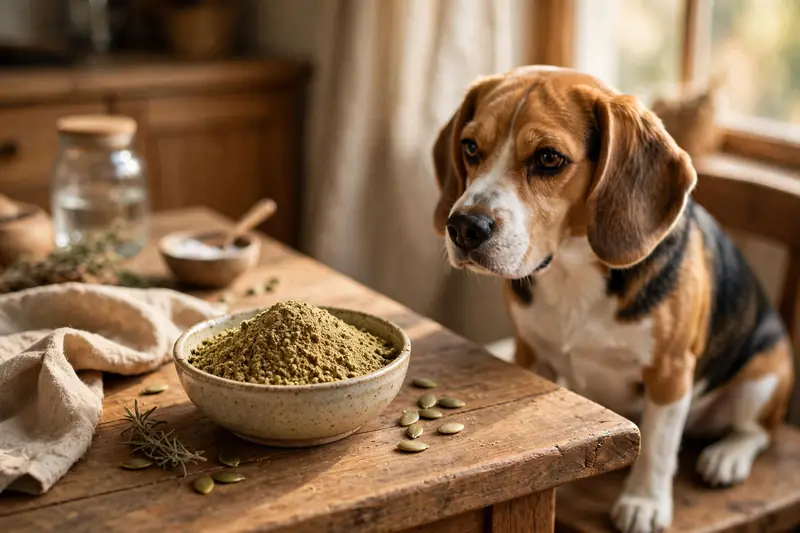
Yes, dogs can eat raw pumpkin seeds as long as the seeds are plain and unsalted, hulled or ground before serving. Whole raw seeds with the shell on are hard to digest and can choke small dogs. Keep portions tiny. The high fat content adds up fast.
PetMD’s pumpkin guide notes that dogs can eat pumpkin seeds with or without the shells, crediting the seeds with minerals like zinc and magnesium. The shells are the practical problem, not a poisoning risk. Large dogs that chew thoroughly usually handle a few whole seeds. Small dogs, puppies, or gulpers should get hulled seeds or ground powder only.
Raw seeds also spoil faster than roasted ones, so freshness matters more with the raw version. The published pumpkin seeds guide covers the general picture; this article focuses on the raw form and its quirks.
What raw pumpkin seeds offer nutritionally

Pumpkin seeds pack minerals like zinc and magnesium into a small package. Iron and a serious dose of healthy fats come along too. For a 50-pound dog, that sprinkle works out to roughly half a teaspoon of powder, which is about all the seed nutrition worth chasing before the calories outweigh the minerals.
Zinc supports skin and immune function. Magnesium plays a role in muscle and nerve health. The fats carry fat-soluble nutrients. Small package, full roster. A sprinkle of ground seeds adds a little of each mineral to the day.
The fat content is the complicating fact. Seeds sit near 50 percent fat, so the dose that delivers meaningful minerals also delivers meaningful calories. A teaspoon of ground seeds is a reasonable topper. A tablespoon is a fat bomb for a small dog.
Dogs do not need seeds the way people think they do; the complete food in the bowl already covers every mineral on the list. Seeds are a bonus with a calorie cost, and the cost deserves more attention than the bonus.
Protein shows up on every seed marketing label, and pumpkin seeds do contain it, but no dog needs seed protein when its food already supplies complete animal protein in every bowl. Judge seeds as a fatty mineral sprinkle, not as a protein source, and the portion question answers itself.
Raw, roasted, or store-bought: which seeds are safe

Raw plain seeds are safe, and plain dry-roasted seeds are equally safe. Salted, spiced, oiled, or flavored seeds from the snack aisle are not. The preparation method matters less than the ingredient list, so read the label before the bag gets opened.
Raw seeds keep their full nutrient profile but go stale quickly. They also carry a slightly higher risk of mold if they sit out. Plain dry-roasted seeds store better and crunch more satisfyingly, which some dogs prefer.
Roast at home with no oil, no salt, no seasoning at all, and the result is as safe as raw. The store-bought trap is the seasoning packet. Snack seeds arrive salted, dusted with garlic or onion powder, coated in oil, or sweetened with flavorings.
Garlic and onion damage a dog’s red blood cells, and the ASPCA’s people foods to avoid names both as items that never belong in a dog’s bowl. Seed and nut snack mixes are the worst version: salted seeds tossed with peanuts, raisins, or chocolate-covered anything, where one handful can contain three separate hazards.
Boiling is the quiet third option. A few minutes in plain water softens seeds for dogs that struggle with crunch. It adds no risk and needs no equipment beyond a pot.
The shell problem: hull or grind
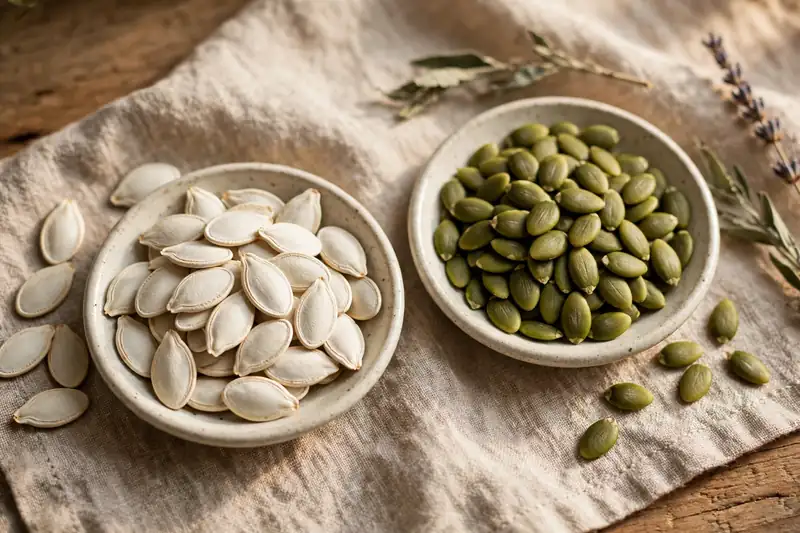
The white shell around a fresh pumpkin seed is the whole argument for preparation. It is flat and fibrous, tough enough that a dog’s gut cannot do much with it. Whole shells can irritate the stomach, and in quantity they can contribute to a blockage. A whole seed is exactly the wrong size and shape for a small throat.
Hulling solves it. The green kernel inside, the pepita, is the part worth feeding. Supermarket pepitas are simply pumpkin seeds with the hull already removed, and plain unsalted pepitas are the easiest safe buy.
Grinding solves it another way. A spice grinder or clean coffee grinder turns whole seeds into powder in seconds, and powder cannot choke anyone. Ground seeds also release their nutrients better, since dogs do not grind food finely with their teeth. The AKC’s squash guide gives the same caution for squash seeds generally, advising owners to strip the seeds out and remove skins and rinds before serving squash to dogs.
The hull is fiber, but not the helpful kind. Owners sometimes hear “high fiber” and assume the shell is doing digestive good. The fiber for dogs that supports digestion comes from soft, fermentable sources like cooked pumpkin flesh, not from rigid hulls that pass through unchanged or get stuck trying.
How to prepare raw pumpkin seeds for your dog

Rinse the seeds clean of pumpkin flesh and pat them dry, then choose between two safe paths: roast them plain or grind them raw. Roasting means 300 degrees Fahrenheit for 15 to 20 minutes with no oil, salt, or seasoning. The raw route means grinding fresh and using the powder within a day or two.
For roasting, spread the dry seeds in a single layer on a lined tray. Bake at 300 degrees Fahrenheit for 15 to 20 minutes, stirring once, with absolutely no oil, no salt, no seasoning at all. Let them cool completely, then hull or grind.
If the seeds still feel damp or soft in the middle after 20 minutes, give them five more, because moisture left inside is what turns a jar rancid weeks before its time.
For the raw route, grind plain raw seeds fresh and use them quickly. Raw seeds carry more moisture and spoil faster, so grind only what the dog will eat within a day or two. A teaspoon of powder stirred into dinner disappears without a trace. Picky dogs never notice.
Storage decides safety after preparation. Cool roasted seeds go into an airtight jar and keep for a couple of weeks, because the seed oils go rancid with time and air.
Rancid fats taste bad and can upset the stomach, so the sniff test applies: stale or paint-like smell means the jar is done. Ground powder stales fastest of all. Grind per serving when possible, and never grind a month’s worth at once.
Keep the preparation area dog-free during the work. Dogs that counter-surf will steal warm seeds off the tray.
A tray stolen whole is a vet visit, shells included. Cool the seeds first. Grind, then serve from the jar, not from the workspace.
How much pumpkin seed is safe to feed

A practical serving is about half a teaspoon of ground seeds per 20 pounds of body weight, up to once a day. That is a sprinkle, not a scoop. Seeds count toward the 10 percent treat budget that the VCA’s feeding guidelines set for all extras combined.
| Dog size | Ground seeds per serving | Frequency |
|---|---|---|
| Small (under 20 lbs) | Quarter teaspoon | Up to once daily |
| Medium (20 to 50 lbs) | Half teaspoon | Up to once daily |
| Large (over 50 lbs) | One teaspoon | Up to once daily |
The first serving should be smaller than the chart, with a full day of watching after. Seeds are rich, and rich foods loosen stools in sensitive dogs. Two or three times a week is plenty for most dogs; daily is the ceiling, not the goal. Dogs that are overweight, prone to pancreatitis, or on a low-fat diet should skip seeds or get the smallest sprinkle on the vet’s word, since fat is the entire concern.
Measuring matters because eyeballing fails. Half a teaspoon looks like almost nothing, and owners consistently overshoot. Use the measuring spoon for the first week. Eyes lie; spoons don’t.
The deworming myth, examined
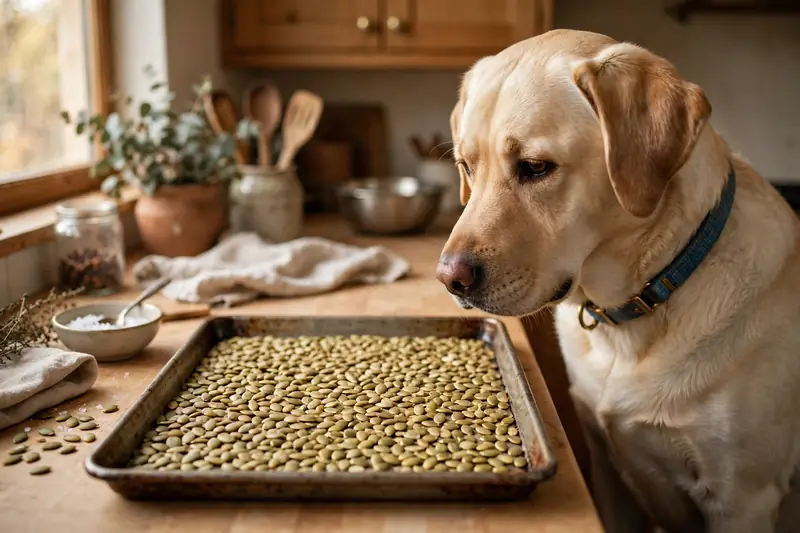
Pumpkin seeds have a folk reputation as a natural dewormer, and the claim is everywhere online. Veterinary sources do not back it. The honest position: pumpkin seeds do not reliably deworm dogs, and no seed sprinkle replaces registered parasite products.
The claim rests on cucurbitacin, a compound in the seeds with some laboratory anti-parasitic activity. Laboratory activity is not a dose, a delivery method, or a clinical trial in dogs.
No veterinary body lists pumpkin seeds as a deworming treatment, and vets who address the claim directly say the evidence is not there. A dog with worms needs a fecal test and a proper dewormer from the vet. A seed regimen only delays real treatment while parasites keep feeding.
This is the complicating fact the seed-enthusiast internet skips. Believing the myth costs more than money.
It costs time, and time is what a growing worm burden uses best.
Seeds are a snack. Medicine is medicine. Any product that actually kills worms has dosing studies behind it, and seeds have never passed that bar in any trial a vet would recognize, which is why no veterinary parasitologist recommends them. Owners who want the full picture on proven gut support should read the main pumpkin for dogs guide, which sticks to what the flesh actually does.
Puppies and senior dogs

Puppies can have a pinch of ground pumpkin seed once they eat solid food reliably. Whole seeds are out for puppies; the choking risk is too high for the tiny nutritional payoff. Keep the amount to a dusting. Introduce it the way every new food arrives: one at a time, with a day of watching.
Senior dogs handle ground seeds well, and a sprinkle can tempt a picky older eater the way a new smell wakes up a dull appetite. The cautions are the usual ones for age: dogs with pancreatitis history, chronic digestive disease, or kidney trouble get seeds only on the vet’s word. Fat and minerals both matter more when organs are compromised.
Very young puppies and nursing dogs sit under the standing rule: new foods wait until the puppy is on solid food and the vet has no objection. No developmental window requires seeds, so rushing buys nothing.
When to call the vet

Call your vet if your dog eats a large quantity of whole seeds with shells, vomits repeatedly, strains without producing stool, or shows a swollen or painful belly. Those signs point toward a blockage, which never improves with waiting. A dog that raids seasoned snack seeds and then drinks excessively needs a prompt call too.
A small sprinkle of plain ground seeds needs no action beyond normal watching. Mild soft stool after a first taste usually resolves on its own, and a bland diet for a day or two settles most minor upsets. Blood in vomit or stool, repeated retching, or extreme tiredness means the emergency clinic.
Prevention is mostly about the snack aisle. Store-bought seeds live in the pantry at dog-nose height, and the seasoned bags smell irresistible to dogs.
Keep them sealed and high, grind plain seeds per serving, and keep the vet’s number where it can be found in a hurry. Owners who share table foods often should keep the human foods dogs can eat list handy as a quick reference.
Frequently asked questions about dogs and raw pumpkin seeds
Owners usually ask about shells, roasting, the deworming claim, and daily amounts before they start. The answers below cover the questions that come up most often, with the practical details that decide whether seeds are worth the trouble for a particular dog.
Can dogs eat raw pumpkin seeds with the shell on?
Large dogs that chew well can handle a few, but the shell is fibrous and hard to digest. Small dogs, puppies, or gulpers should get hulled seeds or ground powder only. The risk is choking and stomach irritation, not poisoning.
Can dogs eat roasted pumpkin seeds?
Yes, as long as they are plain. Dry-roast at home with no oil, salt, or seasoning. Skip store-bought roasted seeds, which are almost always salted or flavored.
Do pumpkin seeds deworm dogs?
No reliable evidence says they do. The deworming claim is folk medicine without clinical backing in dogs. Use a vet-prescribed parasite product and a fecal test instead of a seed regimen.
How many pumpkin seeds can a dog eat per day?
About half a teaspoon of ground seeds per 20 pounds of body weight, up to once daily, is the practical ceiling. Most dogs do fine with two or three servings a week rather than daily.
Can puppies eat pumpkin seeds?
A pinch of ground seed is fine once a puppy eats solid food well. Never give puppies whole seeds with shells. Keep the amount tiny and watch for a day after the first taste.
My dog ate salted pumpkin seeds. What should I do?
Watch for excessive thirst, vomiting, or diarrhea. A few seeds usually pass without drama, but a large amount of salt can cause real trouble. Call your vet if vomiting repeats or your dog seems distressed, and keep seasoned snack bags out of reach going forward.
Raw pumpkin seeds earn a cautious yes with homework attached. Hull or grind them, keep them plain, and measure the sprinkle, and they make a fine seasonal extra with real minerals behind them. Skip the salted snack bags, skip the deworming fantasy, and grind fresh. The seeds are a snack, and snacks work best when they stay small.
Disclaimer: This article is general information, not veterinary advice; call your vet if your dog has a health condition or shows symptoms after eating pumpkin seeds.