Dogs should not eat sushi. That single sentence answers the question can dogs eat sushi, and the reason behind it is more specific than most owners expect. Commercial sushi-grade fish is frozen hard enough to kill many parasites, which convinces people that a shared roll is harmless.
Freezing does not touch bacteria. Raw salmon can carry the organism behind salmon poisoning disease, an infection that kills up to 90 percent of untreated dogs.

Can dogs eat sushi? The short answer
Sushi fails the safety test on the fish, not the rice. Dogs should not eat sushi because the raw fish carries parasites and bacteria that cooking would destroy. Rice and plain nori are harmless, but wasabi and soy sauce add their own risks, and the rest of the condiments do too. Cooked fish makes the safe swap.

Sushi is a bundle of ingredients, and judging the bundle by its safest part is the mistake. Rice is fine. Nori is fine. The raw fish in the middle is where the danger lives, and the condiments around it pile on smaller risks that add up.
Owners who would never hand a dog a raw chicken breast somehow hesitate over a salmon nigiri, probably because sushi feels clean and premium. Clean and premium do not kill parasites. Heat does.
The PetMD’s guide to fish for dogs draws the same line, rating cooked fish excellent and raw fish unsafe. That distinction decides everything in this article. Every safe version of “sharing sushi” with a dog is really sharing cooked fish, which is a different meal entirely.
Salmon poisoning disease: the risk hiding in raw salmon
Raw salmon and trout can carry the parasite behind it, and other salmonids are not exempt. Salmon poisoning disease kills up to 90 percent of untreated dogs, yet it responds very well to prompt antibiotics. The danger is not the fish going bad. It is a living organism, Neorickettsia helminthoeca, riding inside a fluke in raw salmonid flesh.
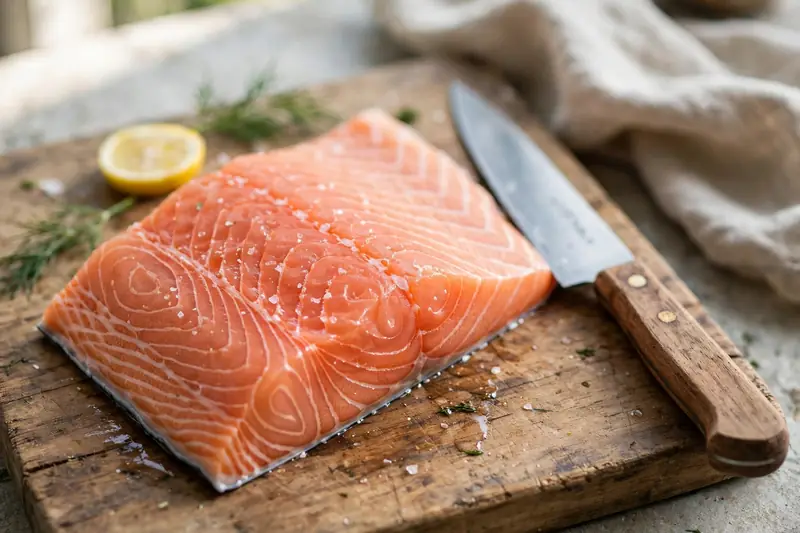
Here is what makes this disease treacherous for owners. Signs appear five to seven days after the meal, sometimes up to two weeks, and they look like an ordinary fever: lethargy, loss of appetite, vomiting. By the time bloody diarrhea and swollen lymph nodes show up, the dog is seriously ill.
A vet who hears “my dog ate raw salmon a week ago” tests for fluke eggs and starts doxycycline, and treated dogs usually recover within days. A vet who never hears those words can miss it entirely.
The disease concentrates in the Pacific Northwest, where the fluke is endemic in wild salmonids. Fish travels. Farmed or shipped salmon reaches every grocery store. Riverbank scavenging is the classic exposure: a dog grabs a dead salmon on a hike and the owner thinks nothing of it for a week. Sushi salmon sits in the same risk category.
One detail complicates the picture. Commercial freezing at low enough temperatures for long enough does inactivate the fluke, which is why properly handled sushi-grade fish is lower risk. Home freezers rarely get cold enough for long enough to count on. Cooking remains the only reliable answer.
Bacteria and parasites in raw fish
The salmon family is not the only problem. Raw fish carries bacteria like Salmonella and Listeria, worms like tapeworms and flukes, and thiaminase in some species, an enzyme that destroys vitamin B1. Dogs have stronger stomachs than people, but stronger is not invulnerable. Puppies and immune-compromised dogs have much less margin.
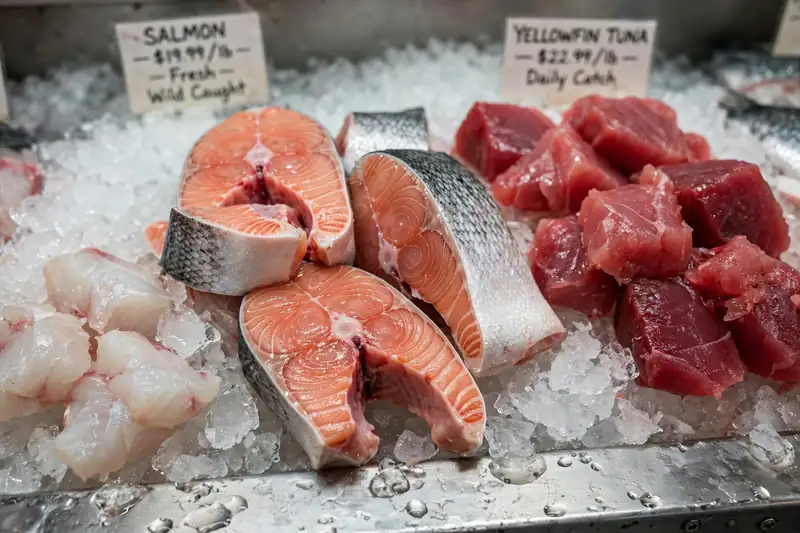
Thiaminase surprises people. The enzyme breaks down thiamine, and a dog fed raw fish regularly can develop a B1 deficiency with neurological signs. An occasional stolen bite will not do it. Cooking deactivates the enzyme completely, which is one more reason the cooked version of fish is a different food from the raw version.
Fish bones add a mechanical risk. Raw fish bones are fine and sharp, and they splinter. A dog gulping sushi with the skin or small bones still attached can end up with a bone lodged in the throat. Cooking firms the flesh and makes bones easier to find and pull.
Tuna and mercury: the sushi fish to skip even cooked
Not every sushi fish is dangerous only when raw. Tuna and swordfish carry enough mercury to make regular sharing unsafe, cooked or raw. Tilefish and king mackerel are no better. Mercury accumulates in large predatory fish over their long lives, and it accumulates in the dog the same way.
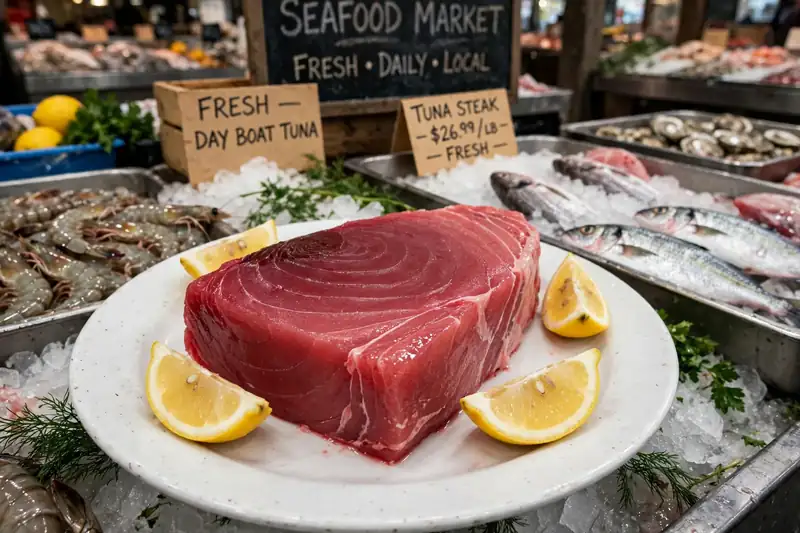
A single piece of tuna nigiri will not poison a dog. The problem is the owner who shares tuna often because the dog loves it. Mercury poisoning in dogs shows up as vomiting and tremors, with lethargy early and kidney damage in severe cases, and it builds silently over repeated exposures. Albacore and bigeye tuna, the prized sushi cuts, run higher in mercury than skipjack, the smaller species in most canned tuna.
Nobody panics over one bite of tuna, so the bites keep coming, and each one adds to a total nobody is tracking. Salmon and white fish like cod or pollock give dogs the omega-3 benefits without the mercury ledger, and sardines do the same. AKC’s guide to fish for dogs names the same high-mercury species to avoid, and it is worth memorizing the short list.
Wasabi and soy sauce: the rest of the roll
The fish gets the headlines, but a sushi roll is a team effort. Each condiment in the roll harms dogs differently: wasabi burns, soy sauce poisons with salt, spicy mayo upsets the stomach, and spring onion damages red blood cells. None of them is as dangerous as raw salmon, but none of them belongs in a dog’s mouth either.
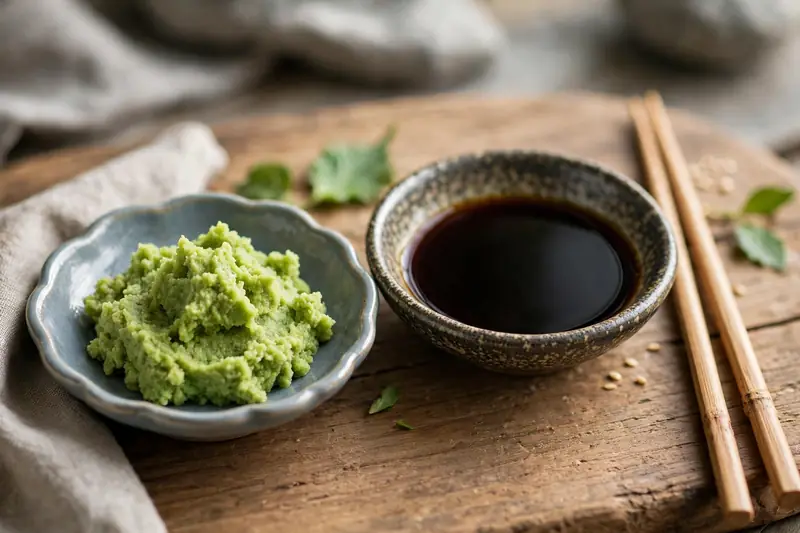
Wasabi is the loudest of the minor offenders. The heat comes from compounds that irritate mucous membranes, and a dog that licks wasabi gets a burning mouth and drooling, often followed by vomiting. It will not cause lasting damage in a small amount, but it is a miserable experience for the dog and entirely avoidable. Spicy mayo adds fat and chili heat on top, a combination that reliably produces stomach upset.
Soy sauce is concentrated salt. A tablespoon of soy sauce holds roughly 900 mg of sodium, and a small dog that laps up a soy sauce dish can end up with salt poisoning: vomiting and diarrhea first, then tremors. Seizures follow in severe cases.
Spring onion and scallion tops, the green garnish on many rolls, belong to the allium family with onion and garlic, and they damage red blood cells the same way. The ASPCA’s people-foods guidance lists onion and garlic among the foods that never belong in a dog’s bowl, in any form.
Avocado shows up in California rolls and dragon rolls. The flesh holds persin, which dogs tolerate in small amounts far better than birds do, but the pit is a choking and obstruction hazard. The roll as a whole is a minefield of small risks around one big one.
Nori and sushi rice: the parts that are actually safe
Strip away the fish and the condiments and sushi gets boring in the best way. Plain nori seaweed and plain sushi rice are safe for dogs, and neither one justifies sharing the roll. Nori is low calorie with some minerals, and most dogs find it uninteresting.

Sushi rice has one wrinkle worth knowing. It is seasoned with rice vinegar and sugar, with added salt, so it is not the same as the plain white rice vets recommend for upset stomachs. A few grains will not hurt a dog, but the seasoned version is not the bland diet rice your vet means.
Seaweed snacks, the roasted seasoned sheets sold for lunchboxes, are a different product from plain nori, and many contain salt and oil, plus flavorings. A dog that steals one will be fine, but they are not a treat to offer deliberately.
What to do if your dog ate sushi
Stay calm and work through the ingredients one by one. If your dog ate sushi, identify the fish first, note how much was eaten, and call your vet with both facts. The fish decides the urgency, and the condiments decide the watching.
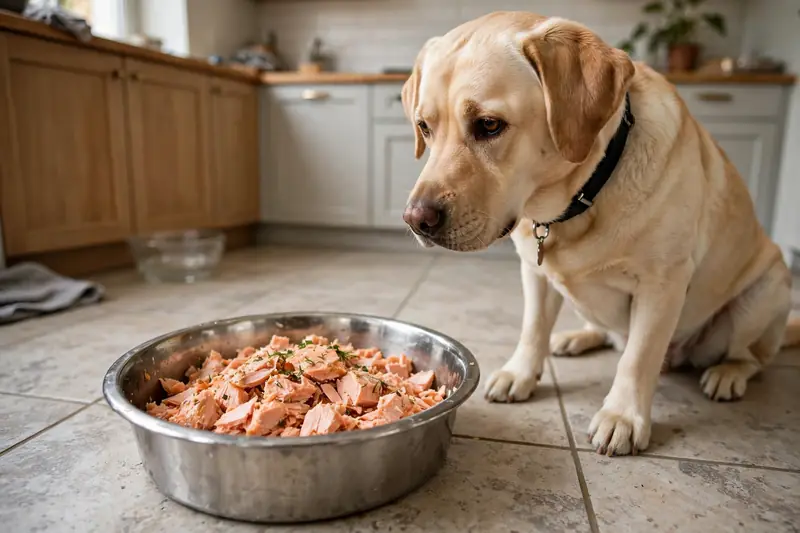
Raw salmon or trout puts the dog in the salmon-poisoning watch category. Say the words “raw salmon” when you call, because those words change the diagnosis if a fever appears five to seven days later. Mark the date on your phone.
Watch closely for a full two weeks, and go in at the first fever rather than waiting to see whether it settles. Tuna-heavy rolls are a lower immediate emergency but worth a call for a small dog that ate a lot.
Wasabi or soy sauce ingestion needs a different kind of watching. Expect drooling and possibly vomiting within the hour from wasabi, and watch for excessive thirst and repeated vomiting after soy sauce. Offer water, do not induce vomiting unless your vet tells you to, and keep the takeout menu so you can read the ingredient list back to the vet. For mild stomach upset after the incident passes, a bland diet for a day or two often settles things.
Cooked fish done right: the safe way to share seafood
Here is the good news. Thoroughly cooked, deboned, unseasoned fish is one of the best foods you can share with a dog. Good choices include salmon and cod. Pollock and haddock work well, and sardines are the easy option. They bring high-quality protein plus omega-3 fatty acids that support skin and coat, plus joint support.

Preparation is simple and strict. Cook the fish all the way through and pull every bone. Remove the skin and add nothing: no butter, no garlic, no lemon pepper, no oil. Bake, steam, or poach rather than fry.
Salmon skin is fatty enough to cause stomach upset on its own, so it stays off the dog’s plate even when the flesh is fine.
Tinned sardines in spring water, drained, are the weeknight hero version. The bones are soft enough to be safe and they add calcium, and the mercury load is tiny because sardines are small and short-lived. Shrimp works too when it is cooked and peeled, with the vein removed. If the goal is omega-3s without the kitchen work, fish oil supplements made for dogs do the job in measured doses.
Portions follow the treat rule. The VCA’s general feeding guidelines keep all extras, fish included, within about 10 percent of daily calories. A few bites of cooked fish a few times a week fits easily inside that budget for most dogs.
Young, old, or small: dogs with less margin
Age and size shrink the margin on raw fish. Puppies and senior dogs face higher risk from raw fish, and small breeds do too, because their immune systems and body weight leave less room for error. A bacterial load that an adult Lab shrugs off can hospitalize a young puppy.

Puppies under six months are still building their immune defenses, and their gut flora is less settled. Raw fish is an unnecessary gamble when complete puppy food already covers every need. Senior dogs with weaker immunity or chronic conditions deserve the same caution. Small dogs hit toxic and infectious thresholds faster because there is less dog to absorb the insult.
Cooked fish, on the other hand, suits all three groups well. Soft, flaked, boneless white fish is easy to chew for a senior with dental trouble and gentle on a puppy’s stomach. Keep the pieces small, keep the portions modest, and the same food that is dangerous raw becomes a solid treat cooked.
When to call the vet
Call your vet if your dog ate raw salmon or trout, vomits repeatedly, or develops a fever within two weeks of eating raw fish. A fever five to fourteen days after raw fish is the sign that matters most, because it points to salmon poisoning disease. Do not wait to see whether it passes.

Choking is the immediate emergency that outranks everything else. A dog gagging on a fish bone or a chunk of nori-wrapped roll needs hands-on help at once. For soy sauce overindulgence, watch for repeated vomiting and tremors, plus wobbliness. Call sooner for small dogs.
When in doubt, call. The history you give, especially the words “raw salmon” and the date, can decide the diagnosis.
Keep your vet’s number and the poison control number in your phone now, not during the panic. Most owners look them up mid-crisis, which wastes the minutes that count.
Frequently asked questions about dogs and sushi
Owners usually ask about cooked sushi and sashimi, plus how long to watch a dog that stole a roll. The answers below cover the questions that come up most.
Can dogs eat cooked sushi?
Cooked-fish rolls are safer than raw ones but still not ideal. The rice carries vinegar and sugar, and the roll may hide spicy mayo or sauces. A small piece without heavy sauce is unlikely to cause harm, but plain cooked fish is the better choice.
Is sashimi safe for dogs?
No, sashimi is raw fish by definition, so it carries the same parasite and bacteria risks. Salmon sashimi carries the salmon poisoning disease risk.
Does sushi-grade fish make raw fish safe for dogs?
Sushi-grade means the fish was frozen under conditions that kill many parasites. That lowers the risk without eliminating it, since bacteria survive freezing. Cooking is the only step that makes fish reliably safe.
Can dogs eat a California roll?
California rolls usually hold imitation crab and avocado. Cucumber adds crunch and mayo binds it. The imitation crab is heavily processed with salt and additives, the mayo adds fat, and the avocado pit is a hazard if the roll is whole. A dog that steals one piece will probably be fine, but it is not food to share on purpose.
How long should I watch my dog after it ate raw fish?
Watch closely for a full two weeks. Salmon poisoning signs typically appear five to seven days after eating, occasionally later. Note the date, and call your vet at the first fever, vomiting, or lethargy.
Can dogs eat seaweed snacks?
Plain unseasoned nori in small amounts is safe. Seasoned seaweed snacks are not toxic but are not a good treat either, so keep portions tiny.
Sushi stays a people food. The raw fish carries risks that range from unpleasant to life-threatening, and every safe version of sharing seafood with a dog is just cooked fish with a different name. Bake a piece of salmon, pull the bones, skip the wasabi, and the dog gets the best part of sushi night. If raw fish already went down, note the date, say “raw salmon” to your vet, and watch for two weeks. Keep the list of human foods that are safe for dogs bookmarked for the next time takeout tempts you.
Disclaimer: This article is for general information only and is not veterinary advice. Every dog is different, and dogs with health conditions or with puppies and nursing dogs may need different guidance. If your dog shows symptoms after eating sushi or raw fish, contact your veterinarian.