
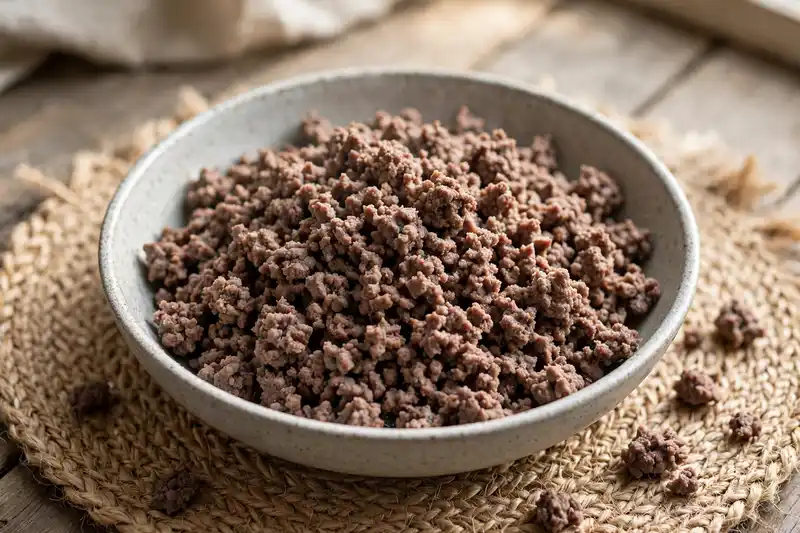
If you are browning beef for tacos or burgers and your dog is watching every move, you are probably wondering: can dogs eat ground beef? The short answer is yes. Plain, cooked, lean ground beef is safe for dogs and most of them love it. It works well as an occasional topper or treat. This guide covers how to prepare it the right way, which fat ratio to buy, safe portion sizes, and the seasoning mistakes that turn a safe food into a dangerous one. For a broader look at sharing table food, see our guide to what human food dogs can eat.
Is Ground Beef Safe for Dogs?
Yes, dogs can eat ground beef when it is plain, cooked, and lean. It is a solid source of protein, iron, and B vitamins. Serve it as an occasional topper or treat, not a full meal, because plain beef alone does not meet a dog’s complete nutritional needs. Always cook it through and drain the fat.

Veterinarians regularly recommend plain cooked beef as part of home-prepared meals and bland diets. The protein supports muscle maintenance, and the iron and zinc help with energy metabolism and immune function. That said, beef by itself is not balanced. Dogs also need calcium, essential fatty acids, and a range of vitamins that muscle meat does not provide. Think of ground beef as an ingredient, not a diet.
The word “plain” does most of the work in that safety verdict. Beef straight from the skillet with salt, pepper, garlic powder, or onion is a different story. Garlic and onion damage a dog’s red blood cells and can cause anemia, even in the powdered forms found in seasoning blends. If the beef was cooked for your dinner, do not scoop some into the dog bowl. Cook a separate small batch with nothing added.
Cooked vs Raw Ground Beef: Which Is Safer?
Cooked ground beef is the safer choice by a wide margin. Raw ground beef can carry Salmonella, E. coli, and other bacteria that make dogs and the people in the household sick. Cooking beef to 160°F (71°C) kills these pathogens and makes the meat easier to digest.

Some raw-feeding advocates argue that dogs handle raw meat well, and healthy adult dogs often do pass small amounts of bacteria without symptoms. The problem is “often” is not “always.” Puppies, seniors, and dogs with weak immune systems face real risk, and even healthy dogs can shed bacteria in their stool and saliva, which puts kids and immunocompromised family members at risk. Veterinary nutritionists at PetMD’s nutrition section consistently advise cooking meat for dogs for exactly this reason.
There is also a handling angle people forget. Raw ground beef contaminates cutting boards, bowls, and hands. Ground meat has far more surface area than a whole steak, which means bacteria get mixed through the entire batch during grinding. Cooking solves the whole problem in a few minutes. Unless your vet has designed a raw diet plan with strict sourcing and handling rules, cook the beef.
What Fat Ratio Should You Buy: 80/20, 90/10, or 93/7?
Buy the leanest ground beef you reasonably can, ideally 90/10 or 93/7. Higher-fat grinds like 80/20 or 73/27 are safe once drained, but the extra grease adds calories a dog does not need and can trigger stomach upset or pancreatitis in sensitive dogs.
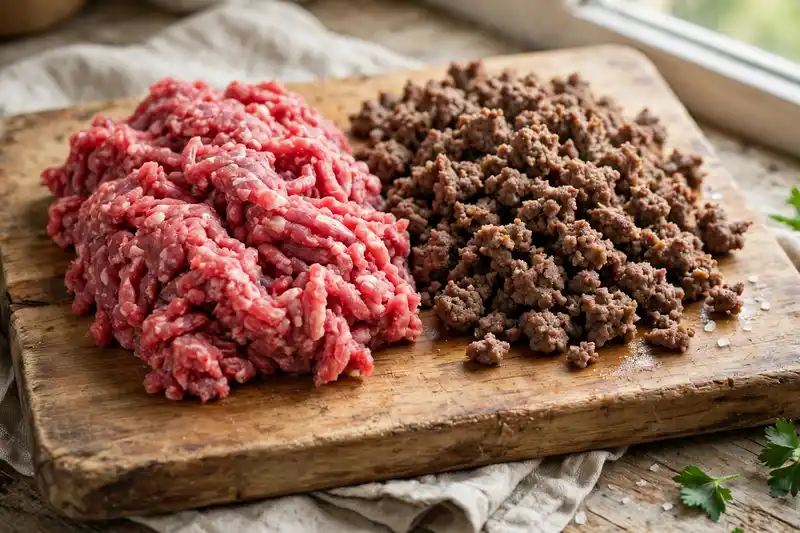
Fat is where most of the trouble hides. A greasy batch of 80/20 can turn a treat into a bout of vomiting and diarrhea, especially for small dogs. For dogs with a history of pancreatitis, fatty beef is genuinely risky, since rich meals are a known trigger for flare-ups. Draining and rinsing cooked beef with hot water removes a surprising amount of surface fat. If you only have 80/20 in the fridge, drain it well and rinse it, and you have made it considerably safer.
For most healthy dogs, 90/10 hits the sweet spot of affordable and lean enough. The 93/7 or 95/5 grinds are the best pick for dogs watching their weight or with sensitive stomachs. Skip anything labeled with added flavorings or “taco seasoned” grinds entirely.
How to Cook Ground Beef for Your Dog
To cook ground beef for your dog, crumble it into a pot of plain water, boil until no pink remains, then drain and rinse it. No oil, no salt, no seasoning. This simple method takes about ten minutes and produces clean, lean beef that is easy on digestion.

Boiling is the easiest dog-safe method because you never add fat to the pan. Break the raw beef into small crumbles, cover with water, and simmer for 8 to 10 minutes, stirring once or twice, until every crumble is browned through with no pink. Pour it into a colander, rinse briefly with hot water, and let it cool to room temperature before serving. The technique is close to how to boil chicken for dogs, another bland-diet staple.
Pan-frying works too if you prefer it, but use a nonstick pan with no oil or butter, and drain the fat thoroughly afterward. Some owners bake crumbled beef on a sheet pan, which lets fat drip away nicely. Whichever method you choose, the rules stay the same: cook to 160°F, add nothing, drain everything, and serve at room temperature so nobody burns a tongue.
How Much Ground Beef Can a Dog Eat?
Treat ground beef as a topper or treat that makes up no more than 10% of your dog’s daily calories. For a 50-pound dog, that is roughly a quarter cup of cooked lean beef. Smaller dogs need much less, and beef should never replace a complete and balanced dog food.

The 10% rule exists because extras dilute the balanced nutrition in your dog’s regular food. A big scoop of beef on top of a full bowl of kibble day after day quietly unbalances the diet. For a 10-pound dog, a tablespoon or two is plenty. For a 25-pound dog, think two to three tablespoons. When in doubt, feed less beef and keep the regular meal intact.
Frequency matters as much as amount. A few times a week as a topper is reasonable for a healthy dog. Every single meal, on the other hand, turns beef into the diet itself, which is when deficiencies creep in. If you want to feed a home-cooked diet long term, work with your vet or a veterinary nutritionist to build a complete recipe. The AKC’s nutrition guidance is a good starting point for understanding balanced feeding.
Ground Beef for Dogs With Upset Stomachs
Plain boiled ground beef mixed with white rice is a classic bland diet vets recommend for mild stomach upset. Use lean beef, keep the ratio around one part beef to two or three parts rice, and feed small meals for a day or two while symptoms settle.

This combination works because both ingredients are gentle and low in fiber, giving the gut a rest while still providing some nutrition. It suits mild cases: a single bout of vomiting, soft stool after dietary indiscretion, or recovery from a skipped meal. Our full bland diet for dogs guide walks through ratios, duration, and the transition back to regular food.
Know when bland food is not enough. If vomiting or diarrhea continues beyond 24 hours, if you see blood, if your dog refuses water, or if a puppy is affected, skip the home cooking and call the vet. Puppies dehydrate fast, and what looks like a mild upset can be the start of something like parvovirus. A little bone broth for dogs can encourage fluid intake during recovery, but it does not replace veterinary care when red flags appear.
Can Puppies Eat Ground Beef?
Yes, puppies can eat small amounts of plain cooked lean ground beef as a treat. Puppies have sensitive digestion, so introduce it slowly, keep portions tiny, and make sure their main diet remains a complete puppy food formulated for growth.
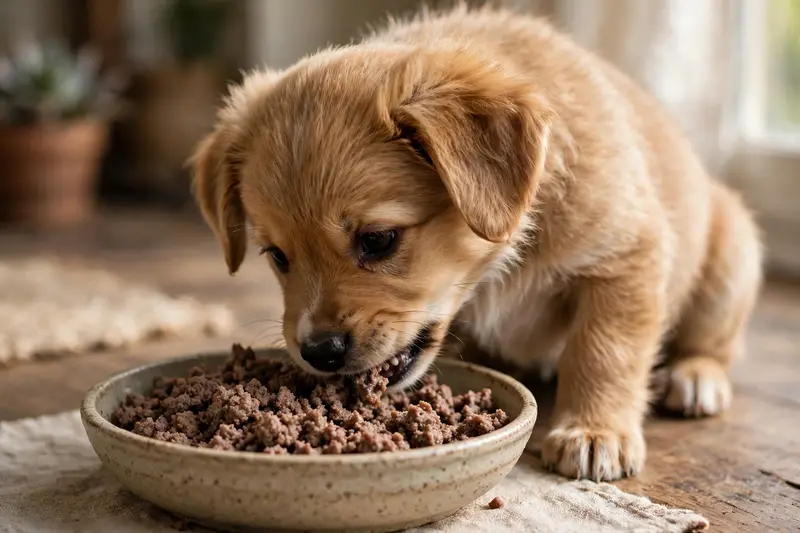
Start with about a teaspoon for a small puppy and watch for soft stool over the next day. Growing puppies need precise calcium and phosphorus ratios for proper bone development, and table-food extras can throw those ratios off faster than in adult dogs. That is why beef should stay a rare treat for puppies rather than a regular topper.
One more puppy-specific caution: never feed raw beef to puppies. Their immune systems are still developing, and bacterial contamination hits them harder. Cook it plain, cool it down, and keep the portion small.
Seasonings and Mix-Ins That Make Beef Dangerous
Garlic and onion in any form are the biggest dangers, followed by excess salt and rich sauces. Garlic powder, onion powder, taco seasoning, and gravy mixes can all harm dogs, so any beef cooked for human meals should be considered off-limits for your dog.

Onion and garlic contain compounds that damage canine red blood cells, leading to hemolytic anemia. The scary part is the delay: symptoms like weakness, pale gums, and dark urine can take several days to appear. Powdered forms are more concentrated than fresh, so that “just a little garlic powder” is worse than it sounds. The ASPCA Animal Poison Control lists both as toxic to dogs and cats.
Other mix-ins to avoid: chili powder, heavy salt, barbecue sauce, and cooked bones if you are mixing beef with leftovers. Cheese in small amounts is usually fine but adds fat most dogs do not need. When you want to make the beef more appealing, stir in a spoonful of plain pumpkin puree or a splash of chicken broth for dogs (unsalted, onion-free) instead of seasoning.
Ground Beef vs Chicken and Turkey for Dogs
Ground beef, chicken, and turkey are all good lean protein options, and the best choice depends on your dog. Beef has more iron and a stronger flavor picky dogs prefer, while chicken and turkey are leaner and easier to digest for sensitive stomachs.

In practice, many owners rotate between proteins to keep meals interesting. Chicken breast is the classic bland-diet protein because it is extremely lean and gentle. Ground turkey sits between the two. Some dogs are allergic to beef specifically, in which case chicken or turkey is the obvious swap. If your dog does well on beef and you are comparing, our article on whether dogs can eat chicken covers the other side of the comparison.
Cost and convenience factor in too. Ground beef is often cheaper than chicken breast and cooks faster. Just remember the same rules apply to every protein: plain, cooked, drained, unseasoned. A dog that tolerates beef beautifully can still react to beef cooked in onion-laden taco seasoning.
When Ground Beef Is a Bad Idea for Your Dog
Skip ground beef if your dog has pancreatitis, a beef allergy, or a vet-prescribed low-fat diet. Dogs with kidney disease or heart conditions may also need restricted protein or sodium, so check with your vet before adding beef to their bowl.

Pancreatitis deserves special attention. A fatty meal can trigger a painful, expensive flare-up, and once a dog has had pancreatitis, vets usually recommend keeping fat strictly limited for life. Even well-drained beef may be too rich for these dogs. Beef allergy shows up as itchy skin, ear infections, or chronic digestive trouble, and it is one of the more common food allergies in dogs. An elimination diet under vet supervision is the way to confirm it.
Dogs on prescription diets are another group to be careful with. Those diets are formulated precisely, and toppers can undermine the medical purpose. VCA Hospitals has helpful explainers on therapeutic nutrition if your dog eats a prescription food. When any of these conditions apply, a quick call to your vet beats guessing.
Frequently Asked Questions
Can dogs eat ground beef every day?
A small amount of plain cooked lean beef can be given regularly, but it should stay within the 10% treat rule and never replace balanced dog food. Daily beef toppers are fine for healthy dogs as long as the main diet stays complete. If beef starts crowding out regular meals, cut back.
Is 80/20 ground beef okay for dogs?
It is acceptable if you drain and rinse it well, but leaner grinds are better. The extra fat in 80/20 adds calories and stomach-upset risk with no nutritional upside. For sensitive dogs or dogs prone to pancreatitis, stick with 90/10 or leaner.
Can dogs eat raw ground beef?
It is not recommended. Raw ground beef can carry Salmonella and E. coli, and grinding mixes bacteria through the whole batch. Cooking to 160°F removes the risk. Raw feeding also exposes your household to bacteria through the dog’s stool and saliva.
Can dogs eat ground beef with rice?
Yes, plain boiled ground beef with white rice is a standard bland diet for mild stomach upset. Use about one part beef to two or three parts rice, feed small meals for a day or two, and return to normal food gradually. See a vet if symptoms last more than 24 hours.
Is ground beef or chicken better for dogs?
Both are good. Chicken is leaner and gentler for sensitive stomachs, while beef offers more iron and a flavor picky eaters prefer. Some dogs are allergic to one protein but fine with the other. Rotate or pick based on what your dog digests best.
How should I store cooked ground beef for my dog?
Refrigerate it in a sealed container and use within three to four days. You can freeze portions for up to three months. Always reheat to steaming and cool to room temperature before serving, and never refreeze thawed beef.
What should I do if my dog ate seasoned ground beef?
Check what seasoning was involved. Plain salt and pepper in small amounts usually just needs monitoring. If the beef contained garlic, onion, or unknown spice blends, call your vet or poison control with the ingredient details. Watch for vomiting, diarrhea, weakness, or pale gums over the next few days.

1 thought on “Can Dogs Eat Ground Beef? A Vet-Backed Safety and Prep Guide”