

Can dogs eat chicken? Yes. Plain, cooked, boneless chicken is one of the safest and healthiest human foods you can share with a dog. It is lean protein most dogs digest easily, it is the backbone of the classic vet-recommended bland diet, and it stars in countless commercial dog foods. But the chicken on your dinner plate, seasoned, skin-on, bone-in, is a different food entirely. This guide covers the cuts, cooking methods, and portions that keep chicken safe, plus the bones, skin, and seasonings that make it dangerous.
Can dogs eat chicken?
Yes. Plain, cooked, boneless chicken is one of the safest human foods for dogs. It is lean, digestible, vet-approved protein that suits most dogs, including puppies and seniors. The dangers are all human additions: seasonings, skin, bones, and frying. Cook a plain piece, strip it clean, and portion it sensibly.

That short answer covers the everyday case, and the details below cover the exceptions. Chicken’s safety record is excellent precisely because the rules are simple: plain, cooked through, boneless. Every problem in this guide comes from breaking one of those three words. Seasoned chicken brings salt, garlic, and onion. Skin brings fat. Bones bring splinters and blockages. Raw chicken brings bacteria. Keep the chicken plain, cooked, and boneless, and you are sharing one of the best human foods a dog can get.
Why chicken is a dog-food staple
Chicken earns its place for straightforward nutritional reasons. It is high in quality protein, relatively lean (especially breast meat), rich in B vitamins and minerals like phosphorus and selenium, and easy on most dogs’ digestion. That combination is why chicken appears in so many commercial diets, and why veterinarians reach for it when a dog’s stomach needs something gentle.

It is also practical: affordable, widely available, simple to cook plainly, and palatable to almost every dog. For training, few rewards beat tiny pieces of plain cooked chicken. They are high value, easy to portion, and far healthier than most commercial treats. A pea-sized piece carries enough scent and flavor to motivate a dog through a whole training session, which is why professional trainers rely on it. No exotic superfood is needed when the humble chicken breast does the job this well. The AKC’s guide to feeding chicken to dogs agrees on the fundamentals: cooked plain, boneless, and unseasoned.
The only safe preparation: plain, cooked, boneless
Every word in that phrase carries weight. Plain means no salt, pepper, garlic, onion, marinades, sauces, butter, or oil, since onion and garlic damage dogs’ red blood cells even powdered. Cooked means 165 degrees Fahrenheit (74 Celsius) internal temperature, which eliminates salmonella and campylobacter.

Boiling, baking, steaming, or poaching are all fine. Skip frying, which adds unnecessary fat. Boneless means removing every bone before serving. This rule is absolute for cooked bones, and the simplest safe policy is boneless, period. The chicken you cook for yourself can become dog-safe chicken with one adjustment: set aside a plain piece before you season. Cooking a separate unseasoned portion takes no extra time and removes all guesswork. That single habit prevents nearly every chicken mistake owners make.
Cooked bones: the hard no
Cooked chicken bones splinter. Unlike raw bones, cooking makes them brittle, and the shards can cut the mouth, lodge in the throat, puncture the esophagus or intestines, or cause blockages. This is one of the clearest, least debatable rules in canine nutrition: never feed cooked bones of any kind. No exceptions for “just one” or “he always crunches them fine.”

If your dog gets into cooked bones, from the trash, the counter, or a careless guest, watch closely over the next 48 to 72 hours. Warning signs include gagging or retching, drooling, vomiting, appetite loss, lethargy, abdominal pain, bloody stool, or straining without producing stool. Any of these warrant an immediate vet visit. Do not induce vomiting for sharp bone fragments unless your vet specifically instructs it. A note on raw bones: some raw-feeding advocates feed them, but many veterinarians advise against all bones due to fracture, obstruction, and bacterial risks. This guide’s position is simple: boneless is the safe default, and any bone-feeding decision belongs in a conversation with your vet.
Raw chicken: not worth the risk
Raw chicken carries salmonella and campylobacter, bacteria that sicken dogs and the humans who handle the dog’s food, bowls, and kisses. Dogs resist these bacteria somewhat better than people, but puppies, seniors, and immunocompromised dogs are genuinely vulnerable, and even healthy dogs can become carriers that contaminate the household.

There is no nutritional advantage to raw that cooked chicken does not provide. Cooking to 165 degrees gives you the same protein with none of the bacterial risk. The raw-feeding argument sometimes claims enzymes or nutrients are lost, but no credible evidence shows a benefit that outweighs the contamination risk to the dog and the family. Cook it, every time. And handle raw chicken in the kitchen with the same hygiene you use for your own food: wash hands, boards, and bowls, because the dog’s bowl is part of your household’s food safety chain.
Skin, fat, and dark meat: the moderation zone
Chicken skin is where the fat lives, and where the problems start. Fatty skin and rich dark-meat trimmings can cause digestive upset in sensitive dogs and contribute to pancreatitis risk with repeated indulgence. The lean move is boneless, skinless breast: the leanest, simplest, safest cut. Thighs and drumsticks, boneless with skin removed, are slightly fattier but acceptable in moderation.
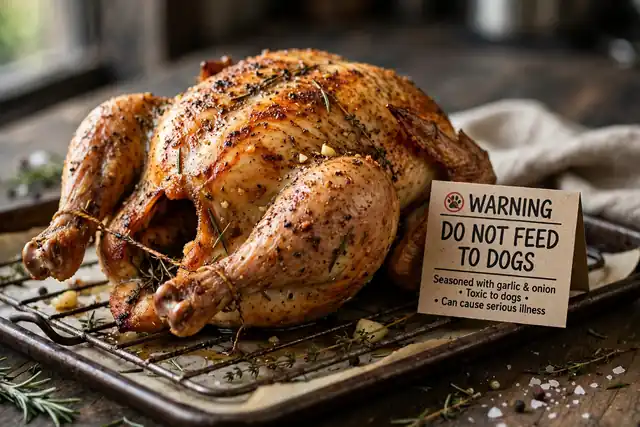
Avoid skin, visible fat trimmings, fried chicken, and rotisserie chicken. Rotisserie deserves a special warning as the most common “but it is just chicken” mistake. The seasoned, salty skin and the garlic and onion in typical rubs make it unsuitable. If you must share rotisserie chicken, use only well-rinsed interior breast meat with all skin and seasoning removed, or better, cook a plain piece. The few minutes it takes to poach a breast are cheaper than the vet visit that seasoned skin can cause.
The bland diet: chicken’s famous medical role
Boiled boneless chicken breast with plain white rice is the classic veterinary bland diet for dogs recovering from mild digestive upset, meaning vomiting or diarrhea that is not severe. The logic is simple: easily digested, low-fat, low-fiber, gentle on an irritated gut. Most vets suggest it as a short-term bridge, typically a few days, while the stomach settles.
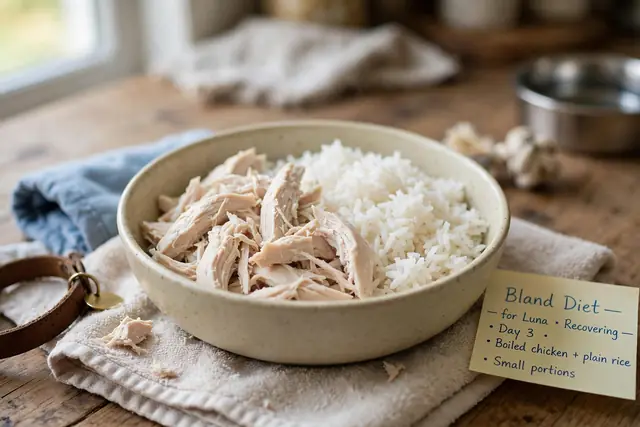
Two caveats matter. A bland diet is not a complete diet: it lacks the balanced nutrition of proper dog food, so it must stay short-term. And it is for mild cases only. Persistent vomiting, bloody stool, lethargy, or a puppy with diarrhea all need a vet, not a home diet. Always confirm with your veterinarian before starting one, and transition back to regular food gradually over several days, mixing increasing amounts of normal food into the bland meals. An abrupt switch back can restart the very upset you just resolved.
Chicken allergies: the common exception
Chicken is one of the most common food allergens in dogs, alongside beef and dairy. The same protein that suits most dogs perfectly triggers others. Signs include chronic itching (especially paws, ears, and belly), recurring ear infections, digestive upset that resolves when chicken is removed, and hot spots.

If you suspect an issue, do not guess. Talk to your vet about a proper elimination diet trial, which is the only reliable way to diagnose a food allergy. Note the implication: a dog allergic to chicken in kibble is allergic to plain cooked chicken too. The protein is the protein, and the form does not change it. This is also why “chicken-free” formulas exist. If your dog does a food trial, the vet may prescribe a novel-protein or hydrolyzed diet with no chicken at all. That is a medical tool, not a lifestyle trend, so do not put a healthy dog on a chicken-free diet “just in case.”
How much chicken is safe?
Chicken follows the 10 percent rule: all extras combined stay within a tenth of daily calories. In practical portions, that means a tablespoon or two of diced chicken for small dogs under 20 pounds, a small handful for medium dogs, and up to a third of a cup diced for large dogs over 50 pounds.

For training, dice small: pea-sized pieces stretch a little chicken across a whole session. Dogs eating a chicken-based complete diet already get plenty, so extra chicken is enrichment and reward, not nutritional necessity. Introduce any significant new portion gradually and watch the stools for the verdict. Firm stool means the amount was fine. Loose stool means you went too fast or too big, so scale back. The dog’s digestion is the final judge of every portion decision in this guide.
Storage, leftovers, and a simple weekly routine
Cooked plain chicken keeps three to four days refrigerated in a sealed container, and the same food-safety rules apply to your dog as to you. Discard anything questionable. Freeze portions for longer storage, thaw in the fridge, and never re-serve chicken that sat out for hours. When in doubt, throw it out.

For owners who share chicken regularly, a small routine removes daily decision-making. Once or twice a week, poach or bake a few plain chicken breasts with no seasoning and no oil. Dice them into pea-sized pieces for training or tablespoon portions for toppers. Refrigerate three to four days’ worth and freeze the rest in bags or ice-cube trays. Thaw overnight in the fridge or with a quick warm-water bath, never on the counter for hours. If chicken is a daily topper, reduce the meal portion slightly to keep total calories steady. One more label note for kibble buyers: “chicken” or “deboned chicken” is the cleanest term, “chicken meal” is rendered concentrated protein and perfectly acceptable, “chicken by-products” vary in quality, and vague “poultry” or “meat and bone meal” should lose to foods that name the animal.
The honest summary: chicken is one of the best human foods for dogs, lean, digestible, versatile, and vet-approved, as long as it is plain, fully cooked, and boneless. The dangers are all human additions: the seasonings, the skin, the bones, the frying. Cook a plain piece, strip it clean, portion it sensibly, and you have a top-tier treat and training reward. Just remember the allergy exception, keep the bones in the trash where clever noses cannot reach them, and let chicken be the simple, boring, healthy food it is at its best.
For the same plain-only, small-portion thinking across the foods dogs meet most often, see our wider guide to what human food dogs can eat. And for another lean protein done right, our shrimp guide follows the same cooked-plain rules.
Frequently Asked Questions
Can dogs eat chicken every day?
Small amounts as a topper or training treat, yes, within the 10 percent treat rule. Chicken should supplement a balanced diet, not replace it, since plain chicken alone is not nutritionally complete.
Can dogs eat chicken bones?
Never feed cooked chicken bones. They splinter and can cut or puncture the digestive tract. The safe policy is boneless, always.
Is raw chicken safe for dogs?
No. Raw chicken risks salmonella and campylobacter> for the dog and the household. There is no nutritional advantage over cooked. Always cook to 165 degrees Fahrenheit.
Can dogs eat rotisserie chicken?
Not the skin or seasoned parts: too much salt, fat, and typically garlic or onion in the rub. Only well-cleaned interior breast meat, and even that is a compromise. Cooking a plain piece is better.
What is the bland diet for dogs?
Boiled boneless chicken breast with plain white rice, used short-term for mild digestive upset on veterinary advice. It is a bridge, not a complete diet, so confirm with your vet first.
Are dogs allergic to chicken?
Chicken is one of the most common canine food allergens. Chronic itching, ear infections, or digestive issues may signal a sensitivity. Diagnose with a vet-supervised elimination diet, not guesswork.
Can puppies eat chicken?
Yes. Plain, cooked, boneless chicken in tiny pieces is an excellent puppy treat and training reward. Dice small, keep portions modest, and watch tolerance.
Can dogs eat chicken skin?
No, skip the skin. It is almost pure fat, which can trigger digestive upset and raises pancreatitis risk, and roasted or rotisserie skin usually carries salt and seasonings too. If your dog steals skin off a plate, monitor for vomiting or diarrhea and skip rich treats for a day or two.
This article is general information only and is not a substitute for veterinary advice. If your dog has a health condition, is on a prescription diet, or you are unsure about any food, check with your veterinarian first.

8 thoughts on “Can Dogs Eat Chicken? The Safe Way to Share”