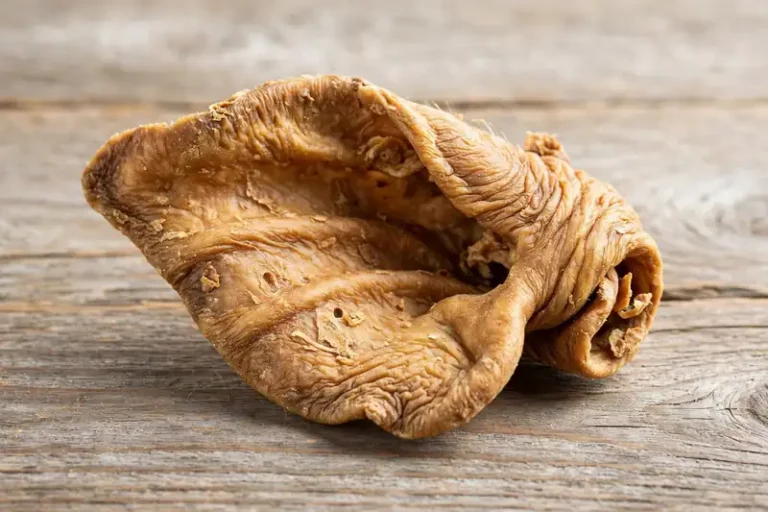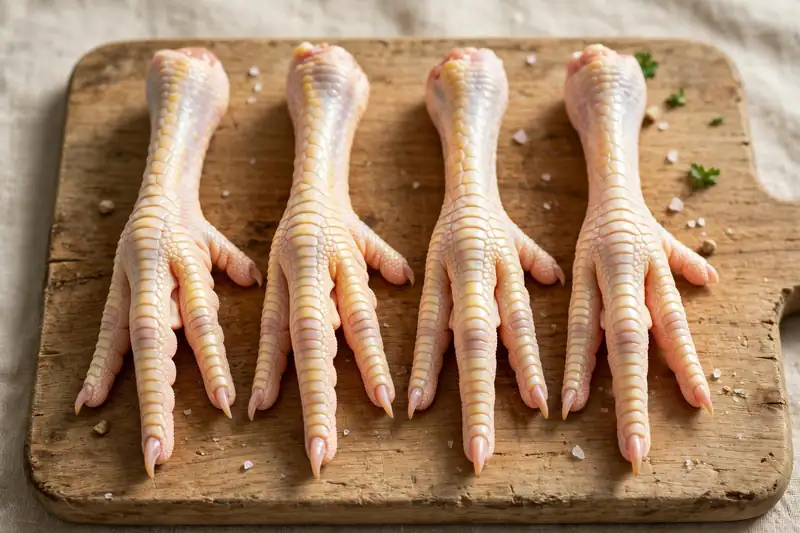
Chicken feet for dogs are one of those treats that look alarming and turn out to be a legitimate chew, as long as you get one rule right. They are a natural source of glucosamine, chondroitin, and collagen, the building blocks joints are made of, and dogs love the crunch. But they contain real bone, carry real bacteria when raw, and become genuinely dangerous the moment they are cooked. This guide covers the safe forms, the honest benefits, the risks nobody should skip, and exactly how much to feed.
Can dogs eat chicken feet?
Yes, dogs can eat chicken feet when they are raw or properly dehydrated, and many dogs enjoy them as a natural chew. Never feed cooked chicken feet, because cooking makes the bones brittle and likely to splinter. Always supervise chewing, start with one at a time, and source them carefully.

The verdict on chicken feet is simple: form decides everything. Raw chicken feet have flexible bones that a dog can crunch and digest. Dehydrated feet from a reputable maker are dried at low heat and keep the same chewable texture. Cooked feet are the problem. Heat changes bone structure. The bones turn brittle, snap into sharp fragments, and can cut the mouth, throat, or intestines. That is the same rule behind the old warning about cooked chicken bones, and it applies fully here. Smoked feet sit in a gray zone. Smoking uses heat, and heavily smoked feet can get brittle too. If you cannot confirm low-temperature processing, skip them. Frozen raw feet are fine and some owners prefer them for hygiene handling. Thaw before serving so the dog does not crack a tooth on a rock-hard foot.
Raw, dehydrated, or cooked: which form is safe
Raw and properly dehydrated chicken feet are the two safe forms. Cooked, boiled, fried, roasted, or grilled feet are never safe because heat makes bones splinter. When buying dehydrated feet, choose products with short ingredient lists from makers you can identify, and skip anything with added flavorings or preservatives.

Why raw works
Raw poultry bones are softer and more pliable than cooked ones. A dog’s jaws and stomach acid handle them well, and the crunching action cleans teeth. This is the same principle behind raw meaty bones generally. The catch is bacteria, covered in a later section, plus the need for supervision.
Dehydrated feet
Dehydration removes moisture without the high heat of cooking. Good commercial feet are crunchy, shelf-stable, and convenient. Watch the sourcing. Because these come from processing plants, bacterial contamination is possible, and the FDA has warned about contaminated pet treats before. Buy from established brands, check for recalls, and store them dry.
What to avoid
Any foot that has seen a frying pan, oven, grill, or smoker hot enough to cook through is out. That includes feet meant as human food, like dim sum chicken feet, which are also loaded with salt, soy, and spices. Leftover cooked feet from dinner go in the trash, not the dog bowl.
What is actually in a chicken foot
A chicken foot is mostly skin, tendons, cartilage, and small bones, with very little meat. It is roughly 30 percent protein and carries a meaningful amount of fat. The star nutrients are glucosamine and chondroitin in the cartilage, plus collagen from the connective tissue. You also get calcium from the bone and small amounts of B vitamins.
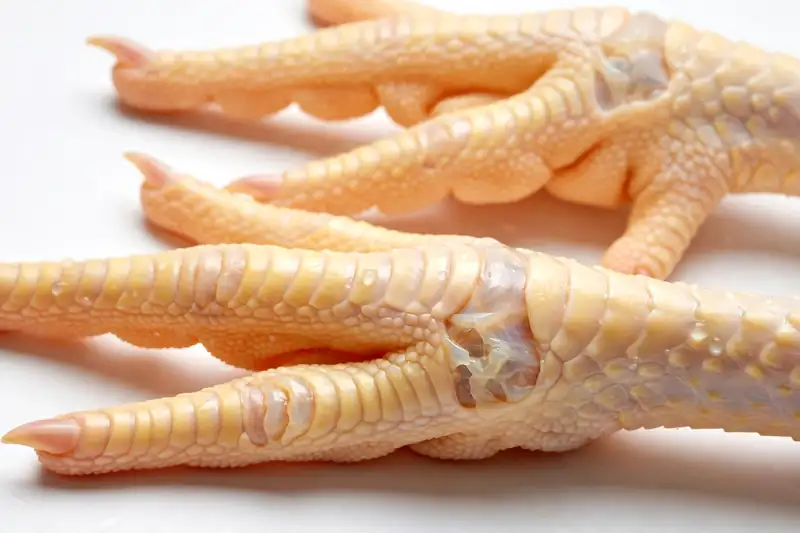
One foot is not a meal. A medium foot weighs about 50 to 60 grams, and the calorie count lands around 70 to 100 calories depending on size. That makes portion control simple: count each foot as a real treat, not a freebie. The skin contributes most of the fat, around a third of the calories, so dogs on low-fat diets need extra caution. There is no added sugar or starch to worry about. What you see is what you get: connective tissue, bone, and skin. That simplicity is the appeal. There are no hidden ingredients, no fillers, and nothing a dog’s body does not recognize. The downside of that simplicity is that a foot is nutritionally one-dimensional. It supports joints and teeth, but it does not replace balanced food.
Joint health claims: what the evidence says
Chicken feet genuinely contain glucosamine, chondroitin, and collagen, the same compounds sold in joint supplements. Laboratory analyses confirm their presence. What is missing is strong evidence that eating chicken feet improves a specific dog’s joints. The nutrients are there in food form, which is a plus, but no clinical trial shows chewed feet reversing arthritis.

Think of chicken feet as joint-supporting nutrition, not joint medicine. A senior dog with stiff hips may enjoy them, and the glucosamine content is real, but the dose is uncontrolled and unmeasured. One foot will not match a formulated supplement. The collagen is a decent protein source for skin and coat health, though again the evidence is general rather than foot-specific. Owners of athletic or large-breed dogs sometimes add feet as a dietary extra during heavy exercise periods. That is reasonable, but keep expectations honest. If your dog has diagnosed arthritis, the feet are a nice addition to a vet’s plan, not a replacement for it. Weight control, appropriate exercise, and vet-approved supplements do the heavy lifting. The feet are the garnish.
Bone safety: choking and splintering risks
Any chew with bone carries some risk, and chicken feet are no exception. The main dangers are gulping a whole foot without chewing, sharp fragments in poorly processed products, and blockage in dogs that swallow large pieces. Supervision is not optional. Watch how your dog handles the first foot before making it a habit.

Most dogs crunch feet thoroughly. The small bones break down into soft, digestible pieces. Problems start with gulpers, dogs that swallow food whole. If your dog inhales treats without chewing, chicken feet are a bad fit. Size matters too. Match the foot to the dog. A giant foot is a choking hazard for a Chihuahua; a tiny foot can be swallowed whole by a Great Dane. Clip the toenails off before serving. They are sharp, serve no nutritional purpose, and can scratch on the way down. Discard any foot that looks off, smells rancid, or came from an unmarked package. And keep count. Bones in bulk are constipating. A dog that gets several feet a day may pass hard, dry stools, a sign the bone load is too high.
Bacterial contamination and safe handling
Raw chicken feet can carry salmonella and campylobacter, the same bacteria found on raw chicken meat. Dogs generally handle these bacteria better than people do, but they can still get sick, and they can shed bacteria around the house. Treat chicken feet like raw chicken in your kitchen, because that is what they are.

Wash your hands after handling raw feet, every time. Clean bowls, cutting boards, and any surface the feet touched. Keep raw feet refrigerated and use them within a day or two of thawing, or keep them frozen until serving day. Households with toddlers, elderly people, or anyone immunocompromised should think twice about raw chews. The dog may be fine while the humans around it are not. Dehydrated feet carry lower but not zero bacterial risk, since drying does not sterilize. Some owners lightly rinse or briefly freeze raw feet as extra caution. Freezing reduces some parasites but does not kill salmonella, so do not treat freezing as a safety guarantee. If your dog has a weakened immune system, is on chemotherapy, or takes immunosuppressive drugs, skip raw feet and talk to your vet about safer chews.
How many chicken feet and how often
One foot a few times a week is plenty for most dogs. Small dogs under 20 pounds get one small foot two or three times weekly. Medium dogs can handle one foot every other day. Large dogs over 50 pounds can have one foot daily. Every foot counts toward the 10 percent daily treat budget.

These are starting points, not prescriptions. A 90-pound dog in heavy training burns more calories than a 55-pound couch companion. Adjust for your dog’s weight, activity, and the rest of the day’s treats. New dogs get one foot, then a 24-hour watch for digestive upset before the second. If stools turn chalky white or rock hard, cut back, that is too much bone. If the dog vomits or gets diarrhea, pause and reassess. Feet are a supplement to meals, never a meal replacement. A dog fed mostly on feet and treats ends up with an unbalanced diet no matter how natural the chews feel. Spread servings through the week rather than giving five feet on Sunday. Consistency beats binges for digestion and for teeth.
Puppies and senior dogs
Puppies eating solid food can have small chicken feet from around 8 to 12 weeks, with full supervision. Their jaws are strong for their size, and the chewing is good enrichment. Senior dogs often love feet too, since the soft cartilage is easy to crunch, but dogs with few teeth or dental pain may struggle.

For puppies, size the foot to the puppy. A foot bigger than the puppy’s head is a choking risk, not a chew. Remove the toenails, supervise closely, and stop the session if the puppy tries to swallow pieces whole. The glucosamine angle appeals to owners of large-breed puppies, but growing dogs need precisely balanced nutrition, so treats stay in the 10 percent lane. For seniors, watch the teeth. A dog with cracked or missing teeth can hurt itself on even a raw foot. Dogs on medications should get a vet’s nod first, since extra protein and minerals can matter for kidney or liver conditions. Senior dogs with sensitive stomachs may do better with the foot given after a meal rather than on an empty stomach, which can reduce the chance of vomiting.
Dogs who should skip chicken feet entirely
Some dogs should not get chicken feet at all. Dogs with pancreatitis or a history of it should skip the fatty skin. Dogs with poultry allergies need to avoid them completely. Dogs on prescription diets, especially kidney or low-fat formulas, should not get extras that break the diet’s balance. And known gulpers should never get bone-in chews.

A poultry allergy is more common than many owners realize, and it shows up as itchy skin, ear infections, or chronic digestive trouble. If your dog has been diagnosed, feet are out. Dogs with inflammatory bowel disease or chronic pancreatitis cannot afford the fat load. Dogs that have had intestinal blockages before are poor candidates for any bone chew. Immunocompromised dogs should avoid the bacterial risk. Households where the dog shares chews with toddlers who put everything in their mouths should pick a different treat. None of these dogs is missing a dietary essential. Chicken feet are a nice extra for healthy dogs, not a requirement for any dog. A carrot, a blueberry, or a vet-approved dental chew fills the treat slot without the risk.
What to do if something goes wrong
If your dog swallows a foot whole, do not panic. Most pass without incident. Watch for choking signs first: pawing at the mouth, drooling, retching, or distress. If the dog is breathing fine, monitor for 48 hours for vomiting, lethargy, appetite loss, abdominal pain, or bloody stool. If your dog ate cooked chicken feet, call your vet promptly.

Splinter risk is the reason cooked feet get a fast phone call. Your vet may advise monitoring or may want to see the dog, depending on how many were eaten and the dog’s size. Do not try to induce vomiting at home unless your vet specifically tells you to. Sharp fragments coming back up can do more damage than going down. For raw feet eaten too fast, the usual outcome is mild digestive upset that resolves on its own. Withhold the next treat, keep meals light, and offer water. If vomiting or diarrhea lasts more than a day, or the dog seems painful or refuses food, get veterinary care. Keep the packaging of any commercial feet you buy, so you can report the brand and lot if a problem traces back to contamination.
Chicken feet earn their place as a natural, joint-friendly chew for healthy dogs, raw or properly dehydrated, always supervised, and counted honestly in the treat budget. The one rule to tattoo on your memory: heat is what turns a safe chew into a hazard. Keep cooked feet away from your dog completely.
For more everyday feeding decisions, see our full guide to what human food dogs can eat. Chicken feet pair naturally with plain cooked poultry, covered in our chicken guide, and for another joint-supporting kitchen staple see bone broth for dogs.
Frequently Asked Questions
Are raw chicken feet safe for dogs?
Yes, raw is one of the two safe forms. The bones stay pliable and digestible when raw. Handle them like raw chicken in your kitchen: refrigerate, wash hands and surfaces, and supervise the dog while it chews.
Can dogs eat cooked chicken feet?
No. Cooking makes the bones brittle and prone to splintering into sharp fragments that can injure the mouth, throat, or intestines. This includes boiled, fried, roasted, grilled, and smoked feet. Only raw or properly dehydrated feet are safe.
Are dehydrated chicken feet safe for dogs?
Yes, when they come from a reputable maker and are dried at low heat rather than cooked. Check the ingredient list, buy recognizable brands, watch for recalls, and store them dry. They still contain bone, so the same supervision and portion rules apply.
Do chicken feet really help dog joints?
They contain real glucosamine, chondroitin, and collagen, but no clinical trials prove that eating them improves arthritis or joint disease. Treat them as joint-supporting nutrition, a nice extra alongside a vet’s plan, not a replacement for diagnosed treatment.
How many chicken feet can a dog have per day?
One foot per day is a reasonable ceiling for a large dog, and small dogs should get a foot only a few times a week. Start with one, watch digestion for 24 hours, and keep all treats within 10 percent of daily calories.
Should I cut the nails off chicken feet?
Yes. The toenails are sharp, carry no nutrition, and can scratch the mouth or throat. Snip them off with kitchen shears before serving, whether the feet are raw or dehydrated.
Can puppies eat chicken feet?
Puppies eating solid food can have small chicken feet with full supervision, usually from around 8 to 12 weeks. Size the foot to the puppy, remove the nails, and stop the session if the puppy tries to swallow pieces whole.
This article is general information only and is not a substitute for veterinary advice. If your dog has a health condition, is on a prescription diet, or you are unsure about any food, check with your veterinarian first.
Source: PetMD: Can Dogs Eat Bones?.