White vinegar sits at a pH of about 2.4. That number tells most of the story behind is vinegar safe for dogs. Vinegar is not poisonous to dogs, and a lick of it will not send anyone to the emergency vet. The real question is whether that much acid belongs in a dog’s bowl or on a dog’s skin. The answer depends on dilution, vinegar type, and the dog’s health.

Is vinegar safe for dogs to eat?
Dogs can eat small amounts of well-diluted vinegar without harm, but vinegar should never be served straight or in large amounts. The acetic acid that gives vinegar its bite irritates mouths, throats, and stomach linings when it arrives undiluted. Most dogs refuse it anyway. Owners who try adding vinegar to water usually report the same result: the dog sniffs, backs off, and drinks less.

A dog that drinks less because the bowl tastes sharp can end up mildly dehydrated, the opposite of what any supplement should do. If your dog avoids the bowl after you add vinegar, the experiment is over. Plain water wins.
The doses sources discuss are tiny: about a teaspoon per quart of water, or a quarter teaspoon in food for a small dog. Those amounts assume a healthy adult dog and raw, unfiltered apple cider vinegar. Anything beyond that deserves your vet’s word first.
Why dilution decides everything
Dilution is the difference between a harmless splash and a chemical burn in a dog’s mouth. Vinegar’s pH runs from about 2.4 for distilled white vinegar to somewhere between 3 and 5 for apple cider vinegar. Dog mouths and stomachs handle their own acids fine, but they did not evolve to process a concentrated acid poured from a bottle.

Undiluted vinegar burns. Dogs that lap it straight can drool, paw at their mouths, vomit, or develop diarrhea within hours. The esophagus is the quiet worry: repeated exposure to strong acid irritates it, and a dog cannot tell you its throat hurts. It just eats less and acts off, which owners misread as pickiness.
For skin use, veterinary sources commonly cite a 1 to 4 mix, one part vinegar to four parts water, as the gentlest starting point, with a small patch test first. For food or water, the ratios run far weaker, closer to a teaspoon per quart. Cleaning vinegar, the double-strength kind sold for descaling kettles, is a different product entirely and has no business near a dog’s bowl or skin. If the label says cleaning vinegar, keep it in the cleaning cupboard.
Apple cider vinegar vs white vinegar vs balsamic
Apple cider vinegar is the only type worth discussing for dogs; white vinegar is too harsh for internal use, and balsamic can be dangerous. Not all vinegars are the same liquid, and the differences matter more than casual coverage admits.

Raw, unfiltered apple cider vinegar with the cloudy “mother” is the gentlest type and the one behind nearly every claimed benefit. Distilled white vinegar is sharper, fine for floors but needlessly harsh for a dog’s stomach or skin. Rice and wine vinegars offer no advantage over it.
Balsamic is the trap. It is made from grapes, and grapes are toxic to dogs, a fact the ASPCA’s list of people foods to avoid states plainly. A splash of balsamic on a stolen salad is unlikely to cause a crisis, but deliberately giving it to a dog makes no sense when a safer option exists. Read flavored vinegar labels too. Some contain onion or garlic infusions, both of which are toxic to dogs.
Apple cider vinegar health claims: what evidence exists
Almost every claimed benefit of apple cider vinegar for dogs rests on anecdotes, not studies. Better digestion, shinier coat, fewer fleas, cleaner urinary tract, relief from itchy skin. Veterinary nutritionists keep repeating one fact. There are no solid clinical trials of it in dogs.

Here is the finding that rarely survives into pro-vinegar articles. A controlled trial on allergy-prone dogs tested daily 50/50 vinegar water sprayed on the skin, and it did not lower skin pH or reduce dermatitis severity compared with placebo. The most common topical use of vinegar for dogs failed its own test. Individual dogs may still benefit anecdotally. That result should cool the confidence of anyone prescribing vinegar like medicine.
None of this makes vinegar useless. Its mild antibacterial properties are real in a test tube, and some owners find a diluted rinse helps with minor odor between baths. The honest framing is smaller: vinegar is a cheap household acid with plausible minor uses, not a remedy. If your dog has an actual problem, itchy skin, ear trouble, digestive upset, fleas, the answer is a diagnosis, not a bottle from the pantry.
Vinegar on skin, paws, and ears
Diluted vinegar can freshen minor skin odor, but it stings broken skin and has no business inside ears. The 50/50 vinegar and water rinse is the internet’s favorite dog grooming hack. On intact skin it is usually harmless. On a hot spot, a scratch, or an inflamed paw, it burns.
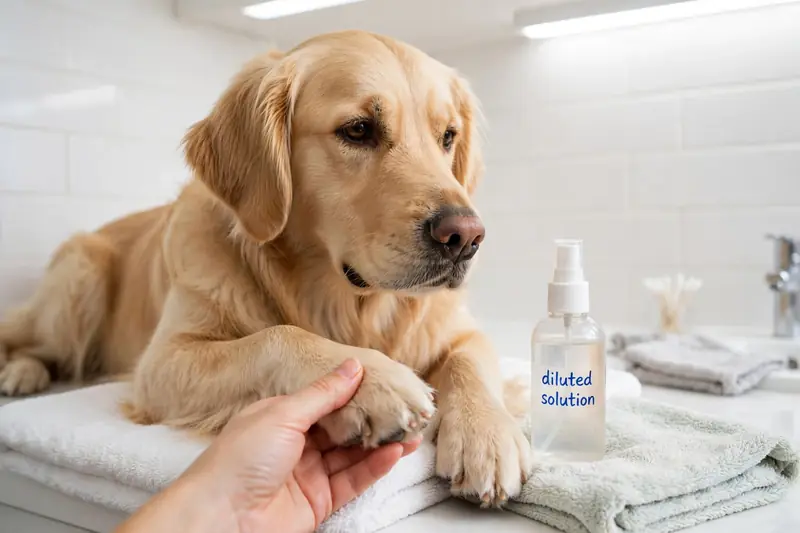
Ears deserve a firm line. Vinegar gets recommended as a home ear cleaner, but a dog’s ear canal lining is thin and sensitive, and most ear disease in dogs is yeast, bacteria, mites, or allergy, each needing different treatment. Pouring acid into an already inflamed ear hurts and can make the problem worse. VCA’s overview of ear infections in dogs describes how easily ear canals get damaged, which is reason enough to leave ear treatment to your vet.
Paws get the same caution. A diluted soak for mildly yeasty paws is a common home attempt, but cracked or chewed paws sting on contact. Watch the dog’s reaction during any topical use. Licking, flinching, or sudden restlessness means stop and rinse with plain water. A patch test on one small area, watched for a day, costs nothing and prevents most bad reactions.
Dogs that should never get vinegar
Dogs with kidney disease, stomach ulcers, or acid reflux should not get vinegar at all. Kidneys regulate the body’s acid balance, and a failing kidney cannot handle extra acid load. Kidney disease in dogs already forces careful diet management, and vinegar adds a burden with zero proven benefit.

Dogs with gastritis, ulcers, or reflux face the same verdict from the other direction. Their stomach lining is already compromised, and even diluted acid can worsen ulceration or trigger vomiting. Dogs on diuretics or insulin need a vet’s word first, since vinegar can nudge electrolytes and glucose handling in ways that complicate dosing.
Puppies and seniors get extra caution rather than a ban, since young digestive systems are still settling and old kidneys work less efficiently. The rule is simple: a healthy adult dog tolerates tiny diluted amounts, and every other dog needs the vet’s approval first.
Cleaning with vinegar around dogs
Vinegar-based cleaners are fine for dog households as long as the dog cannot drink them and surfaces dry before contact. Diluted vinegar mops floors and wipes counters without leaving the residues that worry owners about commercial cleaners. The ASPCA’s guide to household products reminds owners that any cleaning product needs secure storage and dry surfaces before pets return.

Two cautions apply. First, never mix vinegar with bleach; the combination releases toxic chlorine gas, dangerous to everyone in the house including the dog. Second, keep the dog out of the room while you mop. Wet vinegar on paws gets licked off, and while a diluted floor wash is unlikely to harm, there is no reason to let the dog be the mop. Let floors dry fully, then let the dog back in.
Cleaning vinegar deserves repeating here because the bottles look similar. Standard white vinegar is about 5 percent acetic acid. Cleaning vinegar runs 6 to 10 percent or more. A dog that laps a puddle of cleaning vinegar gets a much stronger burn than one that licks a salad dressing spill. Store the two in different places so a hurried grab never confuses them.
What happens if your dog drinks vinegar straight
A dog that drinks straight vinegar will likely drool, vomit, or get diarrhea, and most cases resolve without a vet visit. The mouth burn is immediate: drooling, pawing at the face, refusing food for a few hours. Vomiting often follows as the stomach rejects the acid. Diarrhea can arrive later the same day.

Offer plain water and a bland diet for a day or two once vomiting stops. Do not try to neutralize the acid with baking soda or milk. Call your vet if vomiting repeats more than twice, if there is blood in vomit or stool, if the dog refuses water for over half a day, or if the vinegar was the concentrated cleaning kind.
The quantity matters enormously. A licked spoonful of salad dressing is a non-event. Half a bowl of cleaning vinegar is a vet visit. When you call, bring the bottle so the vet knows exactly what and how much. Gastroenteritis in dogs from any irritant follows the same pattern: rest the gut, rehydrate, and escalate if it does not settle.
How to offer vinegar the safer way
If you want to try apple cider vinegar, start with a quarter teaspoon in food, watch for a week, and stop at the first sign of trouble. Choose raw, unfiltered apple cider vinegar, not distilled white. Mix it into food rather than water so the dog cannot simply refuse to drink. Never exceed a teaspoon for a small dog or a tablespoon for a large one, and twice a week is plenty.

Keep plain water available and watch the dog’s drinking; reduced intake is the most common side effect and the easiest to miss. Repeated acid exposure erodes tooth enamel, and dogs cannot rinse afterward. Our guide to apple cider vinegar for dogs covers uses and limits in more detail.
One more consideration before you start. Bladder stones in dogs sometimes prompt owners to try vinegar for its supposed urine-acidifying effect, but there is no evidence it dissolves or prevents stones, and messing with urinary pH without guidance can backfire. Supplements are not treatments. When a health goal is specific, the vet’s plan beats the pantry every time.
Vinegar and dogs: quick answers
Vinegar questions repeat the same themes, so here are the short versions together.

Can I put apple cider vinegar in my dog’s water?
You can, but most dogs hate the taste and drink less, which defeats the purpose. Mixing a tiny amount into food works better than the water bowl, and plain water should always be available.
Does vinegar kill fleas on dogs?
Vinegar does not kill fleas or their eggs. At best, the smell mildly repels them for a short while. The AKC’s flea treatment guide notes that natural remedies like vinegar lack solid safety and efficacy data, so discuss flea control with your vet.
Can I clean my dog’s ears with vinegar?
Do not. Vinegar stings inflamed ear canals and does not treat the underlying cause, which is usually yeast, bacteria, mites, or allergy. Use a vet-approved ear cleaner instead.
Is white vinegar safe for dogs?
Small diluted amounts will not poison a dog. White vinegar is still harsher than apple cider vinegar and offers no benefits. Keep it for cleaning, not for the dog.
My dog licked balsamic vinegar. Should I worry?
A single lick is very unlikely to cause harm, since the grape content in a lick is tiny. Do not make a habit of it, and watch for stomach upset. Call your vet if your dog drank a meaningful amount.
How much apple cider vinegar can I give my dog?
A quarter teaspoon for small dogs or up to a teaspoon for large dogs, mixed into food, no more than twice a week. More than that needs your vet’s approval.
Vinegar is an acid: useful for cleaning, mostly unproven for dogs, with real downsides when used carelessly. Dilute it heavily, skip it for dogs with kidney or stomach conditions, keep balsamic and cleaning vinegar away from the dog entirely, and let your vet handle anything vinegar was supposed to fix.
Disclaimer: This article is for general information only and is not veterinary advice. Dogs with kidney disease, ulcers, or reflux should avoid vinegar unless their vet specifically approves it.