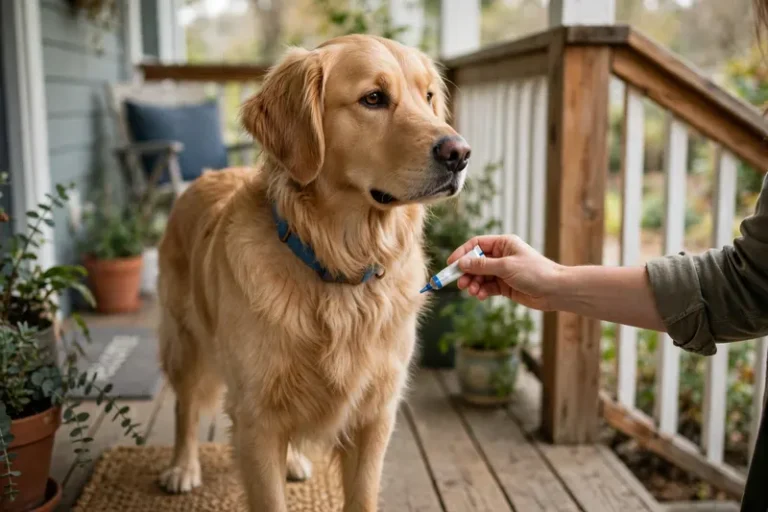
Lavender is safe for most dogs in its plant form and risky in its concentrated oil form. That split answers is lavender safe for dogs better than a flat yes or no. A dog that brushes past lavender bushes on a walk will be fine. A dog that laps up spilled lavender essential oil can be in real trouble within the hour. Two natural compounds, linalool and linalyl acetate, explain both outcomes. Concentration decides which one your dog gets.

Is lavender safe for dogs to smell?
Sniffing lavender in the garden or the house will not harm your dog. Passive smelling of the live plant exposes a dog to tiny amounts of linalool, far below anything that causes symptoms. Dogs that pause to sniff a lavender bush on a walk are doing something completely normal. No reason to pull them away.
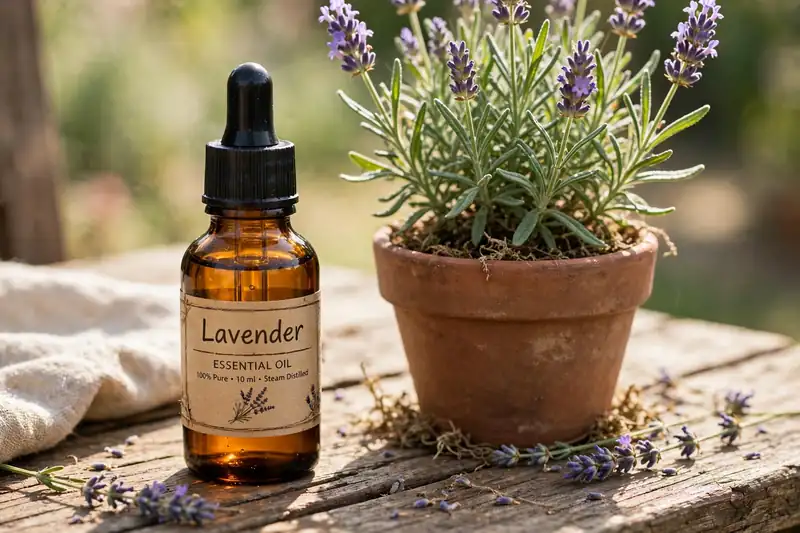
A dog’s nose carries up to 300 million scent receptors, so smells land very differently on dogs than on people. What smells faint to you can overwhelm a dog next to the source. That gap matters most with diffusers, not gardens: a hedge dilutes itself in open air while a diffuser concentrates in a closed bedroom.
The practical test is simple: if the lavender smell hits you at the door, it is too strong for the dog in that room. Open a door and let the dog leave.
Linalool and linalyl acetate: the two compounds that matter
Linalool and linalyl acetate are the compounds behind both lavender’s scent and its risk to dogs. Linalool is a terpene alcohol found in many flowers and herbs. Linalyl acetate is its close chemical cousin and the main source of lavender’s sweet smell. Dogs process both compounds more slowly than people do, so high doses build up instead of clearing out.
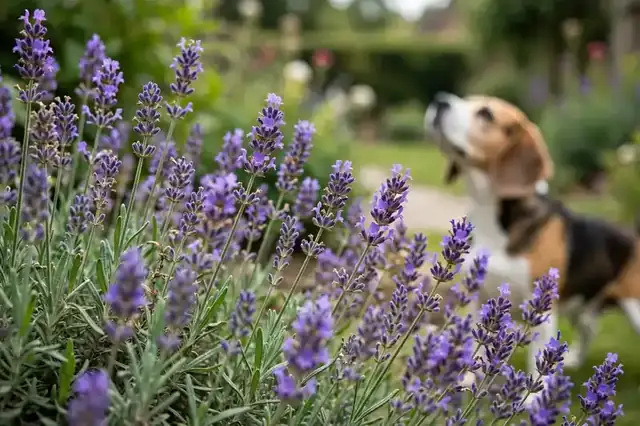
The ASPCA lists lavender as toxic to dogs, naming linalool as the toxic principle, a listing that surprises owners who think of lavender as gentle. The surprise is instructive: “natural” describes a compound’s origin, not its effect in a dog’s liver.
Fresh lavender holds these compounds at low levels, which is why a dog that grazes the garden usually ends up with nothing worse than mild stomach upset. Essential oil flips that ratio completely: distilling a small bottle concentrates hundreds of flower heads into a few milliliters. Same plant, same compounds, wildly different risk.
The garden plant vs the bottle of oil
The lavender plant in your garden is low risk, and the bottle of lavender oil on your shelf is high risk. Chewing a few leaves or flowers usually causes nothing worse than mild vomiting or a skipped meal. Swallowing even a small amount of the concentrated oil can cause vomiting and tremors, and in severe cases liver injury.

Most lavender cases the Pet Poison Helpline sees come from the oil, not the plant: a bottle tips off a nightstand, a diffuser gets knocked over, or an owner rubs oil on the dog’s coat. The plant rarely sends a dog to the vet. The bottle does.
Dried lavender sits between the two. Dried buds in a drawer sachet hold more concentrated compounds than fresh flowers, and a dog that chews open a sachet can get a mouthful of potent material. Keep sachets in closed drawers, not in dog beds or on low shelves. Potpourri with dried lavender belongs on high shelves for the same reason. None of this means ripping out the lavender hedge. It means treating the oil with the respect any concentrated chemical deserves. Gardeners juggling several plants should also know lavender is far from the only concern: lilies and snake plants are both considerably more dangerous to dogs than a lavender border.
What diffusers and candles put in the air
A diffuser running briefly in a ventilated room your dog can leave is low risk, and a diffuser running for hours in a closed room is not. The ASPCA Animal Poison Control Center says short diffuser sessions in a secured area, one the pet cannot access, are not likely to be an issue. It also says pets with breathing problems should skip diffusers altogether.

Passive diffusers like reed sticks release scent without droplets, and their main hazard is respiratory irritation. Ultrasonic and nebulizing diffusers pump microdroplets of actual oil into the air, which settle on fur and get ingested during grooming. That second route surprises most owners.
Run diffusers under 30 minutes, keep the room ventilated with the door open, and put the unit where no tail or nose can knock it over. Dogs with breathing trouble, flat-faced breeds, and puppies get no diffuser until your vet weighs in. Watery eyes, sneezing, coughing, or drooling during a session means it goes off and stays off.
Putting lavender oil on your dog’s skin
Never put undiluted lavender oil on your dog’s skin, and think twice before using it diluted. The essential oils absorb quickly through skin and airways, so rubbing oil on the coat is riskier than it looks. Oil on the coat becomes oil in the mouth within minutes. Dogs groom.

Skin reactions range from redness to chemical burns with concentrated oil, and absorbed oil can cause wobbliness and depression, sometimes with low body temperature. Guidelines that allow topical use cap dilution at 0.5 to 1 percent for dogs, roughly one drop per teaspoon of carrier oil. Most homemade recipes blow past that ratio.
Dabbing lavender oil behind a dog’s ears, a popular internet tip, puts concentrated oil on thin skin next to mucous membranes. Dogs with skin conditions get no essential oils at all, since broken skin absorbs far more. If a product uses lavender, check that it is a properly formulated pet shampoo, not raw oil added to a bath.
Warning signs of lavender trouble
Vomiting, drooling, and wobbliness are the early signs of lavender overexposure in dogs. Unusual tiredness often comes with them. Low-dose plant chewing usually stops at mild vomiting or a missed meal. Oil exposure looks different and worse: depression, unsteady walking, weakness in the rear legs, low body temperature, and skin irritation where oil touched the coat.

Oil exposure signs typically appear within minutes to a few hours. Plant chewing takes longer, often two to six hours, and stays milder. Severe oil cases can stretch for days. The Pet Poison Helpline notes that tea tree oil poisonings, the most common essential oil toxicity they see in dogs, have needed up to four days of aggressive veterinary care.
Do not induce vomiting at home, because oils can slide into the lungs on the way back up and cause aspiration pneumonia, which is harder to treat than the poisoning itself. Call your vet or the ASPCA poison control line at (888) 426-4435 first and follow their instructions. Bring the bottle or a clear photo of the label, because the exact concentration and the other ingredients in the blend change the treatment plan completely.
English lavender vs Spanish lavender
English lavender is the safer variety around dogs, and Spanish lavender carries extra risk from camphor. English lavender, Lavandula angustifolia, holds lower levels of camphor alongside its linalool. Spanish lavender, Lavandula stoechas, runs much higher in camphor, a compound that irritates the nervous system and airways.

Few articles mention this distinction, though the two plants sit side by side in garden centers every spring. Spanish lavender shows upright petals like rabbit ears on each flower head; English lavender has the classic tight purple spikes.
The variety matters most for oils: Spanish lavender oil delivers camphor plus linalool, stacking two irritants in one bottle. Check the botanical name on the label, because reputable oil sellers print Lavandula angustifolia or Lavandula stoechas right on the front. Bottles that just say “lavender oil” tell you nothing. For gardens with dogs, English lavender is the straightforward pick.
Does lavender calm dogs, and what works better?
Lavender may calm some dogs mildly, but a solid routine and vet-guided products work better. The oft-cited evidence is a 2006 trial that diffused lavender in cars carrying dogs; the dogs moved less and vocalized less. It measured calming behavior, never safety, which is a thin foundation for a wellness trend.

No veterinary toxicology body publishes an official list of safe essential oils for dogs. The Pet Poison Helpline and the ASPCA frame the question around the oil, its concentration, and how the dog encountered it, rather than handing out approvals.
None of this means lavender does nothing. Scent clearly affects dog behavior, and many owners report calmer evenings with a brief diffuser session. The honest version is smaller: lavender might take the edge off for some dogs, but it will not fix real anxiety. Treat calming claims as anecdotes with a plausible mechanism.
For situational stress like storms or travel, start with the boring foundations: a tired dog with a predictable day beats any scent. Calming treats made for dogs offer measured doses of studied ingredients. Melatonin has veterinary literature behind it for noise anxiety, with dosing your vet can set by weight. Pressure wraps help some dogs during thunderstorms.
One more honest note. Peppermint oil carries its own risks for dogs, so swapping lavender for another trendy oil solves nothing. The pattern to break is reaching for human aromatherapy products and assuming the dog’s body works the same way.
If your dog eats lavender or licks the oil
Call your vet right away if your dog swallows lavender oil, and monitor at home if it only chewed a few plant leaves. The response scales with the exposure. A few chewed leaves with no symptoms need watching, not panic. Withhold new treats for the day, offer water, and watch for vomiting over the next six hours.

Oil ingestion is the urgent case. Do not wait for symptoms, do not induce vomiting, and skip home remedies like milk or charcoal. Call your vet or the ASPCA line at (888) 426-4435 immediately. If oil reached the coat, bathe the dog with lukewarm water and plain dog shampoo to stop further absorption. Keep the dog warm and quiet while you wait.
Save both numbers in your phone now: your vet’s clinic and the poison control line. Owners always look them up mid-panic, and those are the worst minutes to spend scrolling. Garden nibbling usually resolves by morning; diffuser water means a vet tonight.
Lavender and dogs: quick answers
Lavender questions cluster around the same themes: breathing diffused oil, the ASPCA toxicity listing, pet shampoos, dried sachets, chewed stems, and which oils pose the greatest danger for dogs. The six short answers below cover each one with enough detail to act on.

Is lavender essential oil safe for dogs to breathe?
Brief, diluted diffusion in a ventilated room is low risk for healthy dogs. Hours of diffusion in a closed room is not. Dogs with breathing problems should avoid diffusers entirely.
Does the ASPCA list lavender as toxic to dogs?
The ASPCA does list lavender as toxic to dogs, naming linalool as the toxic principle. The listing covers the plant, and the risk climbs sharply with concentrated essential oil.
Can I use lavender shampoo on my dog?
A properly formulated pet shampoo containing lavender is generally fine, since the concentration is low and it rinses off. Never add raw lavender essential oil to your dog’s bath yourself.
Are dried lavender sachets safe around dogs?
Keep them in closed drawers away from dogs. A chewed sachet delivers a concentrated mouthful of dried buds, which can cause vomiting and drooling.
My dog chewed a lavender stem. What should I do?
Watch and wait. A single stem usually causes nothing or mild stomach upset within a few hours. Call your vet if vomiting repeats, your dog refuses food, or you notice wobbliness.
Which essential oils are most dangerous for dogs?
The worst offenders are tea tree and pennyroyal, followed by wintergreen and pine. Pennyroyal can cause liver failure, and wintergreen contains compounds similar to aspirin.
Lavender earns a split verdict: the garden plant is a non-issue for most dogs, the oil bottle deserves real caution, and the diffuser needs rules. Keep oils sealed and out of reach, diffuse briefly with the door open, and never oil the coat on internet advice. For real anxiety, proven tools and your vet beat any scent.
Disclaimer: This article is for general information only and is not veterinary advice. Every dog reacts differently, and young, old, or health-compromised dogs need their vet’s guidance before any essential oil exposure.