
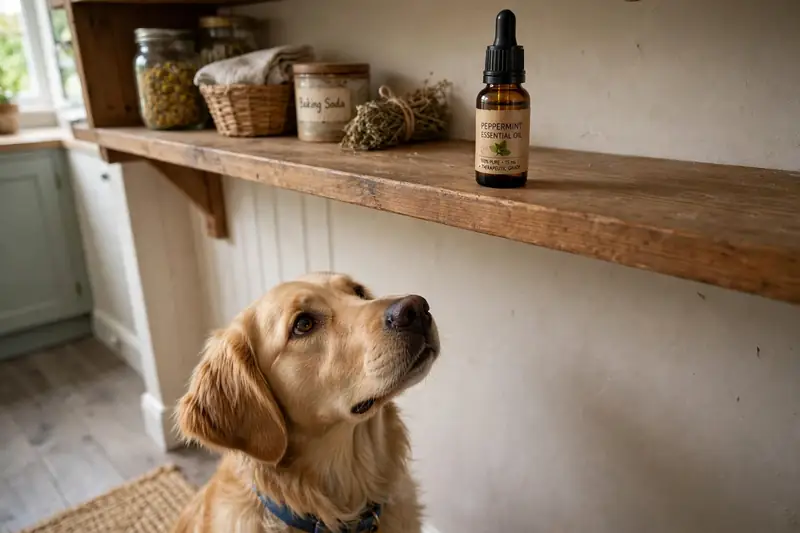
Is peppermint oil safe for dogs? The careful answer is no, not in the way most people mean it. Concentrated peppermint essential oil is risky for dogs whether it is swallowed, rubbed on skin, or breathed in from a diffuser. Veterinary sources including the ASPCA flag it as toxic, and the American Kennel Club warns that the risks of essential oils around dogs generally outweigh any possible benefits. The peppermint plant itself is a different, milder story, but the oil in the little brown bottle is potent chemistry, not a gentle herb tea. This guide explains exactly where the danger lies and what to do instead.
What peppermint oil actually is
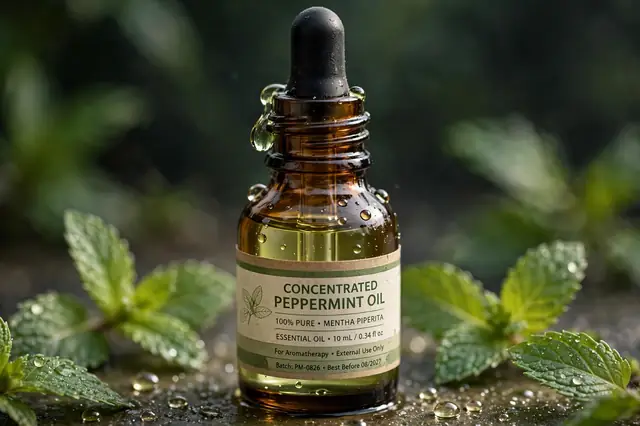
Peppermint oil is an essential oil steam-distilled from the peppermint plant. It is not the same as a peppermint leaf, a mint tea, or a mint-flavored treat. The distillation concentrates the plant’s active compounds, mainly menthol, into a form far stronger than anything the plant delivers on its own.
That concentration is the whole issue. A dog’s sense of smell is tens of thousands of times more sensitive than ours, and their liver processes many plant compounds differently. Something that smells refreshing to you can overwhelm a dog’s airways, irritate their skin, or upset their stomach at doses you would consider tiny. “Natural” describes where it came from, not how safe it is, many natural substances are potent, and potency is what demands respect here.
Why vets urge caution
The veterinary consensus is consistent: most essential oils pose some risk to dogs, peppermint included. The ASPCA lists peppermint oil as toxic to dogs, with risk rising alongside dose and concentration. The AKC’s veterinary-reviewed guidance on essential oils states plainly that dogs can be extremely sensitive to these extracts, with the risks of exposure outweighing the possible benefits, and advises talking to a veterinarian before using any of them around dogs.
Texas A&M’s College of Veterinary Medicine lists mint oils among essential oils toxic to pets. The Pet Poison Helpline notes that essential-oil exposures in dogs can produce drooling, vomiting, tremors, wobbliness, breathing difficulty, low heart rate, and in severe cases liver or kidney injury, with signs depending on the oil, the concentration, and the route of exposure.
None of this means a single sniff of a mint leaf will harm your dog. It means the concentrated oil deserves the same respect you would give any household chemical: stored securely, used only with veterinary guidance, and never applied casually.
The three routes of exposure
Peppermint oil can reach your dog three ways, and each carries its own risks:
Ingestion, the most dangerous. Swallowed concentrated oil irritates the mouth, throat, and stomach lining. Vomiting and diarrhea are the most common signs, but larger amounts can cause tremors, weakness, and liver stress. Never put peppermint oil in your dog’s water, food, or mouth, oil and water do not mix, so a dog drinking from a bowl with oil in it can get a mouthful of undiluted oil, burning lips, tongue, and gums.
Skin contact. Undiluted oil can irritate or burn skin, especially on thin-skinned areas like the belly, ears, or paws. Dogs also lick anything on their fur, turning a skin application into an ingestion. Never rub undiluted oil on your dog, and be wary of “natural” flea remedies containing peppermint oil unless your vet specifically approves the product and dose.
Inhalation. Diffusers in enclosed rooms are an underestimated hazard. A dog cannot leave a room the way you can open a window for yourself, and strong, continuous scent can cause watery eyes, sneezing, coughing, nausea, and breathing difficulty. Passive diffusers (reeds, candles) mainly risk respiratory irritation; active ultrasonic diffusers add fine droplets that settle on fur and get swallowed during grooming.
Symptoms of peppermint oil exposure

Because exposure can happen three ways, symptoms vary, but the common thread is that several can appear together. Watch for:
- Drooling or pawing at the mouth
- Vomiting or diarrhea
- Watery eyes or nose, sneezing, coughing
- Difficulty breathing or rapid breathing
- Lethargy, weakness, or unsteadiness
- Tremors or muscle twitching
- Skin redness where oil touched
Puppies, small breeds, senior dogs, and dogs with liver disease or breathing problems are at higher risk, smaller bodies, weaker clearance, less margin. If you notice any of these signs after a known or suspected exposure, do not wait to see if it passes. Move your dog to fresh air, and call your veterinarian or the ASPCA Animal Poison Control Center at 888-426-4435 right away.
What about the peppermint plant itself?
Here the picture is milder. The fresh peppermint plant is not considered toxic to dogs in the way the concentrated oil is, some dogs even nibble mint leaves when their stomachs feel off, and veterinarians note the plant itself is not “bad” for dogs. But “not toxic” is not a recommendation: large amounts of any rich plant material can still cause stomach upset, and garden mint is often grown with fertilizers or pesticides you would not want your dog eating.
The practical rule: a leaf or two from an unsprayed plant is very different from a dropper of essential oil. Do not let the plant’s mildness fool you into thinking the oil is equally gentle, the oil is dozens of times more concentrated.
Diffusers: the question everyone asks
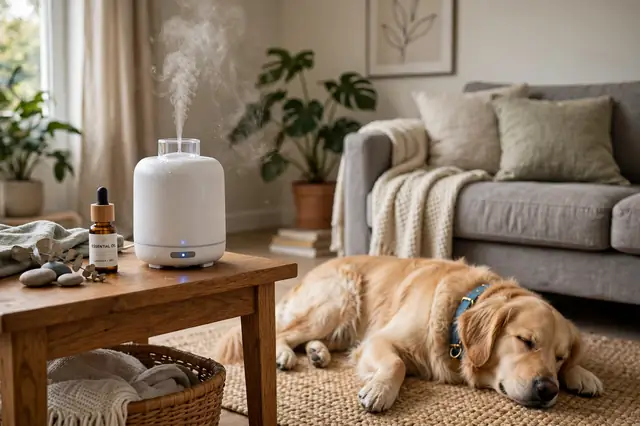
“Can I diffuse peppermint oil if my dog is in another room?” The honest veterinary answer leans toward no, or at least extreme caution. Dogs do not always stay where you put them, scent travels through a house farther than people expect, and continuous low-level exposure can still irritate sensitive airways.
If you diffuse anything around dogs, follow the harm-reduction rules vets suggest: use only well-ventilated, large rooms; keep sessions short; make sure the dog can always leave the room freely; never diffuse in a small closed bedroom where a dog sleeps; and watch for the early signs above, watery eyes, sneezing, restlessness, which mean “turn it off now.” And peppermint specifically, given its toxicity profile, is one of the poorer choices for a dog household. If aroma matters to you, discuss genuinely lower-risk options with your vet rather than experimenting.
If your dog was exposed, what to do

Act quickly and in this order:
- Remove the source. Turn off the diffuser, take the bottle away, stop the licking.
- Fresh air. Move your dog somewhere well-ventilated immediately.
- Skin exposure: gently wash the area with mild dish soap and lukewarm water to cut the oil. Do not use solvents or harsh cleaners.
- Do NOT induce vomiting unless your veterinarian specifically tells you to, vomiting can cause additional injury with some substances, and the decision belongs to a professional.
- Call for help. Your veterinarian, an emergency clinic, or the ASPCA Animal Poison Control Center (888-426-4435, available 24/7). Bring the product with you or have the label handy, the exact ingredients and concentration guide treatment.
Mild, brief exposures often resolve once the source is gone, but breathing difficulty, tremors, collapse, or repeated vomiting are emergencies. When in doubt, go, vets would far rather see a worried owner with a fine dog than the reverse.
Safer alternatives for what you actually wanted
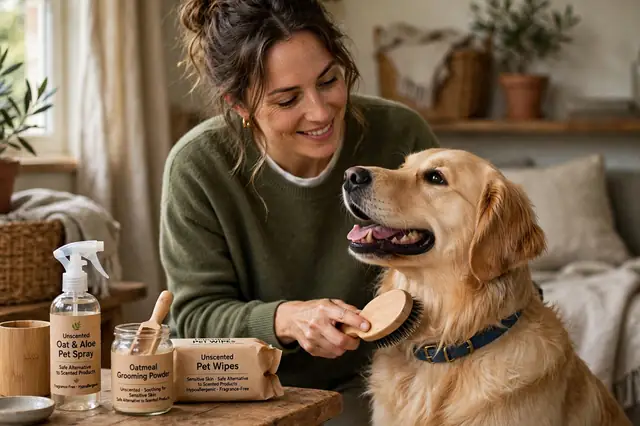
Most people reaching for peppermint oil want one of three things. Each has a safer path:
- Freshening the air or the dog: regular bathing, brushing, teeth cleaning, and washing bedding do more than any scent. For rooms, ventilation beats fragrance.
- Calming an anxious dog: pressure wraps, consistent routines, vet-approved calming supplements, and behavioral training have real evidence behind them. Discuss options with your vet rather than diffusing.
- Repelling fleas or pests: use veterinarian-approved parasite preventives. “Natural” repellents with essential oils are unregulated, inconsistently effective, and, as this guide shows, carry their own toxicity risk.
The pattern is simple: for every job peppermint oil promises, there is a boring, proven, dog-safe alternative. Boring is good when it comes to your dog’s safety.
Peppermint in commercial dog products: buyer beware
Walk down any pet aisle and you will find peppermint in dog shampoos, dental treats, breath sprays, and “calming” products. Does their existence contradict this guide’s caution? Mostly no, concentration and exposure route explain the difference.
Rinse-off products like shampoos use tiny amounts of peppermint extract or fragrance that wash away in minutes; the exposure is brief, diluted, and dermal, a different risk profile from diffusing pure oil for hours or letting a dog ingest it. Dental treats with “mint flavor” typically contain negligible actual essential oil. These products are formulated, however lightly regulated, for their specific use case, unlike the pure oil bottle, which is made for no dog at all.
But “formulated for pets” is not a safety guarantee, and the category is loosely regulated. Sensible rules: prefer products from established brands with transparent ingredient lists; avoid leave-on sprays, balms, or “natural flea treatments” with peppermint oil unless your vet approves; stop using anything that makes your dog sneeze, scratch, drool, or avoid the product; and never reason that because a shampoo contains mint, the pure oil is safe to diffuse. The dose makes the poison, and in pet products the dose is small, brief, and hard for you to verify, which is exactly why watching your individual dog’s reaction matters more than the label’s promises.
The honest summary: peppermint oil is one of those products where the marketing (“pure,” “natural,” “therapeutic”) runs ahead of the veterinary evidence. Concentrated oil can poison dogs through the mouth, the skin, or the air, and the margin between “fine” and “emergency” is uncomfortably thin, especially for small or vulnerable dogs. Keep the bottle locked away, skip the diffuser, and if calm, freshness, or pest control is the goal, choose the proven dog-safe route instead. Your dog will never miss the mint.
For the same plain-only, small-portion thinking across the foods dogs meet most often, see our wider guide to what human food dogs can eat. And for another herb-and-spice safety question answered carefully, our cinnamon guide follows the same cautious approach.
Frequently Asked Questions
Can I put a drop of peppermint oil in my dog’s water?
No. Oil and water do not mix, so your dog can swallow undiluted oil, which irritates the mouth, throat, and stomach. It is not a safe way to freshen breath or water.
Is diffusing peppermint oil safe if my dog leaves the room?
Risky. Scent travels, dogs wander back, and residue settles on fur and gets groomed off. Vets advise against diffusing peppermint oil in homes with dogs, or at minimum only briefly in large, ventilated rooms the dog can freely leave.
My dog licked peppermint oil, what should I do?
Remove the source, offer fresh water (do not force it), and watch closely for drooling, vomiting, or lethargy. Call your vet or the ASPCA Animal Poison Control Center (888-426-4435) for guidance, do not induce vomiting unless told to.
Are mint leaves safe for dogs?
The fresh plant is much milder than the oil and not considered toxic, but large amounts can still upset the stomach, and garden plants may carry pesticides. A nibble is very different from the concentrated oil.
What essential oils are most dangerous for dogs?
Tea tree (melaleuca) is among the most dangerous, along with pennyroyal, wintergreen, pine, and cinnamon oils. Peppermint sits in the toxic group, treat all of them with the same caution.
Can peppermint oil help my dog’s upset stomach?
There is no safe home dose, and the concentrated oil is more likely to cause vomiting than cure it. For digestive upset, talk to your vet about proven options instead.
Should I throw away my peppermint oil?
Not necessarily, but store it locked away from pets (and children), never apply it to your dog, and do not diffuse it in shared spaces. Treat it like any household chemical.
This article is general information only and is not a substitute for veterinary advice. If your dog has a health condition, is on a prescription diet, or you are unsure about any product, check with your veterinarian first.


2 thoughts on “Is Peppermint Oil Safe for Dogs? The Careful Answer”