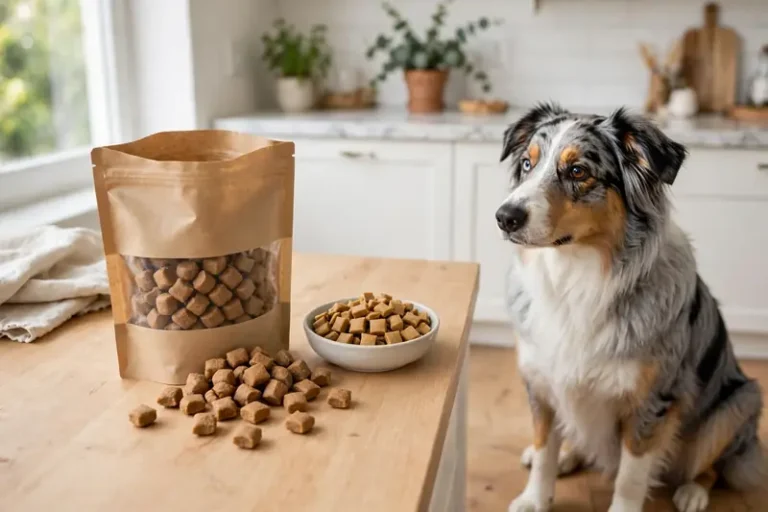
Your dog snatches a marshmallow off the counter during s’mores night, and panic follows. Can my dog eat marshmallows? **One regular marshmallow is not toxic to dogs, but marshmallows are never a good treat.** A regular marshmallow is sugar, corn syrup, and gelatin whipped full of air: about 23 calories and 4 grams of sugar per piece, with nothing a dog needs. The real danger is the sugar-free kind. Some sugar-free marshmallows use xylitol, and xylitol can drop a dog’s blood sugar within 30 minutes and damage the liver at higher doses. Pet Poison Helpline’s xylitol guide treats any xylitol exposure as a call-your-vet-now event. This guide covers the plain marshmallow verdict, the xylitol emergency in detail, label reading, portions, the choking risk, and better treats.

Can my dog eat marshmallows?
**Dogs should not eat marshmallows as treats, though one plain marshmallow is rarely an emergency.** Plain marshmallows contain nothing toxic to dogs, just sugar in several forms. The problem is what they do over time: the sugar adds empty calories, rots teeth, and upsets stomachs, and the sticky texture can choke small dogs. Sugar-free marshmallows are a different story entirely and can be fatal.
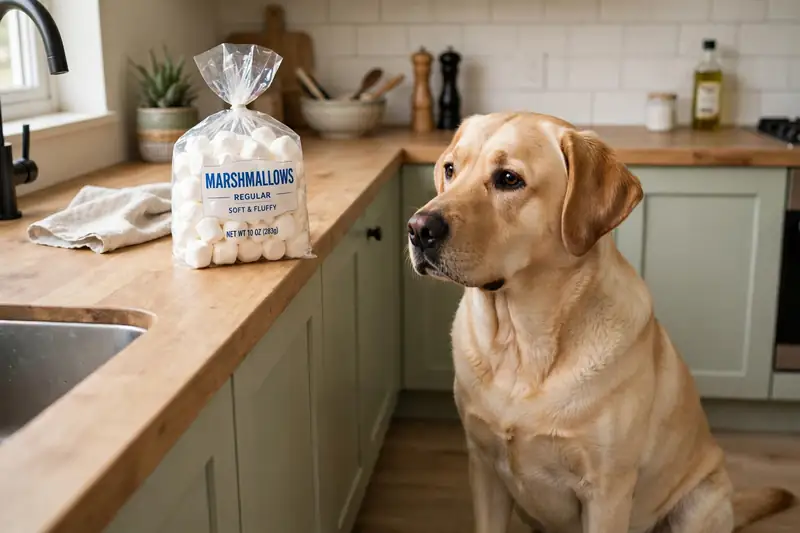
Vets land on “no” as policy even though a single plain one is a non-event. The policy exists because the exceptions kill: xylitol versions, chocolate-covered versions, and the habit of handing out sweets. If your dog stole one plain marshmallow, watch for a few hours and move on. If the bag says sugar-free, skip the watching and call the vet. The list of human foods dogs can eat has better sweet options for dogs that beg at dessert time.
What is actually in a marshmallow
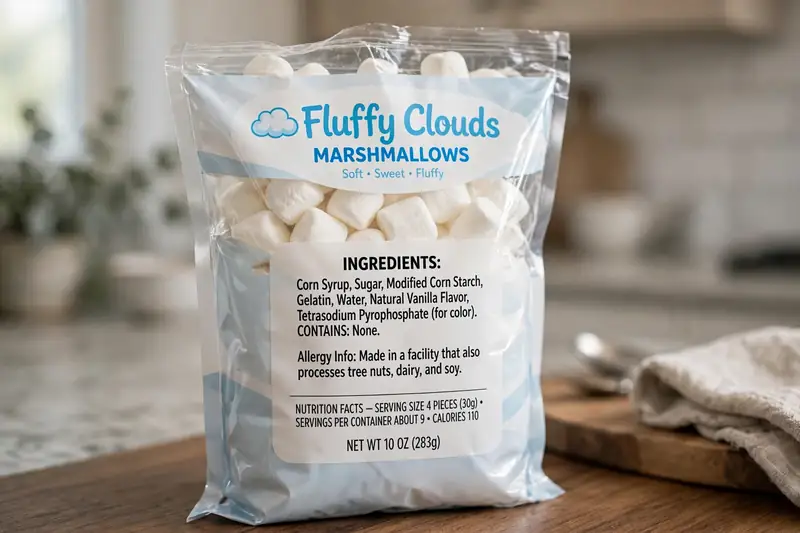
**A plain marshmallow is sugar, corn syrup, gelatin, dextrose, and a little cornstarch.** Gelatin is animal protein, and dogs digest it without trouble. Everything else is sugar wearing different names: corn syrup, dextrose, and plain sugar stack up to about 4 grams per regular marshmallow, roughly a level teaspoon. There is almost no fat and almost no protein.
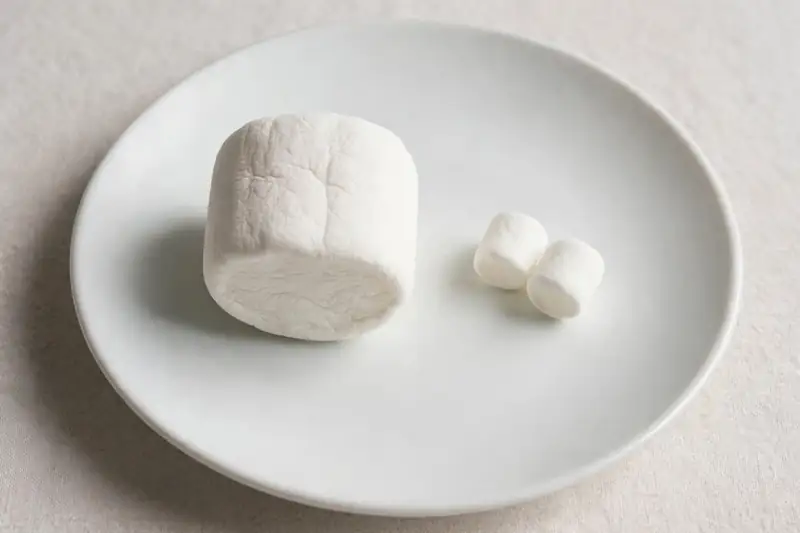
Sugar is not poison for dogs the way xylitol is. Dogs process sugar the same way people do, and a teaspoon of it does no acute harm. The damage is cumulative: weight gain, dental disease, and blood sugar swings in dogs that get sweets often. Mini marshmallows are the same recipe in a smaller piece, about 2 calories each, so one or two is close to nothing calorically. The ingredient list matters more than the size, because the list is where xylitol hides. Read it every time, even on a brand you have bought before, since manufacturers change sweeteners without fanfare.
Xylitol: the sugar-free marshmallow emergency
**Xylitol in sugar-free marshmallows can kill a dog, and the dose needed is shockingly small.** In dogs, xylitol triggers a massive insulin release. Blood sugar crashes, and at higher doses the liver fails. The Merck Veterinary Manual puts the hypoglycemia risk at about 100 milligrams of xylitol per kilogram of body weight, which is only 450 milligrams for a 10 lb dog, and notes liver damage above 500 milligrams per kilogram. Pet Poison Helpline cites 0.1 grams per kilogram as the poisoning threshold.

Signs start fast: vomiting, weakness, and stumbling within 10 to 60 minutes, then collapse or seizures. Merck Veterinary Manual on xylitol warns that vomiting should only be induced under veterinary supervision, because blood sugar can crash during the attempt. If your dog ate anything sweetened with xylitol, even a couple of minis, call your vet or a poison line immediately and let them calculate the dose from the label. Do not wait for symptoms. The brands most likely to use xylitol are the keto, low-carb, diabetic-friendly, and “skinny” marshmallows, the exact ones health-conscious owners buy thinking they are safer.
How to read a marshmallow label in 30 seconds
**Check the ingredients for xylitol, birch sugar, or anything ending in “itol” before any marshmallow reaches the dog.** Xylitol also appears as birch sugar, birch bark extract, or wood sugar. Sugar-free, no-sugar-added, keto, and diabetic-friendly on the front of the bag all mean the same thing: read the back.
Standard brands like Jet-Puffed use sugar and corn syrup, not xylitol, which is why one plain marshmallow from a classic bag is a watch-at-home event. But product lines change, and store brands copy the diet versions. The 30-second habit: front of bag for diet claims, back of bag for the sweetener list, and if xylitol appears anywhere, the bag lives on a high shelf behind a closed door. ASPCA’s list of people foods to avoid names xylitol among the items that never belong near a dog. Peanut butter deserves the same label check, since some brands add xylitol too.
How many marshmallows are too many
**One plain marshmallow for a medium or large dog, or one mini for a small dog, and not every day.** Treats of every kind should stay under 10 percent of daily calories, and VCA’s feeding guidelines hold that line for all extras. A regular marshmallow’s 23 calories is a rounding error for a 70 lb lab and a real chunk of a 10 lb chihuahua’s treat budget.

A whole bag is a different event. A dog that eats ten or twenty marshmallows gets a sugar load that commonly causes vomiting, diarrhea, and loss of appetite for a day, plus a choking risk from gulping sticky pieces. Puppies and small dogs feel it faster. A marshmallow a day is a habit the dog does not need: the calories add up silently, and the teeth pay for it. If the dog begs every time the bag opens, the answer is a training problem, not a portion problem.
The choking problem nobody mentions
**A marshmallow can lodge in the throat or glue itself to the roof of the mouth, especially in puppies, toy breeds, and flat-faced dogs.** The spongy texture compresses, then expands and sticks. A French bulldog or pug that gulps a full-size marshmallow whole can obstruct its airway, and a panicking owner pulling at a sticky mass can push it deeper.

Minis reduce but do not remove the risk. A greedy small dog can inhale several minis at once. If you ever hand a dog a marshmallow despite the advice, tear it into small pieces first and watch the dog eat it. Choking signs are pawing at the mouth, gagging, and panic; if the dog cannot clear it, that is an emergency vet visit, not a wait-and-see. The choking risk alone is reason enough to keep marshmallows out of the treat rotation for brachycephalic breeds.
S’mores, fluff, and chocolate-covered versions
**S’mores ingredients multiply the risks: chocolate is toxic, and the marshmallow is the least of the problems.** Chocolate contains theobromine, which dogs metabolize slowly; dark chocolate and baking chocolate are the worst, but any chocolate in a s’more counts. A dog that raids the s’mores kit gets sugar, chocolate, and sticky choking hazards in one sitting. Call the vet and report the chocolate type and the dog’s weight.

Marshmallow fluff in a jar is the same sugar recipe without the shape, and sugar-free fluff versions exist with the same xylitol risk. Chocolate-covered marshmallows sold as candy are a theobromine problem first. White chocolate carries less theobromine than dark but still brings the sugar load. Ice cream and whipped cream sundaes with marshmallow topping stack dairy, sugar, and fat into one bowl. Campfire rule: the s’mores kit stays on the high table, and the dog gets its own treat from your pocket.
Sugar, teeth, weight, and pancreatitis
**Regular marshmallow feeding leads to weight gain, dental disease, and stomach trouble, and sugary fatty treats can trigger pancreatitis.** Sugar feeds the bacteria that cause plaque and gum disease, and dogs do not brush. The calories are pure carbohydrate with no satiety, so a dog that gets sweets regularly gains weight without eating more meals. Pancreatitis, a painful and sometimes life-threatening inflammation of the pancreas, is linked to rich sugary treats, and it is one more reason sweets never become routine.

Diabetic dogs should never get marshmallows. The sugar spike hits fast, and there is no nutritional reason to risk it. Overweight dogs are already fighting the calorie battle, and 23 empty calories is 23 calories in the wrong direction. Senior dogs with dental disease chew sticky sweets badly and risk pulling at loose teeth. None of this requires a dramatic incident. It is the slow accumulation that does the damage, which is exactly why “just one” becomes a problem when it becomes daily.
Better soft treats to use instead
**Blueberries, banana bits, and small training treats beat marshmallows on every count.** Blueberries are the easy swap: soft, sweet, no pit, safe in handfuls, with real fiber and antioxidants. A thin slice of banana gives the same soft sweetness with potassium and far less sugar per bite. Commercial training treats are portioned, low calorie, and made for the job.

The swap matters most for the ritual. Dogs that beg during s’mores night want participation, not marshmallows. A pocket of blueberries buys the same happy moment with none of the risk. Keep a jar of the dog’s own treats where the marshmallow bag lives, and the begging gets answered safely every time. The dog never knew what it was missing, because it was never about the marshmallow.
When to call the vet
**Call the vet immediately if your dog ate sugar-free marshmallows, chocolate-covered marshmallows, or a large quantity of any kind.** Xylitol is a now emergency: signs can start within 10 to 15 minutes, and early treatment decides the outcome. Chocolate needs a dose calculation from the type and the dog’s weight. A whole bag of plain marshmallows deserves a call too, since the sugar load and choking risk scale with quantity.
Save the bag or take a photo of the ingredients list before you call. The vet needs the sweetener name and the amount eaten. Both poison lines run 24 hours: ASPCA Animal Poison Control at (888) 426-4435 and Pet Poison Helpline at (855) 764-7661, and both charge a fee. For a single plain marshmallow with no symptoms after a few hours, a bland diet for a day or two covers any mild stomach upset.
Frequently asked questions about dogs and marshmallows
Owners usually ask about minis, fluff, sugar-free versions, and the stolen marshmallow. The answers below cover the questions that come up most often.
Can dogs eat mini marshmallows?
One or two plain minis are a non-event for most dogs, at about 2 calories each. The same rules apply: never sugar-free, never as a routine treat, and watch small dogs for choking since greedy eaters inhale minis in groups.
Can dogs eat marshmallow fluff?
Plain fluff is the same sugar recipe as marshmallows, so a licked spoonful is not an emergency. Sugar-free fluff can contain xylitol and is dangerous. Keep the jar closed and out of reach either way.
Can dogs eat sugar-free marshmallows?
Sugar-free marshmallows may contain xylitol, which causes a rapid blood sugar crash and liver failure in dogs. Even a couple of minis can be life-threatening for a small dog. Treat any sugar-free marshmallow as an emergency and call your vet.
My dog ate a marshmallow. Will he be OK?
If it was one plain marshmallow, almost certainly. Watch for vomiting or diarrhea over the next few hours. If the marshmallow was sugar-free, chocolate-covered, or one of many, call your vet now instead of watching.
Can dogs eat roasted marshmallows from a campfire?
A roasted marshmallow is still a marshmallow, just hotter. The burn risk adds to the sugar and choking issues: melted sugar sticks to mouths and throats. Let it cool and skip it, or better, give the dog its own treat away from the fire.
Are gelatin or pectin marshmallows safer?
Not meaningfully. Gelatin and pectin are both fine for dogs, but they are not the problem ingredient. The sugar load and the xylitol risk in diet versions are identical regardless of the gelling agent.
Marshmallows earn a firm no as a treat and a calm shrug for a single stolen plain one. The sugar-free bag is the one that kills, and the label check is the habit that prevents it. Read the bag, keep the diet versions locked away, and hand the dog a blueberry instead.
Disclaimer: This article is for general information only and is not veterinary advice. Every dog is different, and dogs with health conditions, puppies, and nursing dogs may need different guidance. If you are unsure, or if your dog shows symptoms after eating marshmallows, contact your veterinarian.