

Can Dogs Have Whipped Cream? The Puppuccino Question, Answered
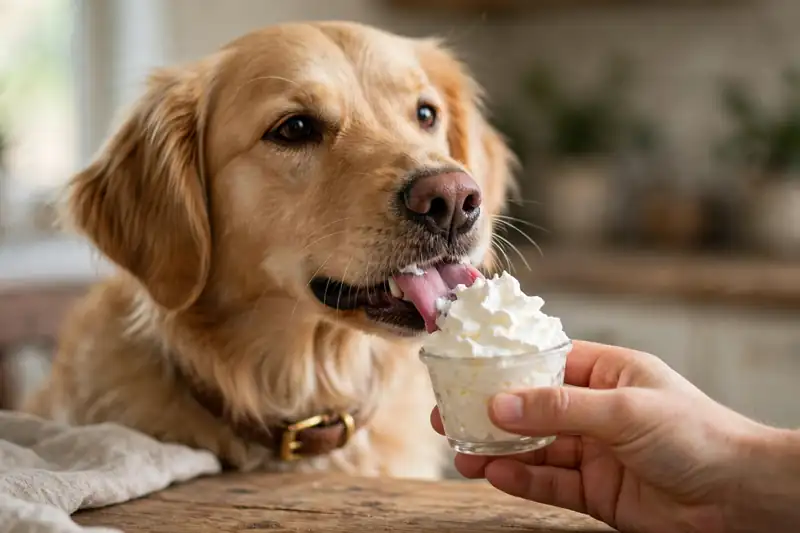
Yes, dogs can have whipped cream in small amounts, occasionally. There is nothing in plain whipped cream that is acutely toxic to dogs the way chocolate or xylitol is, and veterinarian Dr. Jennifer Coates (PetMD) has noted that a small amount is unlikely to cause harm in most dogs. That is the entire basis of the puppuccino phenomenon: an espresso cup of whipped cream from the coffee shop, given rarely, is a harmless indulgence for a healthy dog. But “not toxic” and “good idea regularly” are very different things. Whipped cream is dairy fat plus sugar with essentially no nutritional value, most adult dogs are lactose intolerant to some degree, and the sugar-free versions can be lethal. Here is where the line sits.
What Is Actually in Whipped Cream
Plain whipped cream is simple: heavy cream whipped with air, usually with a little sugar and vanilla. Canned whipped cream (the pressurized-can kind) adds stabilizers and propellants, nitrous oxide, which dissipates, plus more sugar and flavorings than homemade.

Nutritionally, it is almost entirely milk fat and sugar. A small cup contains a meaningful number of calories for a dog with zero accompanying nutrition, no protein worth mentioning, no fiber, no vitamins of note. It is, in dietary terms, pure indulgence: fine as a rare treat, empty as a habit.
The Starbucks “puppuccino” that started the trend is exactly this: a small espresso-sized cup filled with whipped cream, given free to dogs at the drive-through. The concept is sound, tiny portion, rare occasion. The problems start when “rare occasion” becomes “every coffee run.”
Lactose Intolerance: The Main Issue
The primary reason whipped cream is problematic for dogs is dairy. As with ice cream, the issue is lactose: puppies produce the lactase enzyme needed to digest milk sugar, but production drops after weaning, and most adult dogs are lactose intolerant to varying degrees. PetMD’s dairy guidance confirms the mechanism, undigested lactose ferments in the gut, causing gas, bloating, and diarrhea.
Whipped cream is concentrated cream, so it delivers a meaningful lactose dose in a small volume. Individual tolerance varies widely: some dogs handle a puppuccino with no visible effect, while others get soft stool from the same amount. There is no test for it other than observation, which means the first puppuccino should be treated as an experiment with a small amount, not a celebration with a large one.
Dogs with known dairy sensitivity, inflammatory bowel conditions, or generally delicate stomachs should skip whipped cream entirely. There are better treats that do not gamble on their gut.
Fat, Sugar, and Weight: The Slow Costs
Beyond lactose, whipped cream carries the standard costs of rich treats:
Calories and weight gain. The calories in a puppuccino are not huge in absolute terms, but they are empty, and for a small dog, a regular puppuccino habit represents a real percentage of daily intake. Weight gain in dogs is linked to joint disease, reduced lifespan, and diabetes risk. Treats should stay under 10% of daily calories, and whipped cream spends that budget with nothing to show for it.
Fat and pancreatitis. Dogs with a history of pancreatitis, or breeds prone to it, should avoid fatty treats including whipped cream. A rich treat can be the trigger for a flare-up.
Sugar. Added sugar contributes to dental problems and provides nothing a dog needs. Dogs did not evolve to process concentrated sugar, and there is no nutritional argument for giving it to them.
None of this condemns the occasional puppuccino. It condemns the daily one.
The Sugar-Free Danger: Check Every Label
This is the critical safety warning. Sugar-free whipped cream and “light” whipped toppings may contain xylitol, the sugar substitute that is extremely toxic to dogs, causing rapid insulin release, blood sugar crash, and potential liver failure. Some canned whipped products and “diet” dessert toppings use it.

Rules:
- Never give sugar-free whipped topping to a dog without verifying the full ingredient list.
- Read labels on any “light,” “fat-free,” “sugar-free,” or “keto” whipped product before it enters a house with a dog.
- At coffee shops, the standard puppuccino uses regular sweetened whipped cream, but if you ever encounter a sugar-free option, decline it for the dog.
If your dog ingests a xylitol-containing product, it is an emergency: call your veterinarian or the Pet Poison Helpline (855-764-7661) immediately. Do not wait for symptoms.
The Puppuccino Rules: How to Do It Right
If you want to share the occasional puppuccino, here is the responsible framework:

- Keep it tiny. An espresso-cup amount (1-2 ounces) is the standard, not a grande cup.
- Keep it rare. An occasional treat, monthly, not daily. It should never become an expected part of the routine.
- Use plain whipped cream only. No chocolate drizzle, no caramel sauce, no flavored syrups, no sugar-free versions.
- Watch the aftermath. Mild gas or soft stool means your dog’s lactose tolerance is low, take the hint and stop offering it.
- Count the calories. Fold it into the 10% treat budget for the day.
- Skip it for at-risk dogs. Puppies (no nutritional need), diabetic dogs (sugar), dogs with pancreatitis history (fat), obese dogs (calories), and dairy-sensitive dogs should not participate.
Followed this way, the puppuccino is what it was always meant to be: a tiny, joyful, harmless indulgence.
Homemade vs. Canned: Which Whipped Cream Is Safer?
If you are going to offer whipped cream at all, homemade has the edge:
Homemade whipped cream, heavy cream beaten with a touch of sugar, contains exactly what you put in it: cream, sugar, done. No stabilizers, no propellants, no mystery flavorings. You control the sugar amount (use less than you would for humans) and you know with certainty there is no xylitol hiding in it.
Canned whipped cream adds stabilizers, emulsifiers, and nitrous oxide propellant, plus generally more sugar and vanilla flavoring than homemade. None of these are acutely toxic in the tiny amounts of a puppuccino, but they are unnecessary additives, and the label-reading burden is higher, especially with “light” varieties where xylitol becomes a real concern.
The practical takeaway: if whipped cream is already part of your kitchen routine and you make it fresh, sharing a spoonful is the cleanest version. If you only have the canned kind, check the label, keep the portion tiny, and never use a sugar-free variety.
The Coffee-Shop Question: Beyond Starbucks
The puppuccino started at Starbucks, but most coffee chains will now put whipped cream in a small cup for a dog on request, and the same rules travel with it:
- Ask what is in it. Standard whipped cream is fine; flavored or sugar-free versions are not. A quick “is this your regular whipped cream?” costs nothing.
- Decline the extras. Some shops default to adding caramel drizzle, chocolate shavings, or flavored syrups to dog cups as a cute touch. Cute is not worth theobromine or xylitol, ask for plain.
- Watch the size. Some enthusiastic baristas fill a large cup. A puppuccino should be espresso-cup sized; if you get a big one, share a spoonful and discard the rest.
- Mind the caffeine environment. The whipped cream is safe; the coffee is not. Keep the dog’s cup away from yours, and never let a dog lap spilled coffee, caffeine toxicity is a separate, serious risk.
Dogs That Should Skip Whipped Cream Entirely
- Dogs with dairy/lactose intolerance symptoms, the reaction is the answer.
- Dogs with pancreatitis history, fatty treats are a known trigger.
- Diabetic dogs, the sugar content works against blood sugar control.
- Overweight dogs, empty calories are the enemy of weight loss.
- Dogs with kidney disease on restricted diets, check with your vet before any dairy.
- Very small dogs, the calorie and lactose dose relative to body weight is proportionally larger.
Healthier Ways to Spoil Your Dog
The puppuccino is about the experience, a special treat, a little ceremony, a happy dog. You can deliver all of that with better nutrition:

- Frozen banana bites. Naturally sweet and creamy when frozen. See our guide on whether dogs can eat bananas.
- Plain pumpkin frozen treats. Spoon canned pumpkin into a small cup and freeze, fiber-rich and exciting.
- Blueberries. A small handful in a cup feels like a special serving and delivers antioxidants.
- Plain low-fat yogurt (tiny amount). Lower in lactose than cream due to live cultures, but still dairy, so keep it minimal and watch for intolerance.
- Xylitol-free peanut butter. A teaspoon in a cup is a high-value treat most dogs prefer to whipped cream anyway. Verify the label, some peanut butters contain xylitol.
Any of these can be the “special cup” ritual without the dairy gamble.
The Honest Bottom Line
Whipped cream is not a villain, it is a neutral indulgence. Plain whipped cream in puppuccino-sized amounts, given rarely, is unlikely to harm a healthy dog, and the joy it brings is real. But it offers nothing nutritionally, most adult dogs digest its lactose poorly, and making it a habit trades empty calories for health. Keep it tiny, keep it rare, never go sugar-free, and skip it for dogs with dairy, weight, or pancreas issues. Or skip the dairy entirely and build the ritual around frozen banana, your dog will not know the difference, and their gut will thank you.
For the complete framework on evaluating treats, see our guide to what human food dogs can eat. And for the frozen treat upgrade, read our article on whether dogs can eat bananas.
Frequently Asked Questions
Can dogs have whipped cream from Starbucks (puppuccino)?
Yes, occasionally. A puppuccino is a small cup of plain whipped cream, not toxic, and fine as a rare treat for most healthy dogs. Keep it to the small size, keep it infrequent, and skip it if your dog shows dairy intolerance signs.
Is whipped cream bad for dogs?
It is not toxic, but it is not good for them either. The lactose bothers most adult dogs to some degree, and it is pure fat and sugar with no nutritional value. Occasional tiny amounts are fine; regular servings are not advisable.
Can dogs have canned whipped cream (Reddi-wip style)?
In tiny amounts, the same rules apply, but check the label first. Canned whipped creams contain more sugar, stabilizers, and flavorings than homemade, and sugar-free versions may contain xylitol, which is extremely toxic to dogs. Never serve a sugar-free variety.
Is xylitol in whipped cream?
Some sugar-free and “light” whipped toppings contain xylitol (also called birch sugar). Regular whipped cream does not. Always read the ingredient list on any diet or sugar-free product, xylitol poisoning is a veterinary emergency.
Can puppies have whipped cream?
There is no nutritional reason to give puppies whipped cream, and their small size means even a puppuccino-sized portion is proportionally large. It is not toxic in tiny amounts, but puppy treats should support growth, stick to puppy-appropriate options.
How much whipped cream can I give my dog?
A puppuccino-sized serving, about 1-2 ounces, on an occasional basis (not daily). Fold it into the day’s 10% treat calorie budget. If your dog gets gas or soft stool afterward, that is their answer: skip it going forward.
What happens if my dog eats a lot of whipped cream?
Expect gastrointestinal upset, gas, bloating, diarrhea, from the lactose and fat load. In dogs prone to pancreatitis, a large fatty intake can trigger a flare-up (repeated vomiting, abdominal pain, lethargy, call your vet). Monitor for 24 hours and withhold further rich treats.
What can I give my dog instead of a puppuccino?
Frozen banana bites, frozen plain pumpkin in a cup, a small handful of blueberries, or a teaspoon of xylitol-free peanut butter all deliver the “special treat” experience with better nutrition and no dairy gamble.
This article is for informational purposes only and is not a substitute for professional veterinary advice. If your dog shows signs of illness after eating whipped cream, repeated vomiting, diarrhea, or lethargy, contact your veterinarian promptly.


1 thought on “Can Dogs Have Whipped Cream? The Puppuccino Question, Answered”