

Can Dogs Eat Popcorn? Only Plain, Air-Popped, and Kernel-Free
Yes, dogs can eat popcorn, with three non-negotiable conditions: it must be plain, air-popped, and free of unpopped kernels. The AKC confirms that plain, air-popped popcorn is generally safe for dogs in small quantities, noting that it even delivers some fiber and is relatively low in calories. But the popcorn most humans actually eat, buttered, salted, caramel-coated, cheese-dusted, or microwaved in an oil-filled bag, ranges from inadvisable to genuinely risky. And the hard kernels at the bottom of the bowl are a choking and dental hazard. Here is how to share movie night safely.

Why Plain Popcorn Gets a Cautious Yes
Popped corn is a whole grain, and nutritionally it is one of the least objectionable human snacks a dog can share:
- Fiber. Popcorn contains dietary fiber, which supports healthy digestion in small amounts.
- Low calorie density. A cup of plain air-popped popcorn contains roughly 30 calories, a genuinely light snack as human foods go.
- Low fat and sugar, in its plain form. No added anything is the entire point.
- B vitamins and minerals in modest amounts, including magnesium and phosphorus.
None of this makes popcorn a health food for dogs, it is a permissible occasional snack, not a nutritional supplement. But compared to chips, pretzels, or cheese puffs, plain popcorn is firmly in the “fine in moderation” category. The AKC’s guidance reflects exactly this: the popcorn itself is not the problem. Everything humans put on it is.
The Toppings Are the Enemy
Plain popcorn is safe. Movie popcorn is a different food entirely. Here is what the common additions do:
Butter and oil. The classic movie-theater drenching. Fatty extras contribute to weight gain, and a large fatty load can trigger pancreatitis, a painful, potentially serious inflammation of the pancreas. A few buttered pieces stolen off the couch are unlikely to cause a crisis, but a dog that regularly shares buttered popcorn is accumulating real risk.

Salt. Dogs need far less sodium than humans, and heavily salted popcorn delivers a concentrated dose. Excessive salt causes extreme thirst and, in large quantities, sodium ion poisoning, particularly dangerous for small dogs.
Caramel and kettle corn. Sugar-coated popcorn adds a heavy sugar load: empty calories, dental damage, and blood sugar spikes. Not toxic in the way xylitol is, but firmly in the “never share” category.
Cheese flavoring. Cheese dust and cheese sauces add fat and sodium together, the worst combination for pancreatitis and obesity risk.
“Sugar-free” or “light” varieties. Check the label: some sugar-free snacks contain xylitol, which is extremely toxic to dogs. Any product labeled sugar-free should be treated as suspect until verified.
The rule is absolute: if anything was added to the popcorn, butter, oil, salt, sugar, cheese, flavor dust, it is not the dog’s popcorn. Pop a separate small plain batch, or skip sharing that night.
Microwave Popcorn: Do Not Share
Microwave popcorn deserves its own warning. Beyond the toppings problem (most microwave popcorn is pre-loaded with oils, salt, and flavorings), the bags themselves have historically been lined with chemicals that raise health questions, and the “butter flavor” is an artificial formulation, not the simple food that plain popcorn is.
If your household eats microwave popcorn, keep the dog’s portion entirely separate: pop a small batch of plain kernels in a paper bag or an air popper with nothing added. It takes two minutes and removes every variable.
Unpopped Kernels: The Hidden Physical Danger
The nutritional discussion overshadows a mechanical hazard that vets take seriously: un-popped kernels (“old maids”) and partially popped pieces are choking hazards, especially for small dogs and enthusiastic eaters that inhale food. They are also hard enough to fracture teeth, veterinary dentists see slab fractures from dogs crunching hard kernels, and sharp hull fragments can lodge between teeth and irritate gums.
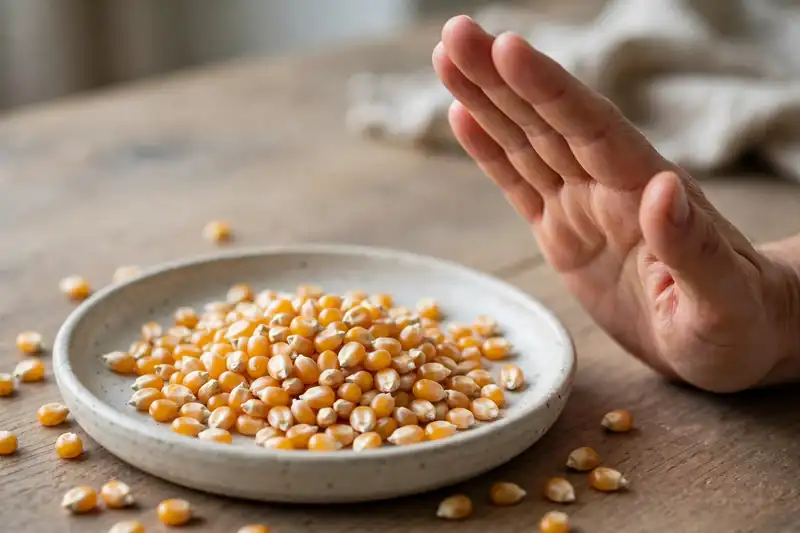
Before offering popcorn to your dog:
- Pop it fully and let it cool.
- Pick through the batch and remove every unpopped kernel and hard partial pop.
- For small dogs, break larger pieces into smaller bits.
This thirty-second step eliminates the most common popcorn injury vets see.
Portions and Frequency
Popcorn is a treat, and the treat rules apply:
- Keep it occasional, movie night, not every night.
- Keep it small. A small handful for a medium or large dog; a few pieces for a small dog. All treats and extras combined should stay under roughly 10% of daily calories.
- Account for the whole day. If the dog already had training treats and a dental chew, the popcorn budget shrinks.
- Watch the individual dog. Some dogs’ stomachs handle the fiber fine; others get gassy. Start with a few pieces the first time.
Overweight dogs, dogs with pancreatitis history, and dogs on calorie-restricted diets should get the smallest portions, or skip popcorn in favor of a lower-calorie veggie treat.
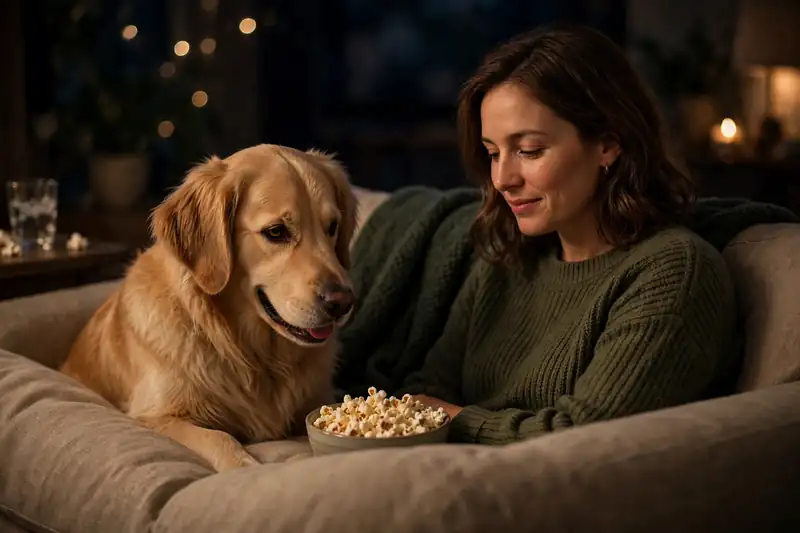
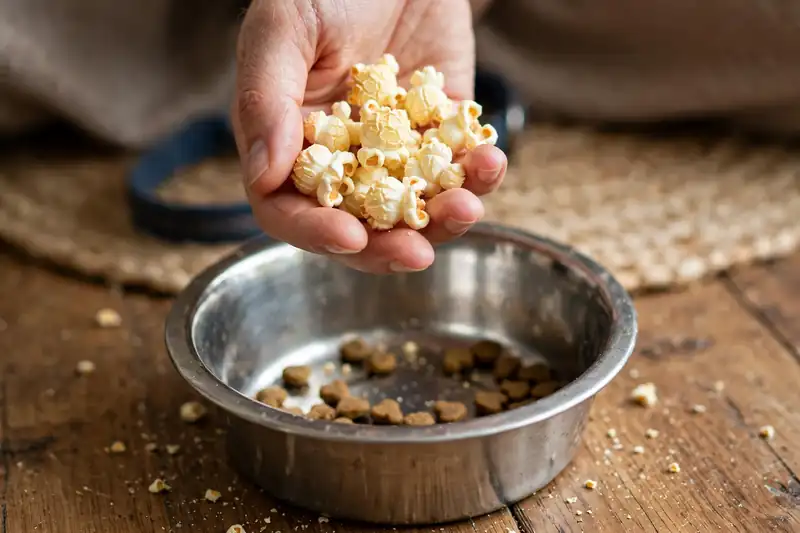
Plain Popcorn as a Training Treat
Popcorn’s best role in a dog’s life may not be movie night at all, it is training. Here is why trainers like it:
Low calorie per piece. At roughly 30 calories per cup, individual popped pieces cost almost nothing calorically. For a training session that needs dozens of repetitions, that matters, you can reward generously without blowing the daily calorie budget the way cheese or hot dog pieces would.
High visibility and tossability. Popped pieces are light, visible, and easy to toss, useful for distance rewards and for scatter feeding in grass, which turns a training session into a sniffing game that tires the dog out mentally.
The rules still apply. Training popcorn must be plain, air-popped, and kernel-free, just like movie-night popcorn. Pre-portion it before the session so you are not estimating mid-training, and count it in the day’s 10% treat allowance alongside everything else.
Know your dog. Food-driven dogs will work happily for popcorn; less food-motivated dogs may find it boring compared to meat rewards. There is no shame in that, the best training treat is the one your individual dog values most, and popcorn is an option, not an obligation.
The Crunch Factor: Why Dogs Love Popcorn
Part of popcorn’s appeal is textural. Dogs experience food through crunch, and the light, shattering crunch of popped corn is novel compared to the dense crunch of kibble or biscuits. That novelty is enriching, new textures keep a dog’s brain engaged, which is why snuffle mats and puzzle feeders work so well.
You can lean into this with simple enrichment: scatter a small handful of plain popped pieces across the lawn or a snuffle mat and let your dog hunt them. Ten pieces become ten minutes of sniffing, seeking, and crunching, far more enrichment value than the same pieces eaten from a bowl in ten seconds. For a food that costs pennies and carries minimal calories, that is an excellent enrichment return on investment.
Just remember the kernel rule applies double here: scatter feeding means the dog eats fast and unselectively, so pick through the batch carefully before it hits the grass.
How Popcorn Compares to Other Grains Dogs Eat
Popcorn is not the only grain in a dog’s world, it helps to see where it fits:
White rice is the vet’s go-to bland grain for upset stomachs: nearly pure starch, very low fiber, maximally gentle. Popcorn has more fiber and is less digestible, which is why rice, not popcorn, is the recovery food.
Oats (plain, cooked) are the fiber champion among common grains, with soluble fiber that actively supports digestion. A spoonful of cooked oatmeal is nutritionally more useful than a handful of popcorn.
Popcorn’s niche is different: it is not the most nutritious grain or the gentlest, it is the most fun. Its value is as a light, crunchy, low-calorie vehicle for enrichment and training, not as a dietary component. Think of it the way you think of a squeaky toy: the point is engagement, not nutrition.
None of these grains should displace complete dog food, and all follow the same preparation rule, plain, no additives. But knowing each grain’s role keeps expectations honest: rice heals, oats nourish, popcorn entertains.
What If Your Dog Ate Buttered or Flavored Popcorn?
Do not panic, assess:
- A few pieces of lightly buttered popcorn: monitor. Possible mild stomach upset or soft stool. Withhold further treats and feed normally at the next meal.
- A large amount of buttered/oily popcorn: the pancreatitis risk is real with fatty volume. Watch for repeated vomiting, abdominal pain (hunching, reluctance to move, “prayer position”), and lethargy over 24-48 hours. Call your vet if these appear.
- Popcorn with xylitol (sugar-free): emergency, call your vet or the Pet Poison Helpline (855-764-7661) immediately.
- Chocolate-coated popcorn: chocolate toxicity risk, call your vet with the product and amount.
- A swallowed unpopped kernel causing gagging or distress: if the dog is choking (pawing at mouth, distressed, cannot breathe), perform the canine Heimlich and get to a vet. If a kernel was swallowed without incident, monitor, most pass, but watch for persistent gagging or appetite loss.
Healthier Movie-Night Alternatives
If you would rather not manage the kernel-picking and topping-policing, these are simpler shares:
- Blueberries, bite-size, no prep, antioxidant-rich. Our article on whether dogs can eat blueberries covers portions.
- Baby carrots, crunchy, satisfying, very low calorie.
- Apple slices (no seeds), sweet and crunchy.
- A frozen Kong, stuff with plain pumpkin or peanut butter (xylitol-free) and freeze; it outlasts the whole movie.
The Honest Bottom Line
Popcorn is one of the more shareable human snacks, but only in the form almost nobody eats it: plain, air-popped, fully popped, kernel-free, and in small amounts. The moment butter, salt, caramel, cheese, or a microwave bag enters the picture, it stops being the dog’s snack. Pop a tiny separate plain batch for movie night, pick out the old maids, keep the handful small, and it is a perfectly fine occasional treat. Your dog gets to participate in movie night, and you get to keep the vet’s number in your phone rather than on speed dial.
For the complete framework on evaluating snacks and extras, see our guide to what human food dogs can eat. And for a movie-night treat that needs no preparation at all, read our article on whether dogs can eat blueberries.
Frequently Asked Questions
Can dogs eat popcorn safely?
Yes, plain, air-popped popcorn in small amounts is generally safe, per the AKC. It must have no butter, oil, salt, sugar, or flavorings, and all unpopped kernels must be removed first.
Can dogs eat buttered popcorn?
Not as a habit, and not in quantity. A few stolen pieces are unlikely to cause harm, but the fat load contributes to obesity and can trigger pancreatitis, and the salt is excessive for dogs. Keep buttered popcorn away from the dog.
Can dogs eat microwave popcorn?
No, do not share microwave popcorn. It is pre-loaded with oils, salt, and artificial flavorings, and the bag linings raise additional concerns. Pop a separate plain batch instead.
Are popcorn kernels bad for dogs?
Unpopped kernels are a choking hazard and can fracture teeth; sharp hulls can lodge in gums. Always remove every unpopped kernel before sharing popcorn, and break pieces smaller for small dogs.
Can dogs eat caramel popcorn?
No. Caramel popcorn is coated in sugar, empty calories, dental damage, and blood sugar spikes. Keep it away from dogs entirely.
How much popcorn can I give my dog?
A small handful for medium/large dogs, a few pieces for small dogs, occasionally, and only plain, air-popped, kernel-free popcorn. All treats combined should stay under 10% of daily calories.
Can puppies eat popcorn?
In tiny amounts, plain air-popped popcorn is generally safe for puppies, but puppies are enthusiastic, uncareful eaters, the choking hazard from kernels is higher. Remove every unpopped kernel, keep pieces small, and supervise.
What should I do if my dog ate a lot of buttered popcorn?
Monitor for 24-48 hours for repeated vomiting, abdominal pain, or lethargy, possible pancreatitis signs, and call your vet if they appear. If the popcorn was sugar-free (possible xylitol) or chocolate-coated, call your vet or the Pet Poison Helpline (855-764-7661) immediately.
This article is for informational purposes only and is not a substitute for professional veterinary advice. If your dog shows signs of illness after eating popcorn, repeated vomiting, abdominal pain, or lethargy, contact your veterinarian promptly.


2 thoughts on “Can Dogs Eat Popcorn? Only Plain, Air-Popped, and Kernel-Free”