Pretzels have a way of summoning every dog in the house. The bag crinkles, and there is a nose at your knee before the twist reaches your mouth. They look harmless enough. Baked, plain, not chocolate, not grapes. The good news is that a plain pretzel will not poison your dog the way truly toxic foods can. The rest of the story is less cheerful: salted pretzels carry enough sodium to make a dog sick, and flavored or coated ones can carry ingredients that are genuinely dangerous. This guide walks through where the line sits, how much salt is too much, which pretzel types to keep away from your dog, and when a stolen pretzel means a call to the vet.

Can dogs eat pretzels? The short answer
Dogs can technically eat pretzels, but they should not. Plain pretzels are not toxic, yet they are heavily salted and offer nothing a dog needs. A tiny piece of plain unsalted pretzel is unlikely to cause harm, but pretzels should never become a regular treat. Salty or flavored pretzels raise the risk a lot.
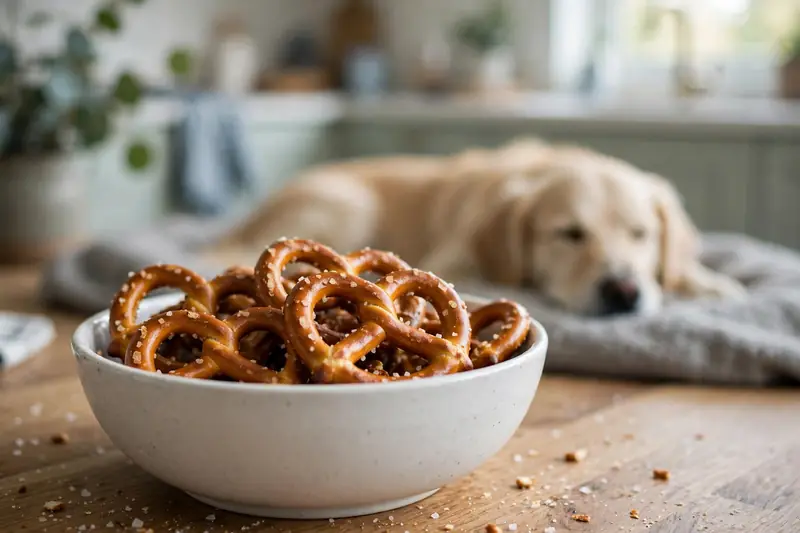
Pretzels are baked wheat flour with a heavy coating of salt, and that recipe tells you most of the story. Nothing in a plain pretzel is poisonous to dogs. The AKC guide to human foods dogs can and cannot eat treats baked goods like this as a judgment call rather than a hard ban. The problem is the sodium load and the empty calories, not toxicity.
Think of pretzels as sitting between two familiar snacks. Plain baked snacks like bread are usually forgiven in small amounts, while salty snacks ask for more caution. When your dog begs during movie night, plain air-popped popcorn is the safer crunchy snack to share.
Why salt is the real problem with pretzels
Salted pretzels carry far more sodium than a dog needs. A one-ounce serving holds roughly 300 to 400 milligrams of sodium, while a dog’s whole daily requirement sits far lower. Too much salt pulls water out of cells and can lead to sodium ion poisoning, a condition that can turn into a veterinary emergency.
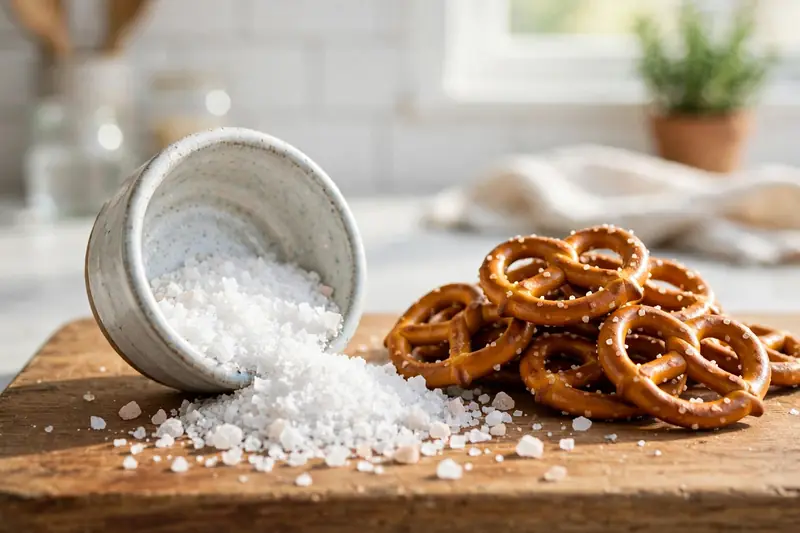
Dogs do need some sodium. It shows up in every balanced dog food at low levels, and healthy kidneys handle normal amounts easily. A one-ounce serving of salted pretzels holds roughly 300 to 400 milligrams of sodium, which is a big share of a small dog’s whole day. Repeat snacks add up fast, and dogs with heart or kidney disease feel the extra salt sooner.
Too much salt at once pulls water from cells and raises blood sodium, which is what veterinarians call sodium ion poisoning. Veterinary references put the dangerous dose around 4 grams of salt per kilogram of body weight, but smaller amounts still cause vomiting and heavy thirst. Keep fresh water available whenever salty snacks are around, because water helps the body rebalance.
Signs of salt poisoning in dogs
Salt poisoning in dogs shows up as extreme thirst, vomiting, diarrhea, restlessness, and loss of appetite first. As it worsens, a dog may develop tremors, wobbly walking, seizures, or collapse. These signs usually appear within a few hours of eating too much salt and need a vet right away.
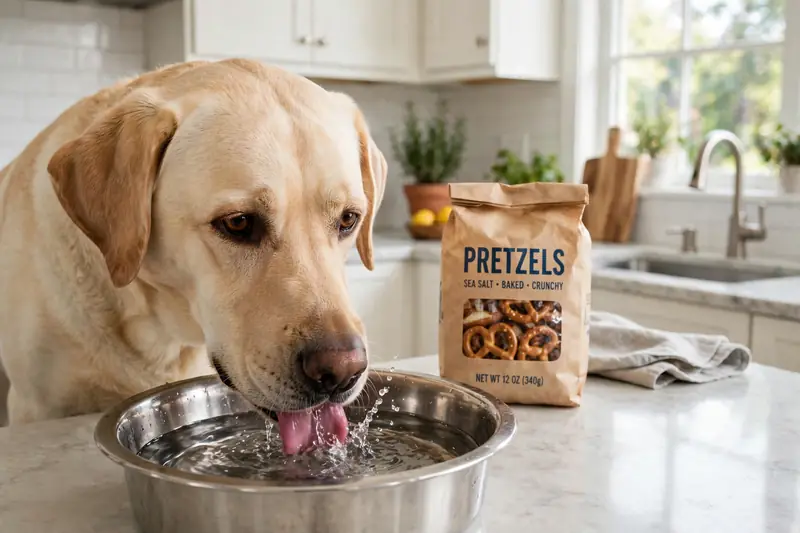
The early signs look like an ordinary upset stomach, which is why salt poisoning gets missed. A dog that ate too many pretzels may drink bowl after bowl of water, vomit, pass loose stool, and seem restless or off its food. These usually show up within a few hours of the snack.
The later signs are harder to mistake. Muscle tremors, a wobbly walk, confusion, seizures, or collapse point to sodium levels that are dangerously high. This is a veterinary emergency. The Merck Veterinary Manual page on food hazards covers salt alongside other food dangers, and it is worth a read before you ever need it.
Do not try to fix it at home. Do not induce vomiting unless your vet tells you to, and do not force your dog to gulp large amounts of water, which can make the imbalance worse. Call your vet, describe what your dog ate and when, and follow their instructions.
Which types of pretzels are worst for dogs
Not all pretzels carry the same risk. Hard salted pretzels pack the most sodium per bite, soft pretzels add dense dough that sits heavy in the stomach, and pretzel sticks are easier to swallow whole. Unsalted pretzels are the least risky type, but none of them are good for dogs.

| Type | Salt level | Main extra risk | Verdict |
|---|---|---|---|
| Hard salted twists | High | Sharp broken pieces | Avoid sharing |
| Soft pretzels | High | Dense dough that sits heavy | Avoid sharing |
| Pretzel sticks | High | Easy to swallow whole | Avoid sharing |
| Unsalted plain | Low | Choking risk remains | Only type worth a crumb |
Soft pretzels deserve a special note. They are baked, so there is no live yeast rising in your dog’s stomach the way raw bread dough can. But they are dense and salty, and a whole soft pretzel is a lot of sodium and dough for any dog under 40 pounds.
Pretzel nuggets and bites look small enough to be safe, but the salt concentrates in every piece and small dogs can still choke on them. Size is not the safety factor here. The coating and the amount are what matter.
Hard pretzels are a choking and stomach hazard
Hard pretzels are dry, dense, and break into sharp pieces, which makes them a choking risk for small dogs and fast eaters. Large chunks can also irritate the stomach lining or get stuck in the throat. Breaking a pretzel into crumbs does not make it safe, since the salt problem stays the same.

Watch how a hard pretzel breaks. It snaps into hard shards with sharp edges, not soft crumbs. A small dog that gulps a piece can get it wedged in the throat, and even swallowed pieces can scratch on the way down. Fast eaters are the worst candidates for crunchy snacks, because they skip the chewing step entirely.
Once in the stomach, large dry pieces swell as they absorb fluid. That usually passes, but in a small dog it can cause pain, gagging, or repeated vomiting. If your dog swallows a big piece and then coughs, paws at its mouth, or drools heavily, check the throat gently and call your vet if the distress continues.
Flavored and coated pretzels are far worse
Mustard, garlic, onion powder, chocolate coatings, and yogurt coatings all push pretzels into clearly unsafe territory. Chocolate contains theobromine, which is toxic to dogs, and many yogurt or sugar-free coatings contain xylitol, which can be fatal. The ASPCA lists these coatings among the people foods dogs should never eat.

This is where pretzels cross from unwise to genuinely dangerous. Chocolate-covered pretzels carry theobromine, the same compound that makes chocolate toxic to dogs, and the darker the chocolate the worse it gets. Yogurt and sugar-free coatings are the sneaky ones: many contain xylitol, a sweetener that can send a dog’s blood sugar crashing and damage the liver. Read the full breakdown of xylitol poisoning signs so you know what to watch for.
Mustard and honey-mustard dips irritate a dog’s stomach and can cause vomiting, while garlic or onion seasoning damages red blood cells even in small amounts. Cheese-flavored pretzels mostly add salt and artificial flavor, so if your dog wants that taste, plain cheese in a tiny amount is the safer route. The ASPCA list of people foods to avoid feeding your pets covers these coatings and seasonings.
Safe portion guidance for pretzels
There is no safe daily serving of pretzels for dogs, because they add nothing to a dog’s diet. If you share a crumb of plain unsalted pretzel once in a while, keep it smaller than a pea for small dogs and smaller than a thumbnail for big dogs. Treats of any kind should stay under 10 percent of daily calories.

Here is the honest version: the safest amount of pretzel for a dog is zero. If you still want to share the tiniest crumb of plain unsalted pretzel on a rare occasion, match the crumb to the dog. Think pea-sized for dogs under 20 pounds and thumbnail-sized for large dogs, and only once in a while. All treats combined should stay under 10 percent of daily calories.
Dogs with wheat sensitivity are a separate case. Pretzels are wheat, and dogs with a true wheat allergy can react with itchy skin, ear trouble, or digestive upset. If your dog has shown those signs with wheat foods before, skip pretzels entirely. The VCA guide to food allergies in dogs explains how vets test for these reactions.
Puppies and small dogs face higher risk
Small dogs and puppies reach dangerous salt levels with much less food because the dose depends on body weight. A few salted pretzels can upset a puppy’s stomach or push sodium too high, and their narrower throats raise the choking risk. Puppies under six months should not get pretzels at all.

Salt danger scales with body weight, which is why a snack that barely registers for a Labrador can be a real problem for a Chihuahua. A puppy’s kidneys are still maturing, and puppies dehydrate faster than adult dogs. The same handful of salted pretzels hits a ten-pound dog roughly five times harder than a fifty-pound dog.
Puppies also explore with their mouths, so they are the ones most likely to grab a dropped pretzel off the floor. Keep snack bowls above puppy height and sweep up crumbs. Puppies under six months should get no pretzels at all, and it helps to know the wider list of foods toxic to dogs since puppies will test everything.
When to call the vet
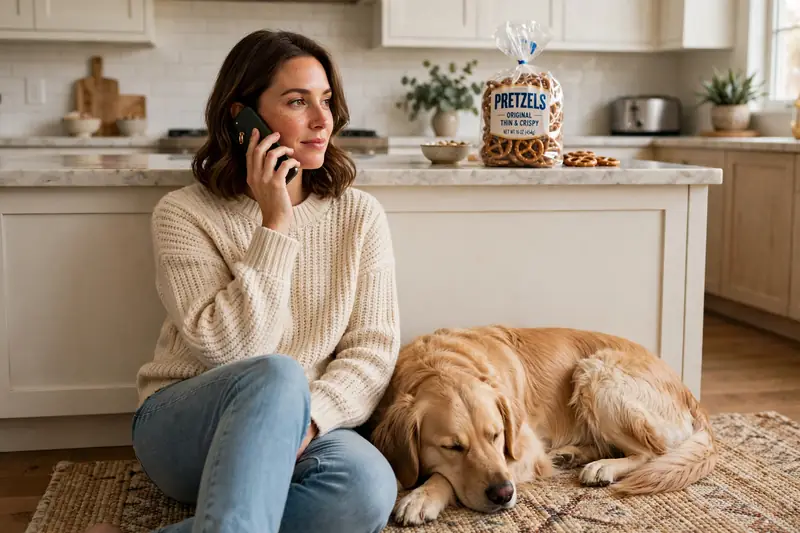
Call your vet if your dog ate a large number of salted pretzels, any chocolate-covered or yogurt-covered ones, or pretzels with garlic or onion seasoning. Also call if you see vomiting, diarrhea, extreme thirst, tremors, or wobbling within a few hours. Quick calls cost nothing and catch salt poisoning early.
| Situation | What to do |
|---|---|
| Ate one small plain pretzel | Watch for thirst and mild stomach upset for 24 hours |
| Ate several salted pretzels | Call your vet for advice based on your dog’s size |
| Ate chocolate, yogurt, or xylitol-coated pretzels | Call your vet or poison control right away |
| Vomiting, tremors, wobbling, or collapse | Emergency vet visit immediately |
Before you call, gather three facts: what kind of pretzels your dog ate, roughly how many, and your dog’s weight. Save the wrapper or take a photo of the ingredient list, because your vet will want to know about xylitol, chocolate, garlic, or onion in the seasoning.
Time matters with salt poisoning. Signs can start within a few hours, and vets treat serious cases with careful IV fluids to bring sodium down gradually. A quick phone call costs nothing and often saves a worried night of watching and waiting.
Better crunchy snacks for dogs
Dogs that love the crunch of pretzels usually enjoy safer alternatives just as much. Plain air-popped popcorn, raw carrot sticks, apple slices without seeds, and small pieces of plain bread all satisfy the craving without the salt load. These options fit easily into the daily treat allowance.
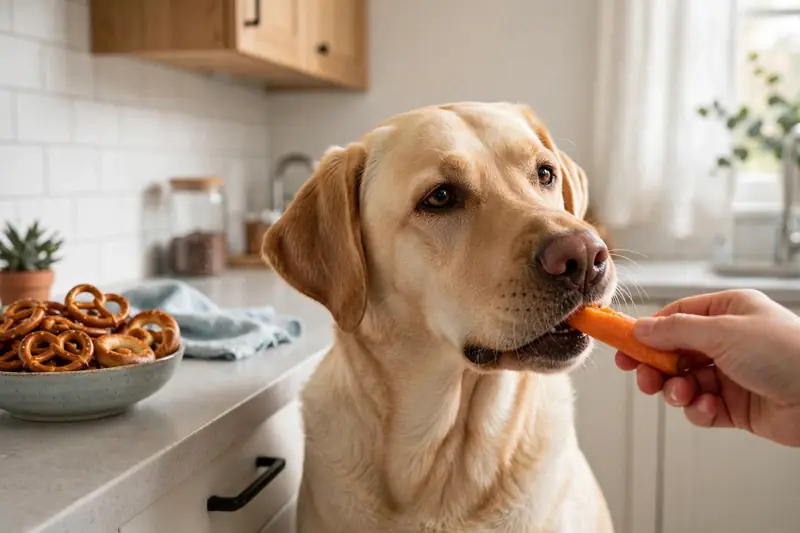
Dogs rarely love pretzels for the flavor. They love the crunch and the fact that you are eating it. Plain air-popped popcorn gives the same satisfying crunch with far less salt, as long as it has no butter or seasoning. Raw carrot sticks and apple slices without seeds are the classic crunchy swaps, and both bring fiber and water instead of sodium.
Small pieces of plain bread work for dogs that want something bready, and most dogs accept them happily. If you want a fuller menu of safe options, see our full list of human foods dogs can eat. The goal is simple: keep the crunch, lose the salt.
My dog ate one pretzel. Will he be okay?
In most cases, yes. One small plain pretzel in a medium or large dog usually causes nothing worse than extra thirst. Offer fresh water and watch your dog for a day. The answer changes if the pretzel was chocolate-covered, yogurt-covered, or heavily seasoned, or if your dog is very small. When any of those apply, call your vet.
Are pretzel sticks safer than twisted pretzels?
No, and they can be worse. Pretzel sticks carry the same salt load as twisted pretzels, and their straight shape makes them easier for a dog to swallow whole. A whole pretzel stick is a bigger choking risk for a small dog than a broken piece of a twist. The shape does not change the verdict.
Can dogs eat soft pretzels?
Soft pretzels are baked, so there is no yeast danger, but they are no safer than hard ones. They pack just as much salt in a denser package, and a whole soft pretzel is a large salty meal for a small dog. The coarse salt on top adds even more sodium. Keep soft pretzels away from your dog too.
Can dogs eat pretzels dipped in cheese or mustard?
Mustard irritates a dog’s stomach and often causes vomiting, so mustard-dipped pretzels are a bad idea. Cheese dip adds salt and fat without much benefit. If your dog loves the cheesy taste, a tiny piece of plain cheese is the safer choice.
Can dogs eat chocolate-covered pretzels?
No. Chocolate contains theobromine, which dogs cannot process well, and the coating turns an unwise snack into a toxic one. Dark chocolate coatings are the most dangerous. If your dog eats chocolate-covered pretzels, call your vet right away with the wrapper in hand.
Are unsalted pretzels safe for dogs?
Unsalted pretzels are the least risky type, but they are still not a good treat. They are baked wheat with little nutrition, and the hard pieces still pose a choking risk. An occasional tiny crumb is unlikely to cause harm, but there are far better snacks to reach for.
Pretzels sit in that gray zone of dog snacks: not poisonous, but not worth it. The salt is the main reason to skip them. Hard pieces add a choking risk, and the flavored coatings are the reason to keep the bag out of reach entirely. Your dog will not miss pretzels if you swap in something crunchy and safe, and you will never have to wonder whether that stolen twist was too many. A dog that begs deserves a yes sometimes, so make it a yes to carrots or plain popcorn, and keep the pretzels for yourself.
This article is for general information only and is not a substitute for professional veterinary advice. Dogs react differently based on size, age, and health, and salt affects some dogs more than others. If your dog ate a large amount of pretzels, ate coated or seasoned ones, or shows vomiting, diarrhea, tremors, extreme thirst, or unusual behavior, contact your veterinarian or an animal poison control line right away. When in doubt, make the call.