

Can dogs eat bread? Yes, plain, fully baked bread in small amounts is safe for most dogs. But this is a two-part answer, and the second part is urgent: raw bread dough is a veterinary emergency that can kill. The yeast keeps rising in the warm stomach, and fermentation produces alcohol, a combination of bloat and alcohol poisoning. If your dog just ate raw dough, skip to “Raw dough: the emergency” and call your veterinarian immediately.
For everyone else, here is the plain truth: bread is safe but pointless as dog food. The American Kennel Club and Purina both confirm plain white or whole wheat bread is non-toxic, and both add the same caveat. It is essentially filler, with negligible nutrition and a real calorie cost.
The short answer: safe but pointless
Plain, fully baked bread in small amounts is safe for most dogs, but it gives them almost nothing worth having. Bread is mostly refined carbohydrate with a little protein and some B vitamins, which a complete dog food already delivers in better proportions. It will not harm your dog in small amounts, but it will not help either.

That honest accounting shapes every rule that follows. Bread should never be a meal component, a training staple, or a remedy for an upset stomach. A small piece of your sandwich bread, before the fillings go on, is the classic safe scenario: harmless, and nutritionally unremarkable. Keep expectations exactly there and the rest of this guide is easy.
Raw dough: the emergency
The Merck Veterinary Manual lists bread dough as a food hazard for dogs, and the mechanism is simple. The dough keeps rising in the warm, moist stomach: yeast produces carbon dioxide, the mass expands, and the pressure can trigger bloat. Fermentation also produces ethanol, so alcohol absorbs into the bloodstream, bringing drunkenness, tremors, dangerously low body temperature, and fatal poisoning.
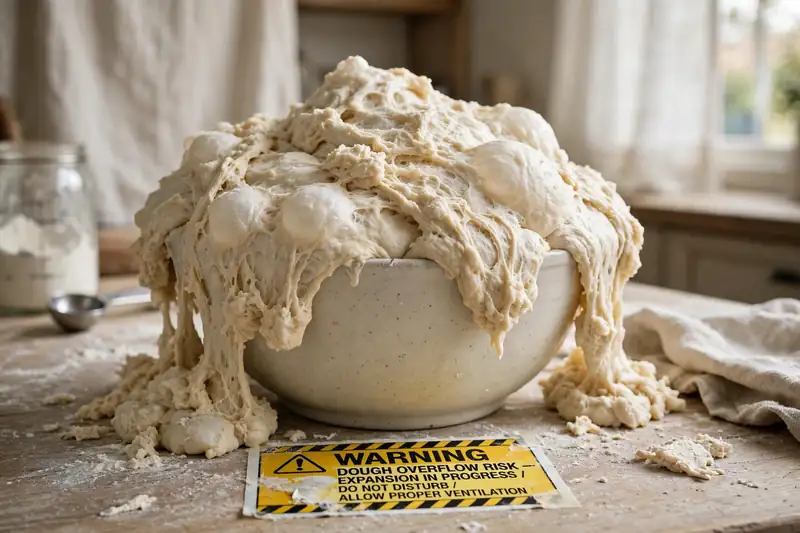
Signs after dough ingestion include a swollen, painful belly, retching or unproductive vomiting, drooling, wobbliness and disorientation, weakness, depression, hypothermia, and in severe cases seizures or coma. Dogs often eat astonishing quantities, whole loaves, pans of rolls, pizza dough, in moments. If your dog eats raw dough, call your veterinarian immediately, because every minute counts. Do not induce vomiting unless your vet specifically instructs it, since the aspiration risk is high with dough. Treatment in the clinic may include induced vomiting under supervision, stomach pumping, IV fluids, and supportive care. Most patients recover within 12 to 24 hours with prompt treatment. Note that activated charcoal is not used here: it does not bind ethanol and it raises aspiration risk. Prevention is simple. Keep rising dough far from dogs, behind closed doors, and wipe flour-dusted counters before the dog investigates.
Breads your dog must never eat
Beyond raw dough, several bread types are dangerous because of their ingredients. Raisin bread can cause sudden kidney failure, even in small amounts. Chocolate chip bread brings theobromine toxicity, macadamia nut bread is dangerous because macadamias are clinically toxic, xylitol-sweetened bread can cause blood sugar crash and liver failure, and moldy bread may carry tremor-causing mycotoxins.
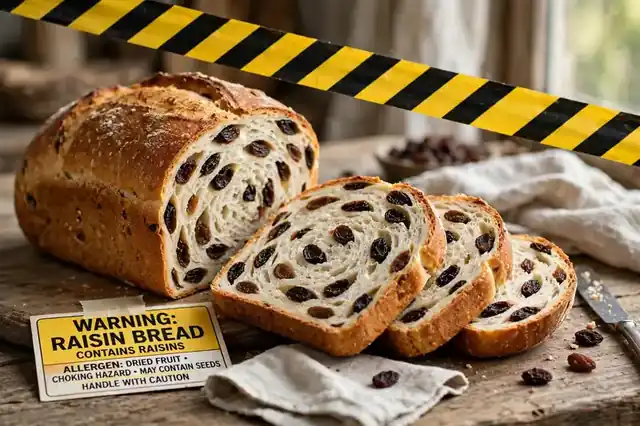
Read the ingredient label on any commercial bread before sharing a piece. “Bread” on the package does not mean “plain bread” inside, and the dangerous varieties above look innocent on the shelf. When a loaf contains anything beyond flour, water, yeast, and salt, check every addition before it goes anywhere near your dog.
Garlic bread and seasoned loaves
Garlic bread and onion bread deserve their own warning: alliums damage dogs’ red blood cells, and the concentrated amounts in garlic bread are a real threat. The damage can be delayed and cumulative, which makes it easy to underestimate. A dog that steals garlic bread on Friday can show the effects days later.

The same caution covers herb breads, cheese-topped loaves, and anything brushed with seasoned butter. If the bread has a topping, a swirl, or a filling, assume it is off the menu until you have verified every ingredient. Plain bread beside garlic bread on the counter is a common kitchen scene; only one of them is ever dog-safe, and dogs cannot tell the difference, so the safe one needs to be the only one within reach.
Sourdough and starters: the double danger
Sourdough deserves a special warning because it combines both bread hazards in one jar. A sourdough starter sitting on the counter is raw, actively fermenting dough: the same stomach-expansion and alcohol-production emergency as any raw dough, potentially worse because fermentation is already underway before the dog even eats it. Discard from feedings is equally raw and equally dangerous.
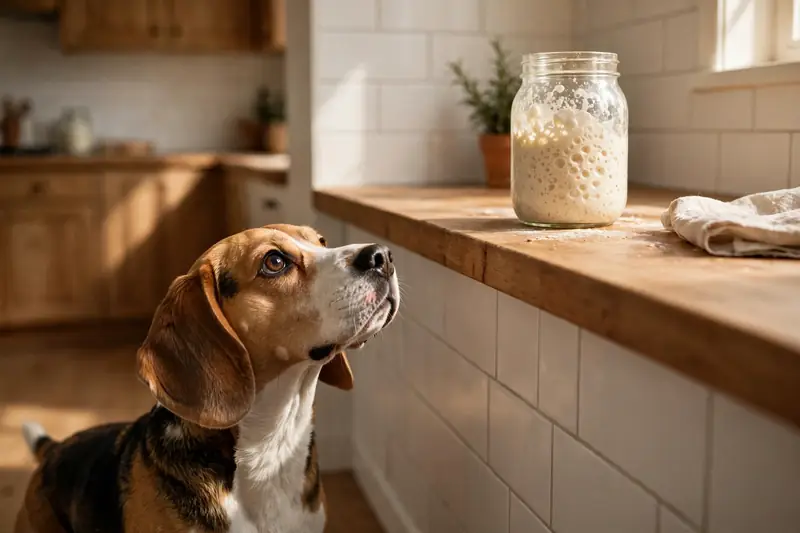
Keep starters in sealed containers, ideally refrigerated, and never where a counter-surfing dog can reach. If your dog eats starter, treat it exactly like raw dough ingestion: call your veterinarian immediately, do not induce vomiting unless instructed, and watch for the same signs of bloat and alcohol poisoning. The artisan baking trend stops at the dog’s stomach.
Portions: small by design
Bread’s calorie density is the quiet problem owners overlook. A single slice of white bread carries 70 to 80 calories, a quarter of a small dog’s entire daily treat allowance. Sensible portions stay small: a bite-sized piece for small dogs, half a slice for medium dogs, one small slice for large dogs.
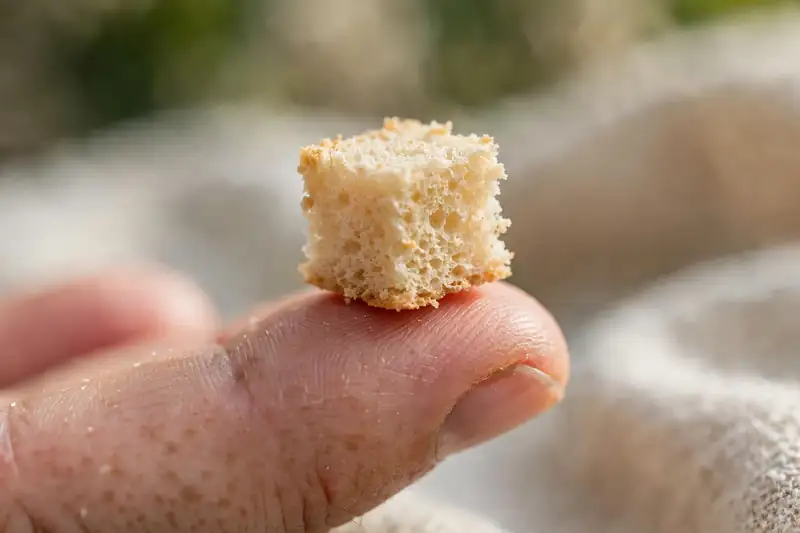
Keep all bread within the 10 percent treat allowance, and never let it displace real food. Overweight or diabetic dogs should get less or none, because the carbohydrates add up fast and there is no nutritional payoff to justify them. Bread cubes also make mediocre training treats: a single slice torn into twenty tiny cubes is still 70 to 80 calories of pure carbohydrate with almost no protein, and most dogs do not find bread exciting enough to justify the cost. A baby carrot or a blueberry delivers more motivation for a fraction of the calories. If you must use bread in training, keep the cubes truly tiny and count them against the day’s allowance honestly.
What to do if your dog eats the wrong bread
Match your response to what was eaten. Raw dough in any amount is an emergency: vet immediately. Raisin bread is an emergency too: call your vet and do not wait for symptoms. Garlic or onion bread means calling your vet, since damage can be delayed. Xylitol bread is an emergency: vet or the Pet Poison Helpline at 855-764-7661 immediately.

A large amount of plain bread is the mildest case on this list: monitor for bloating or digestive upset, and call your vet if the belly distends or the dog seems uncomfortable. In every scenario, keep the packaging or note exactly what was eaten, because the ingredient list and the amount are the two facts your vet needs first.
Bread for an upset stomach? The persistent myth
Some owners offer bread for diarrhea or vomiting, reasoning that it “soaks things up.” Veterinarians do not recommend it. Plain boiled chicken and white rice is the standard bland diet: easily digestible, low-fat, and genuinely soothing. Bread adds little, and its gluten and yeast can irritate a sensitive gut further.

When the stomach is upset, boring and proven beats folk wisdom. If diarrhea lasts more than a day, or comes with vomiting, lethargy, or blood, see your vet rather than experimenting with home remedies. Bread has a role in the treat jar, not the medicine cabinet.
Gluten and dogs: the real story
Wheat gets blamed for a lot in dog nutrition, mostly unfairly. True gluten sensitivity is rare, documented in Irish Setters as an inherited condition, but the vast majority of breeds digest wheat without issue. Chronic diarrhea, itchy skin, or ear inflammation linked to wheat deserves a vet’s investigation and a proper food trial.
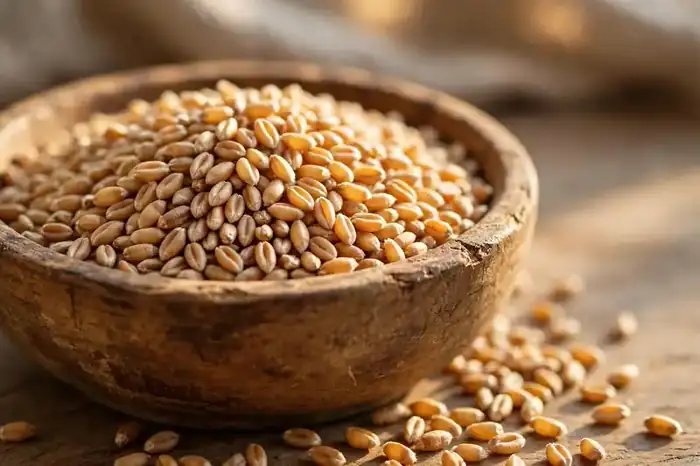
Do not put a healthy dog on a grain-free diet because of a rumor. Grain-free diets carry their own documented concerns, and the trade is rarely worth it. Bread’s problem was never really the gluten. It is the empty calories, and no amount of grain-free marketing changes that math.
Toast, bagels, and bakery leftovers
Plain toast is just bread with crunch, and the same rules apply: small amounts, no butter, no spreads, no toppings. The crunch changes nothing about safety. Bagels are denser, which means more calories per piece, so halve the portion you would give as bread, and avoid everything bagels with their onion, garlic, and seeds, plus any variety with xylitol.

Bakery leftovers are fine only if you can verify they are plain. Croissants bring butter, muffins bring sugar, and anything glazed or filled is out. Plain pita follows the same rules as plain bread, though pita pockets are deceptively calorie-dense, so keep the piece tiny. Plain naan is fine in a tiny piece too, but skip garlic naan entirely and remember that restaurant naan is often brushed with butter or ghee. When in doubt about a bakery item’s ingredients, the answer is no.
Frequently Asked Questions
Can puppies eat bread?
A tiny piece of plain bread is unlikely to harm a puppy, but puppies need nutrient-dense puppy food, and bread displaces nutrition they need. Keep it to a rare, tiny taste, and never raw dough.
Is whole wheat bread better than white bread for dogs?
Marginally: a little more fiber and slightly more nutrients. But the difference is small, and the same rules apply, plain, baked, small amounts. Neither is health food for dogs.
My dog ate raw bread dough. What do I do?
Call your veterinarian immediately; this is an emergency. Do not induce vomiting unless instructed. Watch for a swollen belly, retching, drooling, wobbliness, and weakness while you get help.
Can dogs eat toast?
Yes. Plain toast follows the same rules as plain bread: small amounts, no butter, no spreads, no toppings. The crunch changes nothing about safety.
Can dogs eat bagels?
Plain bagels in tiny amounts are not toxic, but they are calorie-dense, so halve what you would give as bread. Avoid everything bagels with onion, garlic, and seeds, and any with xylitol.
Is moldy bread dangerous for dogs?
Yes. Some bread molds produce tremorgenic mycotoxins that cause tremors, seizures, and worse. Never feed moldy bread; call your vet if your dog eats some, especially if tremors appear.
How much bread can a dog eat?
Very little: a bite for a small dog, half a slice for a medium dog, a small slice for a large dog, a couple of times a week at most, inside the 10 percent treat allowance.
Why is raw dough so dangerous?
Two reasons: the yeast keeps rising in the warm stomach, creating bloat risk, and fermentation produces ethanol, which means alcohol poisoning. The Merck Veterinary Manual lists it as a food hazard. It is one of the true emergencies in the “can dogs eat” world.
For the same plain-only, small-portion thinking across the foods dogs meet most often, see our wider guide to what human food dogs can eat. For another starchy treat with strict preparation rules, our potato guide covers the cooked-only line, and for a treat with genuine nutritional value, our carrot guide is the better crunchy option.
Sources: American Kennel Club, “Can Dogs Eat Bread?” (plain white/wheat bread safe in small amounts; raw dough emergency, yeast rises and ethanol/alcohol toxicosis per Merck Veterinary Manual; call vet immediately): https://www.akc.org/expert-advice/nutrition/can-dogs-eat-bread/
This article is general information only and is not a substitute for veterinary advice. If your dog has a health condition, is on a prescription diet, or you are unsure about any food, check with your veterinarian first. In any suspected poisoning, contact your veterinarian or an animal poison helpline immediately.


3 thoughts on “Can Dogs Eat Bread? Safe Types & the Dough Emergency”