Your dog just hoovered the sesame seeds off a fallen bagel. Good news first: sesame seeds are not toxic to dogs. No cyanide, no xylitol, no allium compounds. The entire risk sits in the fat and calories packed into those tiny seeds, plus whatever seasoning rode along on the bagel. A scattered spoonful is a non-event for a healthy dog. A steady habit is where the trouble starts.

Can dogs eat sesame seeds?
Yes, dogs can eat sesame seeds in small amounts. Plain, unsalted sesame seeds are not toxic and will not harm a healthy dog as an occasional sprinkle. The catch is density: a tablespoon carries over 50 calories and significant fat, so portions must stay tiny. Sesame oil and tahini are far richer and deserve much stricter limits.
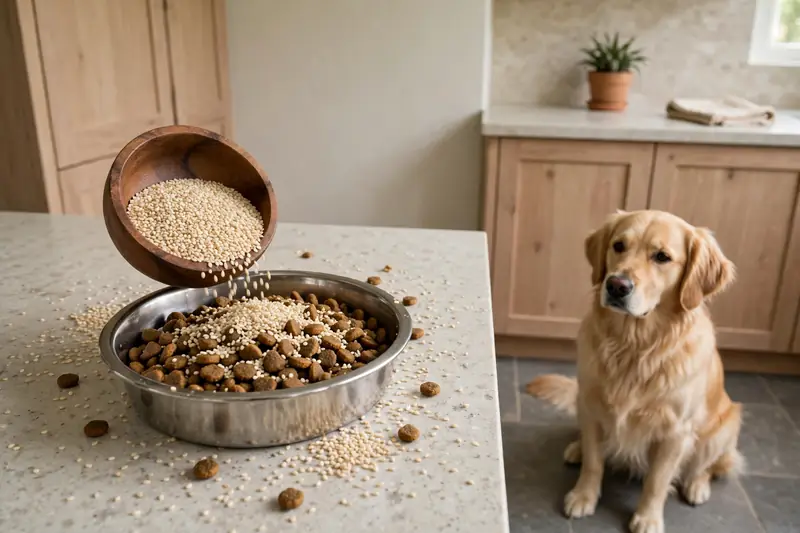
This is the rare article on this site where the headline ingredient is innocent, since most foods covered here hide a toxin, from xylitol to amygdalin to allium compounds. Sesame seeds hide nothing: they are simply a fatty seed, and fat is a dose problem rather than a poison problem. That distinction changes the whole tone of the advice: no emergency numbers, just portion discipline.
The bagel scenario from the opening deserves its own note, because the seeds are the safe part while everything-bagel seasoning often hides garlic and onion flakes, which damage canine red blood cells. A plain sesame bagel dropped on the floor is a free treat. An everything bagel is a vet-call question. A plain sesame bagel dropped on the floor is a free treat. An everything bagel is a vet-call question. When in doubt, check what else was on the bread.
What sesame seeds offer nutritionally
Sesame seeds pack protein and fiber, plus minerals, into a tiny package. A tablespoon delivers roughly 3 grams of protein, plus meaningful calcium, iron and magnesium, and B vitamins. The fats are mostly unsaturated, the kind nutritionists prefer for people. On paper, it reads like a respectable supplement.

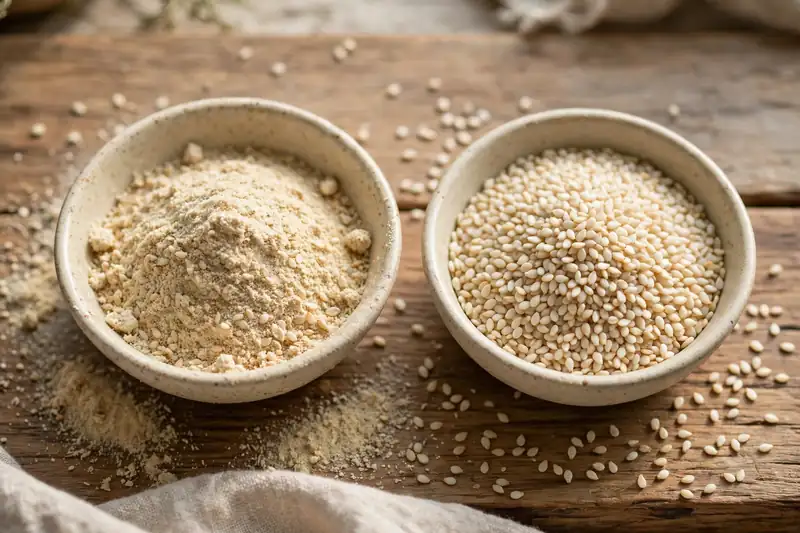
Here is the complicating fact. Dogs are poor at digesting whole small seeds. Much of a sprinkled spoonful passes straight through, hulls intact, which means the dog absorbs only a fraction of those nice minerals. Ground sesame delivers more nutrition, but grinding also releases the oils faster, concentrating the fat hit. Either way, the nutritional upside for dogs is modest: no dog needs sesame seeds to complete a diet already balanced by its complete food.
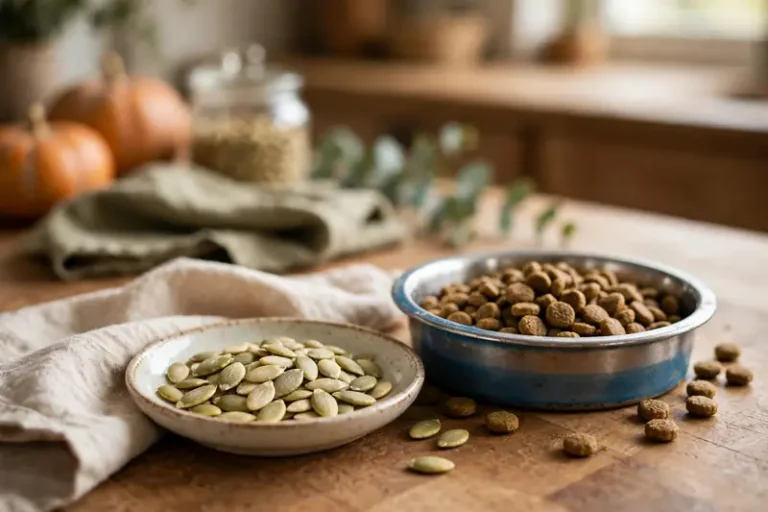
The comparison with other seeds helps. Pumpkin seeds offer a similar mineral profile with a bit more chew, while peanuts bring more protein per bite. None of them are necessary. A complete dog food already covers every nutrient sesame provides, so seeds of any kind are garnish rather than nutrition strategy, a point worth remembering before paying extra for seed-topped boutique kibble. The human foods dogs can eat list treats them accordingly.
The fat problem: why portions stay tiny
Sesame seeds are about 50 percent fat by weight. That single number explains every caution in this article. Fat carries more than twice the calories of protein or carbohydrate per gram, which is why a tablespoon of seeds lands at 50-plus calories.
For a 20-pound dog eating around 400 calories a day, one tablespoon is an eighth of the daily budget in a sprinkle.

The acute risk is digestive upset, since a sudden fatty load can trigger vomiting and diarrhea, plus abdominal discomfort, within hours, especially in dogs unaccustomed to rich food. The serious risk is pancreatitis, an inflammation of the pancreas that high-fat meals can trigger. PetMD’s pancreatitis guide describes the classic signs: repeated vomiting, belly pain, the prayer position with rear raised, and total food refusal. Dogs with any history of pancreatitis should skip sesame products entirely, since a pancreas that has already inflamed once has proven it cannot handle fat loads, and even a modest trigger can restart a painful and expensive episode.
Weight is the slow version of the same problem: a daily sprinkle seems harmless until the ribs disappear under a layer of padding three months later. Every extra pound on a dog strains joints and shortens the healthy years, and calorie-dense garnishes are the usual culprit. The VCA’s general feeding guidelines keep all treats near 10 percent of daily calories, and fatty seeds spend that budget fast.
Sesame oil: a different story
Sesame oil is the seed with the fat concentrated and everything else removed. A tablespoon carries about 120 calories of pure fat, more than double the seeds’ load, with none of the fiber or protein to slow it down. For dogs, that concentration crosses from garnish into hazard. Even small amounts can overwhelm a sensitive stomach.

Pancreatitis is the specific fear with oil, because liquid fat hits the digestive system faster than whole seeds, and a single oily incident can trigger an episode in a prone dog. There is no nutritional argument for giving dogs sesame oil: it adds nothing the seeds lack, while removing the fiber that at least slowed absorption. Keep the oil in the pantry for your stir fry, not the dog’s bowl, because no dog needs 120 calories of pure fat per tablespoon when the seeds already provide every benefit the oil lacks.
If your dog laps up spilled sesame oil, watch rather than panic. A teaspoon in a medium or large dog usually passes with soft stool at worst. Larger amounts, or any amount in a dog with pancreas problems, deserve a vet call. Do not induce vomiting for oil ingestion unless the vet directs it, since aspiration of oily vomit into the lungs is its own hazard.
Tahini: concentrated risk in a jar
Tahini is ground sesame seeds made into a paste, and grinding concentrates everything. A tablespoon carries around 89 calories and 8 grams of fat, most of it unsaturated. Plain, unsalted tahini will not poison a dog, but it ranks among the fattiest “healthy” foods an owner can share.
The portion that looks small to a human is enormous to a dog, which is why tahini needs the strictest limits of any sesame product.

Commercial tahini adds label-reading homework, since many brands include added salt and flavored varieties can contain garlic, onion, or sweeteners. Garlic and onion bring their red-blood-cell toxicity, and any xylitol in a “sugar-free” variety turns the jar into an emergency. The ASPCA’s people-foods list is worth a glance before sharing any processed sesame product.
Portion guidance for plain tahini runs strict: a quarter teaspoon for small dogs, up to a teaspoon for large dogs, and only occasionally. Even that assumes a healthy dog with no weight or pancreas issues. For most owners, the simpler rule is to skip tahini and stick with the seeds. The paste offers no benefit the seeds lack, and every benefit it has arrives wrapped in more fat.
Seasoned blends and hidden dangers
Plain seeds are safe. The blends they travel in often are not. Everything-bagel seasoning typically combines sesame seeds with poppy seeds, garlic flakes, onion flakes, plus salt. The garlic and onion flakes are the problem: both damage canine red blood cells, and the flakes are concentrated.
A dog that hoovers an everything bagel gets a real allium dose along with the harmless sesame.

Furikake, the Japanese rice seasoning, mixes sesame with seaweed and heavy salt, with sugar and sometimes dried fish or wasabi in the blend. The salt load is the main concern, with some blends running very high. Wasabi versions add stomach-burning heat no dog needs. Gomasio, sesame ground with salt, is salted seeds, plain and simple, fine in a tiny sprinkle but pointless as a dog treat when plain seeds exist.
Hummus deserves a mention because tahini hides inside it. Plain hummus is mostly chickpeas, which are safe, but commercial hummus usually contains garlic and lemon, plus significant salt. A lick of plain homemade hummus without garlic is harmless. The store tub is a different product. As with every blend, the sesame is innocent and the company it keeps is guilty.
How much sesame seed is safe
For plain, unsalted seeds, the working rule is about a teaspoon per 20 pounds of body weight, no more than a few times a week. That keeps the fat and calories inside the treat budget for most dogs. A teaspoon of seeds is roughly 17 calories: a rounding error for a medium dog, a noticeable snack for a tiny one.

| Dog size | Safe seed amount | Frequency |
|---|---|---|
| Small (under 20 lbs) | A pinch, under half a teaspoon | A few times a week |
| Medium (20 to 50 lbs) | Half to one teaspoon | A few times a week |
| Large (over 50 lbs) | One teaspoon | A few times a week |
Start with less than the chart suggests. A pinch on the first day, then normal watching. Dogs with sensitive stomachs may show soft stool even at small amounts, which is information, not an emergency. Scale to the individual dog in front of you, not the chart.
Sesame oil and tahini do not get a chart, because neither deserves a regular slot. An occasional quarter teaspoon of plain tahini for a large healthy dog is the outer limit, and sesame oil is best kept at zero. If a recipe needs a fatty topper, a dab of plain peanut butter without xylitol is the more conventional choice, and the almond and cashew guides cover the other nuts dogs meet.
Allergies: rare but real
Sesame allergy exists in dogs, though it is uncommon. In people, sesame ranks among the major food allergens, important enough that labeling laws in several countries now require it. Dogs can develop allergies to any protein, and sesame’s proteins are no exception.
A dog that has never had sesame before deserves the standard new-food protocol: a tiny amount first, then watching.

Allergy signs look like allergy signs. Itchy skin, especially around the face and paws, ear inflammation, hives, or digestive upset within hours of eating point to a reaction. True anaphylaxis, with facial swelling or breathing trouble, is rare but is an emergency wherever it appears. Most suspected “sesame allergies” turn out to be reactions to a seasoning blend’s other ingredients, so check the full picture before blaming the seed.
Dogs with known food allergies should meet sesame under vet guidance, not as a casual experiment. An elimination diet is easily contaminated by a well-meaning sprinkle, and owners running food trials should keep all seeds out until the trial ends. For everyone else, the first-taste protocol covers it.
Puppies, seniors, and at-risk dogs
Puppies should skip sesame seeds until they are older. Young digestive systems handle fat poorly, and puppies have no calorie budget to spare on garnishes. Their complete puppy food covers every nutrient, and new foods should arrive one at a time so any reaction can be traced. Seeds can wait until adulthood.

Senior dogs get a conditional pass. A sprinkle of plain seeds is fine for a healthy older dog, and the soft texture suits worn teeth. The conditions matter more with age: kidney disease, pancreatitis history, obesity, or diabetes all argue against fatty extras. A senior on a prescription diet should eat the prescription diet, full stop, since that diet is doing medical work, balancing kidneys or weight or blood sugar, that a fatty sprinkle can quietly undo.
The at-risk list is short and firm. Dogs with pancreatitis, current or past, skip all sesame products. Obese dogs skip them until the weight is off. Dogs with fat-sensitive stomachs skip them on experience. The AKC’s fruit and vegetable guide is a useful cross-check for the produce side of treat planning, and a bland diet for a day settles the stomach after any fatty indiscretion.
Frequently asked questions about sesame seeds and dogs
Owners ask about bagels and tahini, plus oil and allergies. The six answers below cover the questions that come up most often, with practical guidance for each. Start with the bagel question, since that is the most common scenario. The allergy question matters most for first-timers.
Can dogs eat sesame seed bagels?
A plain sesame bagel will not harm a dog, but it makes a poor treat. The refined carbs add empty calories on top of the seeds’ fat. An everything bagel is worse, since the seasoning usually contains garlic and onion. Skip both as a habit.
Is tahini safe for dogs?
Plain, unsalted tahini is safe enough, though very high in fat. Keep it to a quarter teaspoon for small dogs and up to a teaspoon for large dogs, only occasionally. Read the label first and reject any brand with garlic, onion, or xylitol, or heavy added salt.
Can dogs have sesame oil?
It is best avoided. Sesame oil concentrates the seed’s fat to about 120 calories per tablespoon with no nutritional upside for dogs. A licked teaspoon usually passes with soft stool, but there is no reason to offer it deliberately.
Are sesame seeds good for a dog’s coat?
They contain fats and minerals that support skin health in theory, but dogs digest whole seeds poorly, so little of it is absorbed. A balanced diet and proper grooming do far more for a coat than any seed sprinkle.
Can dogs be allergic to sesame seeds?
Yes, though it is uncommon. Watch for itching, ear inflammation, hives, or digestive upset after the first taste. Dogs with known food allergies should try sesame only with vet guidance.
My dog ate a lot of sesame seeds. What should I do?
Watch for vomiting and diarrhea, plus belly discomfort, over the next several hours. Offer water and keep meals light for a day. Call your vet if vomiting repeats, if your dog refuses food, or if there is any history of pancreatitis.
Sesame seeds are the easy case: not toxic, just fatty. Keep portions to a sprinkle, keep the oil and tahini mostly out of reach, and read the label on every seasoned blend. The bagel on the floor is fine. The everything bagel is not.
Disclaimer: This article is for general information only and is not veterinary advice. Every dog is different, and dogs with health conditions, puppies, and nursing dogs may need different guidance. If your dog shows symptoms after eating sesame products, contact your veterinarian promptly.