Buckwheat sits in an odd split position in the dog world. The cooked seeds are a gentle, gluten-free carbohydrate that plenty of dogs handle well. The living plant is a different story, and it carries a toxin that reacts with sunlight. Cooked buckwheat seeds are safe for dogs in small amounts, but the leaves, stems, and flowers of the buckwheat plant are not. Most confusion about this food comes from mixing the two up, so this guide keeps them firmly apart.
Can dogs eat buckwheat? The short answer
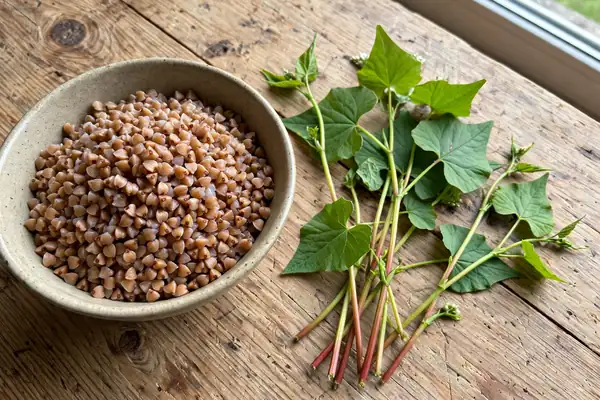
Dogs can eat cooked buckwheat seeds in small portions as an occasional extra. The seeds, also called groats, are non-toxic, gluten-free, and rich in fiber. The rest of the plant is unsafe: leaves, stems, and flowers contain fagopyrin, a compound that causes painful sun sensitivity in dogs.
Buckwheat confuses owners because the name sounds like wheat and the plant looks like an ordinary garden crop, though botanically it is neither. Buckwheat is a pseudocereal, a seed from a plant related to rhubarb and sorrel, and its scientific name is Fagopyrum esculentum. That distinction matters because the safety verdict splits along it: the seed is food, the plant is a hazard. If you keep a general list of human foods dogs can eat on hand, buckwheat seeds belong on the safe side of it, while the growing plant belongs with the garden hazards.
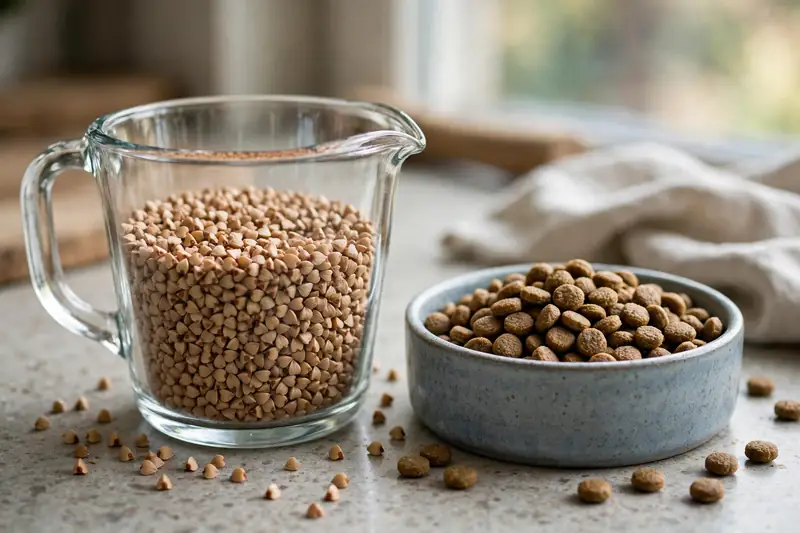
One more source of confusion: some dog foods already contain buckwheat. Grain-free and limited-ingredient recipes sometimes use buckwheat groats as a carbohydrate source, which tells you the seed has passed real-world feeding at scale. That does not make it a dietary essential. Your dog’s complete food already covers its nutrition, and buckwheat works best as a small, plain extra.
Why the seeds are safe but the plant is not
Fagopyrin lives in the green parts of the buckwheat plant, and it turns sunlight into a problem. When a dog eats enough leaves, stems, or flowers, the compound makes the skin hypersensitive to ultraviolet light. The result is photosensitization: redness, swelling, and painful lesions on thinly furred areas like the ears, nose, and belly.
The ASPCA lists buckwheat (Fagopyrum species) as toxic to dogs, naming fagopyrin as the toxic principle and photosensitization as the effect. That listing covers the plant, not a bowl of cooked groats. No dose is published for dogs, so there is no safe nibble amount for the leaves, and guessing at one risks a painful lesson in photosensitization. Gardeners who grow buckwheat as a cover crop should fence the patch or supervise the dog around it, the same way they would around any plant on a toxic list.

Here is the complicating fact most short answers skip: the same toxin affects livestock badly enough that farmers know it by reputation, yet the harvested seed is eaten by millions of people daily without issue. Processing and ripening change the picture. The seed you cook is not the leaf the toxin warning describes. Both facts are true at once, which is exactly why “is buckwheat safe for dogs” gets contradictory answers online. The precise answer is that the seed is safe and the plant is not, and precision is what keeps a dog safe.

What cooked buckwheat gives your dog nutritionally
Cooked buckwheat groats deliver fiber, plant protein, and minerals without gluten. A half cup of cooked groats carries roughly 3 grams of fiber and 3 grams of protein, along with magnesium, phosphorus, and B vitamins. Those numbers will not transform your dog’s diet, but they make buckwheat a respectable carbohydrate extra rather than empty filler.
Fiber is the main nutritional argument for buckwheat: the fiber in a dog’s diet supports steady digestion and firm stool, and buckwheat’s fiber arrives in a gentle form that most dogs tolerate. Protein is the secondary benefit: buckwheat contains all essential amino acids, which is unusual for a plant carbohydrate, though the amount per serving is modest next to meat. Magnesium supports normal muscle and nerve function, and the B vitamins play their usual background roles in energy metabolism.
The gluten-free angle matters for dogs with confirmed wheat sensitivity, who need carbohydrate alternatives like buckwheat alongside rice. Buckwheat is not a grain at all, so it sidesteps the proteins that trigger wheat reactions. If your dog has a diagnosed food allergy, confirm any new carbohydrate with your vet rather than experimenting, since allergy management works by strict elimination, not by swapping in foods that merely sound safe.
Keep expectations honest. Buckwheat is a decent extra, not a superfood. No single carbohydrate earns that title for dogs, and marketing language around ancient grains tends to oversell. The seed earns its place through fiber, low cost, and easy digestion, not through any miracle nutrient.
How to cook buckwheat for dogs
Rinse the groats, simmer them in plain water until tender, cool completely, and serve without seasoning. The ratio is two parts water to one part buckwheat. Bring the water to a boil, add the rinsed groats, cover, and simmer 10 to 15 minutes until soft, then spread the groats out to cool.
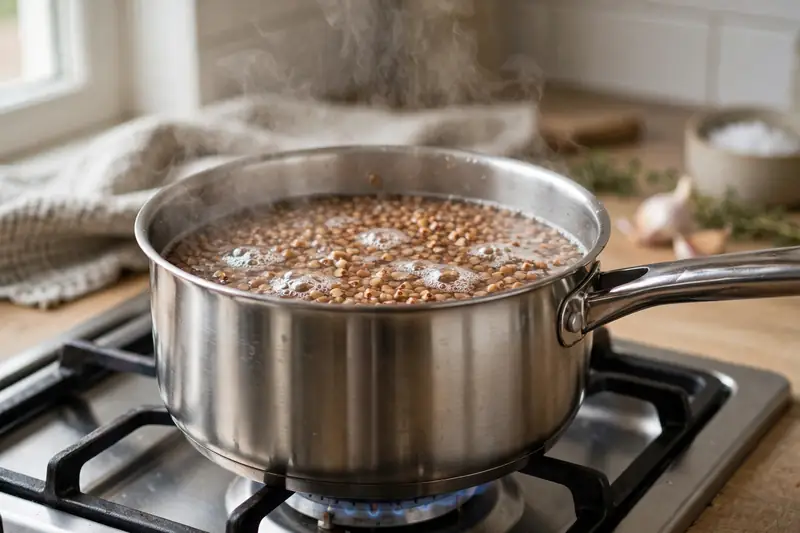
Rinsing takes thirty seconds and is worth it. Buckwheat groats can carry dust and bitter compounds from processing, and a quick rinse under cold water cleans them up. Cooking must be thorough: raw or undercooked groats are hard, and dogs do not chew carefully enough to break them down. Mushy beats crunchy here. If the groats still resist a fork, give them five more minutes.
Seasoning is where owners accidentally ruin a safe food. No salt, no butter, no oil, no garlic, no onion. Garlic and onion damage canine red blood cells, and the ASPCA’s list of people foods to avoid names both. Cook the dog’s portion first in plain water, then season your own batch however you like. Cooked buckwheat keeps three to four days in a sealed container in the fridge, so one batch can cover several small servings across the week.
How much buckwheat can dogs eat
Keep buckwheat within 10 percent of daily calories. For most dogs that means a spoonful or two for a small dog, up to a third of a cup for a large dog, a few times a week. Buckwheat is a carbohydrate extra, and the balanced food in the bowl does the real nutritional work.
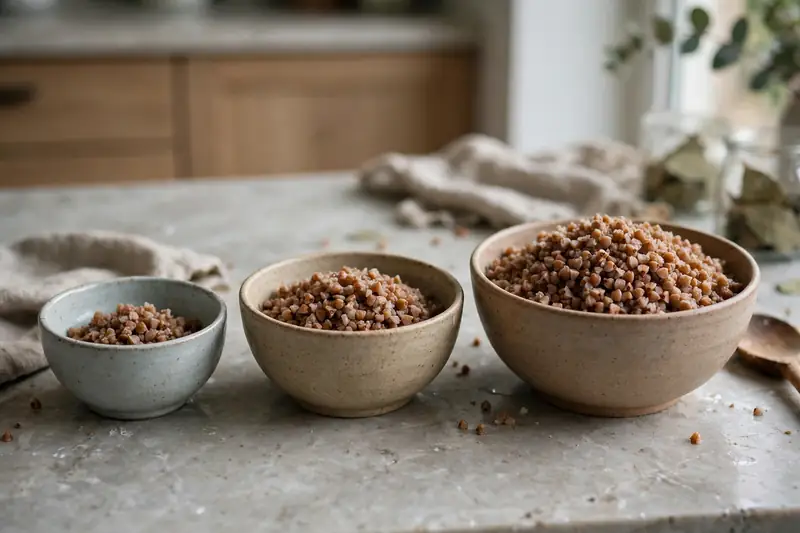
The VCA’s general feeding guidelines put all treats and extras, carbohydrate toppers included, at roughly 10 percent of daily calories. That cap protects the complete nutrition in your dog’s main food from being diluted by extras.
| Dog size | Cooked buckwheat per serving | Frequency |
|---|---|---|
| Small (under 20 lbs) | 1 to 2 tablespoons | 2 to 3 times a week |
| Medium (20 to 50 lbs) | 2 to 4 tablespoons | 2 to 3 times a week |
| Large (over 50 lbs) | Up to 1/3 cup | 2 to 3 times a week |
Start below the chart, not at it, with one tablespoon for any dog on day one and a full day of stool-watching afterward, since your dog’s reaction decides the real limit. Buckwheat’s fiber is gentle, but any new carbohydrate can loosen stool in a sensitive dog, and a gradual introduction tells you your dog’s real limit. If the stool stays firm, move up to the chart amount over a week.
Buckwheat and dog allergies: what to watch for
Buckwheat allergy in dogs is uncommon but real, so the first serving is a test. Watch for itching, red ears, paw chewing, vomiting, or loose stool in the 24 to 48 hours after the first taste. Any of those signs means buckwheat goes off the menu, and a vet visit makes sense if symptoms persist beyond a day.

True food allergies develop over repeated exposure, not from a single bite, which is why the first serving rarely triggers a full allergic reaction. What the first serving can reveal is intolerance: a stomach that simply does not agree with the food. Both outcomes lead to the same decision, which is to stop feeding it. Dogs do not adjust to foods that disagree with them the way people power through a rich meal. Stop, wait, and try a different carbohydrate like plain cooked rice if you need a gentle alternative.
One caution about allergy testing at home: internet lists of “hypoallergenic” foods are not diagnoses. If your dog has chronic itching or ear infections, a vet-supervised elimination diet is the only reliable way to identify the trigger. Buckwheat’s reputation as gentle makes it a candidate carbohydrate during such a diet, but only under veterinary guidance.
Buckwheat vs rice vs quinoa for dogs
Buckwheat, rice, and quinoa all work as plain cooked carbohydrate extras, and the differences are smaller than marketing suggests. Rice is the blandest and easiest to digest, which is why vets reach for it in bland diets. Buckwheat sits between the two: more fiber than white rice, gluten-free like quinoa, and usually cheaper than both.
| Feature | Buckwheat | White rice | Quinoa |
|---|---|---|---|
| Gluten-free | Yes | Yes | Yes |
| Fiber per half cup cooked | About 2 to 3 g | Under 1 g | About 2.5 g |
| Protein per half cup cooked | About 3 g | About 2 g | About 4 g |
| Digestive gentleness | Good | Best | Good, rinse first |
| Main caution | Plant is toxic; seeds only | Low nutrition alone | Saponin; oxalates |
Rotation beats loyalty here. No single carbohydrate needs to become your dog’s permanent topper, and varying the extras across weeks gives a broader mix of fibers and minerals. A dog that gets rice one week and buckwheat the next is eating a more varied diet than a dog locked onto one “superfood” grain. Cost matters too: buckwheat groats are among the cheapest gluten-free carbohydrates in most grocery stores, which makes them a practical staple rather than a boutique choice.
Buckwheat flour, soba noodles, and store-bought treats
Buckwheat flour is safe in the same way the groats are, but the products made from it need label checks. Plain buckwheat flour contains nothing a dog cannot handle, and homemade dog biscuits made with it are fine as occasional treats. Commercial products are where the complications hide.
Soba noodles are the classic trap. Traditional soba is buckwheat, but most commercial soba blends buckwheat flour with wheat flour, and the serving arrives salted or in seasoned broth. A plain cooked soba noodle or two will not harm a dog, but restaurant soba with dipping sauce is a seasoned human food, not a dog treat. Check the package: if wheat is the first ingredient, the “buckwheat” label is doing marketing work.
Store-bought buckwheat dog treats are generally fine and save you the cooking step. Read the ingredient list the way you would for any treat. Some “grain-free” treats replace grains with starches and sugars that add little, and a long ingredient list with flavors and preservatives is a worse choice than plain groats from your own pot. The simplest buckwheat treat remains the one you cook yourself: groats, water, nothing else. For packaged human foods beyond buckwheat, the AKC’s list of foods dogs can and can’t eat is a solid quick reference before sharing anything from your plate.
Puppies and senior dogs
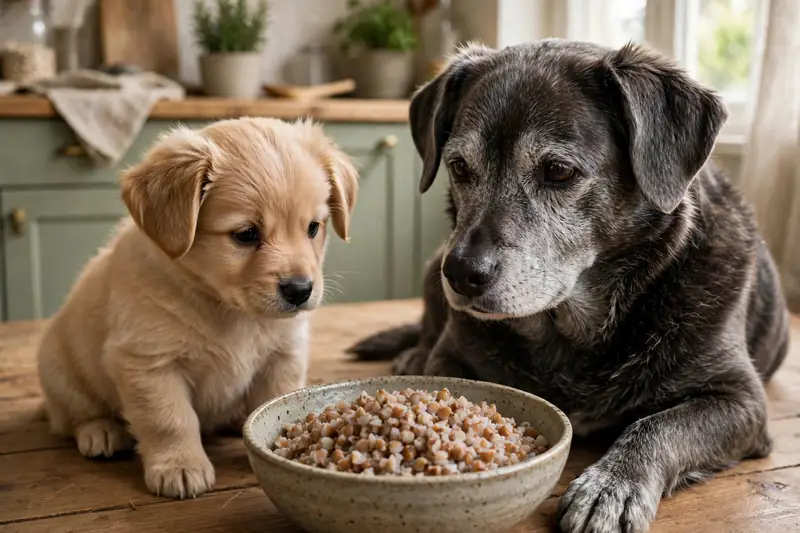
Puppies over eight weeks and senior dogs can eat cooked buckwheat in smaller portions than adults. Mash or overcook the groats until very soft for both groups, since puppies gulp and seniors sometimes struggle with firmer textures. Keep puppy portions to a teaspoon or two.
Puppies under eight weeks should not get extras at all. Their digestion is still settling, and complete puppy food covers everything they need. There is no developmental prize for early carbohydrate variety, and new foods should arrive one at a time so you can identify the cause of any upset. For puppies past that stage, buckwheat is a reasonable first carbohydrate precisely because it is bland and gluten-free.
Senior dogs often do well with a soft carbohydrate topper, especially picky eaters that need enticement toward their meals. A spoonful of warm, mushy buckwheat mixed into the regular food can tempt an older dog without unbalancing the diet. The exception is seniors with kidney disease or other conditions on prescription diets: those dogs get no extras without the vet’s approval, since prescription nutrition works as a complete system and toppers can undermine it.
When to call the vet
Call your vet if your dog eats buckwheat leaves, stems, or flowers, or shows sun-related skin changes after garden foraging. Redness, swelling, or sores on thinly furred skin within a day or two of chewing garden plants deserves professional attention, not home watching. Photosensitization can worsen with continued sun exposure, so keep the dog indoors until you have guidance.

Mild stomach upset from too many groats is a different, calmer situation. A day of soft stool after an overgenerous serving usually resolves on its own, and a short bland diet of rice and plain chicken settles most cases. Call the vet if vomiting repeats, diarrhea lasts beyond 24 hours, blood appears in the stool, or your dog refuses food for a full day.
Keep your vet’s number and the animal poison control number saved before you need them. Garden season is when plant exposures happen, and mid-panic searching wastes the minutes that matter. A note on the fridge covers every pet in the house.
Frequently asked questions about dogs and buckwheat
Owners usually ask about raw groats, the grain question, microgreens, and garden scares. The answers below cover the ones that come up most.
Can dogs eat raw buckwheat?
Raw groats are hard and difficult to digest, and dogs do not chew thoroughly enough to break them down. Always cook buckwheat fully until soft before serving.
Is buckwheat a grain?
No, despite the name. Buckwheat is a pseudocereal, a seed from a plant in the rhubarb family. That is why it is naturally gluten-free and why wheat-allergic dogs can usually tolerate it.
Can dogs eat buckwheat microgreens?
Skip them. Buckwheat microgreens are young plants, and the ASPCA’s toxic listing covers the plant’s green parts because of fagopyrin. The seed is the safe part, not the sprout.
My dog chewed buckwheat leaves in the garden. What should I do?
Bring the dog indoors out of direct sunlight and call your vet. Watch for redness, swelling, or sores on the ears, nose, and belly over the next day or two. Do not wait for symptoms to become severe.
Is buckwheat in grain-free dog food safe?
The groats used as a carbohydrate source in commercial dog food are the safe seed, processed and cooked. The plant toxin is not a factor in finished kibble.
Can dogs eat soba noodles?
A plain cooked noodle or two is harmless, but most soba contains wheat flour and arrives salted or sauced. Treat restaurant soba as seasoned human food and keep it away from the dog.
Buckwheat earns a split verdict that is easy to live with. Cook the seeds plain, serve small portions, and keep the growing plant fenced off from curious noses. Do that, and buckwheat becomes one of the steadier carbohydrate extras in your rotation.
Disclaimer: This article is for general information only and is not veterinary advice. Dogs with health conditions, puppies, and nursing dogs may need different guidance. If your dog eats any part of the buckwheat plant or shows symptoms after eating buckwheat, contact your veterinarian.