
Quinoa already sits inside a number of commercial dog foods, which surprises owners who think of it as a trendy human health food. Pet food makers did not add it by accident. Plain cooked quinoa is safe for dogs in small amounts, as long as it is rinsed, cooked soft, and served without seasoning. The conditions matter more than the verdict, because the mistakes owners make with quinoa are all about preparation, not the seed itself.

Can dogs eat quinoa? The short answer
Dogs can eat quinoa when it is rinsed, fully cooked, and served plain. Quinoa is a gluten-free seed with complete protein, fiber, and minerals like magnesium and iron. Rinse off the bitter saponin coating before cooking, skip all salt and seasoning, and keep servings small. Stop feeding it if your dog develops vomiting, diarrhea, or constipation afterward.

Quinoa earns its safe verdict from heavyweight sources: PetMD confirms dogs can eat quinoa in moderation, and the AKC notes it appears in some high-quality dry dog foods as a healthy alternative to corn, wheat, and soy. Those are not casual endorsements. When veterinary publishers and the country’s largest breed registry agree, the food has cleared real scrutiny. The catch is that both sources attach the same conditions: plain, cooked, moderate. Quinoa is safe the way a kitchen knife is safe, which is to say entirely dependent on handling.
One point worth settling early: quinoa is not a grain. It is the seed of a plant related to spinach and beets, which makes it a pseudocereal like buckwheat. The label matters for dogs with grain sensitivities, since quinoa sidesteps the proteins in wheat that cause reactions. If you track safe extras on a list of human foods dogs can eat, quinoa belongs there with an asterisk for preparation.
What quinoa actually is, nutritionally
Quinoa is a complete protein in seed form, which is rare among plant foods. It contains all nine essential amino acids, the building blocks dogs need for muscle maintenance and repair. A cup of cooked quinoa carries about 8 grams of protein and 5 grams of fiber, plus meaningful amounts of magnesium, phosphorus, iron, and manganese. For a plant carbohydrate, that is a strong profile.

The fiber in a dog’s diet regulates digestion and stool quality, and quinoa’s fiber is the soluble kind that feeds beneficial gut bacteria, which is the nutrient worth noticing first. Magnesium supports muscle and nerve function. Iron helps carry oxygen in the blood. None of these nutrients are ones a dog lacks on complete dog food, so quinoa functions as a bonus, not a fix. A dog with a nutritional deficiency needs a vet and a diet change, not a seed topper.
Quinoa’s gluten-free status is its real practical advantage. Dogs with confirmed wheat or gluten sensitivity need carbohydrate sources that avoid the trigger proteins, and quinoa qualifies alongside rice. True grain allergies are uncommon in dogs, so most owners will never need quinoa for this reason. But for the few who do, it is one of the better options, with more protein than rice and a gentler reputation than some alternatives. The AKC’s overview of quinoa for dogs reaches the same verdict: safe in small amounts when cooked plain, with the same cautions about preparation.
Saponin: the bitter coating you must rinse off
Every quinoa seed wears a natural coating called saponin, and it is the reason rinsing is non-negotiable. Saponin tastes bitter and can irritate the stomach lining in both people and dogs. The plant evolved it as insect protection, and it does its job a little too well in a dog bowl. Most packaged quinoa is pre-rinsed, but processing does not remove all of it.

Here is the complicating fact: the AKC says the saponin amount in quinoa is typically too small to cause health problems in dogs, yet every veterinary source still tells you to rinse. Both statements are true. The residual amount rarely harms a healthy dog, but sensitive stomachs react to smaller irritants, and rinsing costs thirty seconds. Skipping it to test the AKC’s reassurance is a strange gamble when the fix is running water. Rinse the seeds in a fine mesh strainer under cold water for half a minute, until the water runs clear and the foam stops.
Raw quinoa doubles the saponin problem and adds a digestibility one. Uncooked seeds are hard, and dogs do not grind food the way people do, so raw quinoa mostly passes through intact while irritating the gut on the way. Cooked quinoa has less saponin and a soft texture. The rule is simple: no raw quinoa, ever, and always rinse first.
How to cook quinoa for dogs
Rinse the seeds, simmer in plain water until the little tails curl out, and cool completely before serving. The ratio is two parts water to one part quinoa. Bring the water to a boil, add the rinsed seeds, reduce to a simmer, cover, and cook for 12 to 15 minutes. The grains turn translucent and release a tiny white spiral, the germ, which is the visual signal that they are done.

Let the pot rest covered for five minutes off the heat, then fluff with a fork and spread the quinoa to cool. Dogs burn their mouths on hot food just like people do, and a steaming bowl invites gulping. Room temperature is the target, and batch cooking works well since a cup of dry quinoa makes about three cups cooked, which covers a week of small servings stored in a sealed container in the fridge.
Seasoning is the quiet trap. Your quinoa probably tastes better with salt, garlic, or broth, and every one of those is wrong for a dog. Garlic and onion damage canine red blood cells, and the ASPCA’s people-foods list flags both. Store-bought broth often hides onion and garlic, so plain water is the only safe cooking liquid. Cook the dog’s portion first, then make yours however you like.

How much quinoa can dogs eat
Treat quinoa as a spoonful food, not a scoop food. A cup of cooked quinoa holds about 220 calories, and a single tablespoon carries roughly 14. The VCA’s feeding guidelines cap all extras at about 10 percent of daily calories, and quinoa’s calorie density means small volumes hit that cap fast.

PetMD publishes specific daily maximums, and they are smaller than most owners guess:
| Dog size | Cooked quinoa per day (maximum) |
|---|---|
| Extra-small (2 to 20 lbs) | 1 tablespoon or less |
| Small (21 to 30 lbs) | 2 to 3 tablespoons |
| Medium (31 to 50 lbs) | 1/4 cup or less |
| Large (51 to 90 lbs) | 1/3 cup or less |
| Giant (over 90 lbs) | 1/2 cup or less |
Start with half the chart amount for the first week, giving the gut time to show whether the issue is quantity or tolerance. Quinoa’s fiber is the likely culprit if your dog gets gassy or loose, and a gradual introduction separates a too-much problem from a cannot-tolerate problem. If the stool stays normal after a week at half portions, move up. If it does not, quinoa is not your dog’s carbohydrate, and plain cooked rice is the blander fallback.
Quinoa is already in your dog’s kibble (maybe)
Check your dog food’s ingredient list and you might find quinoa printed there. Several premium kibble brands use quinoa as a carbohydrate source, particularly in grain-free or limited-ingredient lines. Manufacturers like it for the same reasons this article does: gluten-free, decent protein, good fiber, and a clean label story. That industrial track record is reassuring. Millions of dogs have eaten quinoa in kibble form without incident.
This also reframes the homemade question. If your dog already eats quinoa in its kibble, adding more as a topper is redundant rather than risky, but it does concentrate the total amount. Dogs with no issues can handle both. Dogs with sensitive stomachs might do better with variety in their extras rather than doubling down on one ingredient. There is no nutritional prize for quinoa loyalty. Rotation across safe carbohydrates gives a broader nutrient mix than repetition.
The kibble connection carries one more lesson: processing matters. Kibble quinoa is rinsed, cooked under pressure, and extruded, which is about as thoroughly prepared as a seed can get. Your stovetop version should aim for the same completeness. Soft, fully cooked, no crunch. If your homemade quinoa still has bite, it needs more time.
Dogs who should skip quinoa
Dogs with kidney disease, a history of bladder stones, or chronic digestive trouble should skip quinoa unless the vet approves. Quinoa contains oxalates, compounds that can contribute to calcium oxalate stones in susceptible dogs. For a healthy dog the oxalate load in a tablespoon is trivial. For a dog that forms stones, it is an unnecessary addition to a problem diet.

Kidney disease changes the calculation differently. Quinoa’s protein and phosphorus need monitoring in renal diets, which are carefully balanced by veterinary nutritionists. Adding extras to a prescription kidney diet can undermine the whole plan, and kidney disease in dogs is managed through precise nutrition, not approximate good intentions. The same applies to dogs on any prescription diet, where the food functions as medicine and unapproved toppers interfere with the treatment plan. The food is the medicine, and toppers are interference until the vet says otherwise.
Dogs prone to pancreatitis or chronic gastrointestinal issues are the third skip group. Quinoa is fibrous and relatively rich for a carbohydrate, and sensitive pancreases prefer blander options. Puppies under 12 weeks should also wait, since their digestion is still developing and complete puppy food covers their needs. When in doubt, the question to ask the vet is specific: “Is a tablespoon of plain cooked quinoa okay with my dog’s condition?” Specific questions get useful answers.
Quinoa vs rice vs buckwheat for dogs
Quinoa wins on protein, rice wins on gentleness, and buckwheat wins on price. All three are gluten-free, all three work cooked plain, and the practical differences are modest. Rice remains the default for upset stomachs because it is the blandest. Quinoa suits owners who want more nutrition per spoonful. Buckwheat suits budgets.

| Feature | Quinoa | White rice | Buckwheat |
|---|---|---|---|
| Protein per cup cooked | About 8 g | About 4 g | About 6 g |
| Fiber per cup cooked | About 5 g | Under 1 g | About 5 g |
| Gluten-free | Yes | Yes | Yes |
| Prep requirement | Rinse well | None | Cook soft |
| Main caution | Saponin, oxalates | Low nutrition alone | Plant toxic; seeds only |
No single one needs to win permanently. Rotating across the three across weeks gives your dog varied fibers and minerals, which is more valuable than picking the “best” one and repeating it. Cost is a legitimate tiebreaker: quinoa costs several times what rice does, and for a food that is only ever a small extra, the cheaper option often makes more sense. Save the quinoa budget for the dogs who actually need gluten-free variety.
Puppies and senior dogs
Puppies past 12 weeks and senior dogs can eat quinoa in smaller portions than the adult chart. Mash the cooked grains soft for both groups. Puppies gulp without chewing, and seniors with dental issues struggle with distinct grains. A teaspoon for a young puppy and a tablespoon for a small senior are sensible starting points.
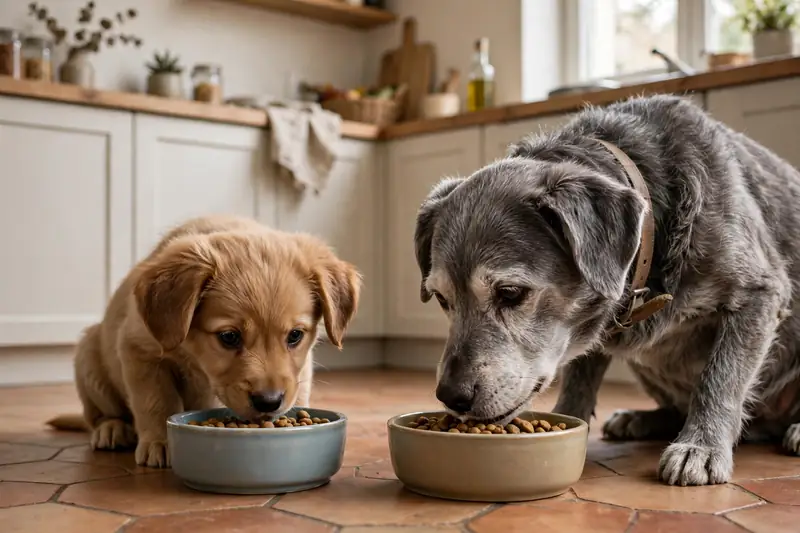
Very young puppies need no extras at all. Complete puppy food is formulated for growth, and every topper dilutes that precision slightly. There is no developmental benefit to early quinoa, and introducing foods one at a time matters more than introducing them early. When you do start extras, quinoa’s soft texture makes it a reasonable early choice, provided the rinsing and cooking are thorough.
Senior dogs are the group most likely to benefit. Older dogs sometimes lose interest in plain kibble, and a warm spoonful of quinoa mixed through the meal can restart an appetite. The fiber also helps seniors prone to constipation. Watch the kidneys, though: senior dogs have more undiagnosed renal issues than owners realize, and any persistent increase in thirst or urination after diet changes deserves a vet check, not a wait-and-see.
When to call the vet
Call your vet if your dog shows repeated vomiting, bloody stool, or lethargy after eating quinoa, or if a stone-prone dog eats a large amount. Most quinoa reactions are mild: gas, soft stool, or a skipped meal, all of which resolve within a day once the food is withdrawn. A short bland diet of rice and plain chicken covers the recovery.
The urgent cases are the ones where quinoa is not really the story. A dog that raids a pot of seasoned quinoa gets the garlic and onion problem, not the quinoa problem, and that needs prompt attention.

A small dog that eats a large volume of any new food can dehydrate from vomiting and diarrhea faster than owners expect. When symptoms escalate beyond mild, the cause matters less than the response: call early, describe exactly what was eaten and how much, and follow instructions.
Frequently asked questions about dogs and quinoa
Owners usually ask about raw seeds, colors, flour, and seasoned leftovers. The answers below cover the repeat questions.
Can dogs eat raw quinoa?
Raw quinoa is hard to digest and carries more saponin, the bitter coating that irritates the stomach. Always rinse and fully cook it first.
Is red or black quinoa safe for dogs?
White, red, black, and tri-color quinoa are equally safe once rinsed and cooked. Color changes nothing about preparation or portions.
Can dogs eat quinoa flour?
Plain quinoa flour is safe in small amounts, such as in homemade dog biscuits. Check commercial products for added salt, sugar, or flavorings before sharing.
Can my dog eat quinoa from my plate?
Only if it was cooked plain. Most human quinoa recipes include salt, garlic, onion, or broth, and seasoned leftovers are not safe. When in doubt, cook a separate plain portion.
How often can dogs eat quinoa?
A few times a week at most, within the daily portion limits. Quinoa is an extra, and extras stay within about 10 percent of daily calories.
What are signs of a quinoa allergy in dogs?
Itching, red skin, ear inflammation, vomiting, or diarrhea after eating it. True allergies are rare, but stop feeding quinoa and call your vet if symptoms appear.
Quinoa is one of the better carbohydrate extras a dog can get: real protein, real fiber, and a safety record that includes commercial dog food. Rinse it, cook it soft, keep the spoon small, and it earns its place. Skip it for stone-formers and kidney patients, and it stays a simple food with simple rules.
Disclaimer: This article is for general information only and is not veterinary advice. Dogs with kidney disease, bladder stones, or chronic digestive conditions need veterinary guidance before trying new foods. If your dog shows symptoms after eating quinoa, contact your veterinarian.