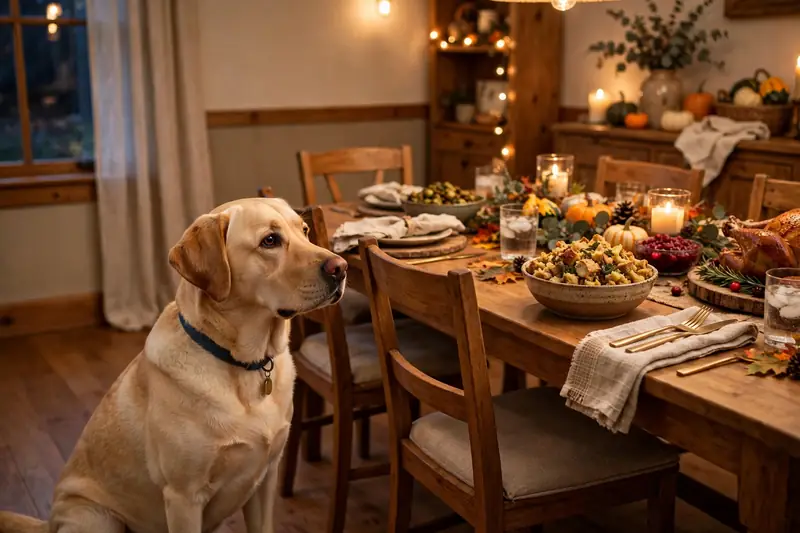
Thanksgiving dinner is on the table, the stuffing smells incredible, and your dog has locked onto the bowl like it is the only thing in the room. Sharing feels generous in the moment. The problem is what sits inside that bowl. Most stuffing recipes mix bread with chopped onion, garlic, butter, and turkey drippings, and every one of those extras causes trouble for dogs. Onion and garlic damage red blood cells. The fat load can inflame the pancreas. Salt runs far higher than a dog should get in a day.
Can dogs eat stuffing? The direct answer
No, dogs should not eat stuffing. Nearly every holiday recipe contains onion, garlic, or both, which can damage a dog’s red blood cells whether raw, cooked, or powdered. Butter, drippings, and salt add pancreatitis and stomach-upset risk on top of the toxicity. Real stuffing is never plain.
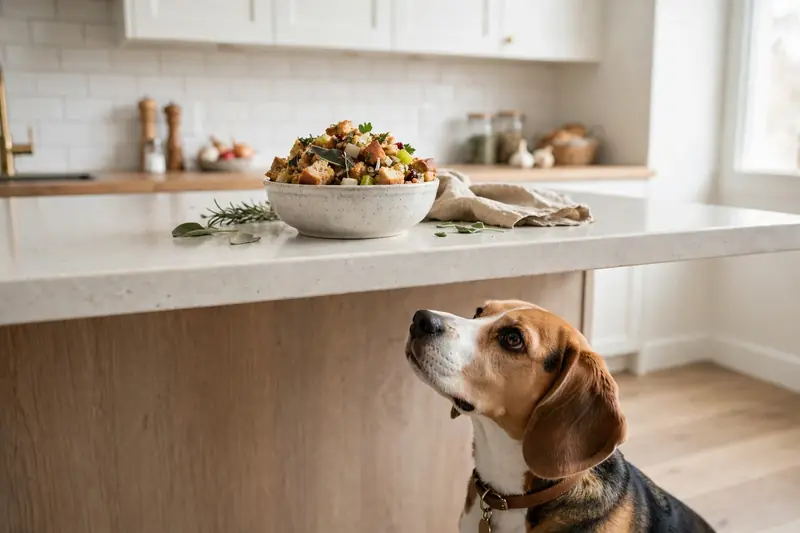
Veterinarians who work emergency shifts around Thanksgiving see the pattern every year. Dr. Brian Collins of Cornell University College of Veterinary Medicine has warned that fatty holiday foods can cause GI upset and pancreatitis, which can be life threatening. The ASPCA’s list of people foods to keep away from pets names onion and garlic among the items that never belong in a dog’s bowl. If you want a quick reference for the whole holiday table, keep the human foods that are safe for dogs list open on your phone while you cook.
Onion and garlic: the main reason stuffing is off limits
Onion and garlic are the most dangerous ingredients in holiday stuffing. Both belong to the allium family, and both contain sulfur compounds that destroy a dog’s red blood cells, causing hemolytic anemia. Cooking and drying do not neutralize the compounds. Onion and garlic powder count exactly the same as the fresh vegetables.
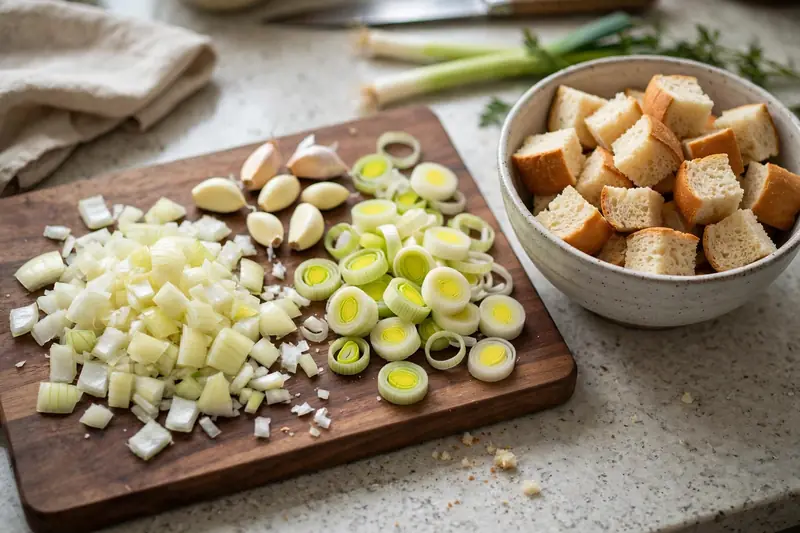
Onions are toxic to dogs in every form, and the same goes for garlic, leeks, chives, shallots, and scallions. The Pet Poison Helpline’s onion toxicity page explains that signs can take days to appear, which is what makes allium poisoning sneaky. A dog can seem fine on Thanksgiving night and turn lethargic with pale gums over the weekend. If you want the numbers, read how much onion it takes to harm a dog before you decide any amount is harmless.
One detail complicates the picture. A single bite of stuffing will not give most medium or large dogs hemolytic anemia. Toxicity scales with dose and body weight, and one spoonful is a small dose. Small dogs face real risk from much smaller amounts, and the bigger problem is that nobody measures what a dog steals off a plate. A dog that counter-surfs a full serving of stuffing has eaten far more onion than the one that licked a dropped crumb. When the amount is unknown, vets treat it as worth a phone call.
Fat, drippings, and salt: the second wave of problems
Stuffing soaks up fat like a sponge: butter, turkey drippings, and often sausage or bacon. A rich, fatty meal can trigger pancreatitis, a painful pancreas inflammation that brings vomiting, belly pain, appetite loss, and dehydration. Mild cases need a vet visit and a few bland days. Severe cases need hospitalization.

Salt is the quieter issue. Stuffing seasoning packets and broth-based recipes run salty, and dogs need far less sodium than people do. A salty meal can leave a dog extremely thirsty and, in large amounts, cause vomiting or worse. Dogs with heart or kidney conditions handle salt loads especially poorly. None of this means a crumb is an emergency. It means stuffing earns its place on the no list through three separate doors: toxic alliums, pancreatitis-triggering fat, and excess salt.
Hidden add-ins that make it worse
Family recipes hide extras that turn risky stuffing into dangerous stuffing. Raisins and grapes top that list. Both can cause sudden kidney failure in dogs, and some dressing recipes mix them right in. Oysters show up in coastal recipes and bring their own salt and richness. Mushrooms, chestnuts, and nuts add fat and calories a dog does not need.

Celery and carrots are the rare innocent add-ins, and they are safe for dogs on their own. The catch is that nobody serves them on their own at Thanksgiving. They arrive cooked in butter with onion and garlic, which ruins the deal. Before you let a dog near any dressing, read the recipe like a label. If you did not cook it and do not know every ingredient, the answer stays no.
Boxed stuffing mix is not safer than homemade
Boxed mixes like Stove Top look plain, which tempts people to call them safer. They are not. Even basic boxed stuffing contains dried onion, and the seasoning packet adds salt a dog should not get. Homemade lets you control the recipe, but classic homemade versions use more onion and garlic than the box, not less.
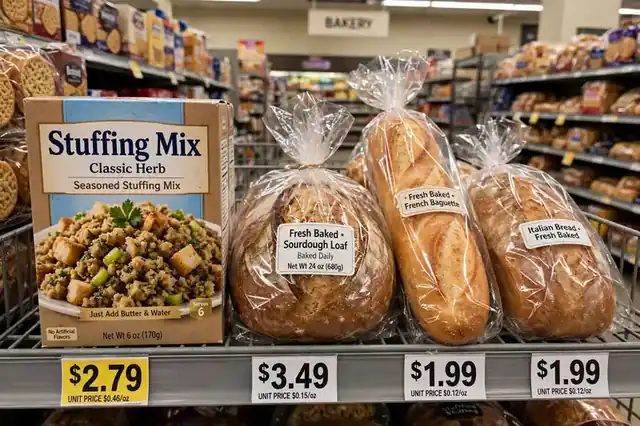
Cornbread dressing, oyster dressing, and sausage stuffing all fail the same test. The bread base is the only safe part, and plain bread without butter or seasoning is fine for dogs in small amounts. The moment bread becomes stuffing, it stops being plain. If a guest asks whether the dog can have “just a little,” the answer is simple: a little of the bread is fine and none of the stuffing is.
The other stuffing: what is inside your dog’s toys
Search results for this question split in two, because “stuffing” also means the filling inside plush dog toys. Toy stuffing deserves its own warning. Most plush toys are filled with polyester fiberfill or cotton batting, neither of which digests. A dog that rips a toy open and swallows the fluff risks an intestinal blockage, which can turn into emergency surgery.

Small pieces sometimes pass through on their own, but larger wads can lodge in the stomach or intestines. Warning signs include repeated vomiting, loss of appetite, straining to poop, a swollen belly, and unusual tiredness. Blockage symptoms can take a day or two to show, so a dog that ate toy stuffing on Thanksgiving may not look sick until the weekend. Call the vet the same day if you know fluff went down, and take the toy away the moment it starts tearing. Stuffing-free toys exist for aggressive chewers, and they remove the whole question.
My dog ate stuffing: what to do right now
First, figure out how much went down. A dropped crumb in a large dog is a watch and wait situation. A full bowl, a small dog, or a recipe with raisins or lots of onion means calling the vet. Do not wait for symptoms with allium exposure, because the worst red blood cell damage shows up days later.

Call your vet or an animal poison hotline and report the dog’s weight, the estimated amount eaten, the ingredients if you know them, and the time it happened. Do not induce vomiting unless the vet tells you to, since vomiting is not safe or useful in every situation. For the next two to three days, watch for vomiting, diarrhea, belly pain, pale gums, dark urine, weakness, and loss of appetite. If the stomach is only mildly upset, a bland diet for a day or two often settles it. Repeated vomiting, bloody stool, extreme lethargy, or pale gums mean the vet visit cannot wait.
Keep the recipe or the box. Vets make better calls with the ingredient list in front of them, and “stuffing” tells them far less than “one cup of sausage stuffing with onion, garlic, and raisins.” Snap a photo of the box panel or the recipe card before you throw anything away.
Safer holiday swaps your dog will actually enjoy
Dogs do not need stuffing to enjoy Thanksgiving. Plain, boneless turkey with no skin is the classic safe share: meat yes, skin and bones no. Plain sweet potato, plain green beans, and a spoonful of pure pumpkin puree all make excellent holiday treats with none of stuffing’s baggage.
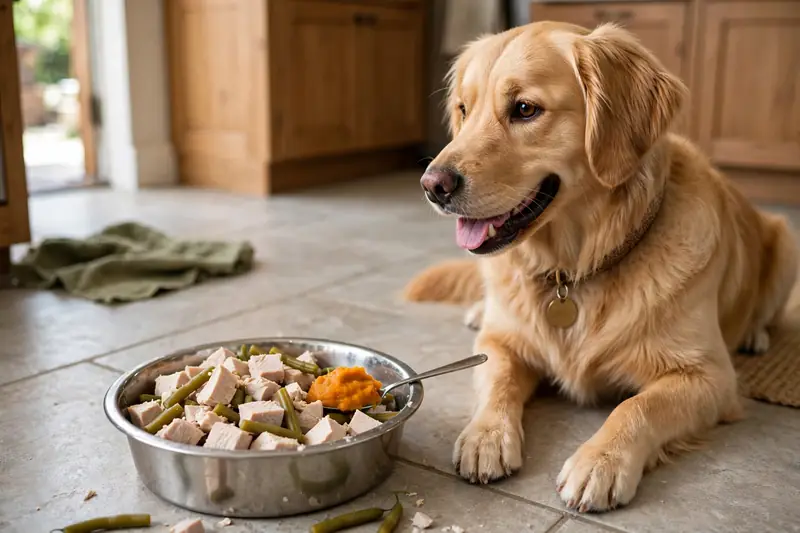
The trick is timing, and the AKC’s guidance on feeding turkey to dogs agrees: set the dog’s portion aside before butter, salt, and seasoning go into the human dishes. Once the food is seasoned, the safe window closes. VCA’s general feeding guidelines put all treats and extras at about 10 percent of daily calories, so think a few bites mixed into dinner, not a second meal. A small Thanksgiving plate built from the plain parts of the meal keeps the dog happy and the vet’s phone quiet.
Puppies, small dogs, and sensitive stomachs
Small dogs get hit harder by every risk in stuffing. The spoonful a Labrador shrugs off can be a meaningful onion dose for a Chihuahua, because toxicity scales with body weight. Puppies have unsettled digestion, and rich food causes bigger upsets in young stomachs. Seniors with kidney, heart, or pancreas issues have the least room for error.

Garlic damages red blood cells the same way onion does, and small bodies have fewer cells to spare. If your household has a toy breed, a puppy under six months, or a dog with any chronic condition, treat stuffing as a hard no with no crumb exceptions. The rest of the family can enjoy the dish. The dog gets its own plate. Serve the safe swaps first and the worry disappears.
Frequently asked questions about dogs and stuffing
Owners ask about boxed mixes, plain bread versions, toy stuffing, and how much onion it really takes to cause harm. The answers below cover the stuffing questions that come up every holiday season, from the dinner table to the toy box.
Can dogs eat Stove Top stuffing?
No. Boxed stuffing mix contains dried onion in the seasoning, plus salt levels meant for human taste buds. It is not a safer shortcut. Keep the box on the shelf and the dog away from the prepared dish.
Can dogs eat plain bread stuffing with no onion or garlic?
A small amount of completely plain bread stuffing, baked with nothing but bread and water, is unlikely to harm a dog. Almost nobody makes it that way, though. If even a pinch of onion or garlic powder went in, the answer goes back to no.
How much stuffing is dangerous for a dog?
It depends on the recipe and the dog’s size. Onion becomes a concern at around half a percent of body weight, and fatty rich food can trigger pancreatitis in sensitive dogs at any amount. When the recipe is unknown, assume the worst and call your vet.
Is sage safe for dogs?
Sage itself is not toxic to dogs in the small amounts used in cooking. The problem is that sage never arrives alone in stuffing. It comes with onion, garlic, butter, and salt, which are the actual hazards.
Can dogs eat cornbread dressing?
No. Cornbread dressing uses the same risky formula: onion, garlic, butter or drippings, and salt. The cornbread base does not make it safer than wheat-bread stuffing.
My dog ate the stuffing out of a toy. What should I do?
Call your vet the same day, even if the dog seems fine. Watch for vomiting, appetite loss, straining, or a swollen belly over the next 48 hours. Those signs can mean a blockage, which needs prompt care.
Can puppies eat stuffing?
No. Puppies have smaller bodies and unsettled digestion, so every risk in stuffing hits them harder. Give a puppy its regular food and a safe chew instead, and keep holiday dishes out of reach.
Stuffing is one of those holiday foods that smells like it was made for sharing and was actually made for people. Onion, garlic, butter, and drippings stack three separate risks into one bowl, and no dog needs any of them. Set a small plate of plain turkey and vegetables aside before the seasoning starts, and the dog gets its own Thanksgiving without the vet visit.

Disclaimer: This article is for general information only and is not veterinary advice. If your dog eats stuffing, especially a large amount or a recipe containing raisins, call your veterinarian or an animal poison hotline promptly.