Cabbage is cheap, crunchy, and always in the crisper drawer, so it is no surprise that dog owners wonder about sharing it. The answer is yes, in moderation. Raw or lightly cooked cabbage is safe for dogs and brings fiber plus vitamins C and K. The catch is one every cabbage eater knows. Too much of it causes gas, and a gassy dog makes its opinions known. A little shredded cabbage a few times a week is a fine low calorie treat.

Can dogs eat cabbage? The short answer
Yes, dogs can eat cabbage in small amounts, raw or lightly cooked. It is low in calories and rich in fiber and vitamins. Keep portions modest, because cabbage is famous for causing gas, and skip seasoned or fermented versions like coleslaw and sauerkraut.
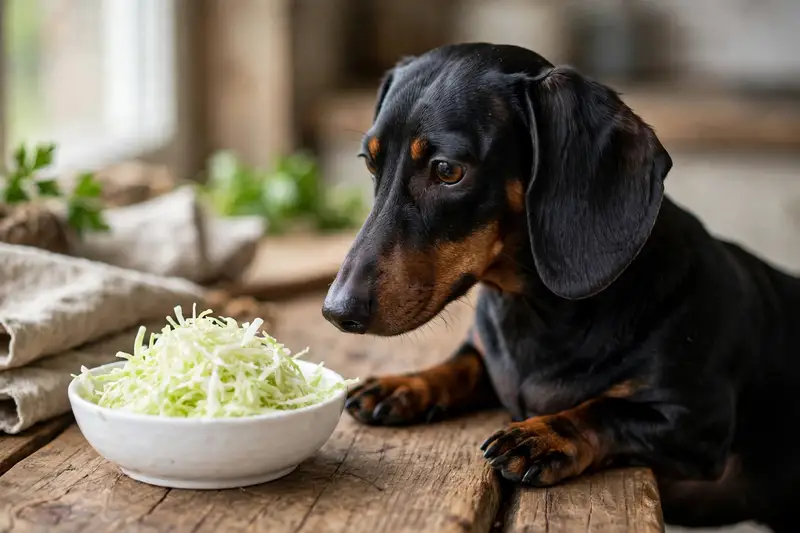
Cabbage is not a necessary food. Your dog’s complete diet already covers its nutritional needs, so cabbage works as an occasional crunchy treat rather than a dietary staple. If you share vegetables from the kitchen often, the list of human foods dogs can eat makes a handy quick reference.
Dogs react to cabbage the way people do: some love the crunch, others ignore it completely. A dog that turns away from raw shreds may accept them lightly steamed, since cooking softens the strong smell as well as the texture. There is no need to persuade a reluctant dog. Plenty of other vegetables offer the same benefits.
What cabbage offers nutritionally
Cabbage brings fiber, vitamin C, vitamin K, and antioxidants, with very few calories per serving. A small handful of shredded cabbage adds bulk and nutrients to the day without adding meaningful calories.

The fiber is the standout, and the fiber in a dog’s diet supports steady digestion when it comes from whole foods in small amounts. Vitamin K helps with normal blood clotting, and the antioxidants in cabbage are the same compounds that give the vegetable its reputation in human nutrition. One honest note: dogs make their own vitamin C, so they do not need the vegetable for it the way people might think. The low calorie count is the real draw. For a dog watching its weight, cabbage is one of the cheapest treats in the kitchen.
Cabbage is also one of the best vegetables for a dog that needs to feel full on fewer calories. The bulk fills the stomach without adding energy, which is why vets sometimes suggest green vegetables as fillers for overweight dogs. A quarter cup of shreds mixed into the regular meal adds volume the dog can feel, and most dogs accept the mix without complaint.
Raw vs cooked cabbage
Both raw and cooked cabbage are safe for dogs, and the choice comes down to your dog’s stomach. Raw cabbage keeps the full crunch and all its nutrients, but it causes more gas. Light steaming softens the fibers and usually sits easier.

If your dog has a sensitive stomach, start with steamed. A quick steam of three to four minutes softens the shreds without turning them to mush. Boiling works too, though it leaches some nutrients into the water. What matters most is that the cabbage goes in plain. No butter, no bacon fat, no seasoning blends. A dog that handles raw vegetables well can take the shreds as they are, chopped fine.
Fermentation is the one preparation method to avoid completely. Sauerkraut and kimchi are cabbage, but the salt content puts them far outside treat territory. The same goes for pickled cabbage. If a recipe involves brine, salt, or fermentation, the result belongs to people only.
How to prepare cabbage for your dog
Wash the head, peel off the outer leaves, and shred or chop the inner leaves finely. Serve raw, or steam lightly for three to four minutes. Keep every serving plain, with no salt, butter, onion, or garlic.

Fine shredding matters more than it seems. Long ribbons of cabbage are hard to chew and easy to gulp, and a gulped ribbon can irritate the throat. Short shreds or small dice solve it. The thick core at the center is too tough and should go in the compost, not the bowl. Red cabbage follows the same rules as green. It is safe, it stains everything it touches, and dogs do not care about the color either way.
A food processor makes cabbage prep effortless. A few pulses turn a wedge into fine shreds in seconds, and the even texture mixes well into meals for dogs that eat around larger pieces. If you shred by hand, a sharp knife and a steady cutting board do the job. Compost the tough core and the wilted outer leaves.
How much cabbage is safe to feed
Keep cabbage within 10 percent of daily calories, which for most dogs means a small handful of shreds a few times a week. Cabbage is bulky, so it looks like more food than it is, and that makes overfeeding easy.

The VCA’s general feeding guidelines cap all treats at roughly 10 percent of daily calories, and that limit protects the balanced nutrition in your dog’s regular food.
| Dog size | Safe amount | Frequency |
|---|---|---|
| Small (under 20 lbs) | One to two tablespoons, shredded | A few times a week |
| Medium (20 to 50 lbs) | A small handful of shreds | A few times a week |
| Large (over 50 lbs) | Up to half a cup, shredded | A few times a week |
Start with half the chart amount. One small serving, then a day of watching, tells you how your individual dog handles it. Some dogs process cabbage without a rumble. Others announce it to the whole house.
Weighing portions is overkill for cabbage. The handful method works fine because the vegetable is so low in calories that small estimation errors do not matter. The one thing to watch is creeping frequency. A little every day adds up to a lot of raffinose, so keep it to a few days a week even when the portions look tiny.
Gas and bloating: the honest side effect
Cabbage contains raffinose, a complex sugar that dogs digest poorly, and gut bacteria ferment what is left. The result is gas. It is uncomfortable and antisocial, but in normal amounts it is not dangerous.

Mild gas after cabbage is normal and passes on its own. What is not normal is a hard, swollen belly, repeated retching without producing vomit, drooling, or restlessness. Those signs can point to bloat, a genuine emergency, especially in large deep chested breeds. Bloat is not caused by a normal serving of cabbage, but any owner of an at-risk breed should know the signs regardless of what the dog ate. If the belly looks distended and the dog is distressed, skip the wait and go to the vet.
If your dog is already known for gas, cabbage will not improve the situation, and you may decide the trade is not worth it. There is no nutritional prize that only cabbage can provide. Broccoli, green beans, and zucchini all offer similar benefits with less atmospheric fallout, and your household will thank you.
Seasonings and cabbage dishes to avoid
Plain cabbage is safe, but most cabbage dishes are not. Coleslaw brings mayonnaise, sugar, and often onion. Sauerkraut brings far too much salt. Stir fries bring garlic, onion, and oil.

Onion and garlic deserve the emphasis, since both damage red blood cells in dogs. Our guide to foods that are toxic to dogs covers them along with the other kitchen items that never belong in a bowl, and the ASPCA’s people foods list names the same culprits. Cabbage rolls, egg rolls, and dumplings all hide seasoned fillings, so none of them count as sharing cabbage. The rule stays simple. If the cabbage came from your plate with anything on it, it is not the dog’s cabbage.
Takeout is the sneakiest source of seasoned cabbage. Egg rolls, dumplings, and stir fry all contain it, wrapped around seasoned meat with garlic and soy. A dog that steals an egg roll gets the cabbage plus everything it was cooked with. Keep takeout containers closed and out of surfing range.
Cabbage vs broccoli, carrots, and zucchini
Cabbage sits in good company. Broccoli is its cruciferous cousin, carrots are the classic crunchy treat, and zucchini is the mild low calorie option. All are safe, all need plain preparation, and all work in small portions.
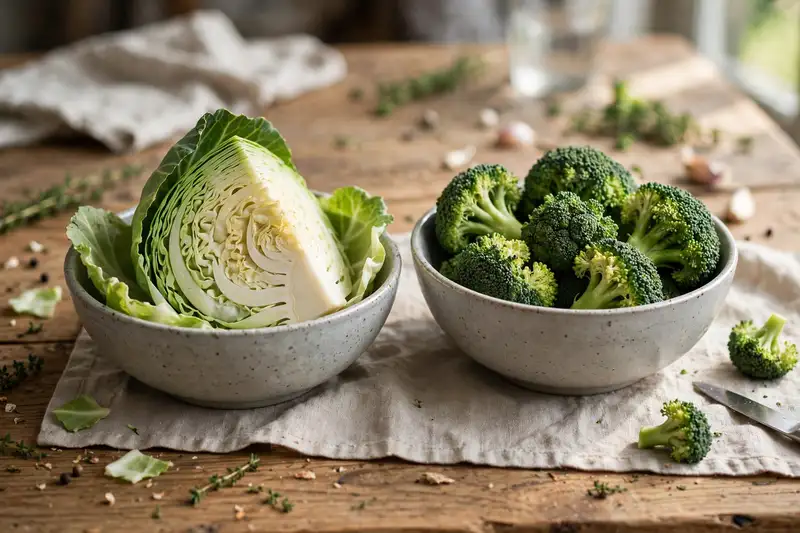
Broccoli shares the crucifer family and the gas question, though it usually causes less of it. Carrots are sweeter and most dogs prefer them, which makes carrots the easier training treat. Zucchini is the gentlest on sensitive stomachs of the group. Cabbage wins on price and crunch. Rotating among them keeps the treat menu interesting and keeps any single vegetable from dominating.
Brussels sprouts deserve a mention as the crucifer to skip for most dogs. They are safe in tiny amounts, but they concentrate the same gas causing compounds as cabbage in a smaller package, and most dogs find them bitter. Cabbage gives you the same family benefits with better portion control.
Puppies and senior dogs
Puppies and seniors can eat cabbage in smaller amounts than adults, served soft and shredded fine. Skip it for puppies under eight weeks, and go easy with seniors prone to gas or digestive trouble.

Puppies are still building their gut flora, so new vegetables arrive one at a time and in tiny amounts. Steamed cabbage suits puppies better than raw, since it is softer and easier to pass. Senior dogs often do fine with a few soft shreds, and the low calories suit older dogs watching their weight. A senior with chronic digestive issues or a thyroid condition should get new vegetables only with the vet’s approval, since cabbage in large amounts can affect thyroid function in theory, though normal treat portions are not a concern.
For senior dogs with arthritis, the vitamin K in cabbage gets occasional mention in supplement marketing, but the amounts in treat portions are far below anything therapeutic. Do not feed cabbage as medicine. If joint support is the goal, talk to your vet about proven options and keep cabbage as what it is: a crunchy snack.
When to call the vet
Most cabbage incidents need nothing more than an open window. Call your vet for repeated vomiting or diarrhea, a hard swollen belly, retching without vomit, or refusal to eat for more than a day.
Ordinary gas passes on its own within a few hours. The emergency signs listed above do not. Bloat in particular cannot wait, and it is always better to call about a false alarm than to wait on a real one. For mild stomach upset after a first taste, the Merck Veterinary Manual is a solid reference for understanding canine digestive issues, and your vet can advise whether a brief bland diet makes sense. When in doubt, make the call.
Pet insurance is worth a thought while you are thinking about emergencies. Bloat surgery is one of the most expensive emergency procedures in veterinary medicine, and it strikes fast. Knowing your vet’s emergency number and the route to the nearest emergency clinic matters more than any article, so sort that out on a calm day.
Frequently asked questions about dogs and cabbage
Owners ask about red cabbage, sauerkraut, coleslaw, and the gas question most. The answers below cover the usual round.
Can dogs eat red cabbage?
Yes, with the same rules as green cabbage. Red cabbage is safe raw or lightly cooked, served plain and shredded fine. It stains bowls, counters, and paws, but the color is harmless.
Can dogs eat sauerkraut?
No. Sauerkraut is fermented cabbage loaded with salt, and some versions include caraway or other seasonings. The sodium alone rules it out as a dog treat.
Can dogs eat coleslaw?
No. Coleslaw brings mayonnaise, sugar, and very often onion. Even a vinegar based slaw usually contains seasonings a dog should not have. Serve plain cabbage instead.
Why does cabbage make my dog gassy?
Cabbage contains raffinose, a sugar dogs cannot fully digest. Gut bacteria ferment the leftovers and produce gas. Smaller portions and light cooking reduce it, but some dogs are simply gassier than others.
Can cabbage help my dog lose weight?
It can help as a low calorie filler. A few shreds add bulk to the bowl without meaningful calories, which suits dogs on a vet supervised weight plan. It does not replace a proper diet plan, so talk to your vet first.
Can dogs be allergic to cabbage?
True allergies are rare, but food sensitivities happen. Watch for itchy skin, paw chewing, or ongoing digestive upset after eating cabbage. The VCA guide to food allergies in dogs explains how vets confirm a food allergy with elimination trials. Stop feeding cabbage and call your vet if you see these signs.
Cabbage is a fine occasional treat when it stays plain and the portions stay small. Shred it fine, skip the seasoned dishes, and accept that a little gas comes with the territory. For a crunchy, nearly free treat from the crisper drawer, it is hard to beat.
Disclaimer: This article is for general information only and is not veterinary advice. Every dog is different, and dogs with health conditions, puppies, and nursing dogs may need different guidance. If you are unsure, or if your dog shows symptoms after eating cabbage, contact your veterinarian.