Can dogs eat zucchini? Safety, benefits, and serving guide
Yes, dogs can eat zucchini, and it is one of the safer vegetables to share from your kitchen. Zucchini is low in calories, high in water, and gentle on most stomachs. The things that make zucchini risky for dogs are never the vegetable itself. They are the butter it was cooked in, the garlic powder someone sprinkled on it, and the oversized chunks a greedy dog swallows whole. Serve it plain, cut it small, and zucchini earns a place among the best low-calorie treats you can offer.

Can dogs eat zucchini? The short answer
Yes, dogs can eat zucchini raw or cooked, and it is safe for most dogs. Zucchini is low in calories, contains no compounds that are toxic to dogs, and most dogs digest it without trouble. Serve it plain, without butter, oil, salt, garlic, or onion, and cut it into pieces that fit your dog’s mouth.
Zucchini belongs to the summer squash family: mostly water, mild flavor, soft flesh when cooked. None of that bothers dogs. The ASPCA lists no toxicity concern for zucchini, and it appears on most veterinary lists of safe vegetables. The AKC guide to human foods dogs can and cannot eat puts vegetables like zucchini in the acceptable category when fed plain and in moderation.
Two simple rules cover nearly everything. Keep it plain, and keep portions reasonable. If your dog already snacks on cucumbers, zucchini will feel familiar in texture and digestibility, and you can treat the two the same way at snack time.
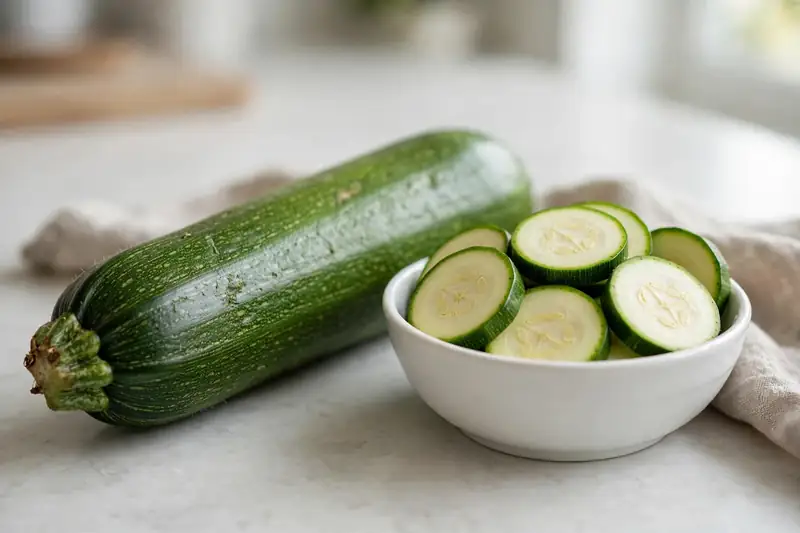
Health benefits of zucchini for dogs
Zucchini gives dogs a low-calorie snack with nutrition behind it. A cup of sliced zucchini has roughly 20 calories, plus vitamin C, vitamin B6, vitamin A, potassium, manganese, and a useful amount of fiber, which makes it a smart pick for weight-conscious dogs.
Vitamin C supports immune function and collagen for joints and skin, which helps sick, stressed, or very active dogs that can run low. Vitamin B6 helps the body use protein. Vitamin A supports vision and skin health. Potassium keeps nerves and muscles working properly, and manganese helps with bone development and metabolism.
Fiber is the benefit most owners notice first. The soluble fiber in zucchini feeds good gut bacteria and adds bulk that keeps digestion moving. For dogs that tend toward constipation, a few pieces can help without the calorie load of a biscuit. Read more about fiber for dogs if your vet has ever suggested adding roughage to the diet.
The calorie math is what makes zucchini special among vegetables. A cup of zucchini has about 20 calories next to over 150 in a cup of cooked sweet potato. Vets often suggest replacing part of a heavy dog’s meal with low-calorie vegetables, and zucchini is one of the first they name for that job.
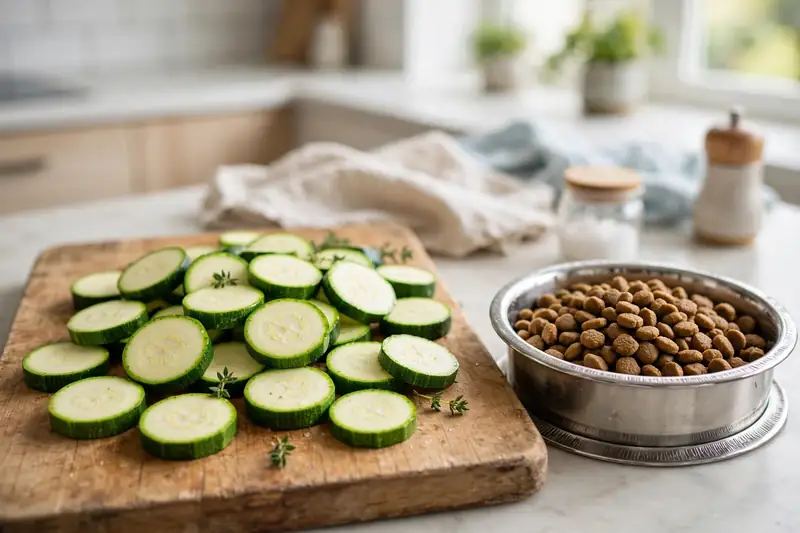
Raw zucchini or cooked zucchini: which is better?
Both raw and cooked zucchini are safe for dogs, and neither one is toxic. Cooked zucchini is easier to digest, so it suits puppies, senior dogs, and dogs with sensitive stomachs. Raw zucchini keeps more crunch and more of its vitamin C, and many healthy adult dogs enjoy it as a refreshing chew.
Raw zucchini has one real drawback: firmness. A hard raw chunk takes more work to chew, and a dog that gulps can choke on a piece that is too big. Small dogs are the main concern. Serve raw zucchini sliced thin or cut into small cubes so there is nothing to struggle with.
Cooking softens the cell walls and makes the nutrients easier to absorb. Steaming or boiling for a few minutes is enough, and microwaving works too. The method does not matter as long as nothing gets added: no butter, no oil, no salt, no seasoning blends. Plain zucchini in plain water is the entire recipe.
Avoid boiling zucchini in salted pasta water or leftover broth from other cooking. That liquid carries salt, onion, or garlic flavors dogs do not need. Owners who also feed broccoli follow the same rule: the vegetable is safe, the cooking liquid often is not.

How to prepare zucchini for your dog
Wash the zucchini, trim the stem end, and cut it into bite-size pieces for your dog’s size. That is the whole method for raw zucchini. For cooked zucchini, steam or boil the pieces for a few minutes until tender, let them cool completely, and serve plain.
Washing matters more than it looks. The skin can carry pesticide residue, dirt, and grocery-store wax, and a quick rinse under running water handles all of it. Peeling is optional. The skin is safe and holds a good share of the fiber and nutrients, so leave it on for a healthy adult dog. Peel it for dogs with very sensitive stomachs, since the skin is the firmest part.
Cutting size is the real safety step. A good test is the size of your dog’s kibble. For a small dog, think pea-size cubes or thin half-moons. For a medium dog, small chunks work. For a large dog, thick slices are fine but still bite-size. Big pieces are the main choking risk with this vegetable.
Skip everything from the spice rack. Garlic powder and onion powder damage a dog’s red blood cells, and even small amounts add up. Butter and oil add fat that sensitive stomachs do not need. If you are grilling zucchini for yourself and want to share a piece, set the dog’s portion aside before the seasoning goes on. The garlic and onion dangers are real enough that we have separate guides on garlic for dogs and onions for dogs if you want the full details.

How much zucchini can dogs eat safely?
Treat zucchini like any other treat and keep it under 10 percent of your dog’s daily calories. In practical terms, a small dog under 20 pounds gets a few small pieces, a medium dog gets a small handful, and a large dog gets a few slices or a small bowl, a few times a week.
Zucchini is low in calories, but it is still not a balanced meal. Dog food delivers complete nutrition in a day’s ration, and every snack displaces some of it. With a vegetable this light you have more room than with cheese or meat treats, but zucchini still works best as a snack, a training reward, or a meal topper, not as the meal itself.
Frequency matters more than the exact number of pieces. A few pieces most days is fine for a healthy adult dog. Some owners use zucchini as a daily low-calorie filler for dogs on a diet, with their vet’s approval, and that works because the calorie load stays tiny.
| Dog size | Safe amount | Frequency |
|---|---|---|
| Small (under 20 lbs) | A few pea-size pieces, about a quarter cup | A few times a week |
| Medium (20 to 50 lbs) | A small handful, about half a cup | Most days |
| Large (over 50 lbs) | A few slices, up to one cup | Most days |
The first time you offer zucchini, give less than the chart suggests. One or two small pieces, then watch your dog for a day. Most dogs handle zucchini without any reaction, but every stomach is different, and a slow start tells you exactly how your dog responds before zucchini becomes a regular snack.

Are zucchini seeds safe for dogs?
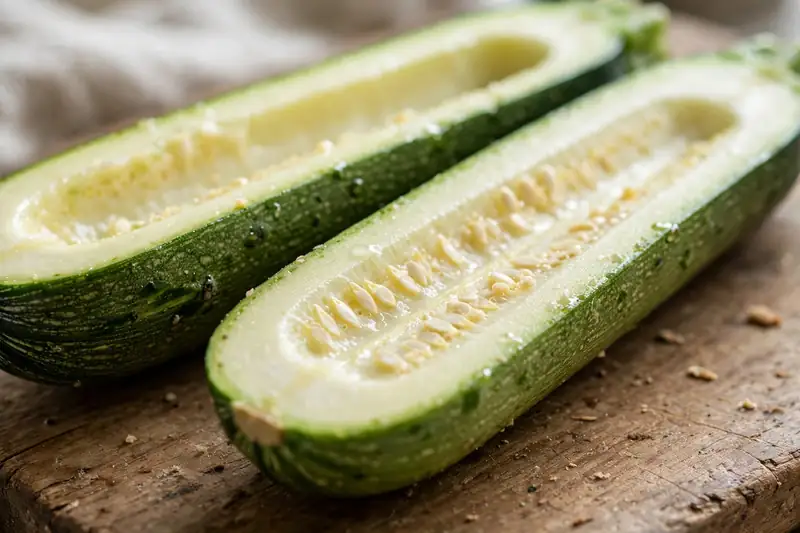
Yes, zucchini seeds are safe for dogs. The seeds inside a normal grocery-store zucchini are small, soft, and digestible, so there is nothing to remove. Only very large, overgrown zucchini develop big hard seeds, and those are worth scooping out for small dogs.
Young zucchini, the kind most stores sell, has seeds so small you barely notice them. They pass through without trouble and add a little fiber. Garden zucchini left on the vine too long is a different story. An overgrown zucchini develops a tough rind and large seeds that are harder to chew and digest.
For small dogs, scoop the seeds out of any zucchini wider than about two inches. For medium and large dogs, even a seedy zucchini is fine once cooked and cut into pieces. For overgrown garden zucchini, peel them, remove the seed core, and cook the flesh soft.
Can dogs eat zucchini flowers?
Yes, dogs can eat zucchini flowers, also called squash blossoms. The flowers are safe raw or cooked, and some dogs enjoy the soft petals. Serve them plain, washed, and with the stem trimmed, the same way you would serve the vegetable itself.
Squash blossoms are the orange-yellow flowers that grow on zucchini plants before the fruit forms. The petals are delicate and digest easily, which makes them gentler than raw zucchini flesh for sensitive stomachs.
The main caution is where the flowers came from. Flowers from your own garden are fine after a rinse. Flowers bought from a florist or picked from a landscaped bed may carry pesticides or fungicides that are not meant to be eaten by anyone. Only feed flowers you know were grown without chemical sprays.

Zucchini bread, fried zucchini, and other forms to avoid
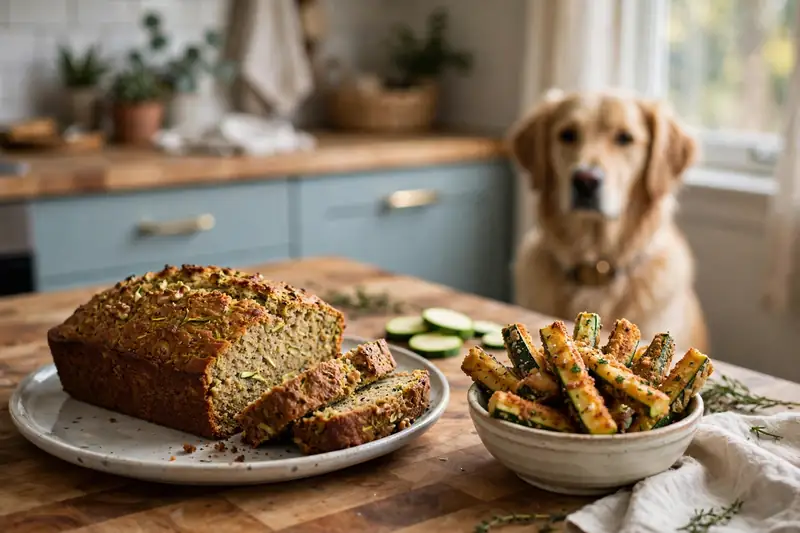
Plain zucchini is safe, but zucchini bread, fried zucchini, and heavily seasoned zucchini dishes are not good for dogs. Zucchini bread contains sugar, butter or oil, and often chocolate chips, nuts, or spices. Fried zucchini soaks up oil and usually comes breaded with salt and garlic powder. Both turn a healthy vegetable into junk food.
Zucchini bread deserves a special warning because it sounds wholesome. It is not. A single slice can carry as much sugar as a cookie, plus fat from butter or oil. Some recipes add chocolate chips, which are toxic to dogs, or macadamia nuts and raisins, which are also dangerous. Nutmeg, another common zucchini bread spice, upsets a dog’s stomach. Keep all quick breads off your dog’s menu.
Fried zucchini from a restaurant is a double problem. The breading adds calories and salt, and the frying oil can upset a dog’s stomach or, in a sensitive dog, trigger pancreatitis. One stolen piece will probably just cause a bad afternoon, but it is not a snack to offer on purpose.
Grilled or roasted zucchini is fine only if it was cooked without oil, butter, salt, or seasoning. When you cook for the family, pull your dog’s portion out first, then season the rest. That one habit keeps the vegetable safe and the flavor where it belongs.
Signs of too much zucchini and when to call the vet
Zucchini itself rarely causes emergencies. Eating too much at once usually leads to mild stomach trouble: gas, soft stool, or a bout of diarrhea that clears up within a day. Dogs that gulp large raw pieces may gag or vomit up chunks that were too big to swallow comfortably.
Watch for the signs that mean more than a mild upset. Vomiting that repeats more than twice, diarrhea that lasts longer than 24 hours, belly pain, bloating, lethargy, or loss of appetite all earn a vet call. These are uncommon with plain zucchini, but they show up when a dog eats a huge amount at once or eats zucchini cooked with garlic, onion, or heavy grease.
A dog that ate seasoned or fried zucchini needs closer watching. Note the ingredients and how much the dog ate, then call your vet. Garlic and onion damage builds over hours, so a dog that looks fine at first can develop problems later.
For urgent after-hours questions, the ASPCA Animal Poison Control line is the resource most vets point owners to. Keep the packaging or the recipe nearby when you call, since the exact ingredients and amounts shape the advice.

Zucchini for puppies, senior dogs, and dogs that need to lose weight
Zucchini suits all three groups well. Puppies get tiny soft-cooked pieces as a gentle first vegetable. Senior dogs with dull appetites often accept the mild flavor, and the soft texture is easy on old teeth. Overweight dogs get the biggest win, since zucchini fills the bowl without filling out the waistline.
For puppies under six months, start with one or two small pieces of cooked zucchini. A puppy’s digestion is still developing, and new foods should arrive one at a time. Cooked is better than raw at this age because it is softer and easier to pass. Once your puppy handles it well, zucchini can join the small rotation of safe vegetables. Carrots make another good early vegetable for the same reason.
Senior dogs follow the adult rules with one adjustment. Older dogs need fewer calories overall, so keep the treat budget tight even with a low-calorie vegetable. Cooked zucchini is a plus for dogs with dental problems, and the potassium supports muscles that are starting to weaken. If your senior is on a prescription diet, check with your vet before adding extras, since those diets are balanced precisely.
For weight loss, zucchini is one of the most useful tools in the kitchen. Many vets suggest replacing part of the kibble with a low-calorie vegetable so the dog feels full on fewer calories. Zucchini works that way and most dogs like it. The Merck Veterinary Manual and most veterinary nutrition sources agree that low-calorie vegetable fillers are a sound strategy when the overall plan comes from your vet.

Frequently asked questions about dogs and zucchini
Below are the questions that come up most often about dogs and zucchini, from daily feeding to the skin and seeds to what happens when a dog eats the wrong kind of zucchini dish. Your vet’s advice wins for any dog with a medical condition.
Can dogs eat zucchini every day?
Yes. The calorie load is tiny, so daily pieces do not unbalance the diet the way daily cheese or meat treats would. Keep it within the portion sizes above, and keep all treats under 10 percent of daily calories.
Is raw zucchini harder for dogs to digest than cooked?
Somewhat. Raw zucchini is safe, but its firm flesh takes more work to break down. Dogs with sensitive stomachs, puppies, and seniors do better with cooked zucchini. For a healthy adult dog with good teeth, raw slices are a fine crunchy snack as long as the pieces are small.
Can dogs eat zucchini skin?
Yes. It holds fiber and a good share of the vitamins. Wash it well, since the skin carries any pesticide residue or wax from the store. Peel it only for dogs with very sensitive stomachs, because the skin is the firmest part.
My dog ate zucchini bread. Should I worry?
Check the ingredients. Plain zucchini bread without chocolate, raisins, macadamia nuts, or xylitol usually causes only mild stomach upset from the sugar and fat. If the bread contained any of those, call your vet right away with the package or recipe in hand, since those ingredients are genuinely dangerous.
Can dogs eat yellow squash too?
Yes. Yellow squash is zucchini’s close cousin and follows the same rules: safe raw or cooked, served plain and cut small. The nutrition is similar. If your dog likes zucchini, yellow squash will almost certainly go over well too.
Is zucchini better than carrots for dogs?
Neither is better overall. Zucchini has fewer calories and more water, which suits dogs on a diet. Carrots have more natural sugar and beta-carotene, and their crunch helps clean teeth as dogs chew. Many owners rotate both.
Zucchini earns its place as a dog-safe vegetable with almost no downsides. Serve it plain, cut it to fit your dog, keep the bread and the fryer out of the picture, and it becomes one of the easiest healthy snacks in your kitchen. The FDA’s animal and veterinary resources are a good starting point if you want to read more about balanced dog nutrition beyond treats.