Persimmons land in grocery stores every fall, right when the season peaks. The good news is the flesh itself is not poisonous to dogs. The bad news is the seeds. Persimmon seeds and pits are large, hard, and indigestible, and swallowing them can block a dog’s intestines. Too much of the sweet flesh can also send a dog to the backyard with diarrhea. This guide covers which parts are safe, how to prepare a persimmon, how much to serve by size, and the warning signs that mean a swallowed seed needs a vet.

Can dogs eat persimmons? The short answer
Yes, dogs can eat persimmons if the fruit is fully ripe, peeled or washed, and completely free of seeds. The flesh itself is not toxic. The seeds and pits are the hazard: they can cause choking, inflame the small intestine, and block the digestive tract, especially in small dogs. Serve only a small amount as an occasional treat.
Searches for this question spike every autumn, when persimmon season runs roughly October through December. Owners who buy the fruit for themselves naturally wonder whether the dog can have some. The answer stays the same: the ripe flesh is fine, the seeds must go, and moderation is the whole trick.

Why persimmon seeds and pits are the real danger
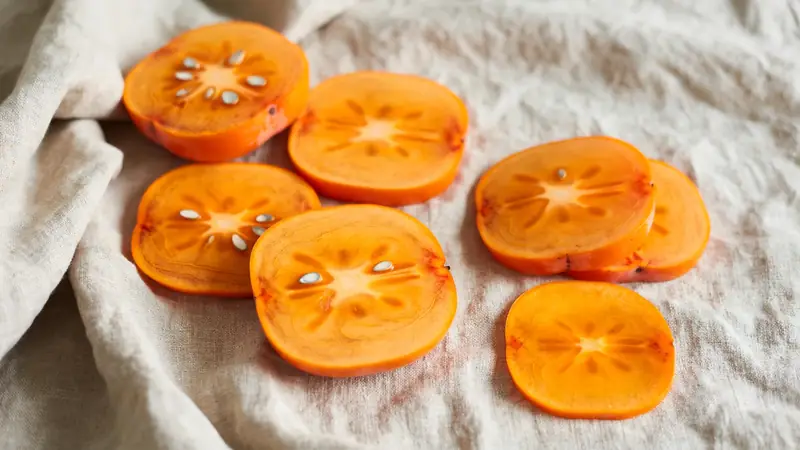
Persimmon seeds are not poisonous, but they are hard, smooth, and too big to pass comfortably. A dog that swallows them risks choking or an intestinal blockage. The seeds can also inflame the lining of the small intestine, a condition called enteritis, which causes vomiting and diarrhea even when nothing is fully blocked.
The flesh gets the credit and the seeds do the damage. Persimmons contain no compound that poisons dogs the way theobromine does in chocolate or the way grapes damage kidneys. That distinction matters because it shapes the response. You do not panic about a toxin. You worry about a physical object moving through a digestive tract that was not built for it.
The seed problem gets worse with size. A large Labrador might pass a persimmon seed with nothing more than a day of loose stool. A Chihuahua that swallows two seeds can face a full blockage. Seed counts vary by fruit. Some persimmons have no seeds at all, while some older varieties hold six or more in one fruit. You cannot tell by looking from the outside, which is why cutting the fruit open and removing every seed is the non-negotiable step.

The ripe flesh is safe, but unripe persimmons are a problem
Ripe persimmon flesh is soft, sweet, and easy for a dog to digest. Unripe persimmons are loaded with tannins that taste sharply bitter and astringent, the mouth-puckering sensation you get from an underripe banana times ten. A dog that bites into an unripe persimmon can end up with mouth irritation, nausea, and stomach upset.
Tannins are the same plant compounds that make strong black tea taste dry on the tongue. In persimmons they discourage animals from eating the fruit before the seeds are ready. For your dog, an unripe persimmon is unpleasant at best and a stomachache at worst. Most dogs spit it out after one bite, but a determined dog that eats several can vomit. A ripe persimmon gives gently under your thumb like a ripe peach and has deep orange skin.
This ripeness rule is stricter for one variety than the other, which brings us to the two types you will see in stores.

Fuyu vs Hachiya: the two varieties you will see in stores
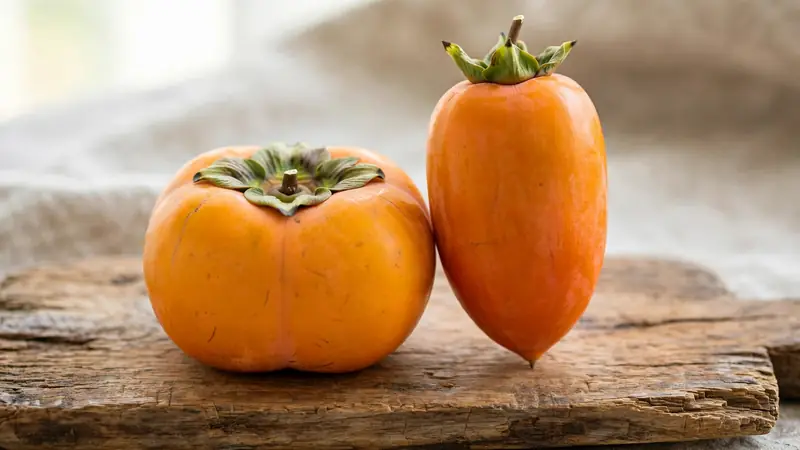
Most persimmons sold in the United States are Fuyu or Hachiya, and they ripen very differently. Fuyu persimmons are flat and tomato-shaped and can be eaten crisp like an apple. Hachiya persimmons are tall and acorn-shaped and stay mouth-puckeringly astringent until they turn completely soft and jelly-like.
| Variety | Shape | Eaten when | Seeds | Best for dogs? |
|---|---|---|---|---|
| Fuyu | Flat, round, like a tomato | Firm or soft | Usually few or none | Best choice, easy to judge ripeness |
| Hachiya | Tall, acorn-shaped | Only when very soft | Often several | Fine only when fully ripe |
| Sharon fruit | Flat like Fuyu | Firm or soft | Usually none | Same as Fuyu, just a variety name |
| American (wild) | Small, round | Only when very soft | Several | Skip for dogs, high seed count |
Sharon fruit is simply a Fuyu variety grown in Israel and other regions, so the same rules apply. For dog owners, Fuyu is the easy pick. Many Fuyu persimmons are seedless, and they are simple to slice. An underripe Hachiya is one of the most unpleasant fruits a dog can bite into, and it hides several seeds. If someone hands your dog a slice and you do not know the variety, ask before the dog eats it. The AKC guide to human foods dogs can and cannot eat lists persimmon among the fruits that need this kind of preparation.
What persimmons offer a dog nutritionally
A persimmon gives a dog fiber, vitamins A and C, and plant antioxidants, wrapped in a lot of natural sugar. A single medium persimmon carries roughly 118 calories and about 13 grams of sugar. The nutrition is real, but the sugar means the fruit stays a treat, not a snack staple.
Start with the fiber. Persimmons are genuinely fibrous, which supports normal digestion in small amounts. Our fiber guide for dogs explains how fiber works in a dog’s gut and which sources suit them best. Vitamin A supports eyesight and immune function, and persimmons are a solid source of it. Vitamin C matters less than people think, because dogs make their own in the liver, a difference between dogs and people noted in the Merck Veterinary Manual.
Now the sugar, because that is where people misjudge this fruit. A persimmon tastes like candy, and nutritionally it acts like one. Those 13 grams of sugar per fruit land fast in a dog’s system. For comparison, that is more sugar than an apple slice and far more than a handful of blueberries. Diabetic dogs and dogs on weight management plans should skip persimmons or get the vet’s approval first.
How much persimmon is safe by dog size
Keep persimmons inside the 10 percent treat rule. A small dog gets one to two tablespoons of diced ripe flesh, a medium dog two to four tablespoons, and a large dog up to half a cup, a couple of times a week at most. Give a smaller test portion the first time.
The 10 percent rule exists because every treat calorie replaces a calorie of balanced dog food. Persimmons are calorie-dense for a fruit, so the servings look small on purpose.
| Dog size | Serving of diced ripe flesh | How often |
|---|---|---|
| Small, under 20 lbs | 1 to 2 tablespoons | Once or twice a week |
| Medium, 20 to 50 lbs | 2 to 4 tablespoons | Once or twice a week |
| Large, over 50 lbs | Up to 1/2 cup | A couple of times a week |
First-time rule: give half the table amount and wait a full day. Some dogs tolerate new fruit perfectly; others get gas or loose stool from a food they have never met. If the stool stays normal, the table amount is fine going forward. If your dog gets gassy or loose, cut the portion or drop persimmons from the rotation. Dogs vary more than charts do, and a mango portion guide uses the same test-first approach. Never feed the whole fruit. A dog left alone with a whole persimmon will swallow the seeds, and then the portion question becomes a vet question.

How to prepare a persimmon for your dog
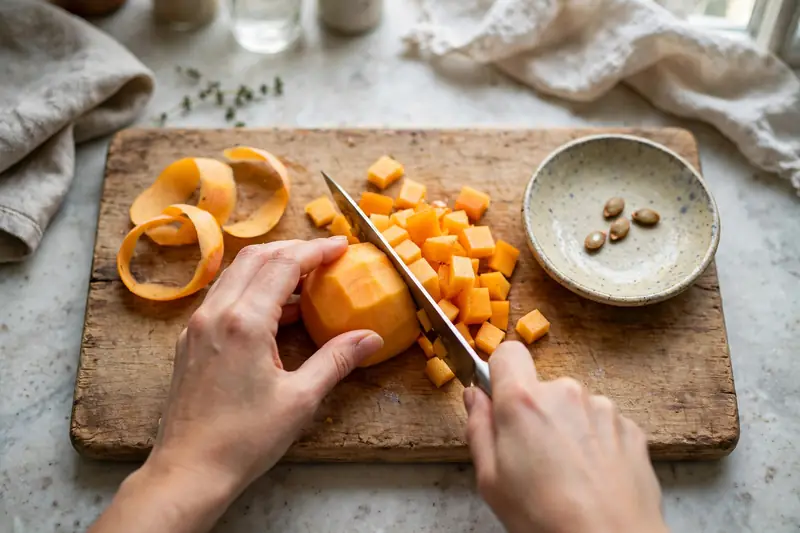
Wash the fruit, cut it open, remove every seed and the stem cap, then dice the flesh into bite-sized pieces. Peeling is optional if the fruit is organic, since the skin is edible, but peeling is the safer call for conventionally grown fruit. Serve the diced pieces plain, never dried, sweetened, or baked into desserts.
The steps take about two minutes. Wash under running water, slice the persimmon open, and check for seeds hiding in pockets of the flesh. Scoop every one out with the tip of the knife. Remove the green stem cap and the whitish core beneath it, which tastes bitter. Dice the flesh into pea-sized pieces for small dogs and thumbnail-sized pieces for large dogs, a choking safeguard on top of the seed removal.
What not to serve matters as much. Dried persimmons pack concentrated sugar and sometimes preservatives, and they are easy to overfeed in dried form. Persimmon baked into cookies, bread, or pudding carries the usual dessert baggage: sugar, butter, and sometimes chocolate. Canned or sugared persimmons belong in the no column.
Signs your dog swallowed persimmon seeds
Watch for repeated vomiting, abdominal pain or bloating, straining to poop or constipation, loss of appetite, and unusual lethargy. These signs can start within hours for vomiting and up to a couple of days for a developing blockage. Any combination of them after a seed was swallowed earns a vet call, not a wait-and-see approach.
An intestinal blockage, also called an obstruction, means food and water cannot pass through the gut normally. The signs creep in stages. Vomiting often comes first as the stomach rejects what will not move through. Appetite drops. The dog may strain in the yard without producing anything, or pass only small amounts of diarrhea around the blockage. The belly can look swollen and feel tender. Lethargy sets in as the dog dehydrates. Left alone, a complete blockage starves sections of the bowel of blood flow, and tissue can start to die. That is a surgical emergency.
The hard part is that you cannot tell at home whether a dog has enteritis or the early stage of a blockage. That uncertainty is why vets want the call early. Note when your dog ate the seeds, how many were swallowed, and your dog’s weight before you dial.

What to do if your dog ate persimmon seeds or too much flesh
Call your veterinarian or the ASPCA Animal Poison Control Center and describe what your dog ate, how much, and when. Do not induce vomiting at home unless the vet tells you to, because a large seed can injure the throat on the way back up. If your dog only ate too much flesh, expect diarrhea and keep water available.
Start by getting the remaining fruit out of reach so the dog cannot eat more. Then gather the facts: how many seeds, whether they were whole or chewed, the time it happened, and your dog’s weight. If the vet advises vomiting, they will direct the timing and method for your specific dog. Our guide on how to induce vomiting in dogs explains when vets recommend it and when they advise against it, and seeds near the throat are one of the against-it cases. Vomiting that an owner starts at home carries an aspiration risk, and with seeds there is also the choking risk in reverse.
For the overate-too-much-flesh case, the situation is calmer. A dog that ate several slices of ripe flesh will likely have soft stool or diarrhea for a day and nothing worse. Keep fresh water available and hold off on rich food until the stomach settles. If diarrhea lasts longer than 24 hours, contains blood, or comes with vomiting and lethargy, call the vet. The ASPCA Animal Poison Control line is worth saving in your phone before you need it in a panic.

Persimmons vs other fall fruits dogs encounter
Persimmons sit in the middle of the fall fruit lineup. The flesh is safer than grapes and raisins, which are truly toxic, and less practical than apples and blueberries, which carry no seed-removal hassle. Wild persimmons from a backyard tree carry more seeds and should be treated as a bigger risk than store-bought Fuyu.
| Fruit | Safe part | Risk for dogs | Verdict |
|---|---|---|---|
| Persimmon | Ripe flesh, deseeded | Seeds cause blockage; high sugar | Occasional treat, prep required |
| Apple | Flesh, cored | Seeds contain amygdalin in large amounts | Regular treat, core it first |
| Grapes and raisins | None | Kidney failure, no safe dose | Never feed |
| Blueberries | Whole berry | Very little | Easy regular treat |
| Cranberries | Fresh berries | Acidic; sweetened forms are the risk | Occasional treat, plain only |
| Mango | Flesh | Pit is a choking and blockage hazard | Occasional treat, remove pit |
The pattern is worth noticing. Most fruit risks in a dog’s world are pits and seeds, not the flesh. Apples need coring, mangoes need the pit removed, and persimmons need every seed out. Grapes and raisins break the pattern because the flesh itself is the toxin, which is why they sit alone in the never-feed column. Blueberries are the lazy owner’s fruit: wash and serve. If your dog raids the fruit bowl often, watermelon is another low-effort summer option with the seeds removed. The VCA hospitals site has a solid overview of intestinal blockages in dogs, which explains why every pit and seed on this list gets the same strict treatment.
Frequently asked questions about dogs and persimmons
Owners usually ask about a single whole persimmon, puppies, dried fruit, the skin, and the wild ones growing in the yard. The answers below cover the questions that come up most often. For anything unusual, your vet’s judgment beats any general article.

Can a dog eat one whole persimmon?
A small dog should not, and a large dog should not unsupervised. One whole persimmon can hold several seeds, and swallowing them is the blockage risk this whole article warns about. One whole persimmon also carries roughly 13 grams of sugar, which is a lot for one sitting. Deseed it, dice the flesh, and serve the portion from the table above instead.
Can dogs eat persimmon fruit if it fell from the tree in my yard?
American persimmons that grow wild in backyards are smaller, seedier, and harder to judge for ripeness than store fruit. An unripe wild persimmon is extremely astringent and can upset a dog’s stomach. If your tree drops fruit, pick it up before the dog does, or fence the tree off during the season.
Can puppies eat persimmons?
Puppies face a higher seed risk because of their small size, and their stomachs react more strongly to new sugary foods. If you share persimmon with a puppy, use a teaspoon of deseeded ripe flesh as a test portion and watch for loose stool. Most vets would rather you stick to puppy-formulated treats until the dog is grown.
Can dogs eat dried persimmons?
No. Dried persimmons concentrate the fruit’s sugar and are easy to overfeed in small-looking pieces, and some dried fruit contains added sugar or preservatives. Stick to fresh.
Can dogs eat persimmon skin?
The skin is edible and not toxic, and some sources say to leave it on organic fruit. In practice, peeling is simpler. The skin can be tough, pesticide residue sits on it for conventionally grown fruit, and it adds nothing your dog needs. Peel it and you remove one more variable.
Are persimmon leaves or branches safe for dogs?
Persimmon leaves and branches are not part of any safe-feeding guidance for dogs. Dogs that chew leaves or bark can get mouth irritation and stomach upset from the plant material itself. Stick to the prepared fruit and keep your dog from gnawing on the tree. If your dog chewed a lot of leaves and starts vomiting, call your vet.
Can dogs eat persimmons every day?
Daily is too much for a fruit this sugary. Persimmons work as a once-or-twice-a-week treat inside the 10 percent rule. A dog that gets persimmon every day would crowd out balanced nutrition with sugar and invite stomach trouble over time.
Dogs can enjoy persimmons the way people do: a seasonal treat, eaten ripe, with the seeds out. The flesh is safe, the sugar is real, and the seeds are the one thing that can turn a snack into an emergency. Remove them, keep the portions small, and this autumn fruit earns its place in the rotation.